Caramel apple cookies land right in that sweet spot between soft bakery-style cookies and the cozy flavor of apple pie. The edges bake up lightly golden, the centers stay tender, and every bite has little pockets of caramel that melt into the dough. A drizzle of caramel sauce and a pinch of flaky salt on top finishes them in a way that feels special without making the recipe fussy.
What keeps these from turning cakey or gummy is the balance of moisture. The apples need to be peeled, very finely diced, and patted dry so they soften in the oven without watering down the dough. The spices also matter here: cinnamon leads, while nutmeg and allspice stay in the background and make the apple flavor taste fuller instead of spicier than it should.
Below, I’ve added the small details that matter most, including how to keep the cookies soft in the middle, what to swap if you only have chopped caramels, and how to store them so the texture stays good for the next day.
The cookies stayed soft for two days, and the tiny apple pieces baked in perfectly without making the centers wet. The caramel pockets were the best part.
Pin these caramel apple cookies for the soft-center texture, caramel pockets, and flaky salt finish that make them worth baking twice.
The Part That Keeps These Cookies Soft Instead of Puffy
Most apple cookies go wrong because the dough picks up too much moisture from the fruit. The result is a cookie that bakes up bready or stays damp in the middle long after the edges look done. Here, the apple is cut very small and patted dry before it goes in, which keeps the fruit from leaking into the dough while the cookies bake.
The other thing that matters is pulling them when the centers still look a little underbaked. That leftover heat on the pan finishes the middle without drying out the edges. If you wait until the tops look fully set in the oven, they’ll cool into a firmer cookie than this recipe is aiming for.
- Fine-diced apples — Smaller pieces spread through the dough instead of creating wet pockets. Chop them too large and they’ll fight the cookie structure.
- Brown sugar — This brings chew and depth. White sugar alone would make the cookie flatter and drier.
- Caramel bits or soft caramels — Caramel bits hold their shape a little better, while chopped soft caramels melt into gooey patches. Both work, but the chopped version gives you more dramatic melt.
- Flaky sea salt — Use it at the end, not in the dough. It sharpens the caramel and keeps the cookies from tasting one-note sweet.
What Each Ingredient Is Actually Doing in the Dough
- Butter — Softened butter creams with the sugars to trap air, which gives the cookies lift and a tender bite. If the butter is melted, the cookies spread too much.
- Apples — Use a firm baking apple if you can, but the bigger rule is dryness. A juicy apple will soften the dough more than you want, no matter how good it tastes raw.
- Cinnamon, nutmeg, and allspice — Cinnamon carries the flavor, while the other two spice the background so the cookie tastes like apple pie, not just cinnamon sugar.
- Vanilla — It rounds out the caramel and keeps the dough from tasting flat. It matters more here than it would in a plain sugar cookie.
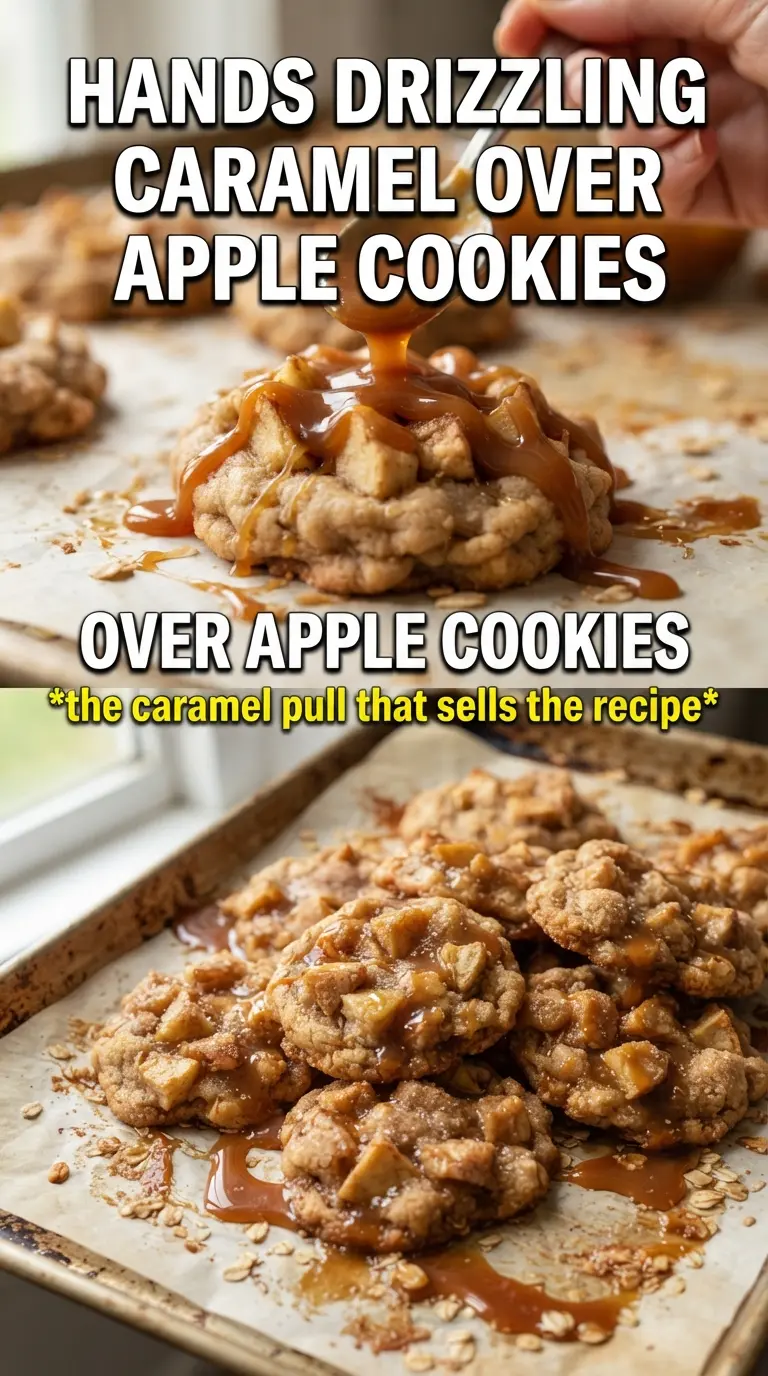
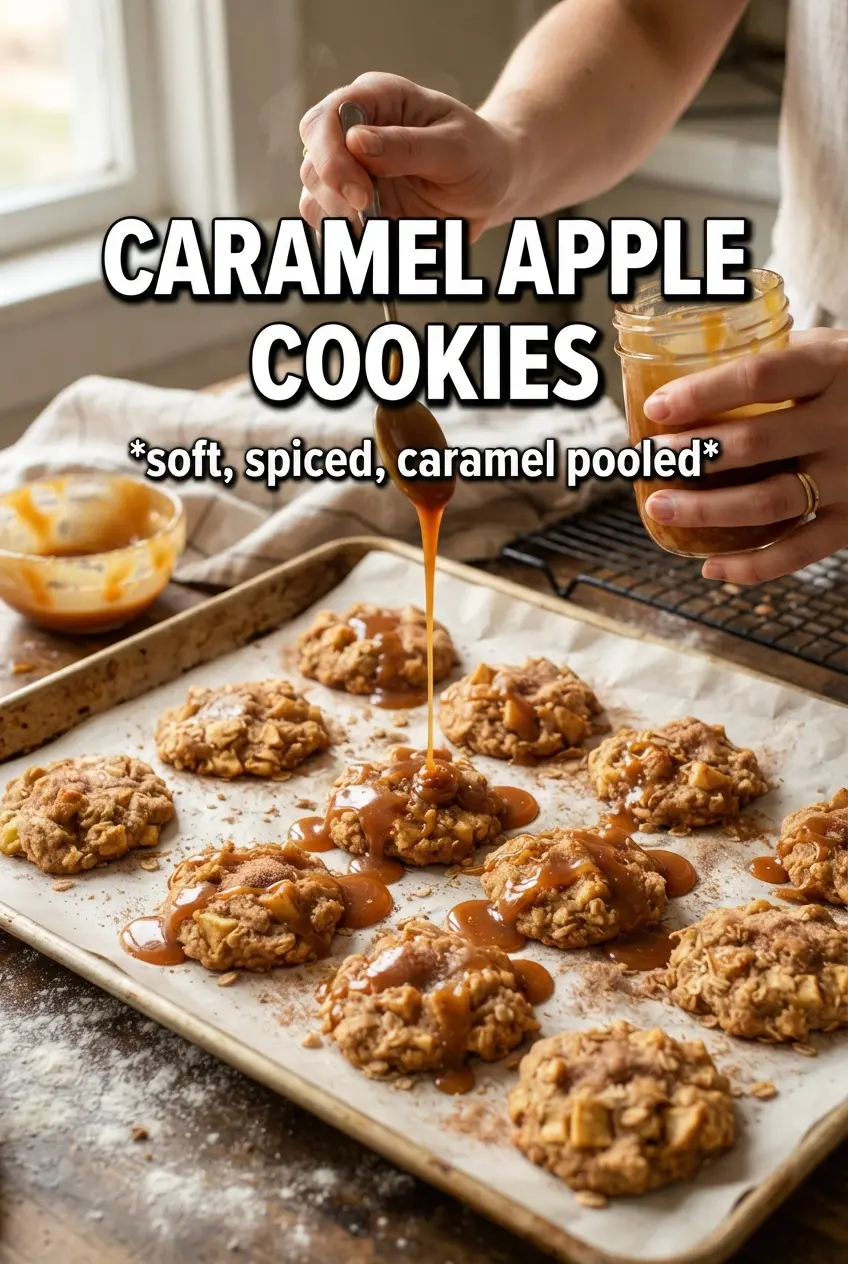
- Caramel sauce — This is for the finish, not the bake. Drizzling it on warm cookies gives you the sticky top layer without turning the cookie itself greasy.
Building the Dough So the Apples and Caramel Bake Evenly
Creaming the Butter and Sugars
Beat the butter, granulated sugar, and brown sugar until the mixture looks pale and fluffy. That step gives the cookies structure and helps them spread in a controlled way. If the butter is too cold, the mixture stays grainy and the dough won’t bake evenly. If it’s too soft, the cookies can turn flat before the centers set.
Adding the Dry Ingredients
Whisk the flour, baking soda, spices, and salt together before they go into the bowl. This keeps the leavening and spice distributed through the dough instead of clumping in one bite. Stir just until the flour disappears; overmixing after the flour goes in makes the cookies tougher.
Folding in the Apples and Caramel
Add the apples and caramel bits at the very end so they stay in distinct pockets instead of getting shredded into the dough. The dough will look thick, and that’s correct. If the mixture seems loose, the apples were probably not dried well enough. In that case, let the dough sit for a few minutes before scooping so the flour has time to absorb a little extra moisture.
Baking Until the Centers Still Look Soft
Scoop the dough into 2-tablespoon rounds and bake just until the edges are golden and the centers still look slightly undone. That look is the signal to pull them. Let them sit on the hot pan for five minutes, then move them to a rack and finish with caramel sauce and flaky salt. The cookies will set as they cool, and that’s how you keep them soft instead of dry.
Three Ways to Make These Caramel Apple Cookies Fit What You Have
Use chopped soft caramels for bigger pockets
Chopped soft caramels melt into larger gooey spots than caramel bits, which gives the cookies a more dramatic pull when they’re warm. The tradeoff is a little more spread, so chill the dough for 15 to 20 minutes if it looks soft after mixing.
Make them gluten-free with a 1:1 baking blend
A good 1:1 gluten-free flour blend works here because the cookies rely on butter, sugar, and egg for much of the structure. The texture will be a little more delicate, but the apple and caramel still shine. Don’t use almond flour alone; it won’t hold the dough the same way.
Make them dairy-free with plant butter and dairy-free caramels
Use a plant-based butter that comes in sticks, not a tub spread. Stick-style versions behave much more like real butter during creaming and baking. Pair them with dairy-free caramel pieces or skip the mix-ins and finish with a dairy-free caramel drizzle after baking.
Add chopped toasted pecans for a bakery-style version
A small handful of toasted pecans brings crunch and a deeper browned flavor that plays well with the caramel. Keep the pieces small so they don’t overpower the apple. This is the variation to use when you want the cookies to eat more like a bakery counter cookie than a soft drop cookie.
Storage and Reheating
- Refrigerator: Store in an airtight container for up to 4 days. The cookies stay soft, though the caramel topping will settle a bit.
- Freezer: Freeze baked cookies without the caramel drizzle for up to 2 months. Wrap tightly and thaw at room temperature before finishing with sauce and salt.
- Reheating: Warm for 8 to 10 seconds in the microwave to soften the caramel again. Don’t overheat them or the cookies will turn dry and the caramel will get sticky instead of gooey.
Answers to the Questions Worth Asking
Caramel Apple Cookies
Ingredients
Equipment
Method
- Preheat the oven to 375F and line baking sheets with parchment for easy release and even baking.
- Whisk all-purpose flour, baking soda, cinnamon, nutmeg, allspice, and salt in a bowl until evenly combined.
- Beat softened unsalted butter with granulated sugar and brown sugar until fluffy, then beat in eggs one at a time and mix in vanilla extract.
- Stir the flour mixture into the wet ingredients just until the dough comes together, then fold in the diced apples (well-patted dry) and caramel bits.
- Scoop dough into 2-tablespoon rounds and place them on the prepared sheets with space between cookies.
- Bake for 10-12 minutes at 375F until edges are golden but centers look slightly underdone, showing a soft baked interior.
- Cool the cookies for 5 minutes on the pan so they set without overbaking.
- Drizzle with caramel sauce and sprinkle with flaky sea salt while still warm for visible caramel streaks and a crisp salty finish.