Slow cooker chicken stew lands in that sweet spot between cozy and practical: tender chicken, soft vegetables, and a gravy that turns spoon-thick without any last-minute fuss. The broth picks up richness from the chicken thighs and cream of chicken soup, while tomato paste gives the whole pot a deeper, rounder flavor than a plain broth-based stew usually has. By the time it’s done, the potatoes are buttery, the carrots hold their shape, and the chicken shreds without resistance.
The trick here is layering the vegetables on the bottom so they can soak up the slow, even heat and carry the stew while the chicken cooks on top. Bone-in thighs matter because they stay juicy over a long cook and season the broth as they go. The cornstarch slurry goes in at the end, after the chicken is shredded, so the stew thickens cleanly instead of turning pasty or gluey.
Below, you’ll find the exact places where this stew gets its body, plus a few swaps that still keep the broth rich and the texture right. If you’ve ever ended up with watery slow cooker stew, the notes here will help you avoid that.
The potatoes held their shape, the chicken shredded beautifully, and the gravy thickened up exactly in that last 20 minutes. I served it with bread and everyone wanted seconds.
Save this slow cooker chicken stew for the nights when you want tender chicken, thick gravy, and one pot that does the whole job.
The Part That Keeps Slow Cooker Stew Thick Instead of Watery
Most slow cooker stews start with too much liquid for the amount of starch and meat in the pot. That’s how you end up with a broth that tastes fine but eats thin. This version avoids that by leaning on cream of chicken soup and tomato paste for body before the cornstarch ever shows up. The result is a gravy that clings to the spoon instead of pooling around the vegetables.
Putting the vegetables under the chicken matters, too. As they cook, the potatoes release a little starch and the carrots soften into the broth, which helps the stew feel full and finished. The only part that needs restraint is the thickener: add it at the end, after the meat is shredded back in, or you’ll dull the stew’s texture and wind up with a gummy pot.
- Bone-in chicken thighs — These stay moist through a long slow cook and give the broth more depth than boneless pieces. You can use boneless thighs, but the stew won’t have quite the same savory backbone.
- Cream of chicken soup — This is the shortcut that gives the broth body without needing a separate roux. If you want a from-scratch version, use a thick homemade cream sauce, but keep it fairly loose so it still blends with the broth.
- Tomato paste — Just two tablespoons add a subtle richness that makes the stew taste cooked, not flat. Don’t skip it unless you want a lighter, more purely chicken-forward broth.
- Baby potatoes — Halving them gives you tender edges and enough surface area to absorb flavor. Larger chunks work, but they need to be even so they don’t fall apart before the chicken is done.
What Each Ingredient Is Actually Doing in This Recipe
- Primary ingredient (the star) — Quality matters most. Choose the best you can find.
- Cooking medium (oil, butter, or broth) — This carries flavors and prevents dryness.
- Seasonings (salt, pepper, spices, herbs) — Layer flavors so nothing overpowers. Build depth gradually.
- Aromatics (garlic, onion, herbs) — Cook with fat to bloom flavors. Become the foundation.
- Supporting ingredients — Complement the main ingredient without overpowering it.
- Sauce or liquid (if applicable) — Brings flavors together. Balance richness with acid.
- Acid (lemon, vinegar, wine, or other) — Brightens and prevents flat-tasting results.
- Final finish (garnish, glaze, or sauce) — Prevents one-dimensional taste and adds visual appeal.
How to Layer the Pot So Everything Finishes at the Same Time
Start With the Vegetables
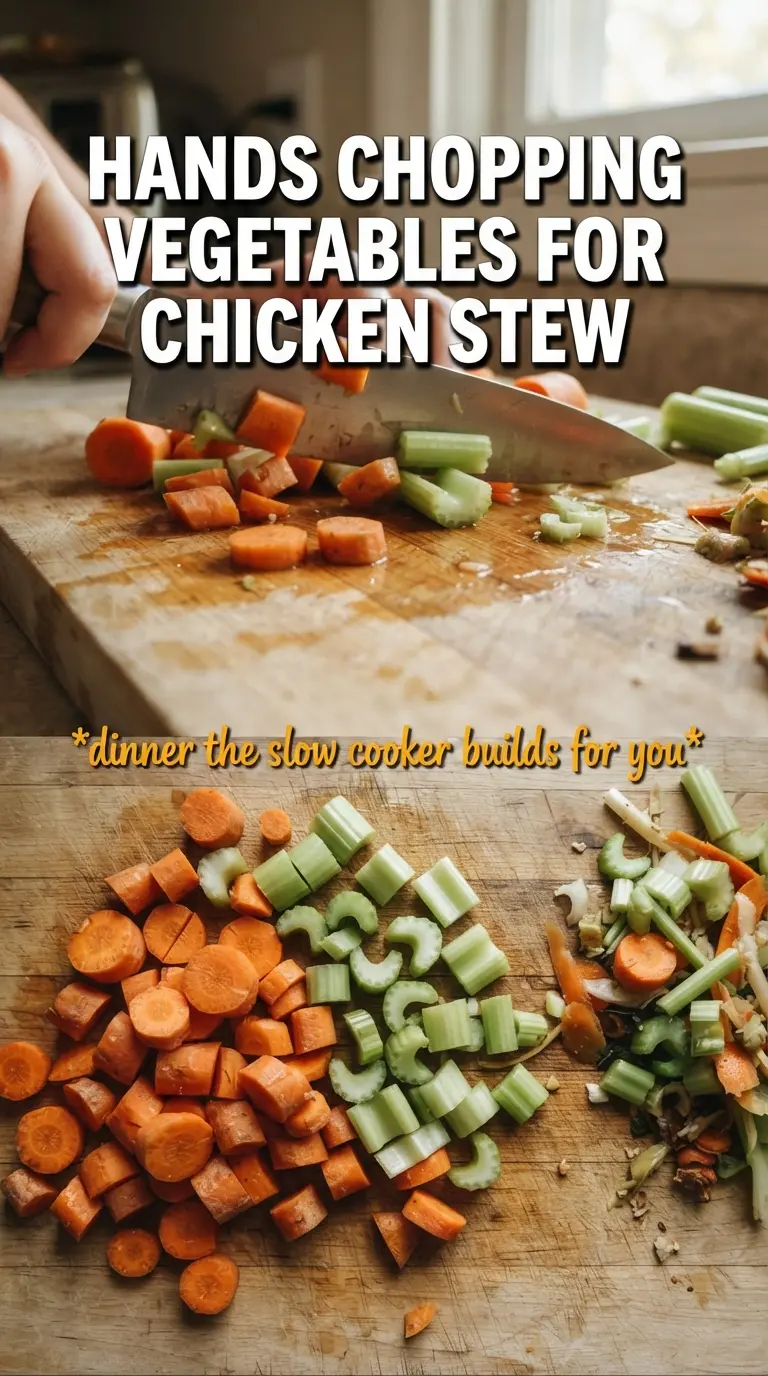
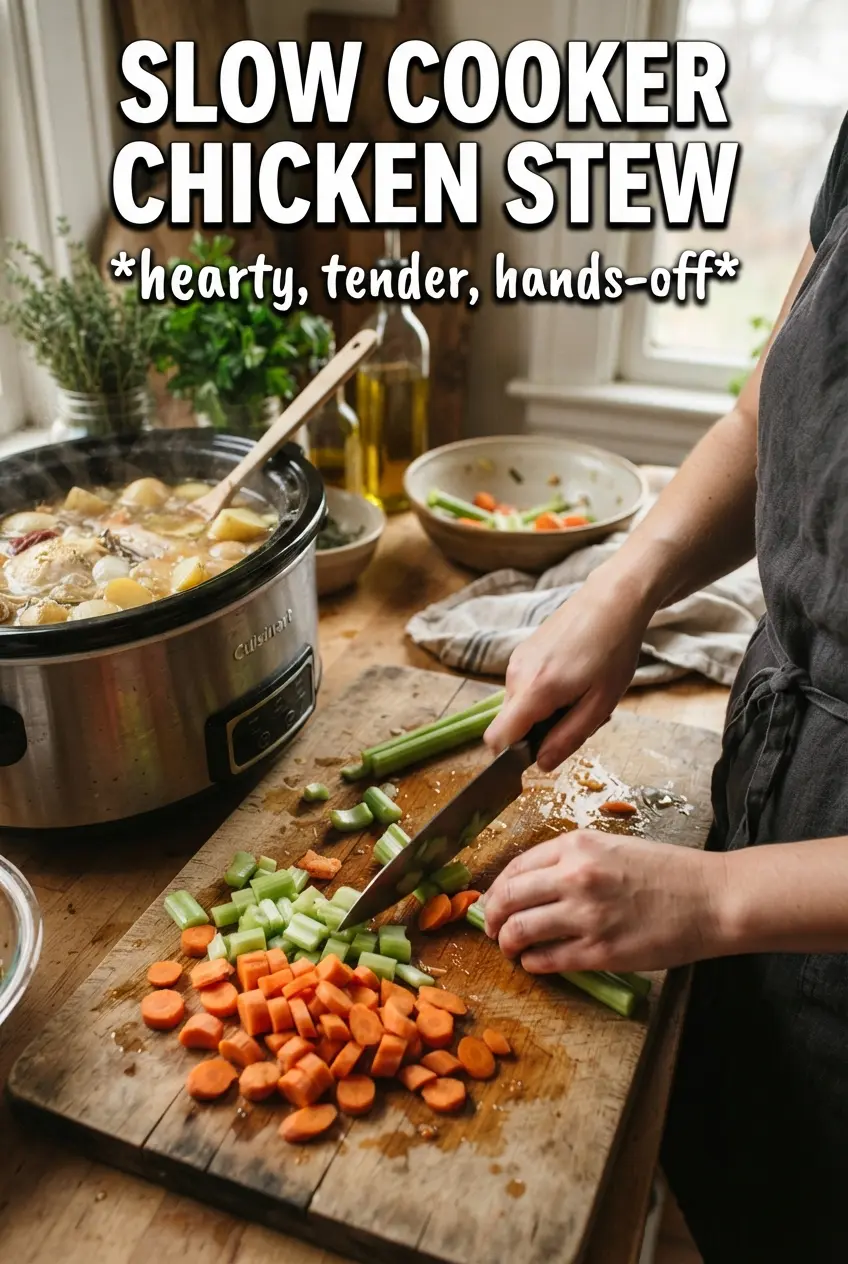
Put the potatoes, carrots, celery, and onion in the bottom of the slow cooker. They sit closest to the heat, so they soften evenly and form the base of the stew instead of floating apart in the broth. If the potato pieces are too small, they’ll break down before the chicken is ready, so keep the halves substantial.
Build the Broth Above the Chicken
Set the chicken thighs on top, then add the garlic, broth, cream of chicken soup, tomato paste, thyme, rosemary, and bay leaf. The chicken doesn’t need to be submerged; it will steam, braise, and flavor the liquid as it cooks. Stir the liquid just enough to loosen the soup and paste without burying the chicken completely.
Cook Until the Thighs Shred Easily
Cook on Low for 6 to 8 hours or on High for 3 to 4 hours. You’re looking for chicken that pulls apart without resistance and vegetables that are tender but still hold their shape. If the potatoes are done early and the chicken isn’t, the stew was likely cooked on too high a setting or the pieces were cut too small.
Thicken at the End, Not at the Start
Remove the chicken, discard the skin and bones, and shred the meat. Pull out the bay leaf, then stir in the cornstarch slurry and cook on High for about 20 minutes. That last burst of heat lets the gravy thicken cleanly; if you add the slurry too soon, it can thin out again over the long cook.
Finish With the Chicken and Seasoning
Return the shredded chicken to the pot and season with salt and pepper. Taste after the chicken goes back in, because it changes the balance of the stew and usually needs a little more salt than you think. A shower of parsley at the end wakes up the whole bowl.
How to Adapt This Slow Cooker Chicken Stew Without Losing the Texture
Gluten-Free Version
Use a certified gluten-free cream of chicken soup and check that your broth is gluten-free. The cornstarch thickener already fits this version, so the texture stays the same as long as the soup base is safe.
Dairy-Free Adjustment
Swap in a dairy-free cream soup substitute or make a quick thickened cashew or oat-based sauce for the same role. The stew will still be rich, but the flavor will be a little less classic and a little more brothy unless you season it generously.
Using Boneless Chicken Thighs
Boneless thighs work fine and shave off a little prep time, but they don’t season the broth quite as deeply. If you use them, check for tenderness a little earlier so they don’t get stringy.
Storage and Reheating
- Refrigerator: Store in an airtight container for up to 4 days. The stew thickens as it chills, so it may look looser when hot and thicker the next day.
- Freezer: It freezes well for up to 3 months. Cool it completely first, then pack it in freezer-safe containers, leaving a little room for expansion.
- Reheating: Reheat gently on the stove or in the microwave with a splash of broth if needed. The common mistake is boiling it hard, which can make the potatoes break down and turn the gravy dull.
Questions I Get Asked About This Slow Cooker Chicken Stew
Slow Cooker Chicken Stew
Ingredients
Equipment
Method
- Add the potatoes, carrots, celery, and onion to the bottom of the slow cooker in an even layer.
- Nestle the chicken thighs on top of the vegetables so they’re mostly covered by the layer beneath.
- Add the garlic, chicken broth, cream of chicken soup, tomato paste, dried thyme, dried rosemary, and bay leaf over the top.
- Cook on Low for 6-8 hours, until the chicken is very tender and easily pulls apart with a fork.
- Or cook on High for 3-4 hours, until the chicken is very tender and easily pulls apart with a fork.
- Remove the chicken from the slow cooker, discard the skin and bones, and shred the meat.
- Remove the bay leaf from the stew and stir the cornstarch slurry into the liquid.
- Cook on High for 20 minutes, stirring once or twice, until the gravy turns thick and coats the vegetables.
- Return the shredded chicken to the stew and stir to combine.
- Season with salt and pepper to taste and garnish with fresh parsley before serving.