Gyoza soup gives you the comfort of dumplings and the clean, savory depth of a ginger broth in one bowl. The dumplings stay tender, the mushrooms soak up the broth, and the bok choy keeps everything light enough that you want a second serving instead of a nap. It lands in that sweet spot where it feels complete, but it still comes together fast enough for a weeknight.
What makes this version work is the order. Garlic and ginger go into the broth first so the base tastes built, not dumped together. The gyoza cook right in the simmering liquid, which keeps the filling juicy and lets the broth pick up a little of that dumpling flavor. Sesame oil goes in at the end because its aroma disappears if you boil it hard for too long.
Below, I’ve added the small details that matter most: when to add each vegetable, how to keep the dumplings from splitting, and the swaps that still give you a good bowl if you need to work with what’s in the fridge.
The broth had that deep ginger-garlic flavor, and the gyoza stayed intact even after simmering. I loved that the bok choy only took a couple minutes and still had a little crunch.
Save this gyoza soup for the nights when you want dumplings, ginger broth, and a fast one-pot dinner that still feels special.
The Trick to Keeping the Gyoza Intact in Soup
Frozen or fresh gyoza can both work here, but the broth has to stay at a gentle simmer, not a hard boil. A rolling boil shakes the dumplings around and can split the wrappers before the filling is cooked through. You want small bubbles moving steadily across the surface, with enough heat to cook the dumplings without battering them.
The other thing that matters is timing. Mushrooms go in before the gyoza because they need a few minutes to soften and season the broth, while bok choy goes in at the very end so it stays bright and tender. If the dumplings sit in the pot too long after they’re cooked, they start to swell and go past their best texture, so serve the soup as soon as everything is done.
What Each Ingredient Is Actually Doing in This Bowl
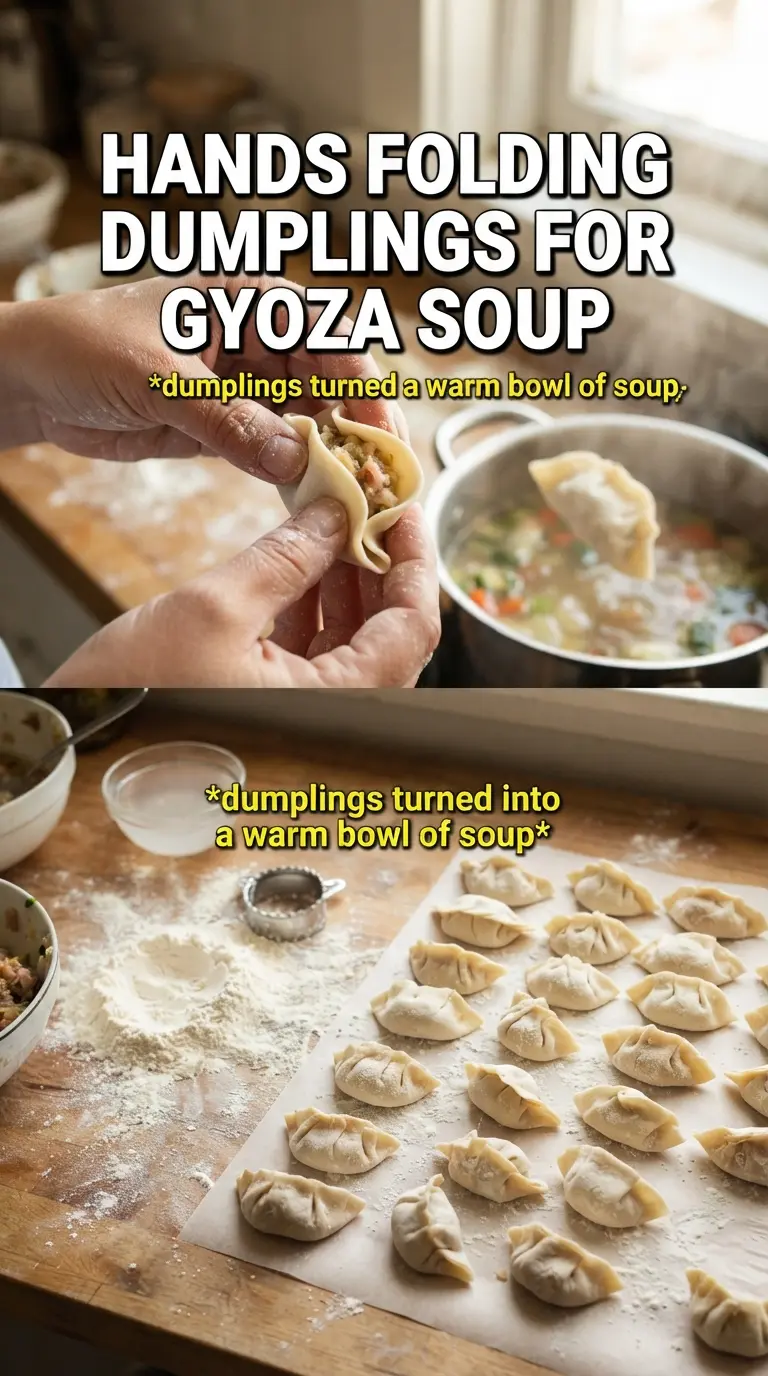
- Gyoza dumplings — These are the anchor of the soup, so use dumplings you’d actually want to eat plain. Frozen dumplings are fine and often the easiest choice; just add them straight from frozen and give them a minute or two longer if needed. If yours are delicate, keep the simmer lower so the wrappers don’t tear.
- Chicken broth — This gives the soup body and carries the ginger, soy, and mirin. A good broth matters here because there isn’t a long cooking time to build flavor from scratch. If you only have low-sodium broth, that’s the better starting point since the soy sauce adds salt later.
- Ginger and garlic — These turn the broth from plain to layered in the first few minutes. Fresh ginger is worth using because dried ginger won’t give the same sharp, warm lift. Grate the ginger finely so it melts into the broth instead of floating around in bits.
- Mirin and rice vinegar — Mirin brings gentle sweetness, while rice vinegar keeps the broth from tasting flat. That balance matters because dumplings and broth can read heavy without a little acid. If you need a substitute for mirin, use a pinch of sugar with a splash of water, but the flavor will be less rounded.
- Bok choy and shiitake mushrooms — These add texture and make the bowl feel like a full meal. Shiitakes bring a deeper umami note than button mushrooms, but sliced cremini will still work. Bok choy should be chopped into manageable pieces so the stems cook through at the same time as the leaves.
- Sesame oil, chili oil, and sesame seeds — Sesame oil finishes the broth with aroma, not just flavor, so stir it in after the heat is off or nearly off. Chili oil is the easiest way to add heat without changing the base recipe. Sesame seeds give a little crunch and make the top of the bowl feel finished.
Building the Broth Before the Dumplings Go In
Starting with the Aromatics
Bring the broth to a steady simmer, then add the garlic, ginger, soy sauce, mirin, and rice vinegar. This gives the soup a chance to taste like a broth, not seasoned water. If you add the dumplings first, the pot cools down and the aromatics don’t have a chance to bloom into the liquid.
Softening the Mushrooms
Let the shiitakes simmer for 3 to 4 minutes before the dumplings go in. You’ll see them relax, darken, and release a little of their flavor into the broth. If the mushroom slices are thick, give them an extra minute so they’re tender by the time you serve the soup.
Cooking the Gyoza Gently
Add the dumplings directly to the simmering broth and cook them according to the package directions, usually 5 to 7 minutes. Stir once or twice with a light hand so they don’t stick to the bottom, but don’t swirl the pot aggressively. If the wrappers start looking ragged, the heat is too high.
Finishing with Greens and Aroma
Add the bok choy for the last 2 to 3 minutes, just until the stems soften and the leaves wilt. Turn off the heat, stir in the sesame oil, then taste for salt. This is the point where the broth should taste bright, savory, and clean, with the dumplings staying tender instead of blown out.
How to Adapt This Gyoza Soup for Different Pantry Situations
Make it vegetarian
Use vegetable broth and swap in vegetable gyoza. You’ll still get a full bowl, but the broth will taste a little lighter, so keep the soy sauce and ginger bold. A few extra shiitakes help replace the savory depth you’d normally get from chicken broth.
Make it gluten-free
Use gluten-free dumplings if you can find them, and replace the soy sauce with tamari. The broth itself is easy to adapt, but the dumpling wrapper is the part that usually contains wheat. Check the package on the gyoza, because the filling and wrapper can vary even when the broth is safe.
Swap the vegetables you have
Baby spinach, napa cabbage, or sliced snow peas all work in place of bok choy. Add quick-cooking greens at the very end, and give firmer vegetables a minute or two earlier in the simmer. The goal is to keep the soup light and crisp, not turn it into a long-cooked stew.
Storage and Reheating
- Refrigerator: Store up to 3 days. The dumplings soften as they sit, so the texture is best the day you make it.
- Freezer: The finished soup doesn’t freeze well because the dumpling wrappers turn soft and gummy. If you want to get ahead, freeze the broth alone and add fresh dumplings and vegetables later.
- Reheating: Reheat gently on the stove over low heat until just hot. A hard boil can split the dumplings and overcook the greens, so keep it to a bare simmer.
Questions I Get Asked About This Gyoza Soup
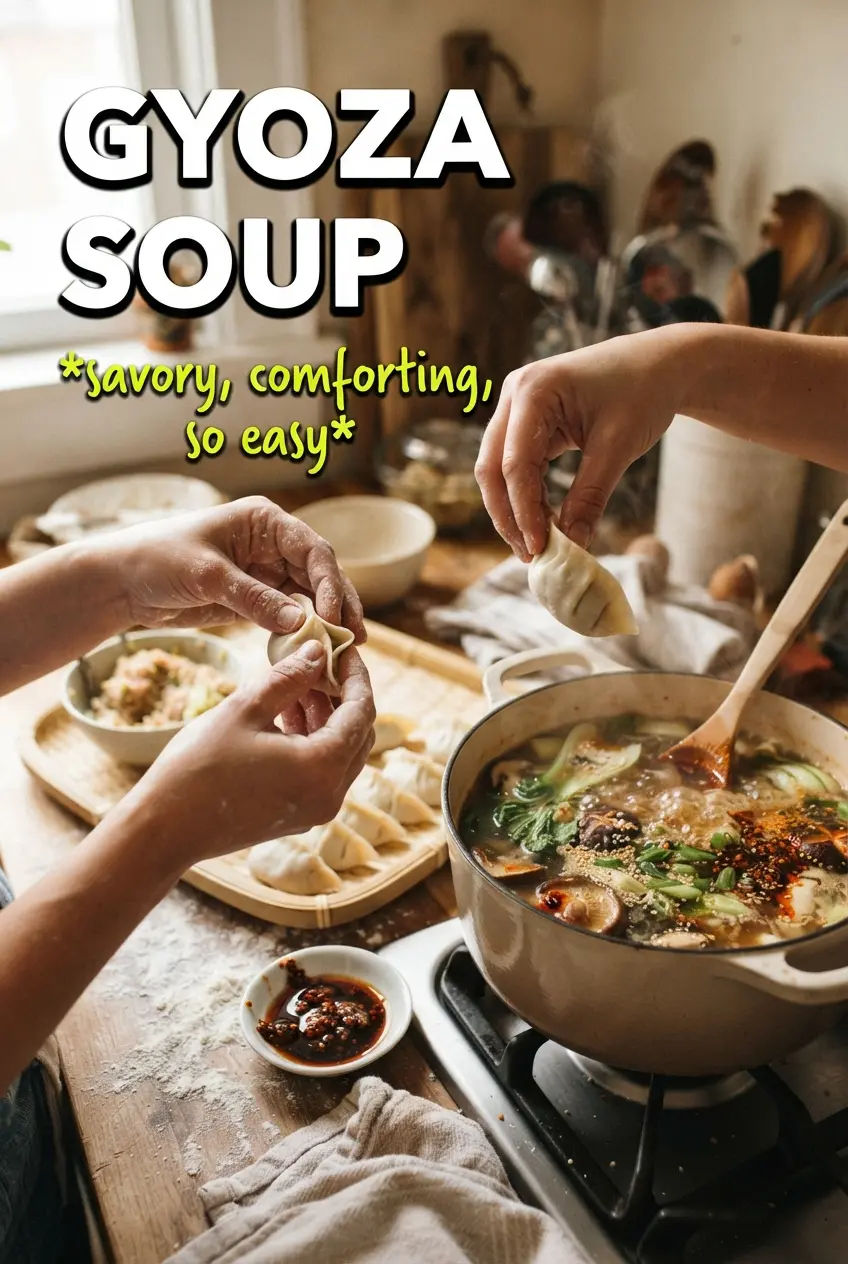
Gyoza Soup
Ingredients
Equipment
Method
- Bring the chicken broth to a simmer in a large pot, then add the garlic, grated ginger, soy sauce, mirin, and rice vinegar. Keep it at a steady simmer so the flavors bloom in the broth.
- Simmer for 5 minutes, then add the shiitake mushrooms and cook for 3-4 minutes until softened and fragrant. You should see light bubbling across the surface and the mushrooms turning tender.
- Add the gyoza/potsticker dumplings directly to the simmering broth and cook according to package directions, usually 5-7 minutes, until cooked through. Watch for dumplings to float and the filling to be fully heated.
- Add the chopped bok choy and cook for 2-3 minutes until wilted. The stems should still hold a little structure while leaves turn vibrant and tender.
- Stir in the sesame oil, taste, and season with salt to taste. The broth should look glossy and smell nutty.
- Ladle the soup into bowls and top with sliced green onions, sesame seeds, and chili oil. Finish with a visible drizzle for a contrasting heat and aroma.