Juicy chicken with a bright citrus bite and a smoky chili finish is the kind of marinade that earns a permanent spot in the rotation. It leaves the meat seasoned all the way through, not just on the surface, and the orange-lime combination gives the chicken enough lift to taste fresh even after a hard sear on the grill.
The trick here is balance. Lime brings sharpness, orange brings sweetness, and olive oil carries the spices so they cling to the chicken instead of washing off. Garlic, cumin, paprika, and oregano build that familiar Mexican-style base without burying the meat under one heavy note. Give it enough time to work, but don’t let it sit forever in the citrus or the texture can turn soft on the outside before it cooks.
Below, I’m walking through the ingredient choices, the best marinating window, and the small grill timing details that keep the chicken juicy instead of dry. If you’ve ever had a marinade taste great in the bowl but disappear after cooking, this version fixes that.
The chicken came off the grill juicy with a clean citrus flavor, and the spice mix stuck to every piece instead of falling into the bag. I marinated it for about 4 hours and it was perfect for tacos the next day.
Save this Mexican Chicken Marinade for juicy taco chicken with lime, orange, and smoky spices.
The Marinade Needs Acid, But Not Too Much
Chicken marinades fail most often when the acid is pushed too hard for too long. Lime juice gives this recipe its brightness and helps season the meat, but it can also start tightening the surface if the chicken sits in it all day. That’s why the orange juice matters too: it softens the sharpness and keeps the flavor rounded, while the olive oil slows the citrus down enough to keep the chicken from turning stringy.
The other mistake is using a mix that tastes bold in the bowl but turns flat once it hits the grill. Garlic, cumin, paprika, and oregano need the salt to wake them up, and the fat in the oil helps them coat the chicken evenly. If the marinade tastes a little too punchy before it goes on the meat, that’s a good sign — it should season the chicken, not taste like salad dressing.
What Each Ingredient Is Actually Doing In This Dish
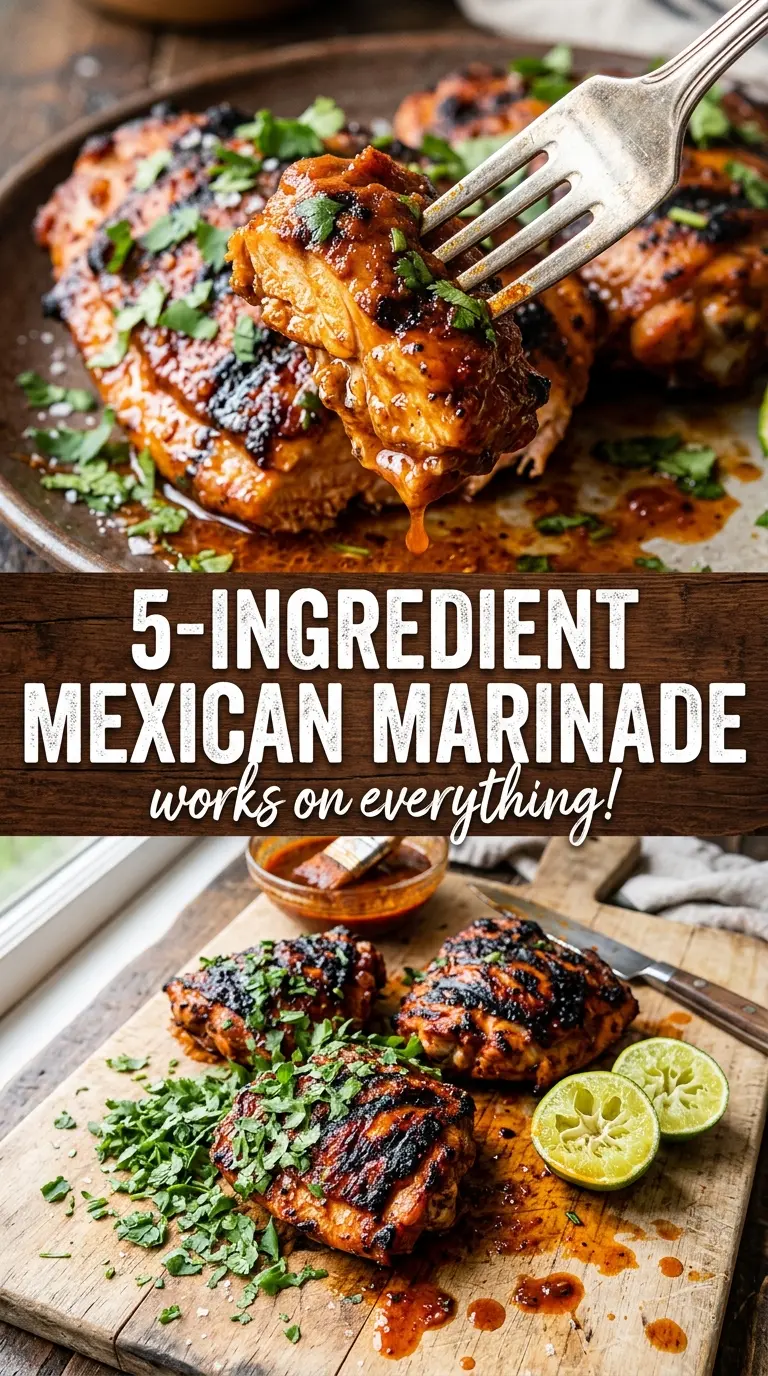
- Chicken breasts, thighs, or drumsticks — Breasts cook fastest and stay lean, thighs give you the most forgiveness and stay juicier on the grill, and drumsticks bring the most flavor if you don’t mind a longer cook. If you’re using breasts, pound them to an even thickness so the thinner ends don’t dry out before the center is done.
- Lime juice — This is the sharp, bright backbone of the marinade. Fresh lime juice tastes cleaner than bottled juice here, and that matters because it’s one of the main flavors you’ll taste after grilling.
- Orange juice — Orange adds sweetness and helps the marinade cling in a way lime alone can’t. Fresh juice is nice, but a good no-pulp bottled orange juice works fine if that’s what you have.
- Olive oil — Oil carries the spices and keeps the marinade from feeling thin. It also helps the chicken brown better on the grill instead of steaming in its own surface moisture.
- Garlic, chili powder, cumin, paprika, oregano — These build the flavor base. Chili powder brings warmth, cumin adds depth, paprika gives color and a little sweetness, and oregano keeps the whole thing tasting grounded and savory.
From Whisked Marinade to Grilled Chicken With Real Char
Mixing the Marinade Base
Whisk the lime juice, orange juice, olive oil, garlic, and spices until the mixture looks evenly speckled and the oil is no longer sitting in a separate layer. That’s the point where the seasoning can coat the chicken instead of pooling at the bottom of the bag. If you taste it, it should be salty and bold with a citrus bite.
Marinating Without Overdoing It
Add the chicken to a zip-top bag or shallow dish and turn it a few times so every piece gets coated. Two hours gives the flavor time to soak in, and up to eight hours is fine for thicker cuts, but don’t leave it much longer if there’s a lot of lime juice in the mix. If the surface starts to look a little pale and soft, it’s been in too long.
Grilling to Juicy Doneness
Preheat the grill to medium-high and let the grates get hot before the chicken goes on. That gives you better browning and helps the meat release cleanly instead of sticking. Grill until the thickest part reaches 165°F, which is usually 6 to 8 minutes per side for breasts, a little longer for thighs and drumsticks depending on size.
Resting Before You Slice
Take the chicken off the grill and let it rest for 5 minutes before cutting. That short pause keeps the juices in the meat instead of spilling onto the cutting board. Finish with fresh cilantro and lime wedges, and slice only when the outside has settled and the center stays moist.
How to Change the Marinade Without Losing the Point
Make it dairy-free and gluten-free
It already is both, as written. That makes it easy to serve with tacos, rice bowls, or roasted vegetables without changing the marinade at all. Just check your chili powder blend if you’re using a store brand, since some blends add fillers you may want to avoid.
Use thighs for the juiciest result
Boneless, skinless thighs handle the marinade best and stay tender even if the grill runs hot. They also carry the citrus-spice flavor more deeply than breasts, which makes them my first choice for tacos. Expect a slightly richer bite and a little more forgiveness at the grill.
Turn it into a bakeable weeknight dinner
If you’re not grilling, bake the marinated chicken at 400°F until it reaches 165°F in the center. You’ll lose a little of the smoky char, but the citrus and spices still come through clearly. A quick broil at the end helps bring back some color on the surface.
Use it for taco night
Slice the cooked chicken and pile it into warm tortillas with cilantro, onion, and a squeeze of lime. The marinade is built for that use, so the flavor stays bright even after you add toppings. If you want more heat, add sliced jalapeños after cooking instead of increasing the chili powder in the marinade.
Storage and Reheating
- Refrigerator: Store cooked chicken in an airtight container for up to 4 days. It keeps its flavor well, though breasts will dry out faster than thighs once reheated.
- Freezer: Freeze the cooked chicken for up to 2 months. Slice it first or freeze it whole in a flat layer so it thaws evenly.
- Reheating: Reheat gently in a covered skillet with a splash of water or broth over low heat, or warm it in the oven at 300°F. High heat is the mistake that turns grilled chicken leathery.
Answers to the Questions Worth Asking

Mexican Chicken Marinade
Ingredients
Equipment
Method
- Whisk together lime juice, orange juice, olive oil, garlic, chili powder, cumin, paprika, oregano, salt, and pepper until evenly combined and fragrant.
- Place the chicken in a large zip-top bag and pour the marinade over the chicken so it’s well coated.
- Marinate in the refrigerator for 2-8 hours, turning the bag occasionally so the spices cling evenly to every surface.
- Preheat the grill to medium-high heat so it’s hot and ready for even charring.
- Grill the chicken until the internal temperature reaches 165°F, about 6-8 minutes per side for breasts, flipping halfway through for grill marks.
- Let the chicken rest for 5 minutes so juices redistribute, then serve topped with fresh cilantro and lime wedges.