Juicy BBQ chicken is all about keeping the meat tender while the sauce gets sticky, smoky, and caramelized on the outside. The best versions don’t rush the grill. They give the chicken time over indirect heat first, then finish with sauce at the end so it clings instead of burning.
That little splash of apple cider vinegar matters more than it looks like it should. It loosens the sauce just enough for brushing and adds a sharp edge that keeps the sweetness in check. Smoked paprika gives the chicken a deeper grillhouse taste even if you’re cooking on a basic backyard grill. The result is chicken with real barbecue flavor all the way through, not just a sauce on top.
Below you’ll find the timing that keeps the meat juicy, plus the small details that help the sauce turn glossy instead of scorched. If you’ve had BBQ chicken dry out on the grill before, this method fixes the part that usually goes wrong.
The chicken stayed juicy all the way through, and brushing the sauce only in the last few minutes kept it from burning. The smoked paprika gave it that backyard BBQ taste even before the glaze went on.
Save this BBQ chicken method for juicy grilled chicken with a sticky, smoky glaze that finishes right on the fire.
The Part That Keeps BBQ Chicken Juicy Instead of Drying Out
The biggest mistake with BBQ chicken is putting sauce on too early and cooking over direct heat the whole time. Sugar in the sauce burns before the chicken is done, and by the time the center reaches temperature, the outside is bitter and blackened. Indirect heat solves that problem by cooking the meat gently first, so the surface has time to dry just enough for the sauce to stick.
Chicken pieces also matter here. Thighs and legs forgive a little extra grill time, while breasts need closer attention because they dry out faster. If you’re mixing pieces, start checking the breasts early and pull them the second they hit 165°F. The sauce should go on only when the chicken is nearly cooked through, when it can caramelize without turning harsh.
What the Vinegar and Smoked Paprika Are Doing in the Sauce
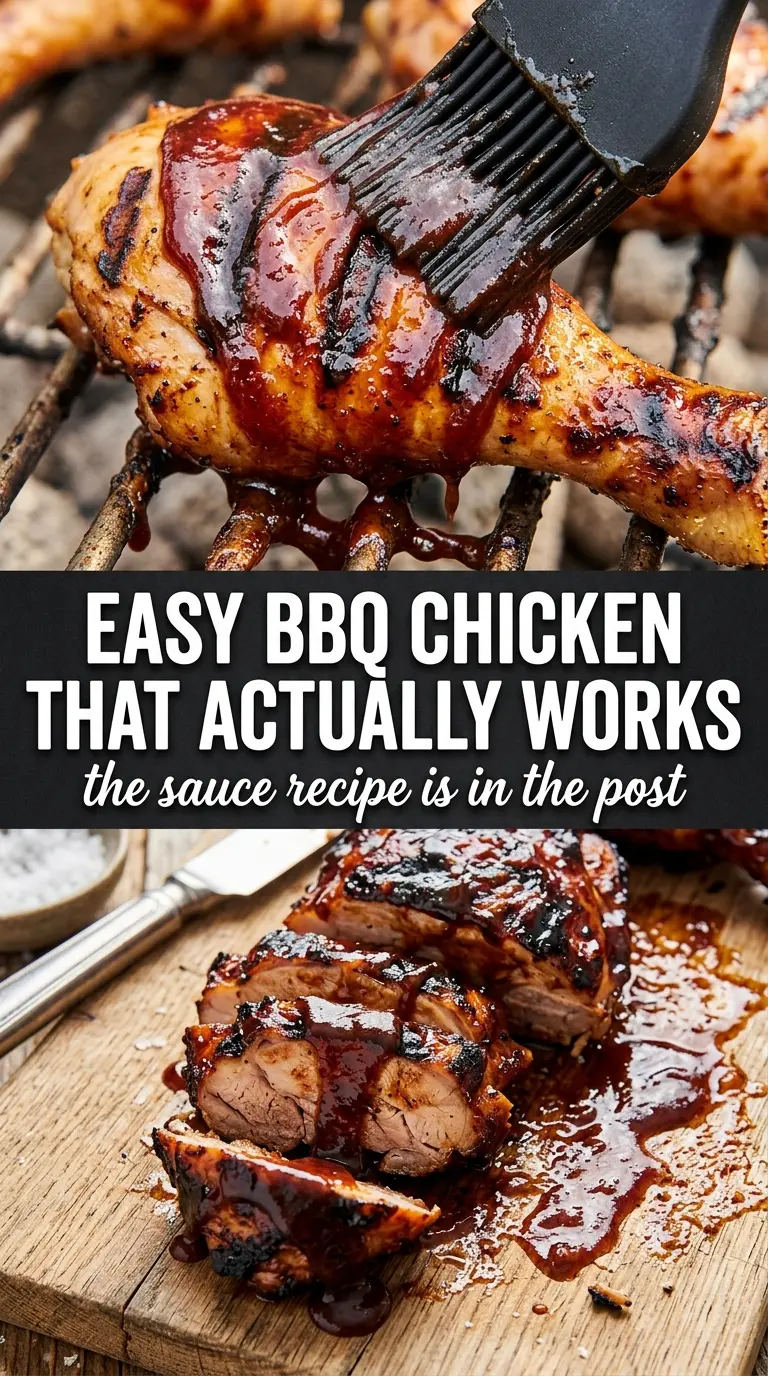
- BBQ sauce — Use a sauce you already like, because it’s doing most of the flavor work here. A thicker sauce will cling better, while a thinner one will brush on more easily but may need an extra minute or two to set.
- Apple cider vinegar — This cuts the sweetness and keeps the glaze from tasting flat. You don’t need much, but skipping it makes the sauce heavier and less balanced.
- Smoked paprika — This adds that faint woodsmoke note even before the chicken hits the grill. If your grill doesn’t produce much smoke, this small addition makes a noticeable difference.
- Chicken pieces — Bone-in pieces stay juicier than boneless cuts on the grill, especially if you’re cooking over indirect heat. If you use all breasts, watch the temperature closely and pull them as soon as they’re done.
- Olive oil — This helps the seasoning coat the chicken and reduces sticking on the grill grates. It won’t save overcooked chicken, but it does help the surface brown evenly.
Building the Grill Time in the Right Order
Drying and Seasoning the Chicken
Pat the chicken dry first. Wet skin or wet surfaces steam on the grill, which works against browning and makes the seasoning slide off. A thin coat of olive oil helps the salt, pepper, and paprika stick, and it gives the chicken a better chance of developing a little color before the sauce goes on.
Keeping the Sauce Separate Until the End
Mix the BBQ sauce with vinegar and smoked paprika before the chicken goes on the grill, but don’t brush it on yet. That lets the flavors settle and keeps you from scrambling once the chicken is already cooking. If the sauce looks too thick to brush cleanly, a teaspoon or two of water can loosen it, but keep it thick enough to glaze.
Grilling Over Indirect Heat First
Preheat the grill to medium heat and set the chicken over indirect heat. Turn it every 10 minutes so the pieces cook evenly and don’t dry out on one side. The chicken should look opaque and start to firm up before you ever think about basting. If the outside is browning too fast, move it farther from the flame — that’s a sign the grill is running hotter than you want.
Finishing with Sauce and Direct Heat
During the last 10 minutes, brush on a generous layer of sauce and move the chicken over direct heat. Keep turning and basting until the glaze looks shiny and tacky, not wet. The sauce should caramelize in spots, but if it starts to darken too fast, pull the chicken back to indirect heat for a minute and let the fire calm down.
Resting Before Serving
Let the chicken rest for 5 minutes after it comes off the grill. That short pause keeps the juices from running out the moment you cut into it. If you slice too early, the juices pool on the plate and the meat feels drier than it should, even when it’s cooked perfectly.
How to Adapt This BBQ Chicken for Different Grills and Diet Needs
Oven Finish for Rainy-Day Cooking
If the grill isn’t cooperating, cook the chicken in a 400°F oven until nearly done, then broil it for the last few minutes with sauce brushed on. You’ll lose a little grill smoke, but the glaze still caramelizes well and the chicken stays juicy if you don’t overbroil it.
Use Boneless Chicken for Faster Cooking
Boneless thighs or breasts work if you need a shorter cook time, but they need less heat and more attention. They’ll cook faster and can dry out quickly, so start checking early and keep the sauce for the final minutes only.
Lower-Sugar or Gluten-Free Sauce Swap
Use a lower-sugar BBQ sauce if you want a lighter glaze, or choose a gluten-free sauce if that matters for your table. The method stays the same, but thinner sauces may take a little longer to tack up, and sweeter sauces burn faster over direct heat.
Dairy-Free, Naturally
This recipe already fits a dairy-free table as written, which is one less thing to adjust. Just check your BBQ sauce label, since some brands sneak in butter flavor or other dairy-based ingredients.
Storage and Reheating
- Refrigerator: Store leftovers in an airtight container for up to 4 days. The sauce will settle into the chicken a bit more, which usually makes the flavor even better the next day.
- Freezer: Freeze cooked chicken pieces for up to 2 months. Wrap them tightly or use a freezer-safe container, and expect the sauce to lose a little shine after thawing.
- Reheating: Reheat covered in a 325°F oven until warmed through, or use low power in the microwave in short bursts. High heat dries the chicken fast and can make the sauce separate or scorch on the edges.
Answers to the Questions Worth Asking
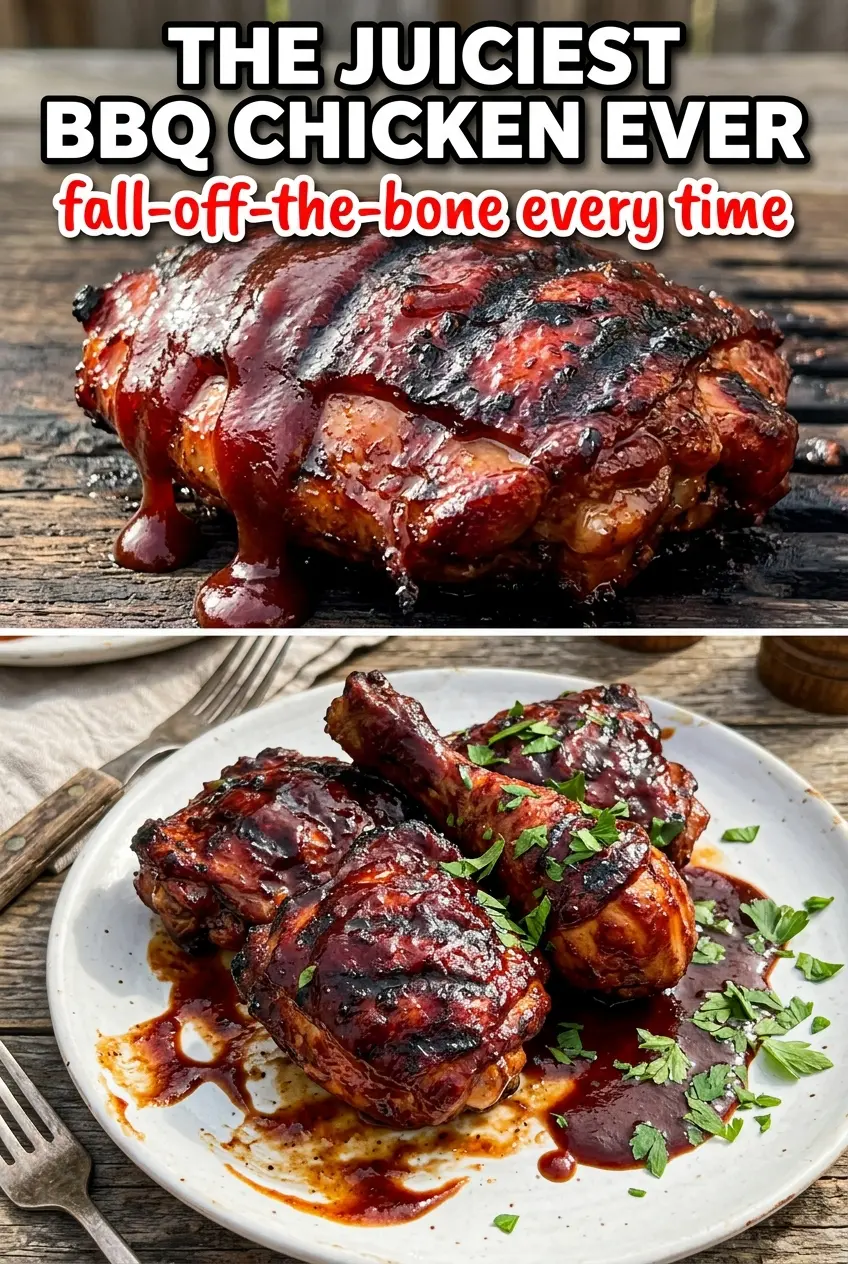
The Best Easy Juicy BBQ Chicken
Ingredients
Equipment
Method
- Pat chicken dry, then rub with olive oil, salt, and black pepper so it’s evenly coated and ready to grill.
- Mix BBQ sauce with apple cider vinegar and smoked paprika until smooth and the glaze looks evenly tinted.
- Preheat the grill to medium heat, 350-400°F, so it’s hot enough to cook through without burning.
- Grill chicken over indirect heat for 30-35 minutes, turning every 10 minutes so the pieces cook evenly and stay juicy.
- During the last 10 minutes, brush chicken generously with BBQ sauce and move it to direct heat so the glaze can set.
- Continue grilling and basting until internal temperature reaches 165°F and the sauce is caramelized, with glossy dark edges visible.
- Let the chicken rest for 5 minutes before serving so juices redistribute and the surface stays sticky-glazed.