Brown stew chicken lands with deep mahogany gravy, tender chicken that pulls cleanly from the bone, and sweet peppers that melt into the sauce without disappearing. The best part is the contrast: a dark, savory crust on the chicken and a stew that tastes layered, not heavy. It’s the kind of dish that earns repeat requests because it feels like it cooked longer than it actually did.
The flavor starts in the marinade, where browning sauce, thyme, garlic, and seasoning work into the meat before anything hits the pan. That rest matters. It gives the chicken a head start so the finished stew tastes seasoned all the way through instead of just sauced at the end. The sugar in the skillet is another key move. It builds the color and a little bitterness that deepens the gravy, but it needs to be watched closely so it doesn’t burn before the chicken goes in.
Below, I’ll walk through the part that matters most: getting the chicken deeply browned without scorching the caramel, and building a gravy that clings instead of turning thin and watery. There’s also a note on how to keep the peppers and onions soft but still distinct, which makes the whole pot taste cleaner and more balanced.
The chicken browned beautifully and the gravy turned that deep color I always get at my favorite Jamaican spot. I simmered it the full 40 minutes and the thighs were falling off the bone without drying out.
Save this Brown Stew Chicken for the nights when you want deep Jamaican gravy, tender thighs, and rice that can soak up every last spoonful.
The Caramel Stage Is What Gives the Gravy Its Depth
Brown stew chicken can taste flat if the color only comes from broth and seasoning. The real depth starts when the sugar darkens in the pan and the marinated chicken picks up that base. That step gives the gravy its signature color and a faint bitterness that keeps the sauce from tasting one-note.
The part people usually miss is timing. The sugar should turn a deep amber, not black, before the chicken goes in. If it burns, the whole pot tastes harsh. If it stays too pale, the sauce never gets that rich Jamaican stew look or the rounded flavor that makes the dish stand out.
What Each Ingredient Is Actually Doing in This Stew
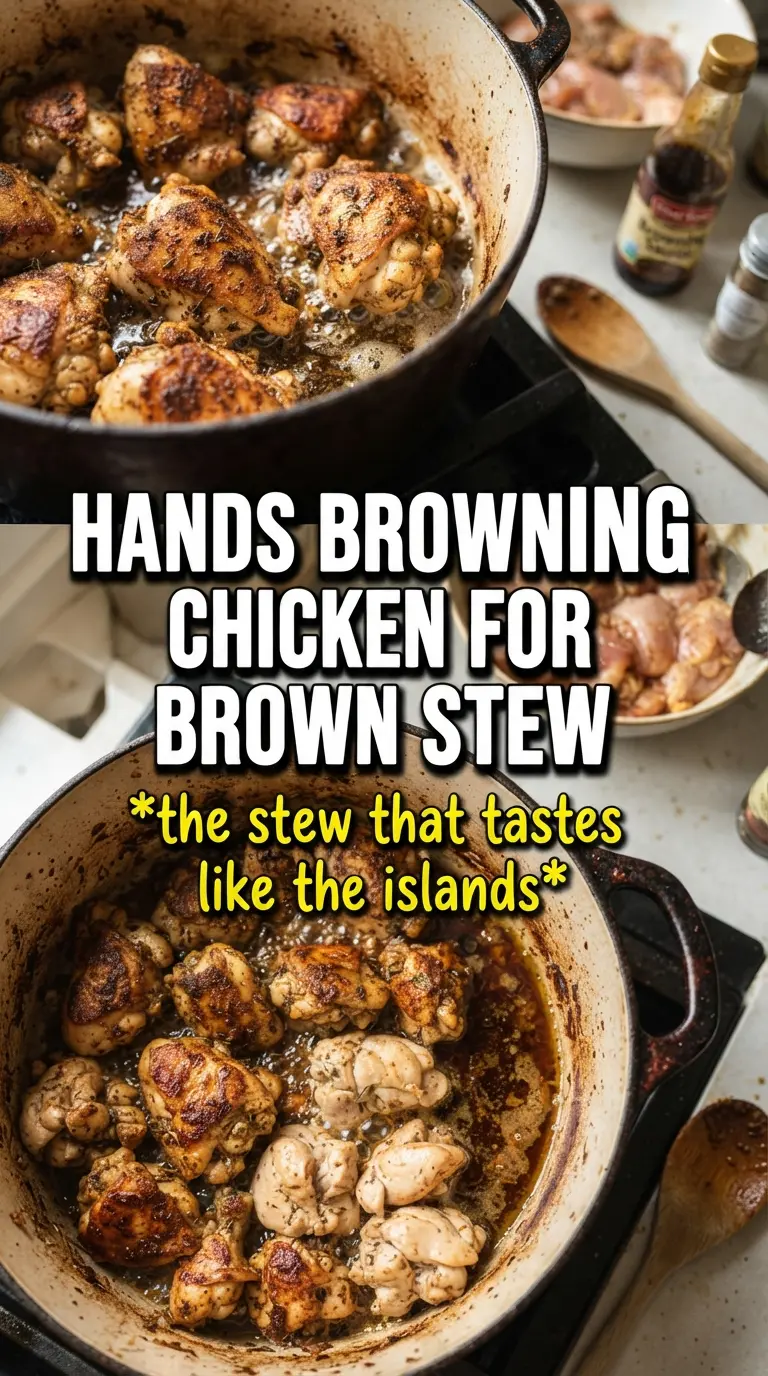
- Chicken thighs and drumsticks — Bone-in pieces hold up best in a long simmer and give the gravy more body than boneless chicken ever will. Thighs bring richness; drumsticks add variety and stay juicy even after 40 minutes on the stove.
- Browning sauce — This is doing more than coloring the chicken. It adds that dark, savory edge that makes the stew taste like it’s been building flavor for hours. There isn’t a perfect substitute if you want the same color and depth.
- Sugar — It’s not there to make the dish sweet. It creates the caramel base that the chicken sears in, which is part of what gives the gravy its sheen and depth. Watch it closely once it starts changing color, because it goes from amber to bitter fast.
- Bell peppers, onion, garlic, and green onions — These soften into the stew and give it a fresh, layered finish. Slice them fairly thick so they don’t vanish during simmering. If you cut them too thin, they break down before the chicken is tender.
- Scotch bonnet or habanero — Optional, but it brings the heat that keeps the stew lively. Mince it fine if you want the spice spread through the pot; leave it out if you want the gravy rich and mild.
- Chicken broth — This loosens the pan fond and becomes the braising liquid. Use a broth you’d actually sip, because a thin or overly salty one shows up in the finished sauce.
How to Build the Stew So the Chicken Stays Tender and the Gravy Stays Dark
Let the Chicken Marinate Long Enough to Matter
Mix the chicken with the browning sauce, all-purpose seasoning, garlic powder, onion powder, thyme, salt, and pepper, then let it sit for at least 2 hours. Overnight is even better if you’ve got the time. The meat should look seasoned on the outside and smell earthy from the thyme before it ever hits the pan. If you rush this step, the chicken still cooks through, but the flavor sits mostly on the surface.
Caramelize the Sugar Carefully
Heat the oil first, then add the sugar and watch it melt into a deep golden caramel. Stir or swirl gently so it colors evenly, and don’t walk away from the stove. The moment it turns amber and smells toasty, the chicken goes in. If the sugar goes too dark before the chicken arrives, it will taste burnt instead of rich.
Sear Until the Outside Turns Dark and Glossy
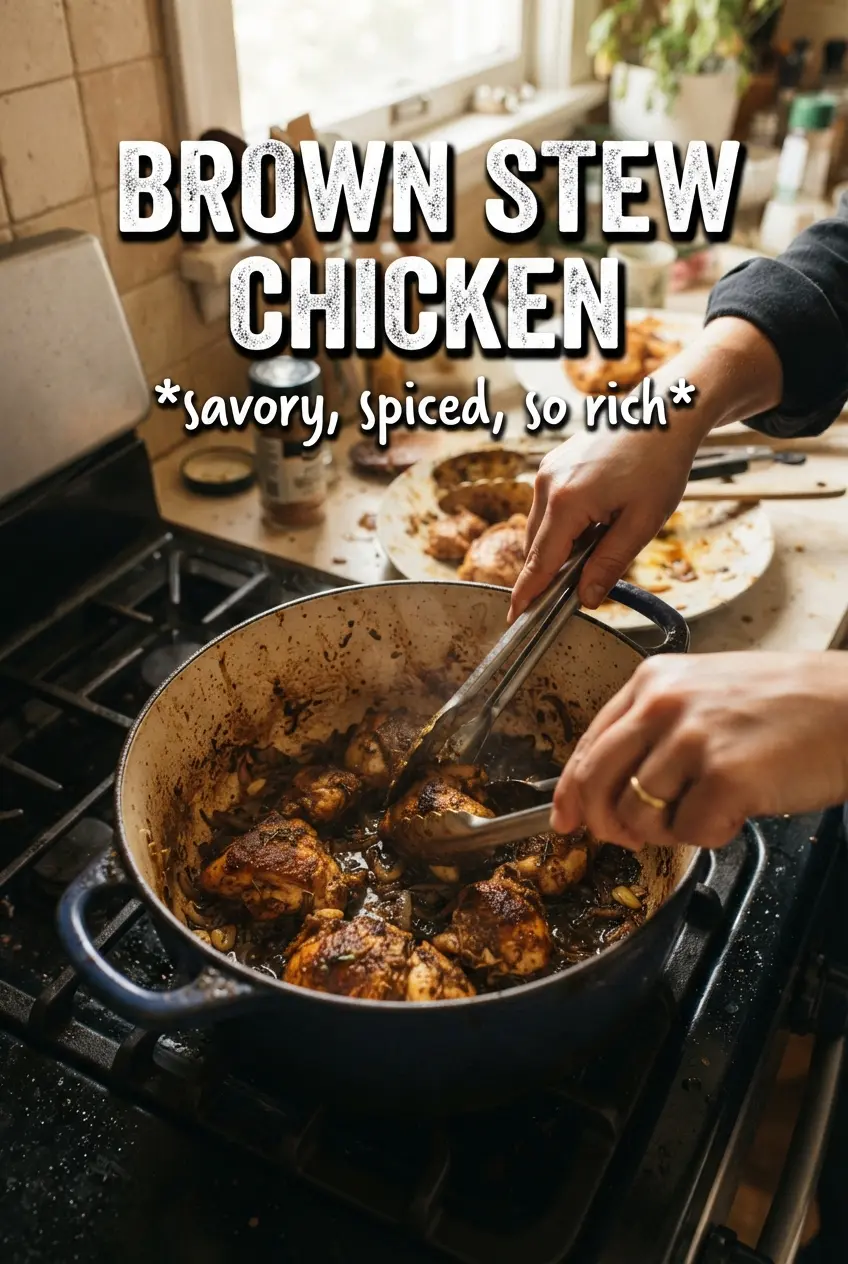
Add the marinated chicken to the caramel oil and brown it on all sides. It won’t be a dry crust like roasted chicken; it should look lacquered and deeply colored. The pan may splatter, so keep the heat at a steady medium rather than cranking it up. If the pieces crowd too closely, they steam and pale instead of taking on color, so work in batches if your pot is tight.
Simmer Until the Gravy Clings to the Spoon
After the vegetables cook down for a few minutes, return the chicken to the pot with the broth and bring everything to a boil. Drop the heat, cover the pot, and let it simmer until the chicken is fall-apart tender and the sauce thickens. The gravy should coat the back of a spoon and pool slowly, not run like stock. If it looks thin near the end, take the lid off for the last few minutes so the sauce reduces without overcooking the chicken.
How to Adapt Brown Stew Chicken Without Losing the Soul of It
Make it milder without flattening the flavor
Leave out the scotch bonnet or habanero and keep the rest of the seasoning the same. You’ll lose the heat, but the stew still tastes complete because the browning sauce, thyme, garlic, and caramelized sugar are doing the heavy lifting.
Use chicken breast only if you shorten the simmer
You can use boneless chicken breast, but it won’t stay juicy through a long braise. Brown it well, then simmer just until cooked through and tender, usually much less time than thighs. The stew will be lighter and leaner, but it won’t have the same rich, forgiving texture.
Make it gluten-free with a seasoning check
The stew itself is naturally close to gluten-free, but the all-purpose seasoning and browning sauce need a label check. Use certified gluten-free versions if needed, and keep the rest of the method the same. The texture and depth stay intact.
Storage and Reheating
- Refrigerator: Store leftovers for up to 4 days. The gravy thickens as it chills, and the flavor gets even deeper.
- Freezer: It freezes well for up to 2 months. Cool it completely first and freeze with plenty of sauce so the chicken doesn’t dry out when reheated.
- Reheating: Warm it gently on the stove over low heat with a splash of broth or water. High heat can tighten the chicken and make the sauce taste reduced too far before the center is hot.
Questions I Get Asked About This Recipe
Brown Stew Chicken
Ingredients
Equipment
Method
- Combine browning sauce, all-purpose seasoning, garlic powder, onion powder, dried thyme, salt, and pepper, then coat the chicken thoroughly. Refrigerate for at least 2 hours or overnight to marinate.
- Heat vegetable oil in a large skillet or Dutch oven over medium heat. Add sugar and cook until it caramelizes to a golden brown color.
- Add the marinated chicken pieces to the caramel oil and cook until deeply golden on all sides. Remove chicken from the pan and keep it aside.
- In the same pan, sauté onion, bell peppers, garlic, green onions, and scotch bonnet for 4 minutes. Stir until softened and fragrant, but not browned.
- Return chicken to the pan, add chicken broth, and bring everything to a boil. Scrape up any browned bits from the bottom to enrich the gravy.
- Reduce heat to a gentle simmer, cover, and simmer for 35-40 minutes. Cook until chicken is fall-apart tender and the gravy is thick.
- Plate the brown stew chicken and garnish with fresh thyme. Serve with rice alongside and spoon the thick mahogany gravy over the chicken.