Homestyle chicken noodle soup earns its place in the rotation because the broth tastes like it simmered all afternoon, even when you start with a plain pot of water and a whole chicken. The noodles stay tender without turning mushy, the chicken stays generous and shreddable, and the vegetables keep enough texture to feel like a real bowl of soup instead of a soft blur.
The difference here is in the order. The first simmer builds a clean, deeply chicken-forward broth from the bones, aromatics, peppercorns, and bay leaves before any noodles go in. That separation matters: if you cook everything together from the start, the noodles steal the broth and the vegetables collapse before the soup ever gets its final finish.
Below, I’ve added the small details that matter most — when to strain, when to add the noodles, and how to keep the dill bright at the end. Those few choices are what turn a decent chicken soup into the kind people ask for again.
The broth came out rich and clean, and the egg noodles stayed firm even after I went back for seconds. My kids picked out the chicken and asked for the soup again the next night.
Save this homestyle chicken noodle soup for the nights when you want a clear broth, tender chicken, and wide noodles that hold their shape.
The Broth Needs Its First Simmer Before Anything Else
The broth is where this soup wins or loses. The whole chicken, whole carrots, whole celery, onion, garlic, bay leaves, and peppercorns need that slow simmer on their own so the liquid can pick up body without getting cloudy or overloaded with tiny soft vegetables. If you rush straight to the noodles, you end up with a starchier broth and less of that clean, homemade chicken-soup taste.
Skimming the foam in the first few minutes matters more than people think. That foam isn’t a sign that anything went wrong; it’s just protein rising to the top. Pull it off, then keep the pot at a steady simmer rather than a rolling boil, because hard boiling makes the broth murky and can tighten the chicken before it’s had time to turn tender.
- Whole chicken or bone-in pieces — Bone-in meat gives the broth its depth. A whole chicken makes the cleanest, roundest flavor, but bone-in pieces work well if that’s what you have.
- Whole carrots, celery, onion, garlic — Leaving some vegetables whole in the broth lets them give up flavor without disappearing into the soup. The chopped vegetables go in later for texture.
- Peppercorns and bay leaves — Peppercorns give a gentle background heat without a gritty spice note, and bay leaves add the quiet herbal base that makes the broth taste finished.
What Each Ingredient Is Actually Doing in the Pot

- Egg noodles — Wide egg noodles hold their shape better than thin noodles in this kind of soup. Add them near the end so they stay plump instead of soaking up half the pot.
- Fresh dill — Dill is the bright finish that keeps the soup from tasting flat. Stir it in after the noodles are done so the herb stays fresh and doesn’t go dull or grassy.
- Thyme — Dried thyme works here because it holds up during the long simmer and reinforces the savory backbone of the broth. Fresh thyme can be used, but use a little more and strip the leaves off the stems first.
- Water — This sounds plain, but it’s doing a lot of work. The long simmer pulls flavor from the chicken and aromatics, so you don’t need stock if the chicken is meaty and the simmer is steady.
Building the Soup So the Noodles Stay Tender
Starting the Broth Gently
Place the whole chicken, whole carrots, whole celery, onion, garlic, bay leaves, peppercorns, and water in the pot, then bring it up to a boil just long enough to see the liquid moving. As soon as foam collects, skim it off and drop the heat to a steady simmer. If the pot boils hard the whole time, the broth turns cloudy and the chicken can go stringy before it’s fully tender.
Straining and Shredding with Purpose
Once the chicken is very tender, lift it out and strain the broth. Discard the cooked vegetables and peppercorns; they’ve done their job. Shred the chicken while it’s still warm enough to pull apart easily, and don’t worry about getting every piece perfectly uniform. A mix of bigger strands and bite-size pieces makes the soup feel homemade.
Finishing the Vegetables and Noodles
Return the strained broth to the pot, then add the sliced carrots, sliced celery, diced onion, and remaining garlic. Simmer until the vegetables are just tender, not soft enough to fall apart. Add the noodles only after that, because if they go in too early they soak up too much broth and turn bloated before the soup is served.
Bringing It All Together at the End
Stir the shredded chicken back in and cook just until the noodles are tender. Turn off the heat, then add the dill and season generously with salt and pepper. If the soup tastes flat at the end, it usually needs more salt than more herbs; salt wakes up the broth, while dill gives it the fresh finish.
How to Change the Soup Without Losing What Makes It Good
Use rotisserie chicken for a faster weeknight version
Skip the long chicken simmer and start with a good rotisserie chicken plus boxed or homemade broth if you need speed. The soup will taste a little less layered, but you’ll still get the same noodle-and-herb finish, and it gets dinner on the table fast.
Make it gluten-free with the right noodle swap
Use a sturdy gluten-free egg-style noodle or a short gluten-free pasta that holds up in broth. Cook it just until tender, then serve right away, because most gluten-free pastas keep absorbing liquid and can turn soft if they sit too long.
Make it dairy-free without changing the texture
This soup is naturally dairy-free as written, which is part of why the broth stays clean and light. Don’t add cream if you want the same homestyle feel; the richness should come from the chicken and the long simmer, not from dairy.
Turn it into a thicker, heartier bowl
Add a little less water or simmer the finished broth a few extra minutes before the noodles go in if you want a fuller-bodied soup. That gives you a more concentrated broth without muddying the flavor.
Storage and Reheating
- Refrigerator: Store for up to 4 days. The noodles will keep absorbing broth, so the soup gets thicker as it sits.
- Freezer: Freeze the broth, chicken, and vegetables without the noodles for the best texture. Cook fresh noodles when you reheat it.
- Reheating: Warm gently over medium-low heat until steaming, then add a splash of water if needed. Boiling hard can break the noodles and make the chicken dry.
Answers to the Questions Worth Asking
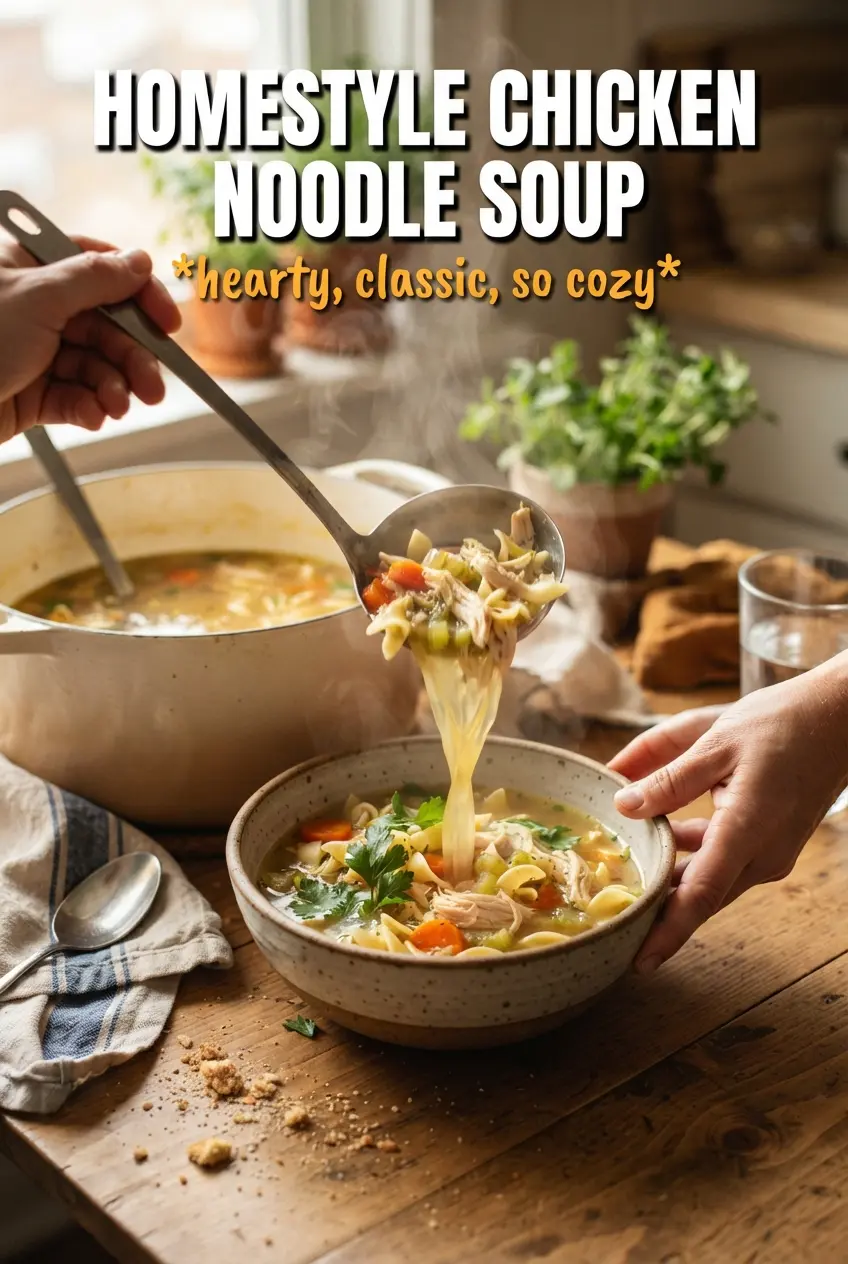
Homestyle Chicken Noodle Soup
Ingredients
Equipment
Method
- Place the whole chicken or bone-in pieces, 2 whole carrots, 2 whole celery stalks, the whole onion, 4 garlic cloves, bay leaves, dried thyme, and whole peppercorns into a large pot with the water. Bring everything to a boil, then watch for foam forming on top and be ready to skim it off.
- Skim foam from the surface, then reduce the heat to a gentle simmer. Simmer at a steady simmer for 45-60 minutes until the chicken is very tender, with small bubbles rising but not boiling hard.
- Strain the broth into a clean pot, then discard the vegetables and peppercorns. Return the strained broth to the pot and bring it back to a simmer.
- Shred the chicken meat and add it back to the pot with the simmering broth. Stir to distribute the chicken evenly before adding vegetables.
- Add the sliced carrots, sliced celery, diced onion, and the remaining garlic to the simmering broth. Simmer for 10 minutes until the vegetables begin to soften.
- Add the wide egg noodles and cook for 6-8 minutes until tender. Keep the liquid at a steady simmer and stir occasionally so noodles don’t stick.
- Stir in the chopped fresh dill and season generously with salt and pepper to taste. Taste and adjust, then serve hot for a bright herby finish.