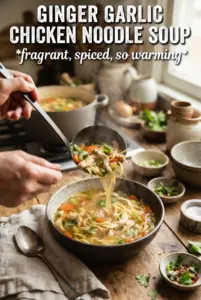
Ginger garlic chicken noodle soup lands in the bowl with a clear, savory broth that tastes bright, warming, and comforting without feeling heavy. The ginger and garlic don’t just perfume the soup — they give the broth a sharp, clean backbone that keeps every spoonful interesting, and the shredded chicken stays tender while the noodles soak up all that flavor.
The trick is building the base in stages. Onion, carrots, and celery soften first, then the garlic and ginger only get a short cook so they stay fragrant instead of bitter. A splash of soy sauce adds depth fast, and the sesame oil goes in at the end so its nutty aroma stays intact. You’ll also see why the noodles should be cooked just until tender if you want the broth to stay clear instead of starchy.
Below, I’ve included the one step that keeps the broth tasting clean, plus a few smart swaps if you want to use what’s already in your pantry.
The broth stayed so clear and the ginger-garlic flavor was perfect. I added the noodles at the end like you said, and they didn’t turn mushy even after sitting for dinner.
Save this ginger garlic chicken noodle soup for the night when you want a clear, savory broth with tender chicken and noodles.
The Step That Keeps the Broth Clear Instead of Cloudy
The difference between a clean, golden soup and one that looks heavy usually comes down to timing. Garlic and ginger need only enough heat to wake them up; if they brown, the broth can take on a harsh edge. The same goes for the noodles. If they simmer too long in the pot, they give off starch and soften the broth’s bright flavor.
- Garlic — Fresh minced garlic matters here because it gives the broth a sharp, savory lift. Jarred garlic works in a pinch, but it tastes flatter and can dull faster in the pot.
- Fresh ginger — This is the ingredient that makes the soup taste warming instead of just salty. Grate it finely so it disperses evenly; thick slices won’t release the same punch.
- Chicken thighs or breasts — Thighs stay a little richer and more forgiving if the soup simmers a few minutes longer. Breasts work well too, as long as you pull them once they’re cooked through so they don’t dry out.
- Rice vinegar and sesame oil — These go in at the end because heat mutes both of them. The vinegar sharpens the broth, and the sesame oil finishes it with a nutty aroma you’d lose if it cooked too long.
What Each Ingredient Is Actually Doing in This Recipe
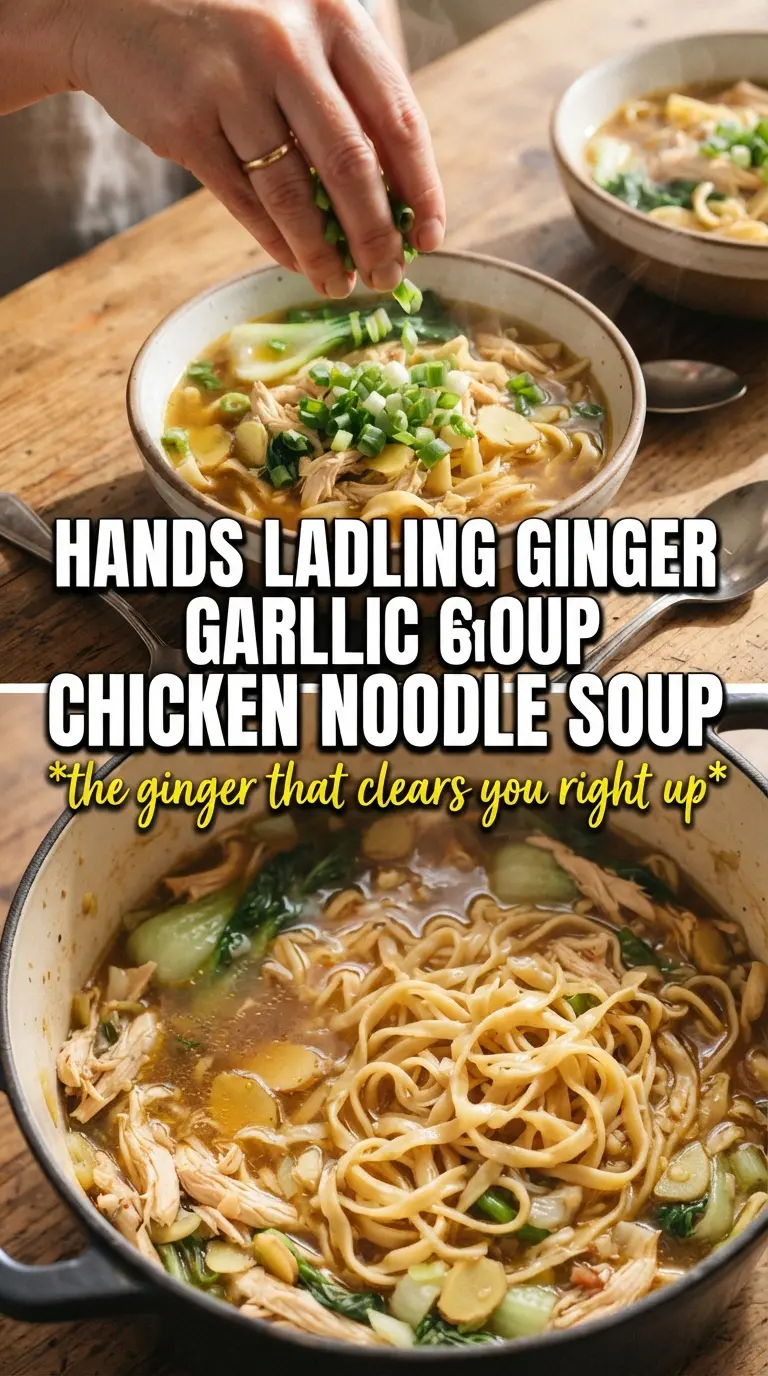
- Primary ingredient (the star) — Quality matters most. Choose the best you can find.
- Cooking medium (oil, butter, or broth) — This carries flavors and prevents dryness.
- Seasonings (salt, pepper, spices, herbs) — Layer flavors so nothing overpowers. Build depth gradually.
- Aromatics (garlic, onion, herbs) — Cook with fat to bloom flavors. Become the foundation.
- Supporting ingredients — Complement the main ingredient without overpowering it.
- Sauce or liquid (if applicable) — Brings flavors together. Balance richness with acid.
- Acid (lemon, vinegar, wine, or other) — Brightens and prevents flat-tasting results.
- Final finish (garnish, glaze, or sauce) — Prevents one-dimensional taste and adds visual appeal.
Building the Soup Without Overcooking the Noodles
Softening the Vegetables First
Start with the onion, carrots, and celery in a little oil and let them cook until the onion turns translucent and the carrots begin to lose their raw snap. That first few minutes creates the soup’s base sweetness. If the heat is too high, the onion will brown before the carrots soften, and the broth won’t taste balanced.
Waking Up the Ginger and Garlic
Add the garlic and ginger once the vegetables have softened. Stir constantly for about 2 minutes, just until the pot smells fragrant and warm. If you leave them in too long, the garlic can turn bitter and take over the whole pot.
Simmering the Chicken in the Broth
Pour in the broth, soy sauce, and chicken, then bring everything up to a boil before lowering it to a steady simmer. The chicken should cook gently, not rattle around in a hard boil, or it can turn stringy. Pull it out once it’s cooked through and shreds easily, then return the shredded meat to the pot.
Adding the Noodles at the End
Cook the noodles only until they’re tender, then stop. Ramen noodles soften fast, and egg noodles can go from perfect to bloated in a minute or two. If you plan to have leftovers, undercook them by a minute and keep in mind they’ll keep soaking up broth as they sit.
Finishing With Brightness and Aroma
Stir in the sesame oil and rice vinegar after the heat is lowered. That keeps the sesame oil fragrant instead of cooked off and lets the vinegar brighten the whole pot. Taste at the end and season with salt and pepper once the broth has settled, because soy sauce already brings salt to the party.
How to Adapt This Soup When You Need a Different Bowl
Gluten-Free Version
Use gluten-free tamari instead of soy sauce and choose rice noodles or certified gluten-free ramen. The broth keeps the same savory backbone, and the noodles stay springy if you cook them separately and add them just before serving.
Dairy-Free and Egg-Free by Default
This soup already fits both of those needs, which is part of why it works so well for a crowd. Just check your noodles if you’re buying packaged ramen, since some brands include egg in the dough.
Vegetable Version
Swap the chicken for cubed extra-firm tofu or a can of drained chickpeas and use vegetable broth. You’ll lose the deeper poultry richness, so taste carefully at the end and add a little more soy sauce or an extra pinch of salt to keep the broth full.
Storage and Reheating
- Refrigerator: Store for up to 4 days. The noodles will keep absorbing broth, so the soup gets thicker by day two.
- Freezer: Freeze the broth, chicken, and vegetables without the noodles for best texture. Noodles turn mushy after thawing, so cook a fresh batch when you reheat.
- Reheating: Warm it gently on the stove over medium-low heat until steaming. If the noodles are already in the soup, add a splash of broth or water so they loosen instead of clumping together.
Questions I Get Asked About This Soup
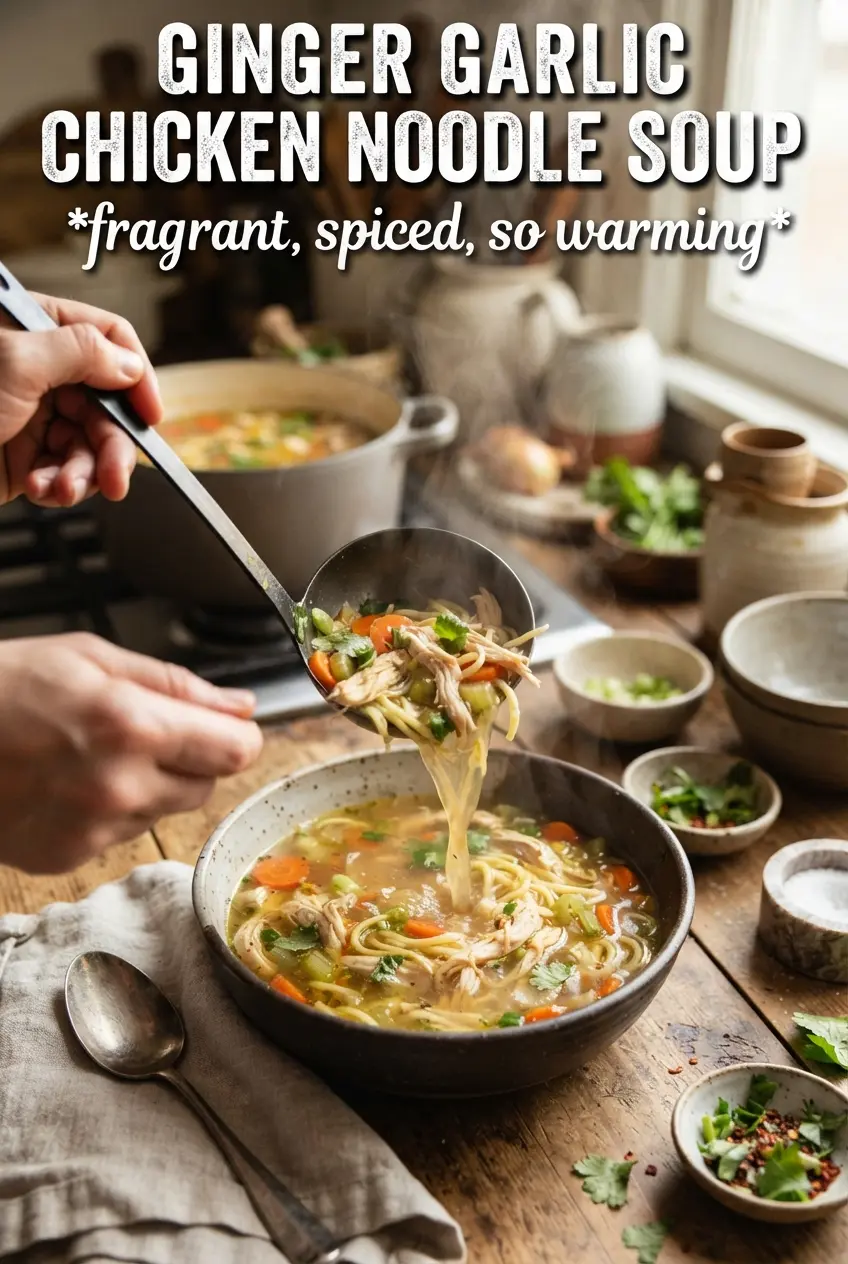
Ginger Garlic Chicken Noodle Soup
Ingredients
Equipment
Method
- Heat 1 tablespoon sesame oil in a large pot over medium heat, then sauté onion, carrots, and celery for 4 minutes, stirring until they start to soften and smell sweet.
- Add garlic and fresh ginger to the pot and cook for 2 minutes until very fragrant, using a continuous stir so they don’t brown.
- Add chicken broth, soy sauce, and chicken to the pot, bring to a boil, then simmer for 20 minutes until the chicken is cooked through and flakes easily.
- Remove the chicken from the pot, shred it, and return the shredded chicken back to the broth.
- Add ramen noodles or egg noodles and cook for 3 to 5 minutes until tender, stirring occasionally so they don’t stick.
- Stir in sesame oil and rice vinegar, then season with salt and pepper to taste until the flavor is balanced.
- Top each bowl with green onions, fresh cilantro, and sesame seeds for a bright finish and a toasted crunch visual cue.