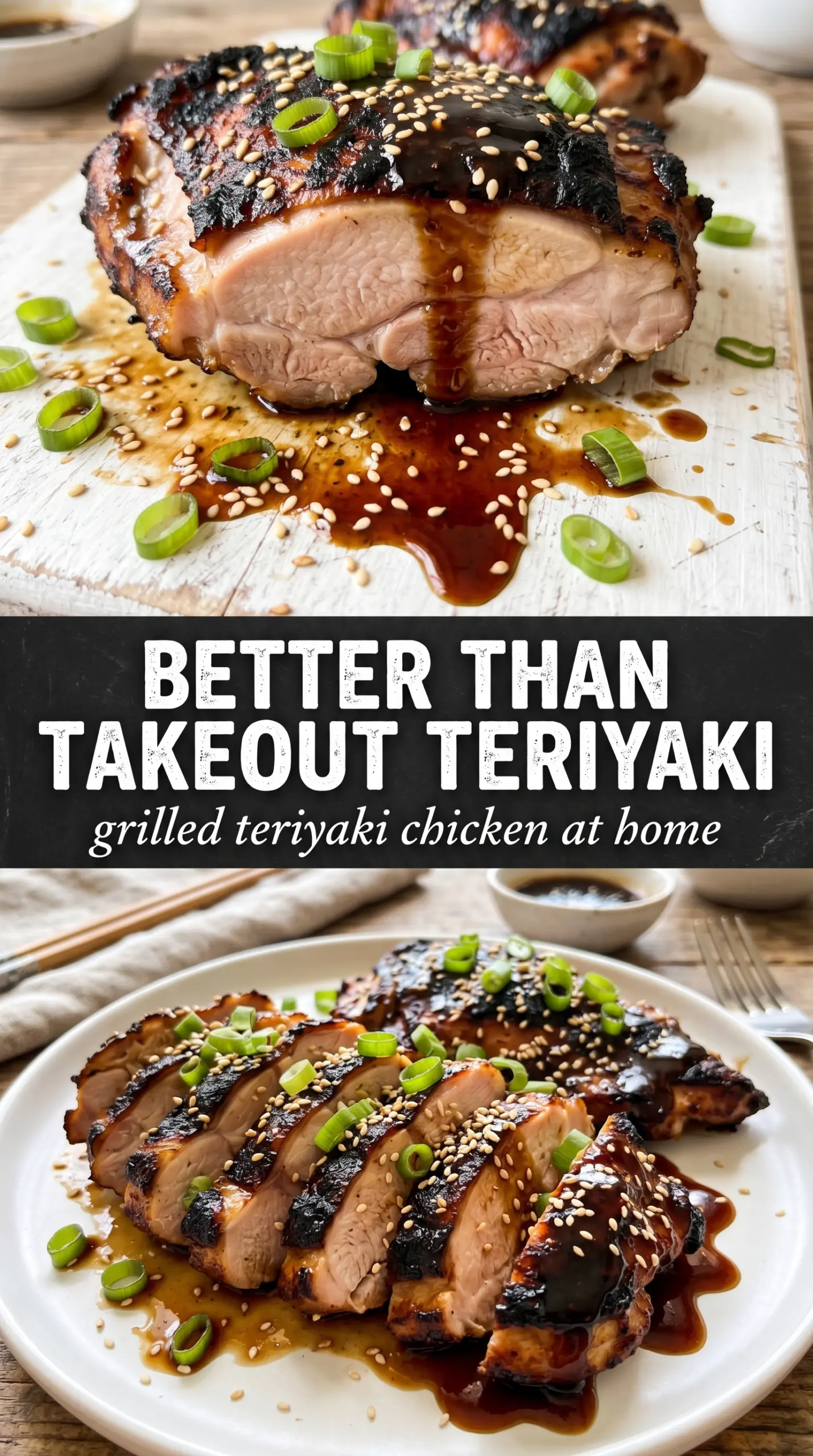
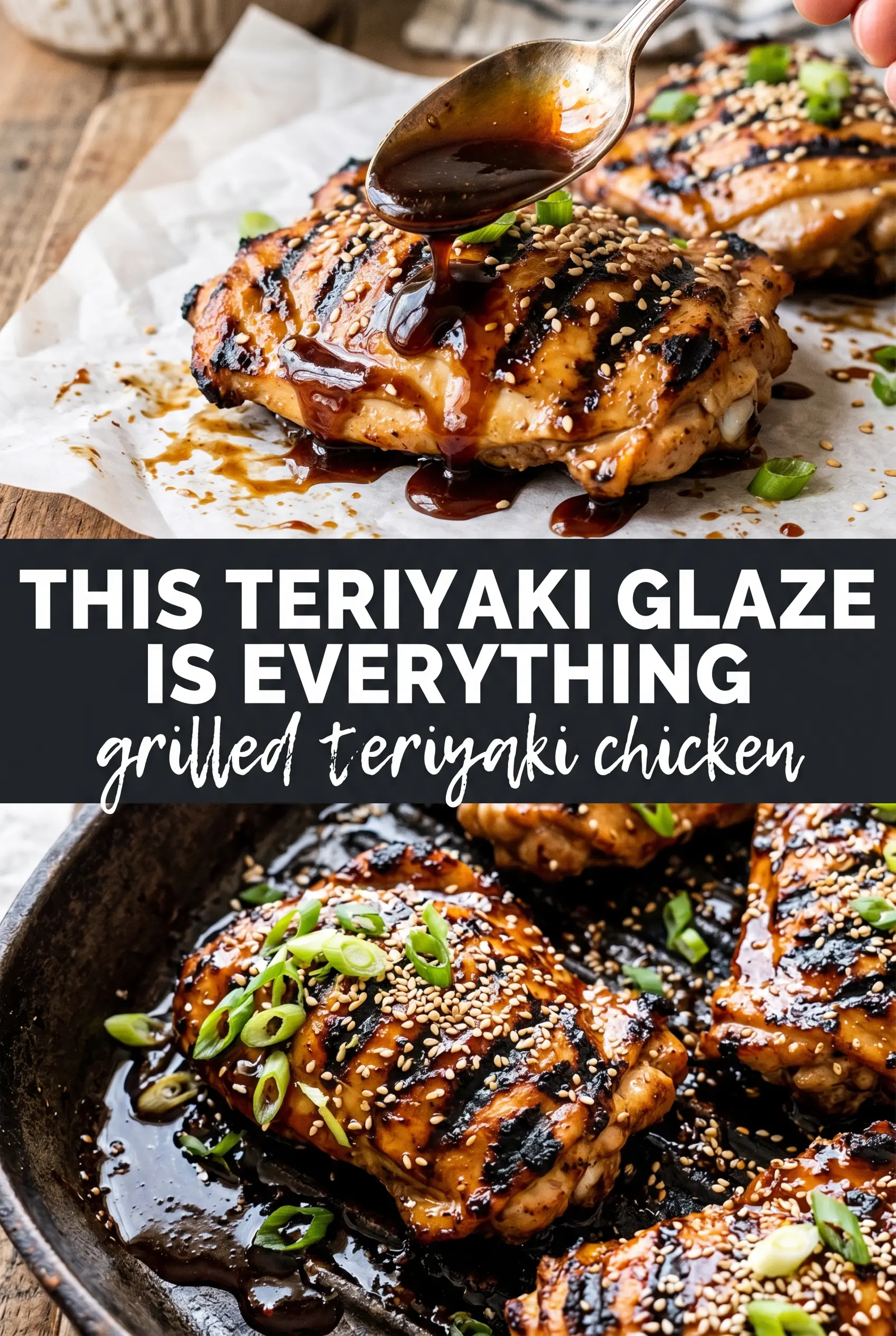
Grilled teriyaki chicken earns its spot in the regular dinner rotation when the glaze turns glossy and sticky, the edges pick up a little char, and the meat stays juicy instead of drying out on the grill. The balance here matters: salty soy sauce, sweet honey and brown sugar, and just enough sesame oil and ginger to keep the sauce from tasting flat. When it’s done right, you get that deep mahogany coating that clings to the chicken instead of sliding off into the pan.
The trick is separating the marinade from the glaze before the chicken ever hits the grill. That reserved portion gets cooked down with a cornstarch slurry, which gives you a sauce that actually thickens and caramelizes instead of staying thin and watery. I also like using boneless, skinless thighs here because they stay tender under direct heat and pick up more flavor from the marinade than lean breast meat usually does.
Below, I’ve included the small details that keep the glaze from burning, the best swap if you only have chicken breasts, and the one reheating method that keeps leftovers from turning rubbery.
The glaze thickened up beautifully and brushed on like a real sauce, not a watery marinade. I grilled it exactly 6 minutes per side and the chicken stayed juicy with those caramelized edges my husband kept stealing off the plate.
Save this grilled teriyaki chicken for the nights when you want sticky, caramelized grill flavor without a complicated sauce.
The Reason the Glaze Sticks Instead of Sliding Off
Most teriyaki chicken fails in one of two ways: the marinade never turns into an actual glaze, or the glaze burns before the chicken cooks through. The fix is to treat the marinade like two separate jobs. One portion seasons the chicken during the soak, and the reserved portion gets simmered until it turns shiny and spoon-coating.
Boneless thighs help here because they stay forgiving over medium-high heat. If you use breasts, the timing gets tighter and the margin for error shrinks fast. The other thing that matters is heat control in the last few minutes; that’s when the glaze goes on, and it needs enough heat to caramelize without letting the sugar go from amber to bitter.
- Chicken thighs — They hold up best on the grill and stay juicy even if the heat runs a little hot. Breasts work, but they need a shorter cook and should come off the grill the moment they hit 165F.
- Soy sauce — This is the backbone of the marinade. Use regular soy sauce for the right balance of salt and depth; low-sodium works if that’s what you keep, but the glaze will taste a little lighter.
- Mirin or rice vinegar — Mirin brings sweetness plus a gentle roundness that vinegar can’t fully copy. If you use rice vinegar, the sauce will taste sharper, so keep the honey and brown sugar as written.
- Sesame oil — A little goes a long way. It adds the toasted, nutty note that makes the sauce taste complete, and there isn’t a substitute that gives the same finish.
- Cornstarch slurry — This is what turns the reserved marinade into a glaze that actually clings. Mix it with cold water first so it disperses smoothly; dumping dry cornstarch straight into the pan gives you lumps.
What Each Ingredient Is Actually Doing in This Recipe
- Primary ingredient (the star) — Quality matters most. Choose the best you can find.
- Cooking medium (oil, butter, or broth) — This carries flavors and prevents dryness.
- Seasonings (salt, pepper, spices, herbs) — Layer flavors so nothing overpowers. Build depth gradually.
- Aromatics (garlic, onion, herbs) — Cook with fat to bloom flavors. Become the foundation.
- Supporting ingredients — Complement the main ingredient without overpowering it.
- Sauce or liquid (if applicable) — Brings flavors together. Balance richness with acid.
- Acid (lemon, vinegar, wine, or other) — Brightens and prevents flat-tasting results.
- Final finish (garnish, glaze, or sauce) — Prevents one-dimensional taste and adds visual appeal.
Building the Marinade, Glaze, and Grill Marks in the Right Order
Mixing the Marinade
Whisk the soy sauce, honey, mirin, brown sugar, sesame oil, garlic, and ginger until the sugar starts dissolving and the mixture looks glossy. Pull off one-third of it before the raw chicken goes in, because once the chicken has touched the marinade, that liquid is no longer safe for glazing unless you cook it. The flavor should taste bold and slightly too intense at this stage; it mellows once it’s on the chicken.
Letting the Chicken Absorb the Sauce
Coat the thighs well and let them marinate for at least 2 hours, or overnight if you want the deepest flavor. A short soak gives surface seasoning, but the longer rest helps the soy and ginger work into the meat. If you rush this part, the chicken still cooks fine, but the teriyaki flavor stays on the outside instead of settling in.
Turning the Reserved Marinade into Glaze
Bring the reserved marinade to a simmer in a small saucepan, then stir in the cornstarch slurry and cook for 3 to 4 minutes until it thickens enough to coat the back of a spoon. It should look glossy and slightly syrupy, not gluey. If it seems too thin, give it another minute; if it gets too thick, splash in a teaspoon of water to loosen it.
Grilling and Brushing at the End
Oil the grates well and preheat the grill to medium-high before the chicken goes on. Grill the thighs for 6 to 7 minutes per side, then brush on the glaze during the last 4 minutes so the sugars caramelize instead of burning from the start. The chicken is done when it reaches 165F at the thickest part and the glaze has turned deep brown with a little char around the edges.
What to Change When You Want a Different Version
Use chicken breasts instead of thighs
Breasts work if that’s what you have, but they dry out faster and need closer attention on the grill. Pound them to an even thickness so they cook at the same pace, and start checking the temperature a few minutes early. You’ll lose some richness, but the glaze still gives them plenty of flavor.
Make it gluten-free
Swap the soy sauce for tamari or a certified gluten-free soy sauce. The sauce keeps the same salty-sweet balance, and the texture of the glaze doesn’t change. Just check that your cornstarch is certified gluten-free if cross-contamination matters to you.
Use rice vinegar instead of mirin
Rice vinegar gives you brightness, while mirin adds a little sweetness and softness. If you use vinegar, keep the honey and brown sugar as written so the glaze doesn’t skew too sharp. The result is a slightly tangier teriyaki that still caramelizes well.
Cook it on a grill pan indoors
A grill pan gives you the same charred look and most of the flavor, even if you lose a little smoke from the outdoor grill. Preheat the pan until it’s hot enough that the chicken sizzles on contact, then brush on the glaze near the end just like you would outside. The biggest mistake indoors is crowding the pan, which steams the chicken instead of searing it.
Storage and Reheating
- Refrigerator: Store leftovers in an airtight container for up to 4 days. The glaze thickens as it chills, so the chicken will taste a little more intense the next day.
- Freezer: It freezes well for up to 2 months. Freeze the chicken with a little extra glaze or sauce in a sealed container so it doesn’t dry out when thawed.
- Reheating: Reheat gently in a covered skillet over low heat with a splash of water, or warm it in the oven at 325F until heated through. High heat will tighten the meat and can make the sugar in the glaze go sticky in the wrong way.
Answers to the Questions Worth Asking
Grilled Teriyaki Chicken
Ingredients
Equipment
Method
- Whisk soy sauce, honey, mirin, brown sugar, sesame oil, garlic, and ginger together until smooth, then reserve 1/3 of the mixture for glazing.
- Marinate the chicken in the remaining sauce for at least 2 hours or overnight in the refrigerator, covered.
- Simmer the reserved marinade with the cornstarch slurry (cornstarch mixed with water) in a small saucepan over medium heat for 3-4 minutes until thickened to a glaze, stirring for even texture.
- Keep the glaze warm while the grill heats so it brushes on easily during grilling.
- Preheat the grill to medium-high heat and oil the grates well to prevent sticking.
- Grill chicken for 6-7 minutes per side, brushing with the teriyaki glaze in the last 4 minutes of cooking on each side.
- Cook until the internal temperature reaches 165F and the glaze is deeply caramelized, with charred grill marks visible on the surface.
- Garnish with sesame seeds and green onions, then serve immediately with steamed rice.