Grilled mango chicken turns out with sticky, caramelized edges, juicy meat, and a bright glaze that tastes like it belongs on the grill. The mango softens into a glossy coating that catches on the chicken as it cooks, and the lime keeps it from drifting into plain sweetness. What you get is bold, balanced, and just smoky enough to make the whole plate feel finished.
The key is splitting the glaze before the chicken goes in. One portion seasons the meat during the marinating time, and the reserved portion stays clean for brushing on at the end, which is what gives you that lacquered finish instead of a dull, overcooked sauce. Boneless thighs are the right cut here because they stay tender through high heat and forgive a little extra grill time.
Below, you’ll find the trick for getting real grill marks without burning the sugars, plus a few smart swaps if your mango is extra ripe or you need to work with what you’ve got.
The mango glaze caramelized beautifully and didn’t burn, and the chicken stayed juicy even with the extra brushing at the end. The lime and ginger kept it from tasting too sweet, which was exactly what I was hoping for.
Love the caramelized mango glaze on these grilled chicken thighs? Save it to Pinterest for the nights when you want smoky grill marks, juicy chicken, and a bright tropical finish.
The Reason the Mango Glaze Stays Bold Instead of Turning Watery
The biggest mistake with fruit-based marinades is treating them like a dump-and-go sauce. Mango has enough natural sugar to brown fast, and enough water to thin everything out if you don’t reduce the sauce by using heat at the right moment. Here, the glaze gets divided before the chicken goes into it, which keeps one portion sanitary and gives you a clean finishing glaze that actually clings.
Boneless thighs matter more than people think. They have enough fat to stay juicy over direct heat, and they handle the sticky glaze better than lean breast meat, which can dry out before the sugars caramelize. If you use chicken breast, cut the pieces evenly and pull them as soon as they hit temperature; otherwise the outside will darken before the center catches up.
- Lime juice and zest — The juice brings the sharpness that keeps the mango from tasting flat, and the zest carries the citrus aroma through the grill heat. Skipping the zest makes the marinade taste thinner.
- Honey — This helps the glaze brown and turn glossy on the grill. Maple syrup works in a pinch, but it changes the flavor and browns a little faster, so watch the last few minutes closely.
- Allspice — This is the quiet ingredient that gives the chicken its Caribbean-American character. Don’t leave it out unless you want the dish to taste more like a standard sweet-and-savory grilled chicken.
What Each Ingredient Is Actually Doing in the Marinade

- Mango puree — This is the body of the glaze, not just a flavoring. Use a ripe mango with some give at the stem end; underripe fruit makes the marinade sharp and underdeveloped, while overripe fruit can go mushy but still works well here.
- Soy sauce — It brings salt, depth, and the dark color that helps the glaze look grilled even before it hits the flame. Low-sodium soy sauce is fine if that’s what you keep around, but don’t switch to a sweet bottled stir-fry sauce.
- Garlic and ginger — These keep the marinade from tasting like straight fruit. Fresh is the move here because powdered versions can read dusty once they hit high heat.
- Red pepper flakes — They don’t make the chicken hot; they give the glaze a little lift. If you want more heat, increase them slightly, but don’t add so much that the mango gets buried.
Getting the Grill Marks Without Burning the Glaze
Building the Marinade
Blend the mango puree with the soy sauce, lime juice, lime zest, honey, garlic, ginger, red pepper flakes, and allspice until smooth. Reserve about a third of the mixture before the chicken touches it, because that clean portion is what you’ll brush on at the end. If you skip that split and use the same marinade for basting, you’ve got cross-contamination and a glaze that tastes muddy.
Marinating for Flavor, Not Mush
Coat the chicken thighs and let them sit for at least 1 hour. That gives the salt time to season the meat and the aromatics time to sink in without breaking down the texture. Much longer than 4 hours isn’t necessary here; the acidity from the lime can start to make the outside a little soft, which works against a good sear.
Grilling Over Medium-High Heat
Preheat the grill and oil the grates before the chicken goes on. You want a hot, clean surface so the thighs release on their own after a few minutes; if they stick, they’re not ready yet. Grill the chicken for 6 to 7 minutes per side, then brush on the reserved glaze during the last 4 minutes so it caramelizes instead of scorching.
Knowing When It’s Done
The finished chicken should have deep brown grill marks, sticky edges, and an internal temperature of 165°F. If the glaze is darkening too quickly, move the chicken to a cooler part of the grill and finish it there. Let the thighs rest for a few minutes before serving so the juices stay in the meat instead of running onto the plate.
How to Adapt the Glaze When You Need a Different Finish
Make it dairy-free and gluten-free without losing the glaze
This recipe is already naturally dairy-free, and it can be gluten-free if you use a gluten-free soy sauce or tamari. The flavor stays the same, but tamari can taste a touch rounder and less sharp, which works nicely with the mango.
Swap the chicken thighs for chicken breasts
Breasts work, but they need more attention because they dry out faster and don’t have the same cushion of fat. Pound them to an even thickness and start checking temperature a few minutes early so the glaze doesn’t overcook while the center finishes.
Turn it into a broiler or grill-pan dinner
If you don’t have an outdoor grill, a broiler or hot grill pan gets you close. Keep the rack a few inches from the heat and watch the glaze closely, because the sugars from the mango and honey can go from glossy to burnt in a minute once they start bubbling.
Storage and Reheating
- Refrigerator: Store leftovers in an airtight container for up to 4 days. The glaze will thicken as it chills, and the chicken stays usable for bowls, salads, or wraps.
- Freezer: It freezes well for up to 2 months. Wrap the chicken tightly and freeze with a little extra sauce if you have it so the meat doesn’t dry out on thawing.
- Reheating: Warm it covered in a 300°F oven until heated through, or use a skillet over low heat with a splash of water. High heat will scorch the sugary glaze before the center is warm.
Questions I Get Asked About This Recipe
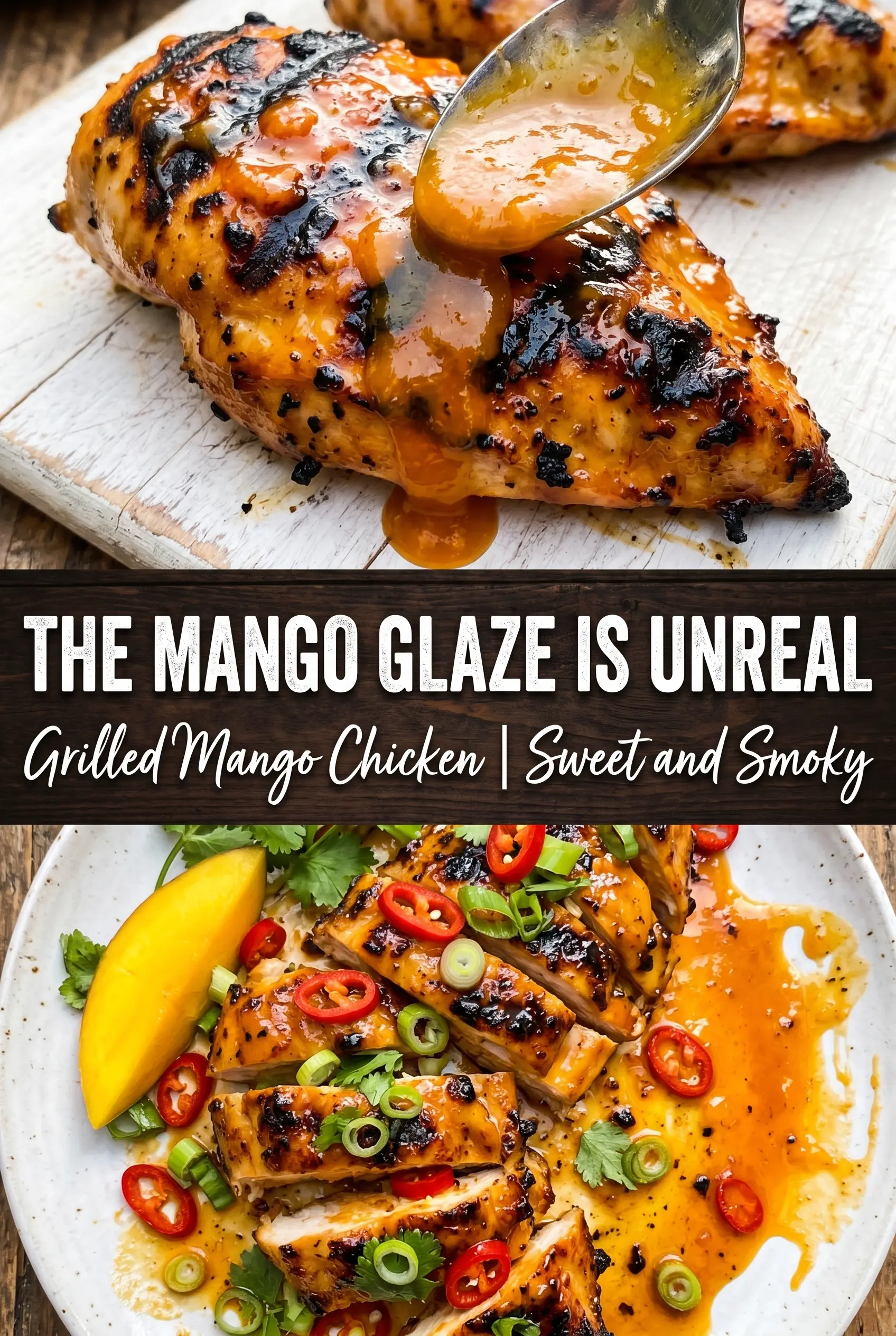
Grilled Mango Chicken
Ingredients
Equipment
Method
- Blend mango puree with soy sauce, lime juice, lime zest, honey, garlic, ginger, red pepper flakes, and allspice, then reserve 1/3 of the mixture for glazing later.
- Keep the remaining 2/3 of the marinade ready for the chicken; stir until smooth and evenly combined.
- Coat the boneless chicken thighs with the reserved 2/3 marinade, cover, and refrigerate for at least 1 hour.
- Preheat the grill to medium-high and lightly oil the grates to prevent sticking.
- Place chicken thighs on the grill and cook for 6 to 7 minutes per side, brushing with the reserved mango glaze in the last 4 minutes of grilling.
- Continue grilling until deeply caramelized and the internal temperature reaches 165°F.
- Transfer grilled chicken to a platter and top or serve alongside fresh mango chunks, cilantro, and lime wedges.