Crispy-skinned chicken thighs with a sticky honey-buffalo glaze hit that sweet spot between smoky, spicy, and just rich enough to keep you coming back for another piece. The skin gets a real charred crunch on the grill, then the sauce cooks down into a lacquer that clings to every bite instead of sliding off into the flames.
The trick here is balancing the honey and butter so the buffalo sauce stays bold without turning harsh or burning before the chicken is cooked through. Bone-in, skin-on thighs handle the grill better than lean cuts because they stay juicy while the skin renders and crisps. A short marinade gives the seasoning time to settle in, but the reserved sauce goes on during the last stretch so it finishes sticky instead of bitter.
Below you’ll find the small details that matter most: how to keep the glaze from scorching, what to look for when the skin is crisp enough to flip, and a few smart ways to adjust the heat without losing the buffalo flavor.
The sauce caramelized beautifully on the grill and the chicken stayed juicy all the way through. I loved that the skin got crisp without the honey burning.
Save these grilled honey buffalo chicken thighs for the nights when you want sticky heat, crisp skin, and an easy grilled main dish.
The Part That Keeps Honey Buffalo Chicken from Burning on the Grill
The biggest mistake with honey-buffalo chicken is putting all of the sauce on too early. Honey caramelizes fast, which sounds good until it crosses into scorched before the thighs have finished cooking. The reserve-and-baste method solves that problem by letting the chicken cook over medium heat first, then letting the glaze tighten up during the final minutes when the surface can handle it.
Chicken thighs are the right cut here because they stay tender even if the grill runs a little hot. Bone-in, skin-on pieces also give you enough fat to crisp the skin and enough protection that the meat doesn’t dry out while the glaze bubbles. If the sauce starts to darken too fast, move the thighs to a cooler part of the grill and finish them there instead of trying to power through direct heat.
What Each Ingredient Is Doing in the Glaze and on the Grill
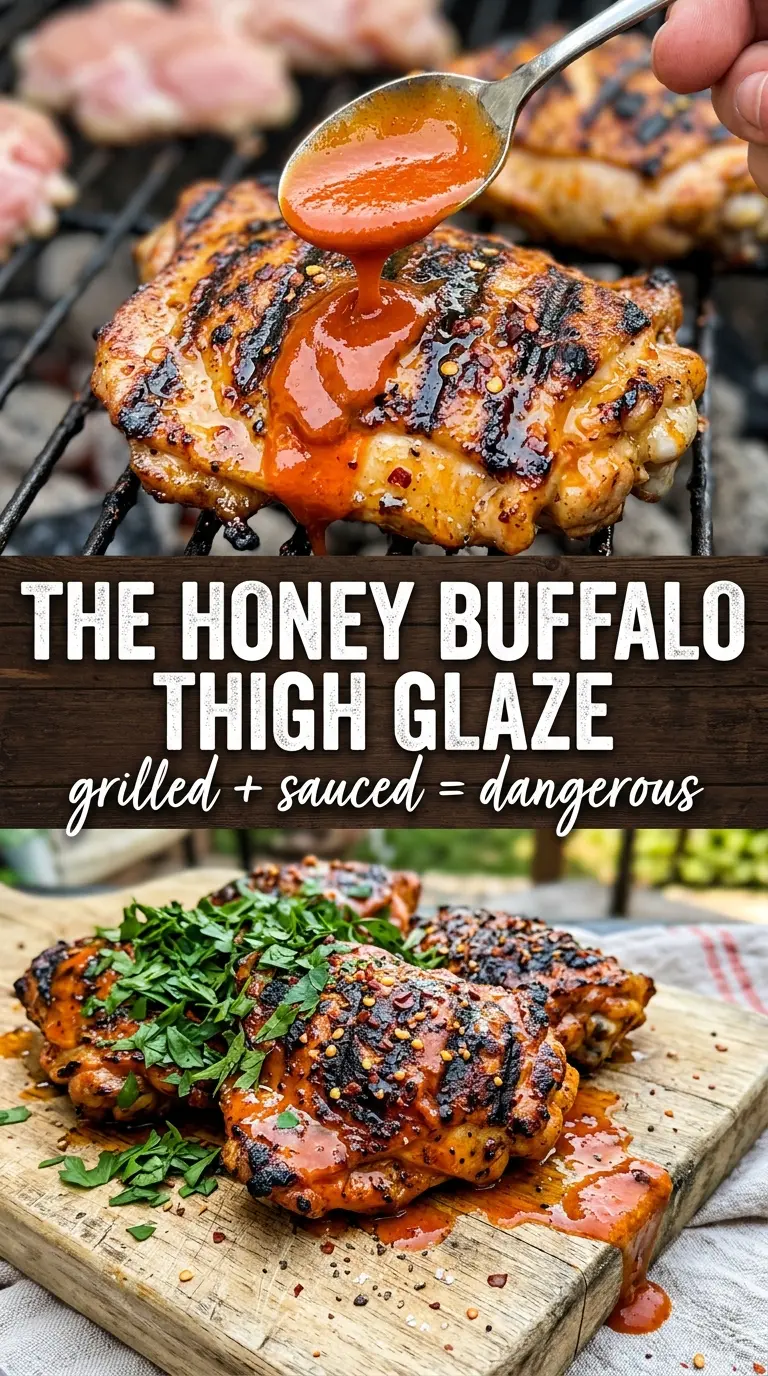
- Chicken thighs — Bone-in, skin-on thighs give you the best balance of juicy meat and crisped skin. You can use boneless thighs, but they cook faster and won’t give you the same rendered, crackly finish.
- Buffalo sauce — This carries the heat and vinegar sharpness that define the dish. Use a bottled sauce you like on its own, because the flavor gets concentrated once the glaze hits the grill.
- Honey — This is what makes the coating sticky and glossy instead of thin and sharp. It also helps the sauce cling to the skin, but it needs the butter and vinegar to keep it from tasting one-note.
- Butter — Melted butter rounds out the heat and helps the sauce baste more evenly. It isn’t just for richness; it also gives the glaze a smoother texture that brushes on cleanly.
- Apple cider vinegar — A small splash keeps the honey from dulling the buffalo sauce. If you skip it, the glaze can taste heavy instead of bright.
- Blue cheese dressing and celery — These aren’t decoration. The cool dressing and crunchy celery cut through the sticky glaze and reset your palate between bites.
Grilling the Skin First, Then Bringing the Glaze In
Mix the Sauce and Hold Back a Clean Portion
Stir the buffalo sauce, honey, melted butter, and vinegar until the mixture looks smooth and glossy. Pull off one-third cup before it ever touches the raw chicken so you have a clean basting sauce later. If you skip that reserve, you’ll end up tempted to use marinade that has touched raw meat, and that is not the moment to improvise.
Season and Marinate with Purpose
Season the thighs with salt and pepper, then brush on enough sauce to coat them lightly. Let them sit for 30 minutes while the grill heats and the flavors settle into the skin. Longer than that isn’t necessary here, and the sauce can start to loosen the skin before it has a chance to crisp.
Start Skin-Side Down and Let the Fat Render
Put the thighs skin-side down over medium heat and leave them alone long enough for the skin to turn crisp and deeply golden. You should hear steady sizzling, not aggressive flare-ups. If the grill flames under the rendered fat, shift the thighs slightly off the hottest spot instead of flipping early, because under-rendered skin never gets that shattering texture back later.
Flip, Baste, and Finish to 165°F
Turn the thighs over and brush on the reserved sauce in thin layers while they finish cooking. Keep basting frequently, but don’t drown the chicken each time or the sugar will drip away before it sets. Pull them when the thickest part reaches 165°F and the glaze looks sticky and lacquered; if the sauce is still wet and loose, give it another minute or two over gentler heat.
Dialing Back the Heat Without Losing the Buffalo Bite
Use a milder buffalo sauce and add the honey as written. The sweet glaze still reads as buffalo chicken, but the finish lands softer and less sharp. This is the best move if you’re serving people who like the flavor more than the burn.
Making It Dairy-Free
Swap the butter for a neutral oil or a plant-based butter that melts cleanly. You’ll lose a little of the rounded richness, but the glaze will still cling and caramelize well. Serve with a dairy-free ranch or skip the creamy dip and lean on celery for contrast.
Boneless Thighs for Faster Grilling
Boneless thighs cook faster and are easier to portion, but they don’t give you the same crackly skin or built-in protection from drying out. Watch them closely and start checking for doneness a few minutes earlier. The glaze still works beautifully, just with a softer texture on the outside.
Oven Finish When the Grill Runs Hot and Fast
If your grill is spitting flames or cooking unevenly, crisp the skin on the grill and finish the thighs in a 425°F oven. Brush on the reserved glaze before the transfer and again near the end so it sets without burning. This is the safer path when you want control more than smoke.
Storage and Reheating
- Refrigerator: Store leftovers in an airtight container for up to 4 days. The skin softens, but the flavor holds well.
- Freezer: Freeze cooked thighs for up to 2 months. Wrap them well and freeze the sauce separately if you can, because the glaze texture stays better that way.
- Reheating: Reheat in a 375°F oven until hot through, uncovered, so the skin has a chance to wake back up. The common mistake is microwaving them straight from the fridge, which makes the skin rubbery and the glaze greasy.
Questions I Get Asked About This Recipe

Grilled Honey Buffalo Chicken Thighs
Ingredients
Equipment
Method
- In a bowl, mix buffalo sauce, honey, melted butter, and apple cider vinegar until smooth.
- Reserve 1/3 cup of the sauce for basting and set it aside.
- Season chicken thighs with salt and pepper, then brush with some of the honey buffalo sauce.
- Marinate the chicken for 30 minutes.
- Grill the chicken skin-side down over medium heat for 8-10 minutes, until the skin is crispy.
- Flip the thighs and grill for 8-10 more minutes, basting frequently with the reserved sauce.
- Cook until the internal temperature reaches 165°F and the glaze looks sticky and glossy.
- Serve the grilled honey buffalo chicken thighs with blue cheese dressing and celery sticks.