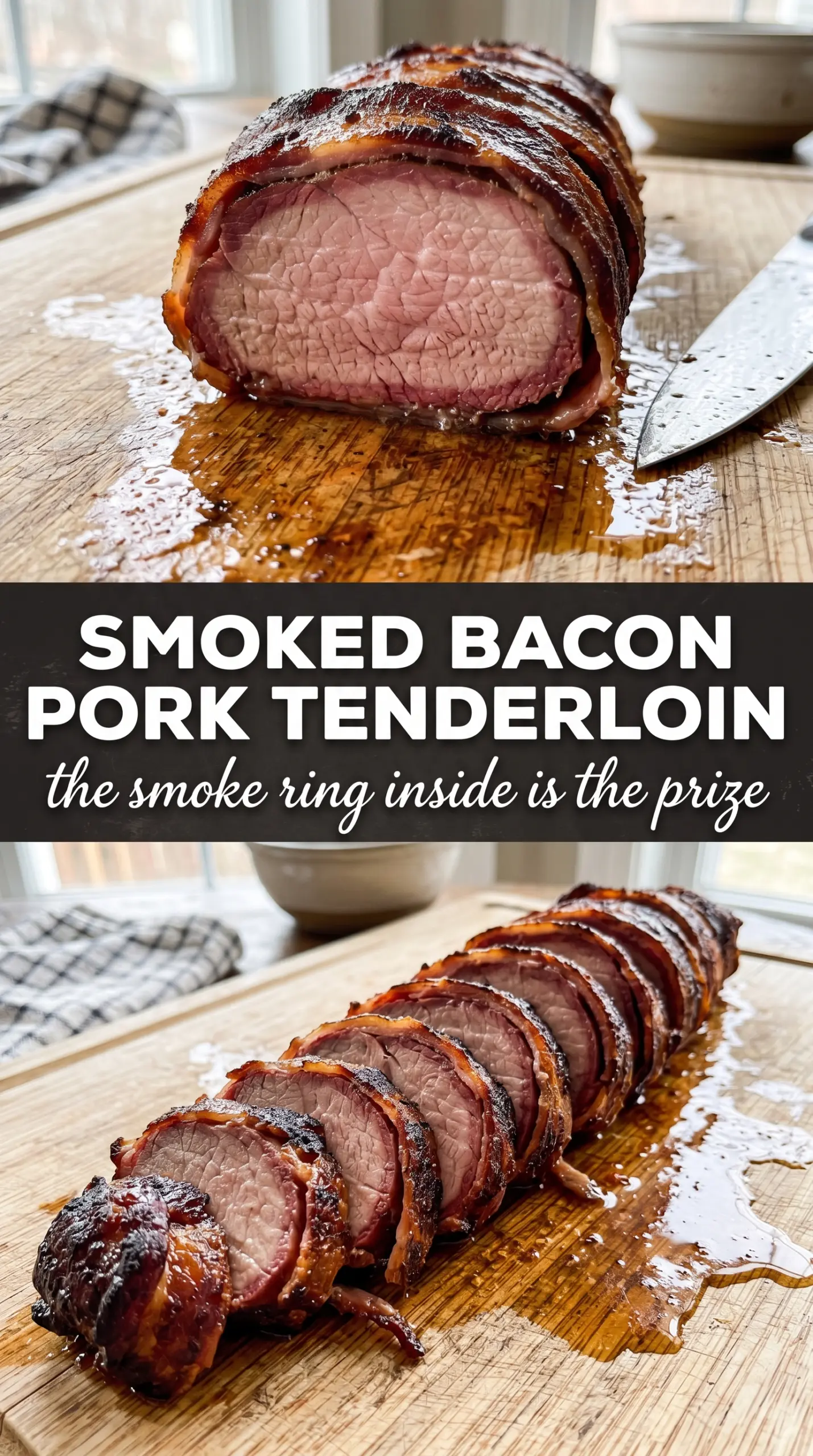
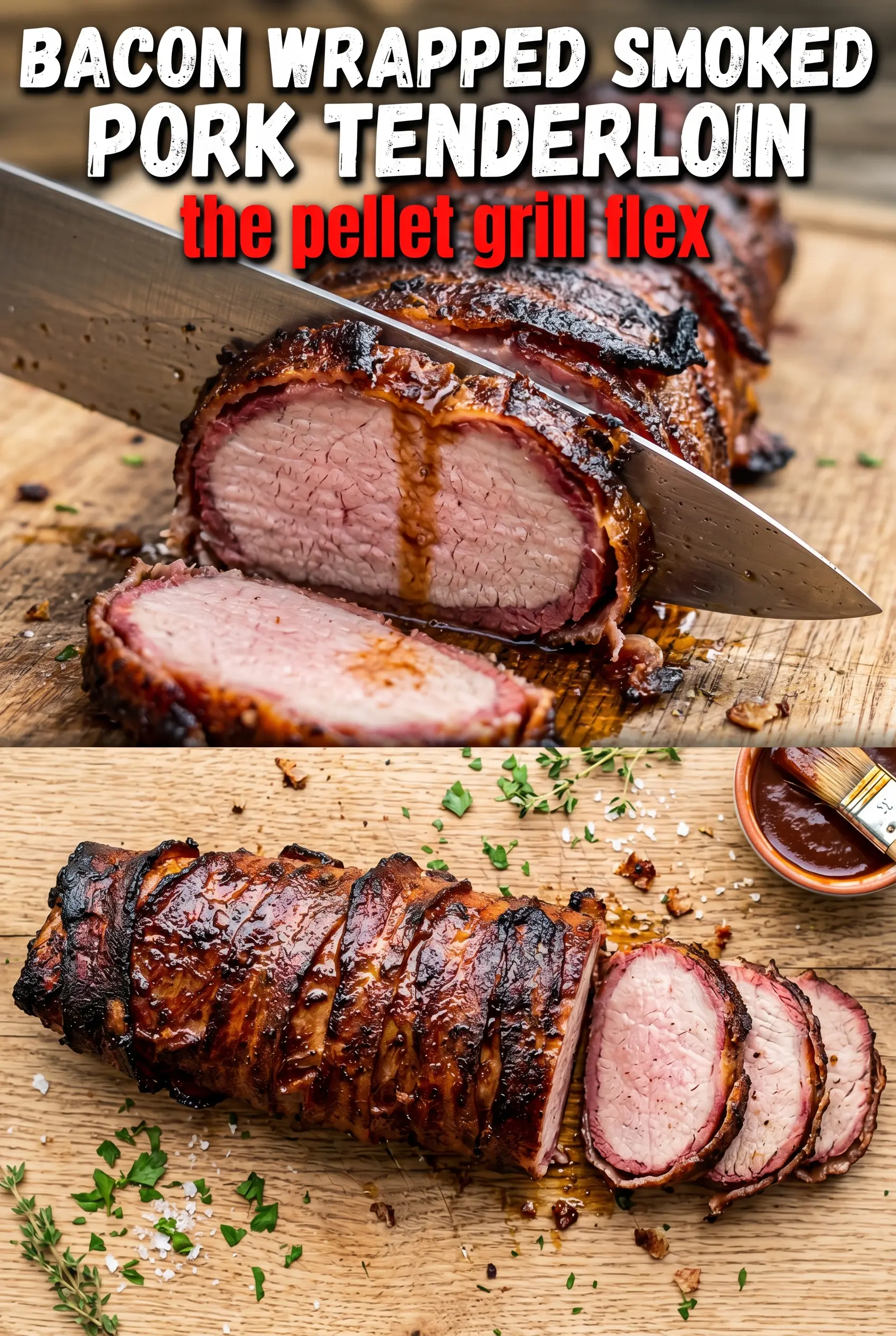
Bacon-wrapped pork tenderloin comes off a pellet grill with the kind of contrast that gets people reaching for a second slice before the platter even hits the table. The bacon turns crisp at the edges, the pork stays juicy in the center, and the smoke settles into every bite without overpowering the meat. It’s the sort of main dish that looks like you worked harder than you did.
What makes this version work is the low, steady heat and a rub that seasons the pork all the way through before the bacon goes on. The brown sugar helps the bacon brown, but there’s just enough paprika, garlic, and onion to keep the whole thing savory instead of tasting like candy. I’ve found that wrapping the tenderloin tightly and smoking it patiently gives you better bacon coverage and a cleaner slice at the end.
Below you’ll find the timing cues that matter most, plus a few smart swaps for different pellet flavors and different dinner situations.
The bacon crisped up on the edges and the pork stayed pink and juicy exactly to 145. I’d never smoked tenderloin this way before, but the seasoning and smoke balance were spot on.
Save this pellet grill smoked bacon wrapped pork tenderloin for the nights when you want crisp bacon, juicy pork, and smoky BBQ flavor on one platter.
The Bacon Needs Time to Crisp, Not a Hotter Grill
The most common mistake with bacon-wrapped tenderloin is chasing browning with heat. That backfires fast. The bacon can look pale for a long stretch, then suddenly go from underdone to burnt while the pork is still catching up. A pellet grill set to 225°F gives you time for the smoke to work and the fat in the bacon to render slowly enough to crisp instead of shrivel.
Pork tenderloin is lean and narrow, which means it dries out if you overcook it by even a few degrees. Pull it at 145°F and let the carryover finish the job during the rest. If you wait for it to climb much higher on the grill, the center turns dull and chalky before the bacon ever gets where it needs to be.
- Pellet choice — Apple gives a lighter, slightly sweeter smoke. Hickory brings a deeper BBQ note. Either works, but hickory is stronger, so use it if you want the bacon to taste more savory than sweet.
- Brown sugar — This helps the rub cling and gives the bacon a little lacquer as it cooks. You don’t need much; too much sugar can darken before the pork finishes.
- Thick-cut bacon — Standard bacon crisps more evenly here than extra-thick slices, which can stay chewy by the time the pork is done. If thick-cut is all you have, give the wrapped tenderloin a few extra minutes and watch the bacon closely near the end.
What the Rub Is Doing Before the Smoke Ever Hits
2 pork tenderloins are the right size for even smoking, because they cook quickly and stay tender if you don’t overdo them. If you only have one, keep the same seasoning amounts and check the temperature earlier. The shape matters more than the exact weight here.
Bacon does more than wrap the meat. It protects the outside from drying out and adds salt, fat, and texture as it renders. Use slices that are long enough to overlap slightly so you don’t end up with bare spots where the pork is exposed.
Brown sugar, paprika, garlic powder, and onion powder build a simple barbecue-style crust without masking the pork. Paprika gives color, garlic and onion bring the savory backbone, and the sugar helps everything brown. If you need a lower-sugar version, cut the brown sugar in half and add a pinch more paprika so the rub still looks balanced on the meat.
Salt and pepper are worth seasoning generously here because the bacon and pork both need it. Bacon varies a lot in saltiness, so if yours is heavily cured, go lighter on the rub salt. If it’s a milder bacon, season the pork surface well before wrapping.
Getting the Smoke, Wrap, and Temperature to Line Up
Season the Pork First
Mix the rub ingredients together until the brown sugar breaks up and the spices look evenly distributed, then coat the tenderloins on all sides. The surface should look evenly dusty and tacky, not wet or paste-like. If you skip this step and rely on the bacon for seasoning, the pork itself tastes flat once you get past the first bite.
Wrap Without Gaps
Lay the bacon slices over the tenderloin with slight overlap so they hold together as they render. Press the ends underneath the meat so the wrap stays put on the grill. Loose bacon shrinks and curls, which leaves exposed strips of pork that cook faster than the rest and dry out before the bacon catches up.
Smoke Low and Watch the Finish
Set the pellet grill to 225°F and cook until the thickest part of the tenderloin reaches 145°F. Start checking early because tenderloin can move quickly once it gets close. The bacon should look rendered and browned with crisp edges; if the pork is done but the bacon still needs more color, give it a short blast at higher heat for the last few minutes, keeping a close eye on it so the sugar doesn’t scorch.
Rest Before You Slice
Let the tenderloin sit for 10 minutes before slicing. That pause keeps the juices inside the meat instead of running out onto the board the moment the knife goes through. Slice across the grain and you’ll get neat pieces with bacon staying attached instead of sliding off in strips.
How to Adapt This for Different Pellet Grills and Dinner Plans
Dairy-Free, Gluten-Free, and Naturally Friendly
This recipe is already dairy-free and gluten-free as written, which makes it easy to serve a mixed crowd without changing the method. Just check your bacon and spice blends for any hidden fillers or anti-caking agents if you’re cooking for someone with a sensitivity. The finished result stays the same: smoky pork, rendered bacon, and a lightly sweet crust.
Use Maple Bacon for a Sweeter Finish
Maple bacon adds a little extra sweetness and deepens the caramelized edges, but it also browns faster because of the added sugar. If you go this route, watch the last 15 minutes closely and lean toward apple pellets instead of hickory so the smoke stays balanced.
Make It Ahead for Easier Serving
You can season and wrap the pork earlier in the day, then keep it covered in the refrigerator until grill time. That gives the rub a little more time to settle into the meat without hurting the texture. Don’t leave it wrapped overnight unless you want the bacon to soften too much before it hits the grill.
Storage and Reheating
- Refrigerator: Store leftovers in an airtight container for up to 3 days. The bacon will soften a bit, but the pork stays tender if you don’t overheat it later.
- Freezer: Freeze sliced pork for up to 2 months, wrapped tightly and sealed well. Bacon texture changes after freezing, so it’s best for leftovers in sandwiches or chopped into breakfast potatoes rather than served as-is.
- Reheating: Reheat gently in a 300°F oven, covered loosely with foil, until warmed through. The biggest mistake is blasting it in the microwave, which tightens the pork and turns the bacon rubbery before the center is warm.
Questions I Get Asked About This Recipe
Pellet Grill Smoked Bacon Wrapped Pork Tenderloin
Ingredients
Equipment
Method
- Mix brown sugar, paprika, garlic powder, onion powder, salt, and pepper until evenly combined and sandy-looking.
- Rub the spice mixture all over the tenderloins so the surface looks fully coated.
- Wrap each tenderloin with bacon slices, overlapping slightly so no pork shows through.
- Preheat the pellet grill to 225°F using apple or hickory pellets until stable at temperature.
- Place the bacon-wrapped tenderloins on the grill and smoke for 60-90 minutes, until the internal temperature reaches 145°F and the bacon appears crisping at the edges.
- Rest the tenderloins 10 minutes before slicing so juices redistribute and the bacon stays crisp.