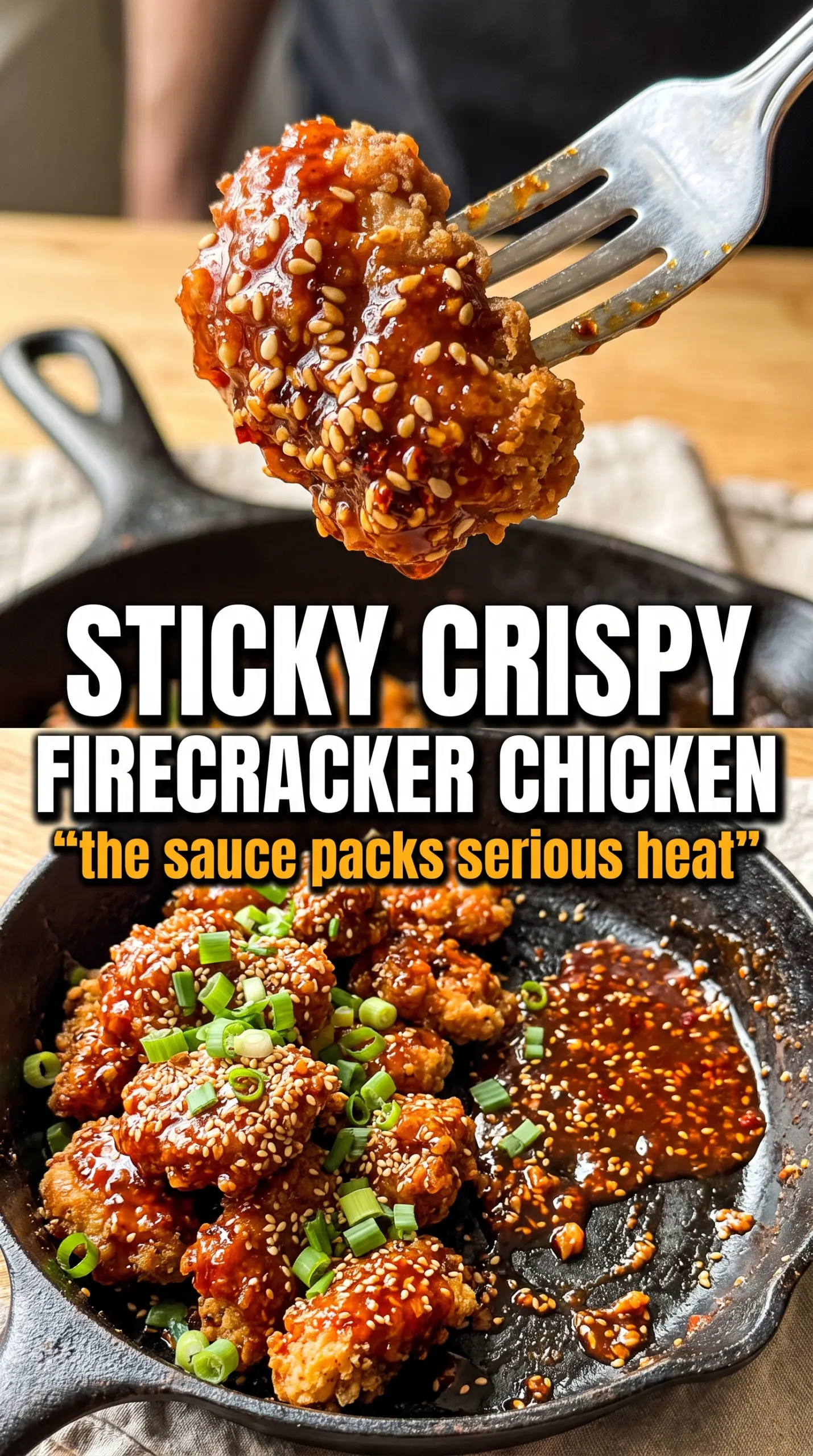
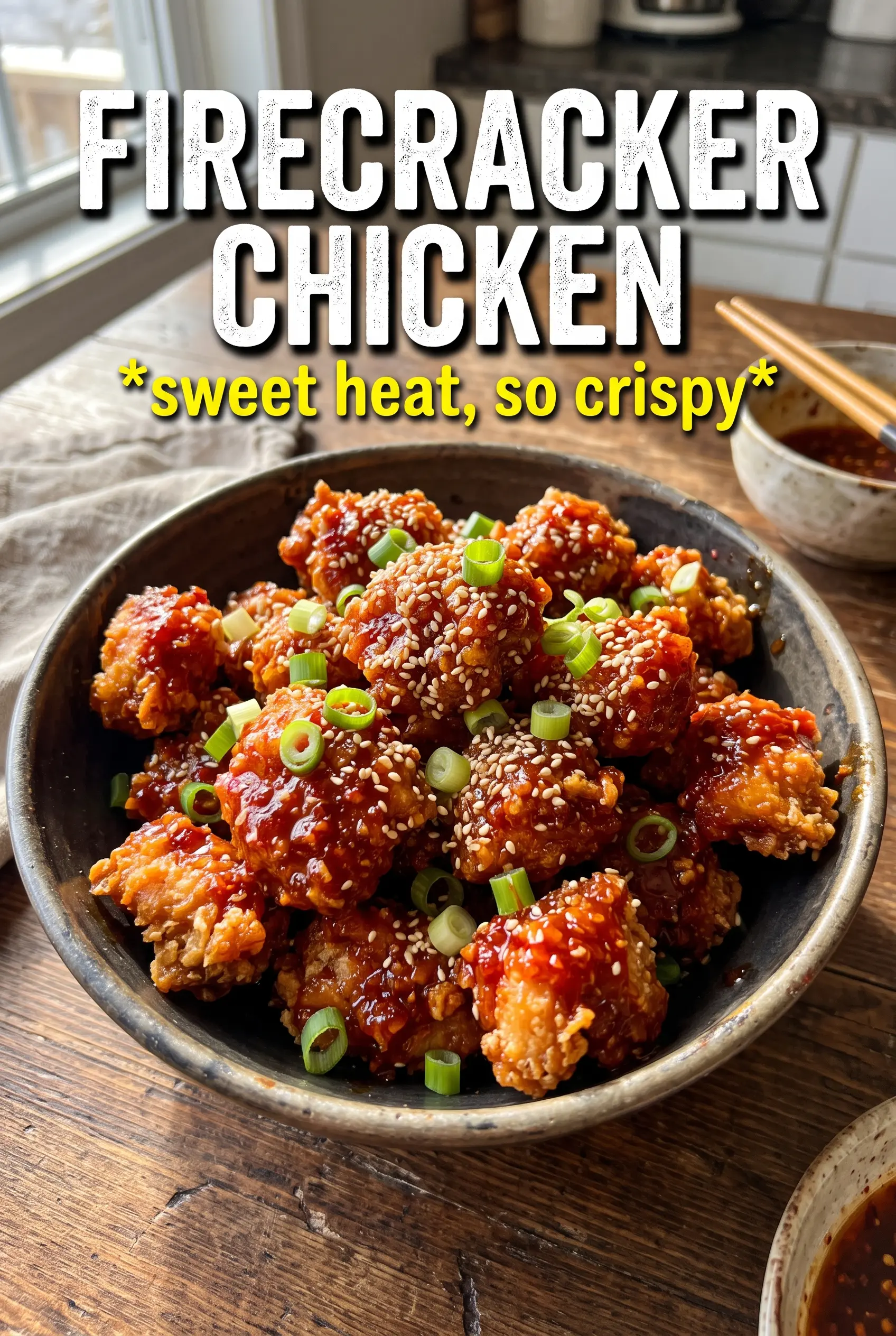
Crispy firecracker chicken lands on the plate with that takeout-style snap on the outside and a sticky, glossy sauce that clings to every ridge of the coating. The heat comes in fast, then the brown sugar and butter round it out just enough to keep you going back for another bite. It’s the kind of dinner that disappears from the pan before the rice is even all the way fluffed.
What makes this version work is the contrast: the chicken gets coated in flour and cornstarch before frying, which gives you a drier, craggier crust that holds up under sauce better than a straight flour dredge. The sauce itself is built in a saucepan first, so the butter melts into the hot sauce and vinegar before the chicken goes in, giving you a glossy finish instead of a greasy one. That last minute back in the pan matters too; it turns the coating from merely sauced into properly caramelized.
Below, I’m breaking down the small details that keep the chicken crisp, how to dial the heat up or down, and what to do if you want to make it ahead without losing that just-fried texture.
The sauce coated every piece and stayed sticky instead of turning watery, and the chicken still had a little crunch even after tossing it. My husband asked if I could put this on the weekly menu.
Like this sticky firecracker chicken? Save it to Pinterest for the nights when you want crispy chicken bites with a glossy sweet-heat sauce over rice.
The Secret to Keeping the Coating Crisp Under a Sticky Sauce
The fastest way to ruin firecracker chicken is to drown the crust before the sauce has a chance to tighten. That crisp coating needs a head start from the hot oil, and it needs a sauce that’s smooth enough to cling instead of soak in. If the chicken sits around after frying, steam softens the crust; if the sauce is too thin, it slides off and pools in the bottom of the bowl.
The fix is simple: fry until the pieces are deep golden and cooked through, then toss them immediately in a hot sauce that’s already emulsified with butter. That last short return to the pan helps the sugar and sauce thicken around the chicken instead of turning watery. You’re aiming for a glossy finish that looks almost lacquered, not a loose glaze.
- Cornstarch + flour — This combination gives you a lighter, crisper crust than flour alone. The cornstarch helps with shatter and the flour gives the coating enough structure to stay put.
- Butter — It smooths out the hot sauce and helps the glaze cling. Margarine won’t give the same round finish.
- Brown sugar — This is what turns the heat into sticky, caramelized sauce. Light brown sugar works fine; dark brown sugar gives a deeper molasses note.
What Each Part of the Firecracker Sauce Is Doing
Hot sauce brings the sharp, vinegary base that keeps the sauce from tasting flat. Frank’s RedHot is a good choice here because it has enough tang and salt to carry the sweet heat without turning harsh.
Apple cider vinegar wakes everything up and keeps the sauce from reading as just sweet syrup. If you skip it, the sauce tastes heavier and less balanced.
Red pepper flakes give you those little bursts of heat that show up in the finished coating. Start with the lower amount if you want a milder burn, then add more after tasting the sauce in the pan.
Soy sauce and garlic powder deepen the background flavor so the sauce tastes seasoned, not just sweet and spicy. The soy sauce also helps the glaze darken a bit as it caramelizes.
From Dredge to Glossy Finish Without Losing the Crunch
Coating the Chicken Evenly
Toss the chicken pieces until every surface is lightly dusted, not clumped into wet paste. A thin, even coating fries up crisp; a heavy coating turns gummy. If the chicken looks chalky and shaggy, that’s a good sign. Shake off excess before it hits the oil so the crust sets cleanly instead of falling off in patches.
Frying to a Deep Golden Color
Keep the oil around 375°F and fry in batches so the temperature doesn’t crash. If the oil is too cool, the chicken drinks up grease and comes out soft. If it’s too hot, the coating browns before the center cooks. You want a steady sizzle and a crust that turns deeply golden in 3 to 4 minutes per side.
Building the Sauce
Combine the sauce ingredients over medium heat and stir until the butter fully melts and the mixture looks smooth and glossy. Don’t rush this by cranking the heat; once the sugar starts scorching, the sauce turns bitter and grainy. When it looks unified and slightly thickened, it’s ready for the chicken.
Tossing and Caramelizing
Add the fried chicken to the sauce and turn it until every piece is coated. Then keep it moving in the pan for a minute or two, just long enough for the glaze to tighten and cling. If the pan is crowded, the sauce steams instead of caramelizes, so work quickly and serve right away over rice.
Three Ways to Make Firecracker Chicken Fit Your Table
Bake it instead of frying
Toss the coated chicken with a little oil and bake at 425°F until crisp and cooked through, flipping once halfway. You won’t get the same shattering crust you get from frying, but you’ll still get a good bite and all the sweet-heat sauce. Let the baked pieces rest on a rack, not a sheet pan, so the bottoms don’t steam.
Make it gluten-free
Swap the all-purpose flour for a gluten-free all-purpose blend and use a gluten-free tamari in place of soy sauce. The coating stays crisp if your blend includes rice flour or starch. Don’t skip the cornstarch; it helps the crust stay light instead of dense.
Dial down the heat without losing the sauce
Cut the red pepper flakes to a pinch and use the lower amount of hot sauce if you want more sweet than burn. The sauce still caramelizes and tastes bold, just less sharp on the finish. Serve with extra rice so the balance stays in your favor.
Storage and Reheating
- Refrigerator: Store leftovers for up to 3 days. The coating softens as it sits, but the flavor stays strong.
- Freezer: It freezes, but the crust won’t stay crisp after thawing. Freeze the chicken and sauce separately if you want the best chance at preserving texture.
- Reheating: Reheat in a hot skillet or oven until the chicken is warmed through. The microwave makes the coating soggy fast, so use it only if texture doesn’t matter.
Answers to the Questions Worth Asking
Firecracker Chicken
Ingredients
Equipment
Method
- Toss the chicken with cornstarch, flour, salt, pepper, and garlic powder until every piece is coated; the surface should look lightly dusty before frying.
- Heat vegetable oil in a cast iron skillet to 375°F and fry the chicken in a 1/2 inch oil layer for 3-4 minutes per side, until golden and cooked through; drain on a rack or paper.
- In a saucepan over medium heat, combine hot sauce, brown sugar, butter, apple cider vinegar, soy sauce, garlic powder, and red pepper flakes, stirring until the butter melts and the sauce turns smooth and glossy, about 2-3 minutes.
- Toss the crispy chicken in the firecracker sauce until every piece is fully coated, then return it to the pan for 1-2 minutes so the coating caramelizes and looks glossier.
- Serve the firecracker chicken over steamed rice and top with sesame seeds and sliced green onions so the red-orange sauce clings visibly to the bites.