Silky broth, tender shredded chicken, and pillowy gnocchi make this soup land somewhere between comfort food and a full meal. The garlic gives it backbone, the parmesan melts in for a salty finish, and the spinach softens just enough to feel fresh without stealing the spotlight. Every spoonful is rich, but it still eats like dinner, not a side dish.
What makes this version work is the order. The onion and garlic cook first in butter so the base tastes rounded instead of sharp, then the broth and cream are added before the gnocchi goes in. That keeps the gnocchi from overcooking and lets the starch from the pasta help thicken the soup naturally. A little nutmeg sounds small, but it pulls the cream and parmesan together in a way that makes the whole pot taste finished.
Below, you’ll find the spots where people usually rush and end up with bland broth or mushy gnocchi, plus the one reheating trick that keeps this soup creamy instead of dull and heavy the next day.
The gnocchi stayed pillowy, the cream never broke, and the garlic flavor came through without taking over. I added a little extra parmesan at the end and the broth thickened up beautifully after sitting for 5 minutes.
Save this creamy garlic chicken gnocchi soup for the nights when you want a rich, cozy bowl with tender gnocchi and a parmesan finish.
The Broth Stays Creamy Only If You Respect the Heat
The fastest way to ruin a cream-based soup is to let it boil after the cream goes in. That’s when the dairy can turn grainy or separate, especially once parmesan is added. Keep the pot at a gentle simmer from the moment the broth and cream meet, and you’ll get a smooth, velvety base instead of something that looks broken.
The gnocchi also needs a light hand. It cooks fast and starts releasing starch almost immediately, which is part of what gives the soup body. If you leave it in too long, it turns soft and heavy instead of tender and buoyant.
- Chicken broth — This is the backbone of the soup, so use one that tastes good on its own. A low-sodium broth gives you room to season properly at the end without overshooting the salt.
- Heavy cream — This is what makes the soup luxurious and stable. Half-and-half works in a pinch, but the broth will be thinner and a little more likely to split if it gets too hot.
- Potato gnocchi — Shelf-stable or refrigerated both work. The important thing is not to overcook them; they should float and then stay in the hot soup just long enough to finish.
- Parmesan — Freshly grated parmesan melts more smoothly than the pre-shredded kind, which can stay a little sandy. If you use the packaged version, stir it in off the heat so it has less chance to clump.
- Spinach — Baby spinach wilts fast and brings freshness without needing extra prep. Add it at the end so it keeps some color and doesn’t disappear into the broth.
What Each Ingredient Is Actually Doing in This Recipe
- Primary ingredient (the star) — Quality matters most. Choose the best you can find.
- Cooking medium (oil, butter, or broth) — This carries flavors and prevents dryness.
- Seasonings (salt, pepper, spices, herbs) — Layer flavors so nothing overpowers. Build depth gradually.
- Aromatics (garlic, onion, herbs) — Cook with fat to bloom flavors. Become the foundation.
- Supporting ingredients — Complement the main ingredient without overpowering it.
- Sauce or liquid (if applicable) — Brings flavors together. Balance richness with acid.
- Acid (lemon, vinegar, wine, or other) — Brightens and prevents flat-tasting results.
- Final finish (garnish, glaze, or sauce) — Prevents one-dimensional taste and adds visual appeal.
Building the Soup in the Right Order Keeps the Gnocchi Tender
Cooking the Onion Until It Turns Sweet
Melt the butter first, then cook the diced onion until it softens and turns translucent at the edges. You’re not looking for browning here; you want the raw bite gone so the soup tastes round and savory instead of sharp. If the pot starts to look dry, lower the heat rather than adding more butter, because burned onion will carry through the whole pot.
Blooming the Garlic and Italian Seasoning
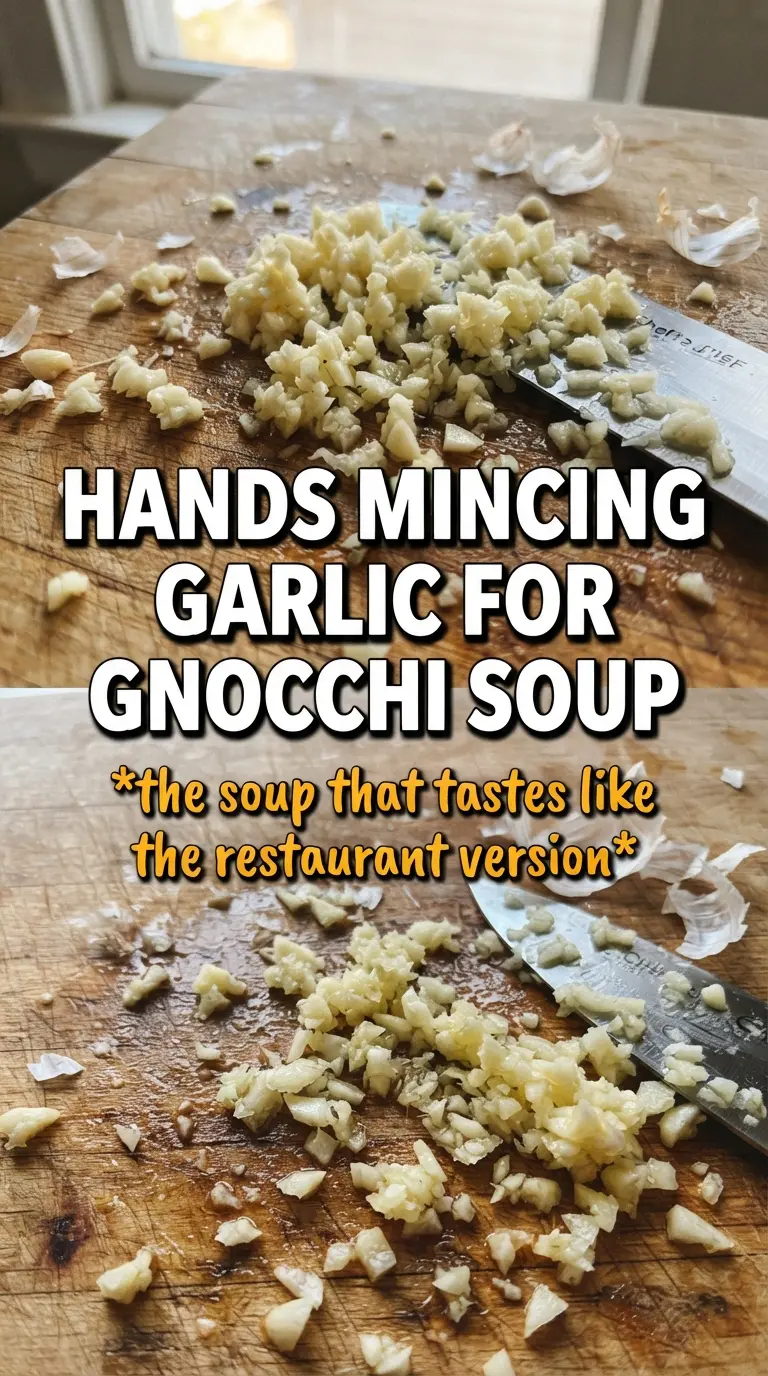
Add the garlic and Italian seasoning after the onion softens, then stir for about 2 minutes. The garlic should smell fragrant and warm, not harsh or toasted. If it starts to brown, the heat is too high and the flavor will go bitter fast, so pull the pot back before adding the liquid.
Adding the Broth, Cream, and Gnocchi
Pour in the broth first and bring it to a gentle simmer before stirring in the cream. That keeps the dairy from taking the full hit of direct heat and helps the soup stay smooth. Add the gnocchi once the liquid is hot and steady, then cook until they float and feel tender in the center, usually 3 to 4 minutes. If they sit too long after floating, they get bloated and start to break apart.
Finishing with Chicken, Spinach, and Cheese
Stir in the shredded chicken and spinach near the end so the chicken warms through without drying out. The spinach should wilt in just a couple of minutes. Turn the heat low before adding parmesan, then stir until it melts into the broth and the soup turns silky. A pinch of nutmeg and final salt and pepper pull everything together; if the soup tastes flat, it usually needs more salt, not more cream.
How to Adapt This Soup When You Need a Different Pantry or Dietary Fit
Make It Gluten-Free Without Losing the Comfort
Use certified gluten-free gnocchi if you can find it, or swap in gluten-free potato gnocchi from the refrigerated section. The texture stays close to classic gnocchi, and the soup still gets that same pillowy bite. Check the broth label too, since some brands sneak in wheat-based additives.
Use Rotisserie Chicken for a Faster Shortcut
Shredded rotisserie chicken works beautifully here and gives the soup a little extra depth from the roasted skin and seasoning. Add it only at the end so it stays juicy. If the chicken is heavily seasoned, taste before salting the broth so the soup doesn’t end up too salty.
Make It Dairy-Free with a Different Kind of Richness
Use unsweetened oat cream or a plain dairy-free cooking cream instead of heavy cream, then finish with a little extra broth if the soup gets too thick. Skip the parmesan or use a dairy-free parmesan-style substitute, but expect the flavor to be less savory and a little less glossy. A touch of extra salt and a spoonful of nutritional yeast can help replace some of that depth.
Stretch It for a Bigger Crowd
The soup scales well, but hold back a little extra broth if you’re making a large batch because gnocchi keeps absorbing liquid as it sits. For serving at a party, cook the gnocchi just to tender and let the soup rest a few minutes before ladling. That keeps it from turning overly thick in the pot.
Storage and Reheating
- Refrigerator: Store for up to 4 days. The gnocchi will keep soaking up broth, so the soup gets thicker as it sits.
- Freezer: It freezes, but the cream and gnocchi both take a hit. If you want to freeze it, do so before adding the gnocchi and spinach, then finish those fresh after reheating.
- Reheating: Warm it slowly over low heat on the stove with a splash of broth or water. A hard boil is the fastest way to break the cream and turn the gnocchi mushy, so keep the heat gentle and stop as soon as the soup is hot.
Answers to the Questions Worth Asking
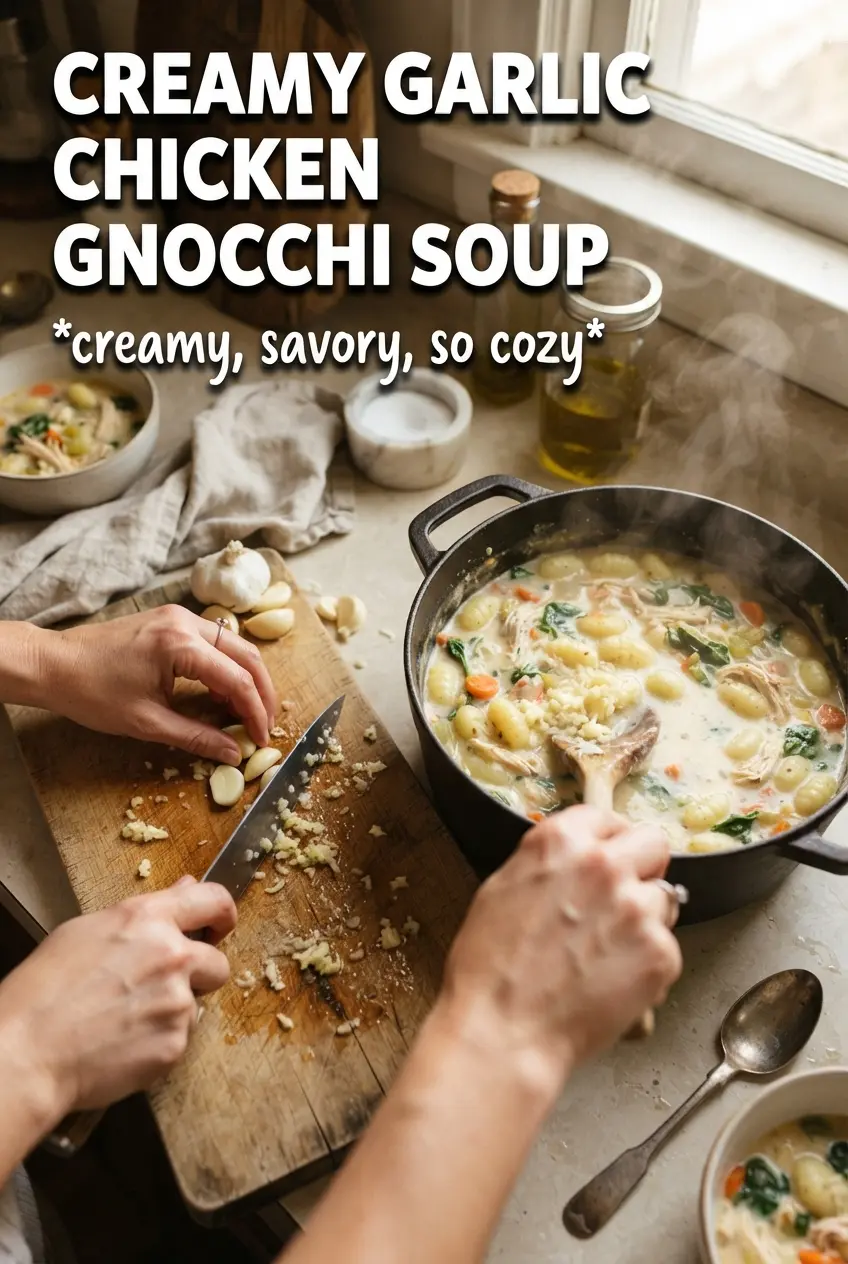
Creamy Garlic Chicken Gnocchi Soup
Ingredients
Equipment
Method
- Melt the butter in a large pot, then sauté the diced onion for 4 minutes until softened and translucent.
- Add the minced garlic and Italian seasoning, then cook for 2 minutes, stirring, until fragrant.
- Pour in the chicken broth and bring to a simmer, then stir in the heavy cream until smooth.
- Add the potato gnocchi and cook for 3-4 minutes, stirring occasionally, until the gnocchi float and are cooked through.
- Stir in the shredded chicken and baby spinach, then cook for 2 minutes until the spinach wilts.
- Stir in the grated parmesan and nutmeg, then season with salt and pepper until the flavor is balanced.
- Ladle into bowls and top with extra parmesan and fresh basil before serving.