Creamy chicken and rice soup lands in the bowl with a soft, velvety broth that clings to every spoonful without turning gluey. The chicken stays tender, the rice cooks right in the pot, and the carrots and celery give it that familiar, comforting backbone that keeps you going back for another ladle. It tastes like the kind of soup that earned a spot in the regular dinner rotation because it eats like a meal, not a starter.
What makes this version work is the order. The flour gets cooked briefly with the vegetables so the broth thickens smoothly instead of tasting pasty, and the rice goes in only after the chicken is cooked and shredded so it doesn’t soak up all the liquid too early. The cream goes in at the end, after the heat has dropped a bit, which keeps the soup rich instead of split or grainy.
Below, you’ll find the small details that keep the broth silky, the rice tender, and the chicken from drying out. There’s also a note on what to change if you want a lighter bowl or need to work with what’s already in the pantry.
The broth turned out silky instead of heavy, and the rice stayed tender without falling apart. I used the exact simmer times and the chicken shredded beautifully after 15 minutes.
Save this creamy chicken and rice soup for the nights when you want a silky broth, tender chicken, and one pot of comfort.
Why the Cream Goes in After the Rice Is Tender
The biggest mistake with creamy chicken and rice soup is adding the dairy too early and then letting it boil hard for the rest of the cooking time. That’s how you get a flat, broken broth instead of a smooth one with body. The rice also needs its own time in the pot; if it goes in too soon, it drinks up too much liquid and leaves you with stew instead of soup.
Cooking the chicken in the broth first gives you a richer base because the meat seasons the pot as it simmers. Once it’s cooked through, shredding it before the final creamy finish keeps every bite tender and evenly distributed. The result is a soup that stays balanced from the first bowl to the last.
What Each Ingredient Is Actually Doing in This Bowl

- Chicken breast — This gives you lean, shreddable meat that cooks directly in the broth and picks up all the seasoning. Breasts work well here because the soup finishes with cream, which adds back the richness that breast meat lacks. If you swap in thighs, the soup gets a deeper chicken flavor and a little more softness.
- Long grain white rice — Long grain rice stays separate and tender instead of turning mushy. Short grain rice releases too much starch and can make the soup overly thick. If you want to use brown rice, cook it longer and expect a firmer bite and a more absorbent pot.
- Butter and flour — This is the base of the broth’s body. The flour needs those 1 to 2 minutes in the butter so it loses the raw taste before liquid hits the pot. Skipping that step leaves the soup with a chalky, unfinished flavor.
- Heavy cream — This is what turns the soup from a chicken stew into a creamy bowl with real spoon-coating texture. Half-and-half will work in a pinch, but the broth will be thinner and less luxurious. Add it at the end over low heat so it blends in smoothly.
- Carrots, celery, onion, and garlic — These build the classic soup flavor and keep the base from tasting one-note. Dice the onion evenly so it softens at the same pace as the carrots and celery, and don’t rush the first sauté or the broth will taste flat.
- Thyme, parsley, and nutmeg — Thyme and parsley give the soup its familiar herbal backbone, while nutmeg adds a subtle warmth that disappears if you leave it out but makes the broth taste rounded. The nutmeg is easy to overdo, so keep it to a small pinch and let it whisper in the background.
Building the Pot in the Right Order
Softening the Vegetables
Start by melting the butter and cooking the onion, carrots, and celery until the onion turns translucent and the edges of the vegetables look glossy. You’re not trying to brown them hard; you’re waking up their sweetness. If the pot runs too hot, the butter will darken before the vegetables soften, and the soup base will taste sharp instead of mellow.
Cooking Out the Flour
Stir in the garlic and flour and let them cook for a minute or two before any broth goes in. The mixture should look pasty and lightly coating, not dry or dusty. This is the point that keeps the soup from tasting raw or floury later, so don’t shortchange it.
Simmering the Chicken
Pour in the broth gradually while stirring, then add the chicken, thyme, parsley, and nutmeg. Keep the soup at a gentle simmer until the chicken is cooked through and pulls apart easily, about 15 to 18 minutes. A hard boil will make the chicken stringy and can make the broth cloudy.
Cooking the Rice and Finishing Creamy
Remove the chicken, shred it, and bring the soup to a boil before adding the rice. Cover and simmer until the rice is tender, then stir in the cream and shredded chicken and let everything warm through for a few minutes. If you add the cream before the rice is done, the soup can thin out and the dairy won’t have the same clean finish.
How to Adapt This Soup Without Losing the Creamy Texture
Use chicken thighs for a richer bowl
Boneless, skinless thighs bring a deeper chicken flavor and stay juicy even if they simmer a few minutes longer. The soup ends up a little more luxurious, with less chance of dry shredded chicken. Use the same timing and shred once the meat is fully cooked and tender.
Make it dairy-free with full-fat coconut milk
Full-fat coconut milk gives you creaminess, but it changes the flavor slightly and adds a gentle coconut note. It works best if you lean into the herbs and keep the nutmeg light. The broth won’t taste identical, but it will still be silky and satisfying.
Use brown rice if you want a heartier soup
Brown rice adds a nuttier flavor and a firmer texture, but it takes longer to cook and absorbs more broth. Add extra liquid and plan on a longer simmer, or cook the rice separately and stir it in at the end. That keeps the soup from turning thick before the rice is done.
Storage and Reheating
- Refrigerator: Store for up to 4 days. The rice will keep absorbing broth, so the soup thickens as it sits.
- Freezer: It freezes, but the rice softens after thawing. For the best texture, freeze the soup before adding the rice and cream, then finish those fresh when reheating.
- Reheating: Warm it gently over low heat with a splash of broth or water. A hard boil will overcook the rice and can make the cream separate.
Answers to the Questions Worth Asking
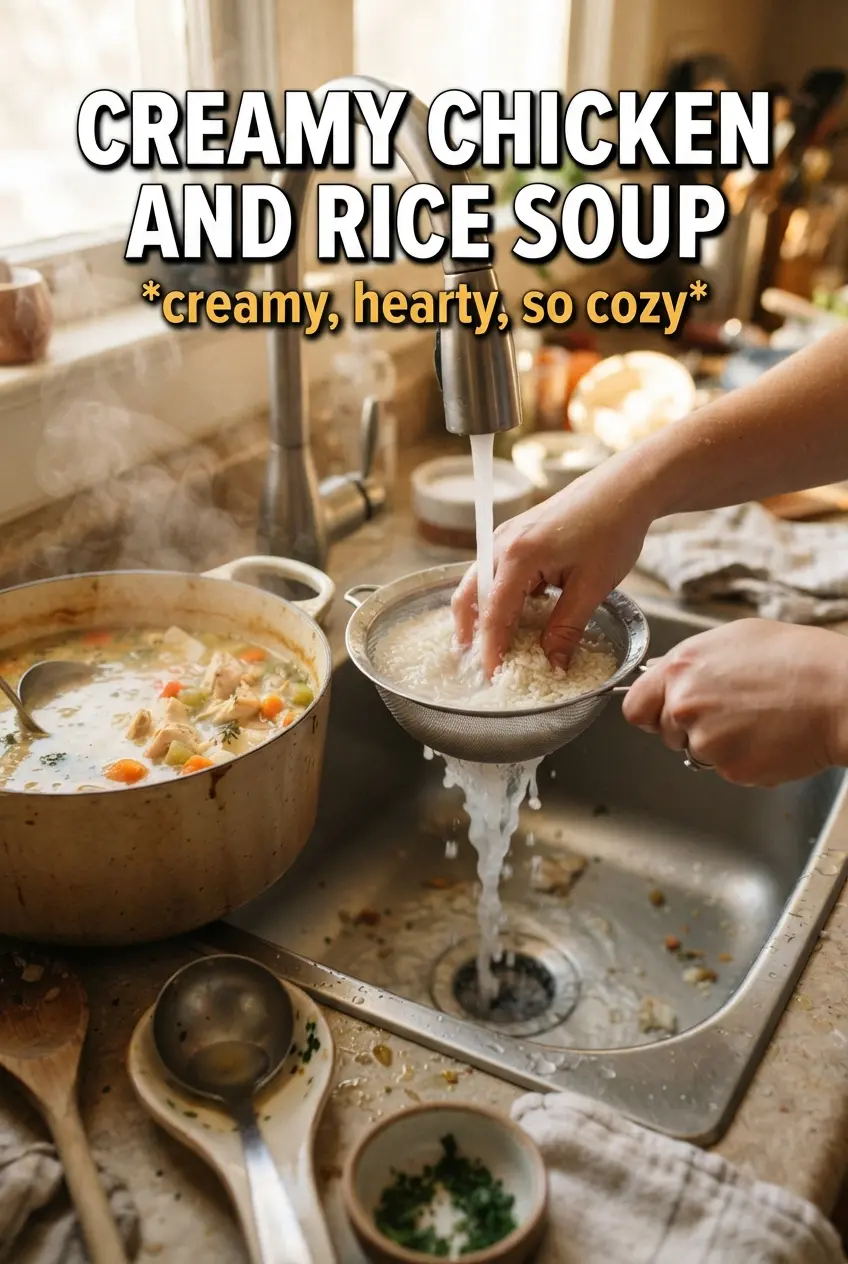
Creamy Chicken And Rice Soup
Ingredients
Equipment
Method
- Melt the butter in a large pot over medium heat, then sauté the onion, carrots, and celery for 5 minutes until beginning to soften.
- Add the garlic and flour, then cook for 1-2 minutes, stirring, until the mixture smells toasted and looks slightly thickened.
- Gradually pour in the chicken broth, whisking as needed, then add the chicken, thyme, dried parsley, and nutmeg.
- Simmer for 15-18 minutes until the chicken is cooked through, then remove the chicken and shred it.
- Bring the soup back to a boil, then stir in the long grain white rice.
- Cover and simmer for 18 minutes until the rice is tender and the soup is thickened.
- Stir in the heavy cream and the shredded chicken, then simmer for 5 minutes to warm through.
- Season with salt and pepper to taste, then serve hot.