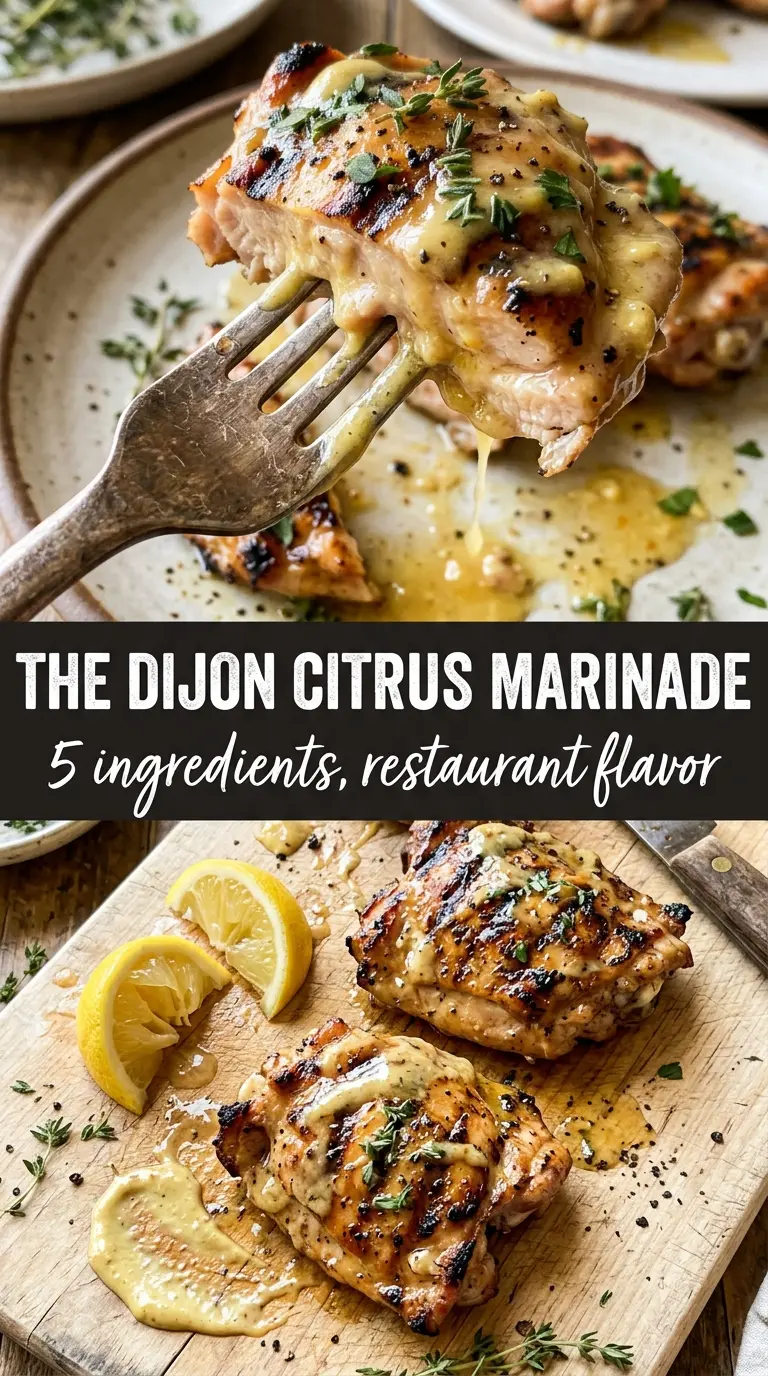
Juicy grilled chicken gets a bright, savory lift from this citrus Dijon marinade. The mustard brings body and a gentle bite, while orange and lemon juice keep the flavor lively without turning the meat sharp or thin. What you end up with is chicken that tastes polished enough for company but still easy enough for a weeknight grill.
The trick here is balance. Dijon does more than add flavor; it helps the marinade cling to the chicken so the citrus and garlic don’t just run off into the bowl. A little honey rounds out the acidity, and a short marinade window keeps the chicken tender without making the surface mushy. If you’ve ever had grilled chicken that tasted good on the outside but bland in the middle, this version fixes that.
Below, I’ve added the part that matters most: how long to marinate, what to do if you only have bottled citrus juice, and how to keep the chicken juicy on the grill. Those small choices make a bigger difference here than people expect.
The marinade gave the chicken a bright, tangy crust on the grill, and the mustard helped it brown without drying out. I used thighs and they stayed juicy even after the 5-minute rest.
Save this Citrus Dijon Grilled Chicken Marinade for juicy chicken with a sharp, golden glaze and almost no cleanup.
The Small Mistake That Makes Citrus Marinades Taste Flat
Most citrus marinades fail for one simple reason: they lean too hard on acid and not hard enough on fat and salt. Citrus gives brightness, but by itself it can taste thin and wash out once it hits the grill. Dijon changes that by adding emulsifying power and a savory backbone, so the marinade coats the chicken instead of sliding off in a watery layer.
The other thing that matters is time. Two to eight hours is the sweet spot here. Less than that, and the chicken won’t pick up much flavor. Much longer than that, especially with smaller cuts, and the citrus can start to rough up the surface instead of seasoning it.
- Dijon mustard — This is the anchor. It binds the marinade and gives it that tangy, slightly sharp finish that plain yellow mustard can’t match.
- Orange juice — Orange keeps the marinade round and fragrant. Bottled juice works in a pinch, but fresh orange juice gives a cleaner, brighter flavor.
- Lemon juice — This is the sharper edge. Use it exactly as written so the marinade stays lively without taking over.
- Honey — Just enough to soften the acidity and help the chicken brown. Don’t add much more or the sugars can scorch before the chicken cooks through.
- Olive oil — Oil carries the flavor and helps keep the chicken from sticking to the grill. A standard olive oil is fine here; save the fancy bottle for finishing.
What Each Ingredient Is Actually Doing on the Grill
Chicken — Any cut works, but the timing changes with thickness. Thighs stay juicier and are the easiest if you’re worried about overcooking. Breasts need a closer eye and are best if they’re pounded to an even thickness.
Olive oil and Dijon — These are what help the marinade cling and brown. If you skip the oil, the surface can dry out faster. If you swap the Dijon for a milder mustard, you lose the sharpness that makes this taste distinctive.
Citrus juices — The orange brings sweetness and aroma, while the lemon keeps the flavor from feeling sleepy. Fresh juice matters more here than in many marinades because there are only a few ingredients doing the work.
Garlic and thyme — They add the savory note that keeps the marinade from reading like salad dressing. Dried thyme works well because it holds up in the marinade and on the grill; fresh thyme is fine, but use a little more lightly.
The 20 Minutes That Actually Matter Before and After the Grill
Mixing the Marinade Until It Looks Smooth
Whisk the olive oil, mustard, juices, garlic, honey, thyme, salt, and pepper until the mixture looks glossy and fully blended. If it looks streaky, the oil and citrus haven’t come together yet, and the coating won’t cling evenly. Taste the marinade before the chicken goes in; it should be punchy, because some of that flavor softens during cooking.
Marinating Without Overdoing the Acid
Put the chicken in a zip-top bag or shallow dish and coat it well. Two hours gives good flavor, and eight hours is the top end I’d use for most cuts. If you leave it much longer, especially with boneless breasts, the citrus can start to make the texture a little chalky on the outside.
Grilling to Juicy, Not Dry
Preheat the grill to medium-high and let it get fully hot before the chicken goes on. You want the chicken to sizzle when it hits the grates, not steam. Cook until the thickest part reaches 165°F, turning only as needed to build clean grill marks; if the outside is browning too fast, move it to a cooler spot on the grill instead of dropping the heat too low.
Letting the Meat Rest Before Slicing
Give the chicken five minutes off the grill before cutting into it. That short rest lets the juices settle back into the meat instead of running all over the cutting board. If you slice immediately, even perfectly cooked chicken can seem dry because all the moisture is still moving.
How to Adapt This Marinade When You Need a Different Finish
Dairy-Free and Gluten-Free as Written
This recipe already fits both diets without any changes, as long as your Dijon mustard is gluten-free. That makes it an easy one to serve to a mixed crowd without changing the texture or flavor at all.
Use Chicken Thighs for the Juiciest Result
Thighs handle the marinade beautifully and stay tender even if the grill runs a little hot. They also pick up a deeper browned edge because the higher fat content works well with the honey and mustard.
Turn It Into a Sheet Pan Dinner
If you don’t want to grill, roast the marinated chicken at 425°F until it reaches temperature. You’ll lose the smoky char, but the citrus-Dijon flavor stays intact and the honey still helps the edges caramelize.
Skip the Honey for a Less Sweet Finish
Leaving out the honey gives you a sharper, more savory marinade with less browning. If you do that, keep an eye on the grill because the chicken may color a little more slowly and the citrus will come through more boldly.
Storage and Reheating
- Refrigerator: Store cooked chicken in an airtight container for up to 4 days. The flavor stays bright, though the crust softens a bit.
- Freezer: Freeze cooked chicken for up to 2 months. Slice it first so it thaws faster and reheats more evenly.
- Reheating: Warm it gently in a covered skillet over low heat with a splash of water or broth. High heat dries out grilled chicken fast and turns the edges tough before the center is warm.
Questions I Get Asked About This Recipe

Citrus Dijon Grilled Chicken Marinade
Ingredients
Equipment
Method
- Whisk together olive oil, Dijon mustard, orange juice, lemon juice, garlic, honey, and dried thyme with salt and pepper until smooth and uniform.
- Place chicken in a large zip-top bag and pour the marinade over the chicken so it’s evenly coated.
- Refrigerate the bag for 2-8 hours so the chicken absorbs the citrus-Dijon flavor.
- Preheat the grill to medium-high heat until hot.
- Grill chicken until the internal temperature reaches 165°F, with timing varying by cut, watching for golden exterior and juices to run clear.
- Let the chicken rest for 5 minutes before serving so the juices redistribute for a tender bite.