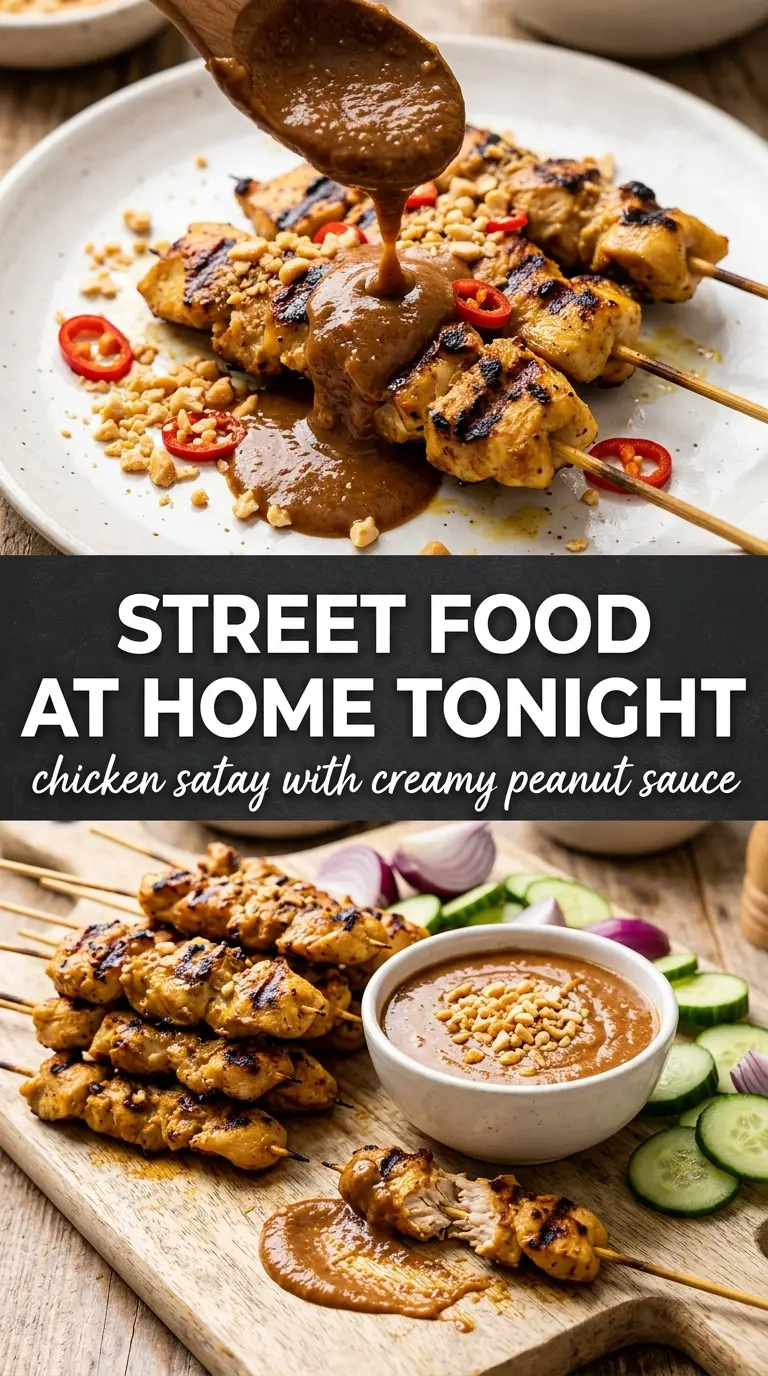
Chicken satay earns its place on the table the first time you bite into it: smoky edges, tender meat inside, and a peanut sauce that clings to every strip instead of sliding off the plate. The marinade gives the chicken that deep golden color and the layered savory-sweet taste people usually expect only from a restaurant grill.
The key is in the balance. Coconut milk softens the chicken and carries the spices, while fish sauce and soy sauce build the salty backbone. A little brown sugar helps the surface caramelize fast over medium-high heat, which is exactly what you want for skewers that cook quickly without drying out.
Below you’ll find the trick to keeping the satay juicy, how to thin the peanut sauce to the right dipping consistency, and a couple of swaps that still keep the dish close to the version worth making again.
The chicken stayed juicy even after grilling, and the peanut sauce thickened up just enough to coat the skewers without being pasty. My family kept dunking the cucumber slices in it after the satay was gone.
Save this chicken satay with peanut sauce for the nights when you want smoky grilled chicken and a creamy dip that comes together fast.
The Marinade That Gives You Char Without Drying Out the Chicken
Chicken thighs handle high heat better than breast meat, which matters here because satay should pick up color quickly before the outside has time to toughen. The coconut milk in the marinade isn’t just there for flavor; it coats the chicken and helps the spices cling, so every bite tastes seasoned all the way through.
The mistake that ruins this dish is over-marinating in a heavy salt mixture without enough fat or sweetener to balance it. This version keeps the seasoning bold but not harsh, and the brown sugar gives the grill something to work with. If the chicken goes onto the grill looking wet and slippery, give it a minute to drain; a dry surface browns better and releases cleanly from the grates.
What Each Ingredient Is Actually Doing in This Recipe
- Primary ingredient (the star) — Quality matters most. Choose the best you can find.
- Cooking medium (oil, butter, or broth) — This carries flavors and prevents dryness.
- Seasonings (salt, pepper, spices, herbs) — Layer flavors so nothing overpowers. Build depth gradually.
- Aromatics (garlic, onion, herbs) — Cook with fat to bloom flavors. Become the foundation.
- Supporting ingredients — Complement the main ingredient without overpowering it.
- Sauce or liquid (if applicable) — Brings flavors together. Balance richness with acid.
- Acid (lemon, vinegar, wine, or other) — Brightens and prevents flat-tasting results.
- Final finish (garnish, glaze, or sauce) — Prevents one-dimensional taste and adds visual appeal.
What the Peanut Sauce Is Doing Beyond Dipping
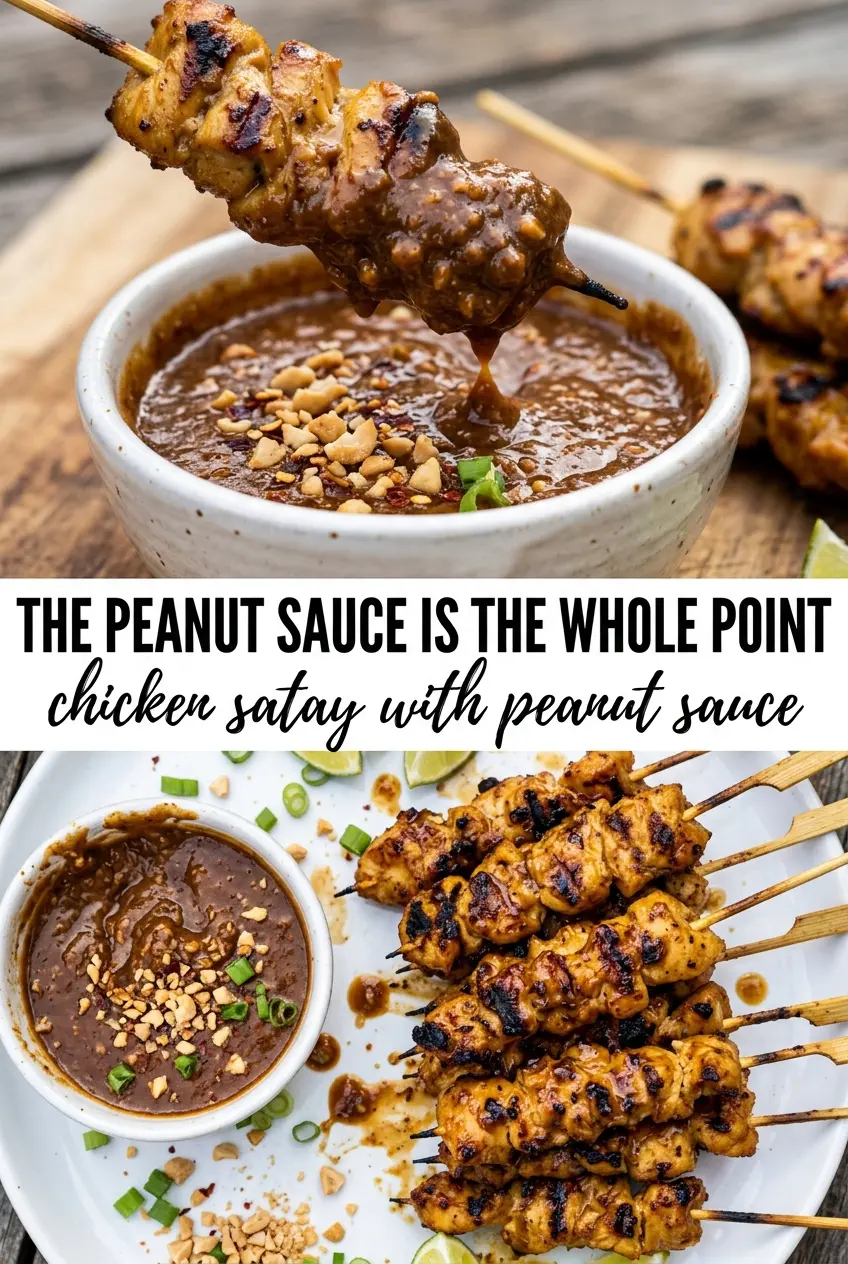
Before the sauce ever reaches the platter, every ingredient has a job. Peanut butter brings body, soy sauce and lime juice sharpen it, honey rounds the edges, and sriracha gives it a little lift so it doesn’t taste flat against the grilled chicken. The remaining coconut milk helps the sauce turn silky instead of thick and pasty.
- Chicken thighs — Thighs stay tender over direct heat and take the marinade better than lean breast meat. If you use breast, slice it thin and pull it off the grill the second it turns opaque all the way through.
- Coconut milk — Use full-fat coconut milk if you can. It carries the spices and keeps the marinade from tasting thin.
- Fish sauce — This is the ingredient that gives the satay its deep savory edge. There isn’t a perfect substitute, but in a pinch you can use extra soy sauce with a tiny splash of lime, knowing the flavor will be less complex.
- Peanut butter — Creamy peanut butter gives the smoothest sauce. Natural peanut butter works too, but stir it well first so the oil doesn’t throw off the texture.
- Warm water — Add it slowly at the end. Peanut sauce can look too thick at first, then loosen all at once, so stop as soon as it turns glossy and spoonable.
Getting the Skewers to Grill Cleanly and Stay Juicy
Marinating the Chicken
Whisk half the coconut milk with the soy sauce, fish sauce, brown sugar, turmeric, coriander, cumin, and garlic, then add the chicken and turn it until every strip is coated. Two hours gives you enough time for the flavor to settle in without turning the surface soft. If you go much longer than that, the salt can start to cure the meat instead of just seasoning it.
Building the Peanut Sauce
Whisk the peanut butter, soy sauce, lime juice, honey, sriracha, garlic, and the remaining coconut milk until the sauce looks smooth and unified. It may look broken for a moment, but keep whisking and it comes together. Thin it with warm water a tablespoon at a time until it falls off a spoon in a slow ribbon; if you add too much at once, it turns watery and loses that clingy texture.
Threading and Grilling
Soak the wooden skewers long enough that they don’t scorch on the grill, then thread the chicken in loose folds rather than flat straight strips. That shape gives you more surface area for browning and keeps the meat from tightening up into little hard pieces. Grill over medium-high heat until you see dark char marks and the chicken feels firm but still springy; if the heat is too low, the skewers dry out before they color.
How to Adapt the Satay Without Losing the Point of the Dish
Gluten-Free Version
Use tamari or a certified gluten-free soy sauce in both the marinade and the peanut sauce. The texture stays the same, and the flavor lands in the same place, so this is an easy swap that doesn’t cost you much at all.
Dairy-Free Already, with One Thing to Watch
This recipe is naturally dairy-free as written. Just check your peanut butter and soy sauce labels if you’re cooking for someone with allergies, since some brands add trace ingredients or shared processing notes.
Milder Peanut Sauce
Cut the sriracha in half and add the heat a little at a time at the end. You keep the creamy peanut flavor front and center, which works better if you’re serving kids or anyone who likes the sauce more mellow.
Make-Ahead for a Crowd
Marinate the chicken the day before and mix the sauce up to two days ahead. Keep the sauce chilled and whisk in a splash of warm water before serving, because it tightens in the fridge and needs loosening to get back to that dipping consistency.
Storage and Reheating
- Refrigerator: Store cooked chicken and sauce separately for up to 3 days. The chicken stays good, but the sauce thickens as it chills.
- Freezer: The cooked chicken freezes well for up to 2 months. Freeze the sauce separately if you must, though the peanut texture may need a good whisk after thawing.
- Reheating: Reheat the chicken gently in a skillet over medium-low heat or in a 300°F oven until just warmed through. High heat dries out the edges fast, especially once the chicken has already been grilled.
Questions I Get Asked About This Recipe
Chicken Satay With Peanut Sauce
Ingredients
Equipment
Method
- Combine half the coconut milk with soy sauce, fish sauce, brown sugar, turmeric, coriander, cumin, and garlic. Marinate the chicken strips for at least 2 hours in the refrigerator.
- Whisk peanut butter, soy sauce, lime juice, honey, sriracha, garlic, and the remaining coconut milk until smooth. Thin with warm water to reach a pourable, dip-able texture.
- Soak wooden skewers in water for 30 minutes. Thread the marinated chicken strips onto the skewers.
- Preheat a grill to medium-high heat and grill the skewers for 5-6 minutes per side until char marks appear and the chicken is cooked through.
- Serve the satay immediately with peanut sauce on the side. Add cucumber slices and lime wedges for freshness.