Golden-seared chicken breast with a molten mushroom, garlic butter, and cheese center earns a permanent place in the dinner rotation fast. The outside gets deeply caramelized in the skillet, then the oven finishes the chicken without drying out the filling, so every slice gives you tender meat, savory mushrooms, and that stretchy, gooey pull that makes stuffed chicken worth the extra few minutes.
The part that makes this version work is the mushroom filling. The mushrooms cook long enough for their moisture to evaporate before the cheese goes in, which keeps the filling rich instead of watery. A quick cool-down before stuffing matters too, because hot filling starts melting the cheese too early and makes the pockets harder to seal.
Below, I’m walking through the little details that keep the chicken juicy and the filling tucked inside. There’s also a note on how to avoid a soggy skillet and what to do if your chicken breasts are on the thick side.
The mushrooms cooked down until the filling was thick instead of watery, and the cheese stayed inside the chicken when I sliced it. That garlic butter drizzle at the end was the best part.
Save this cheesy garlic butter mushroom stuffed chicken for the night you want a crisp sear, a juicy center, and that mushroom-cheese filling to stay put.
The Filling Has to Lose Its Moisture Before It Goes Anywhere Near the Chicken
The mistake that ruins stuffed chicken most often is rushing the mushroom filling. Mushrooms hold a lot of water, and if that water stays in the pan, it ends up leaking into the chicken pocket and making the whole dish slack. Cook them until the pan looks dry again and the mushrooms have shrunk down, browned a little, and smell deep and savory.
Let the filling cool for a few minutes before you add the cheese. If it’s too hot, the cheese melts into a loose mess instead of holding together inside the breast. You want a mixture that clumps when you stir it, not one that runs like sauce.
What the Mushrooms, Cheese, and Garlic Each Need to Do Here
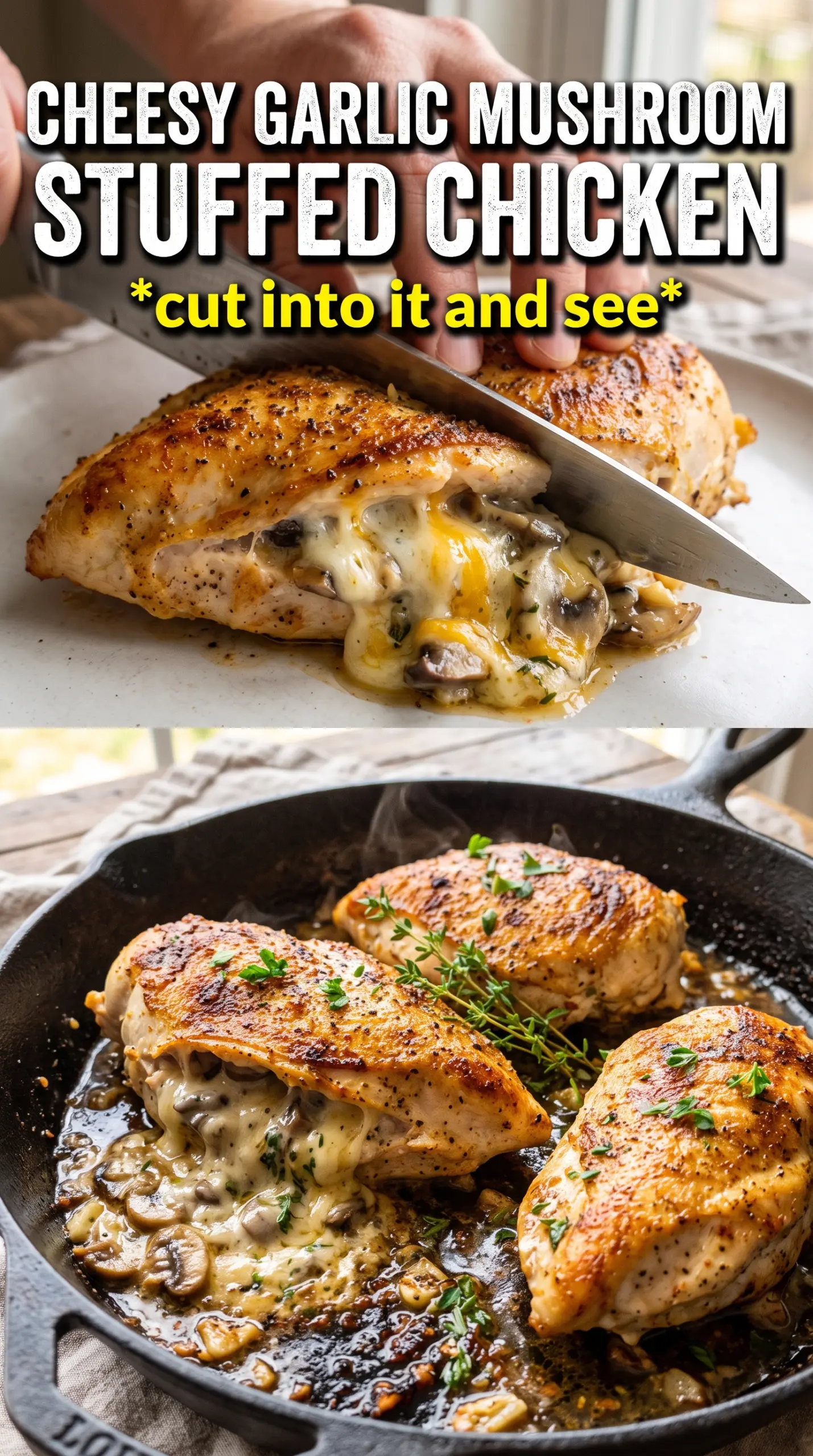
- Cremini mushrooms — These bring the earthy, meaty base that makes the stuffing taste substantial. White button mushrooms work in a pinch, but cremini give you more depth and hold their shape better once diced and cooked down.
- Butter — This carries the garlic and helps the mushrooms brown instead of steaming. You can use salted or unsalted butter; just taste the filling before stuffing because the Parmesan adds salt too.
- Garlic — Fresh minced garlic matters here because it perfumes the butter and mushrooms in a way garlic powder can’t. Cook it for only a minute after the mushrooms are done, or it turns sharp and bitter.
- Mozzarella and Parmesan — Mozzarella gives you the melt, while Parmesan gives the filling structure and a salty finish. Pre-shredded mozzarella works, but a block you shred yourself melts cleaner and tastes fresher.
- Chicken breasts — Use breasts that are similar in size so they finish at the same time. If one is much thicker, pound it lightly before cutting the pocket so the outside doesn’t overcook before the center reaches temperature.
Stuff the Pockets First, Then Let the Skillet and Oven Do Their Jobs
Building the mushroom mixture
Cook the diced mushrooms in butter over medium-high heat until they give off their liquid, then keep going until that liquid cooks away and the mushrooms start to turn golden at the edges. Add the garlic and thyme only after the pan looks mostly dry, because garlic burns fast in a wet pan with too much heat. Stir in the cheeses off the heat so the filling stays thick and spoonable.
Cutting and seasoning the chicken
Slice a deep pocket into the side of each chicken breast, keeping your knife parallel to the cutting board so you don’t cut clean through. Season the inside and outside well with salt, pepper, garlic powder, and smoked paprika. If the seasoning looks light, it probably is; chicken breast needs more than a dusting or the filling will outshine the meat in the wrong way.
Searing for color before baking
Use an oven-safe skillet and get the olive oil hot before the chicken goes in. You want a loud sizzle and a browned crust after 3 to 4 minutes per side, not pale chicken that has just warmed through. If the heat is too low, the chicken releases liquid and steams, which makes it hard to get that golden crust before it goes into the oven.
Finishing in the oven and resting
Bake just until the thickest part of the chicken reaches 165°F. Pull it out and let it rest for 5 minutes before slicing so the filling settles and the juices stay in the meat instead of running onto the board. Remove the toothpicks before serving, then drizzle with extra garlic butter while the chicken is still hot enough to melt it over the top.
How to Adapt This Stuffed Chicken When You Need a Different Finish
Make it dairy-free
Use dairy-free butter, a melty plant-based cheese, and skip the Parmesan or replace it with a dairy-free hard cheese alternative. The filling won’t get quite the same salty richness, but it’ll still hold together if you cook the mushrooms down until dry.
Swap in a different mushroom
Button mushrooms work if that’s what you’ve got, and chopped baby bellas give the closest match to cremini. Avoid large, watery slices, since the finer dice is what keeps the stuffing tucked inside the chicken instead of falling apart.
Turn it into a gluten-free dinner
This recipe is naturally gluten-free as written, as long as your cheeses and seasonings are certified gluten-free. That’s one reason it works so well for a weeknight main dish: the structure comes from the chicken and the cooked-down filling, not bread crumbs or flour.
Use chicken thighs instead
Boneless, skinless thighs can be rolled around the filling instead of cut into pockets, but the bake time changes and the shape won’t slice as cleanly. You’ll get a juicier result with a more rustic look, which works well if you’re less concerned about that neat stuffed-chicken presentation.
Storage and Reheating
- Refrigerator: Store leftovers in an airtight container for up to 3 days. The filling stays tasty, though the chicken firms up a bit after chilling.
- Freezer: Freeze tightly wrapped portions for up to 2 months. The texture of the cheese changes slightly after thawing, but this still reheats well if you want a make-ahead dinner.
- Reheating: Warm covered in a 325°F oven until heated through, or use short bursts in the microwave at medium power. High heat dries out the chicken fast and can make the cheese separate before the center is hot.
Answers to the Questions Worth Asking
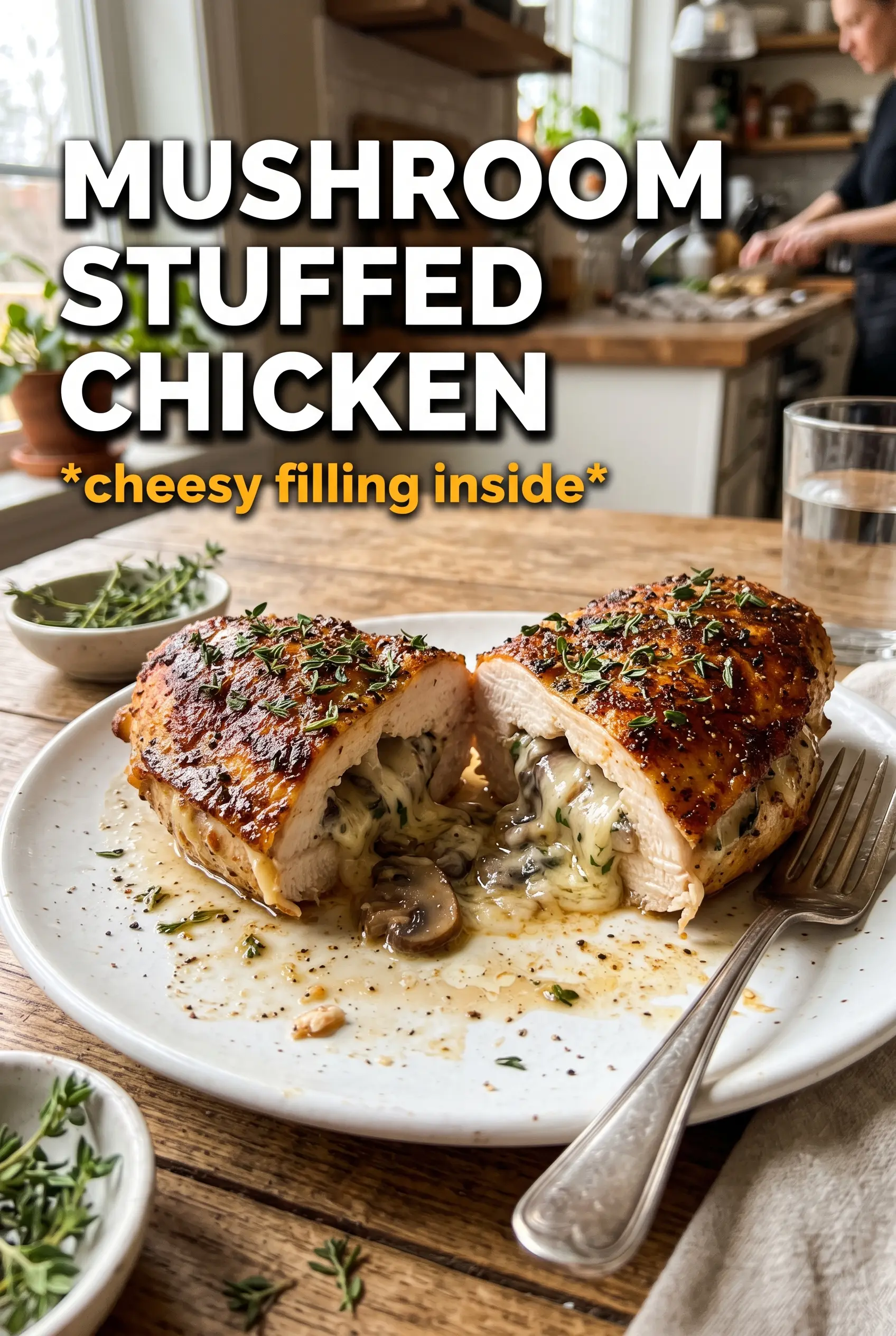
Cheesy Garlic Butter Mushroom Stuffed Chicken
Ingredients
Equipment
Method
- Melt the butter in an oven-safe skillet over medium-high heat, add the diced cremini mushrooms, and cook 5-6 minutes until all moisture has evaporated, stirring occasionally as they brown.
- Add the minced garlic and fresh thyme leaves and cook 1 minute, just until fragrant, then turn off the heat and cool slightly.
- Stir in the shredded mozzarella cheese and the grated Parmesan cheese until the mixture turns cohesive and stretchy.
- Cut a deep pocket in each chicken breast, then season inside and out generously with salt, pepper, garlic powder, and smoked paprika.
- Spoon the mushroom cheese mixture into each pocket and secure the openings with toothpicks so the filling stays contained.
- Heat the olive oil in the oven-safe skillet over medium-high heat and sear the stuffed chicken breasts 3-4 minutes per side until golden.
- Bake at 400°F for 18-22 minutes until the internal temperature reaches 165°F.
- Remove the toothpicks, drizzle with extra garlic butter, and rest 5 minutes before slicing so the filling stays molten and the juices settle.