Baked Tuscan chicken casserole lands in that sweet spot between comfort food and a dinner that still feels a little special. The chicken comes out juicy with crisp, browned skin, and the sauce turns into a silky Parmesan cream packed with sun-dried tomato richness and wilted spinach. It’s the kind of one-dish meal that looks like you spent a lot more time on it than you did.
What makes this version work is the order of operations. Searing the chicken first builds flavor in the pan and gives you drippings to carry the sauce, while the oven finishes the thighs gently so they stay tender. The cream goes in after the broth is reduced a bit, which helps it thicken without turning greasy or flat. A handful of Parmesan gives the sauce body, and the spinach goes in at the end so it stays green instead of dissolving into the pan.
If you’ve ever had a cream sauce go thin, split, or taste dull, the notes below will help you avoid that. I’ve also included a few useful swaps and the one reheating tip that keeps the sauce from breaking the next day.
The sauce thickened up beautifully in the oven and the chicken stayed juicy all the way through. I was worried the spinach would disappear, but it held its color and made the whole dish taste fresh.
Love the bubbling Parmesan cream, golden chicken thighs, and sun-dried tomato sauce in this Tuscan chicken casserole? Save it to Pinterest for an easy one-dish dinner night.
The Part That Keeps the Cream Sauce From Breaking
The biggest mistake in a dish like this is rushing the sauce after the chicken comes out of the skillet. If the pan is screaming hot when the cream goes in, the dairy can separate before it has a chance to thicken. This recipe avoids that by deglazing with broth first, which cools the pan just enough and loosens the browned bits from the bottom.
Parmesan also needs a little respect here. Add it after the cream is in and the liquid has started to look slightly glossy, not while the pan is boiling hard. That keeps the sauce smooth instead of grainy. The oven does the last bit of work, so you get a thick, clingy sauce without standing over the stove trying to reduce it into a paste.
What Each Ingredient Is Actually Doing In This Casserole
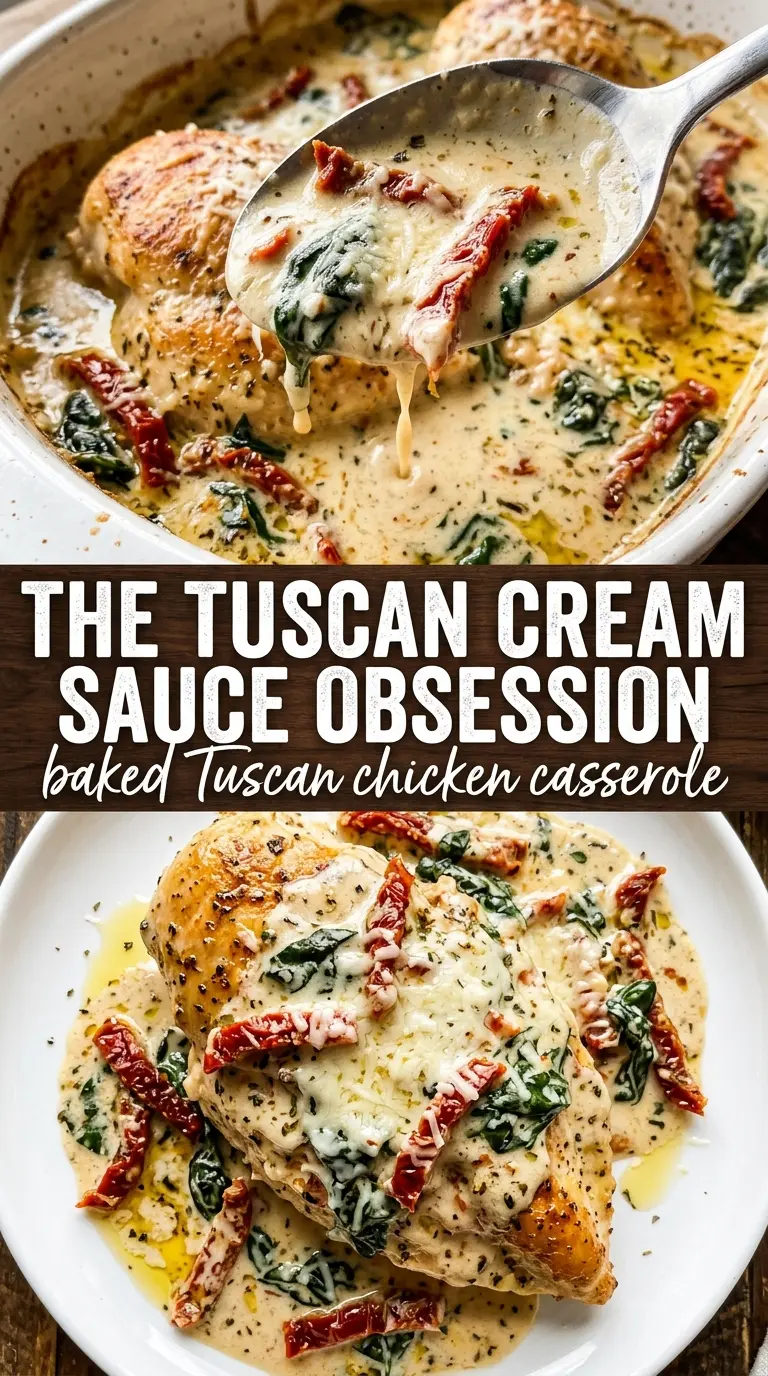
- Bone-in, skin-on chicken thighs — These hold up to the oven better than breasts and stay juicy while the sauce finishes. The skin also gives you the best browning in the skillet, which adds flavor to everything that follows.
- Sun-dried tomatoes in oil — These bring concentrated tomato flavor and a little richness from the oil they’re packed in. Drain them before slicing so the sauce doesn’t get oily, but don’t rinse them; that flavor is the point.
- Heavy cream — This is what gives the sauce its body and that smooth, spoon-coating finish. Half-and-half will work in a pinch, but the sauce will be thinner and more likely to look split after baking.
- Parmesan cheese — Freshly grated Parmesan melts more cleanly than the pre-shredded kind, which can leave the sauce a little sandy. If you only have the packaged stuff, use it sparingly and stir it in off the heat so it has less chance to clump.
- Baby spinach — It wilts fast and adds freshness at the end without taking over the dish. Larger spinach leaves can work, but tear them first so they fold into the sauce evenly.
- Chicken broth — This deglazes the pan and starts the sauce before the cream goes in. Use low-sodium broth if you can, since the Parmesan and seasoned chicken already bring plenty of salt.
Building the Skillet So the Oven Can Finish the Job
Searing the Chicken Until the Skin Releases Cleanly
Start with the chicken skin-side down in a hot skillet and leave it alone until the skin turns deeply golden and lifts easily from the pan. If it sticks when you try to move it, it’s not ready yet. That first sear is where the flavor starts, and it also renders enough fat to help the sauce later. Flip it after 6 to 7 minutes, then give the second side just enough time to pick up color before the chicken comes out.
Making the Sauce in the Same Pan
Garlic and sun-dried tomatoes go into the leftover fat and browned bits, not a clean pan. Stir them just until the garlic smells fragrant, about a minute, then add the broth and scrape up everything stuck on the bottom. That browned layer is the backbone of the sauce. Once the cream and Parmesan go in, keep the heat moderate and let the sauce look slightly thickened before the chicken returns.
Finishing in the Oven Without Overcooking the Thighs
Return the chicken skin-side up so the top stays crisp as it bakes. The oven should finish the thighs in about 20 to 22 minutes, but temperature is the real test: 165°F at the thickest part. Pull the pan when the sauce is bubbly and the chicken is done, then stir in the spinach while the casserole is still hot. It wilts fast, and that keeps the greens bright instead of mushy.
How to Adapt This for a Few Different Kitchens
Make It Dairy-Free
Use full-fat canned coconut cream instead of heavy cream and swap in a dairy-free Parmesan-style cheese. The sauce will be a little softer and carry a faint coconut note, but the sun-dried tomatoes and garlic still keep it savory.
Use Chicken Breasts Instead of Thighs
Chicken breasts work, but they cook faster and dry out sooner, so reduce the oven time and start checking early. I’d brown them lightly, then bake only until they reach 165°F so they stay tender.
Make It Gluten-Free
This casserole is naturally gluten-free as written, as long as your chicken broth is certified gluten-free. That’s one of the nice things about a cream sauce built from scratch — there’s no flour needed to thicken it.
Stretch It Into a Bigger Dinner
Add cooked pasta, rice, or crusty bread on the side if you need to feed more people. If you want to bulk up the pan itself, stir in sautéed mushrooms or serve the chicken over mashed potatoes so the sauce has something to soak into.
Storage and Reheating
- Refrigerator: Store leftovers in an airtight container for up to 4 days. The sauce will thicken as it chills, which is normal.
- Freezer: It freezes, but the cream sauce can separate a little after thawing. For the best texture, freeze just the chicken and tomato mixture, then add fresh cream and Parmesan when reheating.
- Reheating: Warm it slowly in a covered skillet over low heat with a splash of broth or cream. High heat is the fastest way to break the sauce and dry out the chicken.
Answers to the Questions Worth Asking
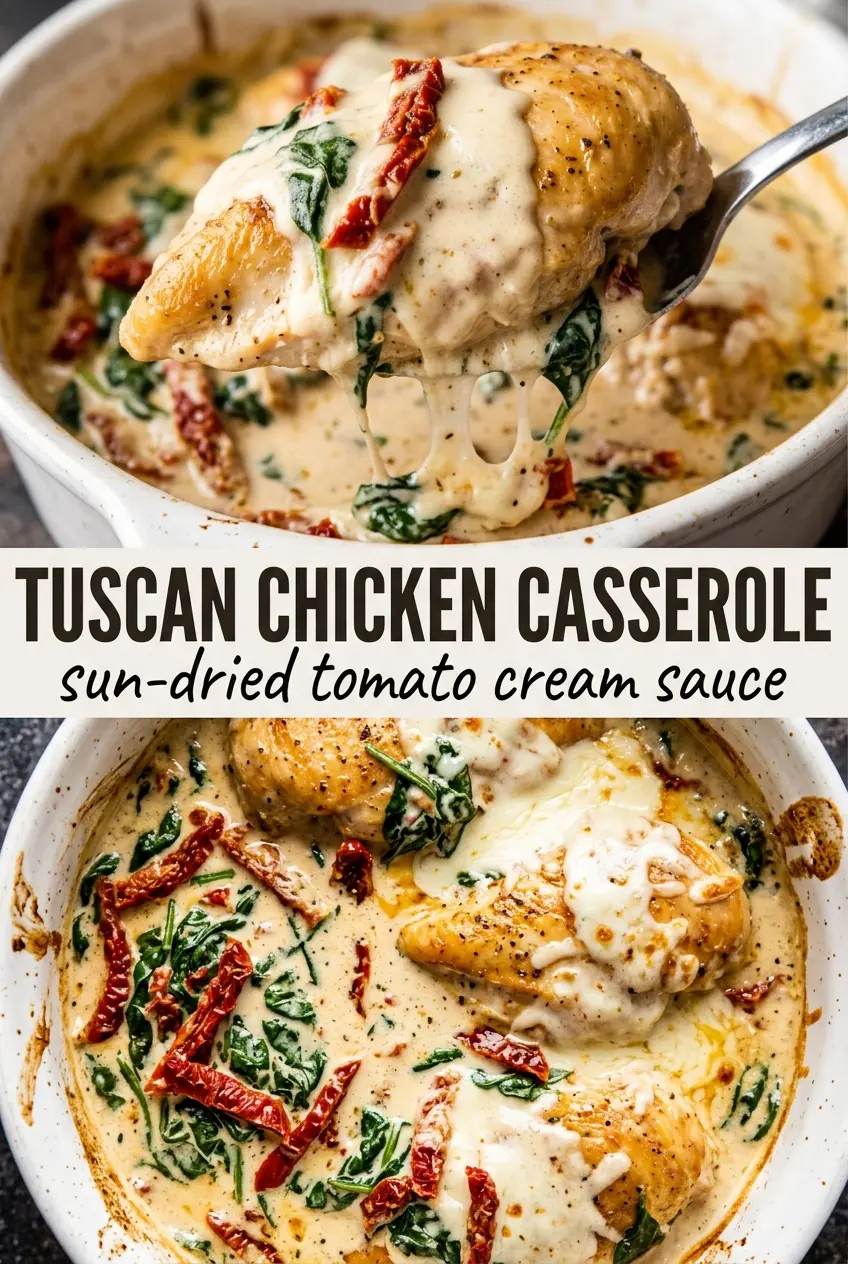
Baked Tuscan Chicken Casserole
Ingredients
Equipment
Method
- Preheat your oven to 400°F, and arrange an oven rack in the middle position for even browning.
- Season the chicken thighs all over with salt, pepper, garlic powder, Italian seasoning, and smoked paprika.
- Heat the olive oil in a large oven-safe skillet or braiser over medium-high heat.
- Place the chicken skin-side down and sear for 6-7 minutes until deeply golden.
- Flip the chicken and sear for 3 minutes more, then remove to a plate.
- In the same pan, cook the garlic and sun-dried tomatoes for 1 minute, stirring to prevent burning.
- Pour in the chicken broth and deglaze the pan, scraping up the browned bits from the bottom.
- Stir in the heavy cream, Parmesan, Italian seasoning, and red pepper flakes until the sauce is smooth and thickening.
- Return the chicken skin-side up to the pan and spoon a little sauce around the pieces.
- Bake uncovered for 20-22 minutes at 400°F, until the chicken reaches 165°F and the edges of the sauce bubble.
- Stir in the baby spinach until wilted and bright green throughout the sauce.
- Garnish with fresh basil and serve hot.