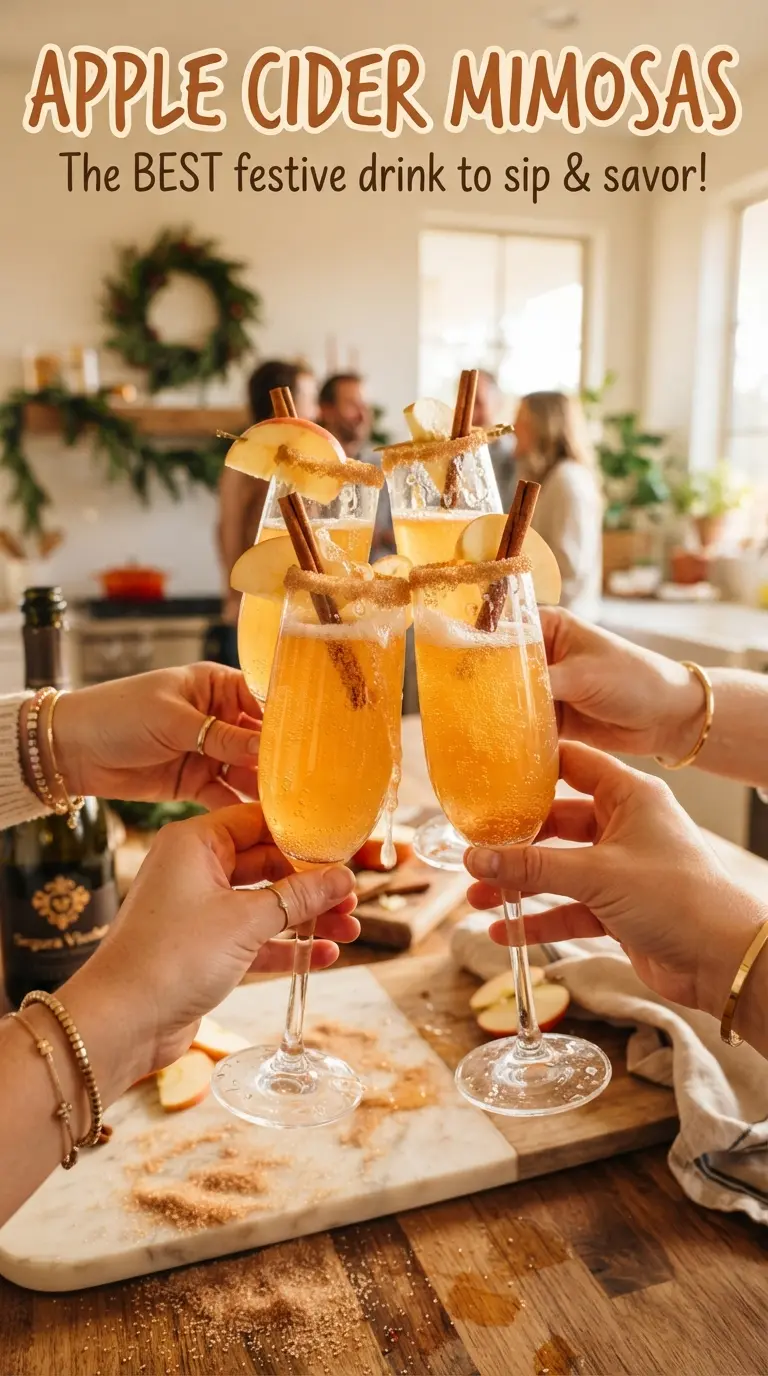
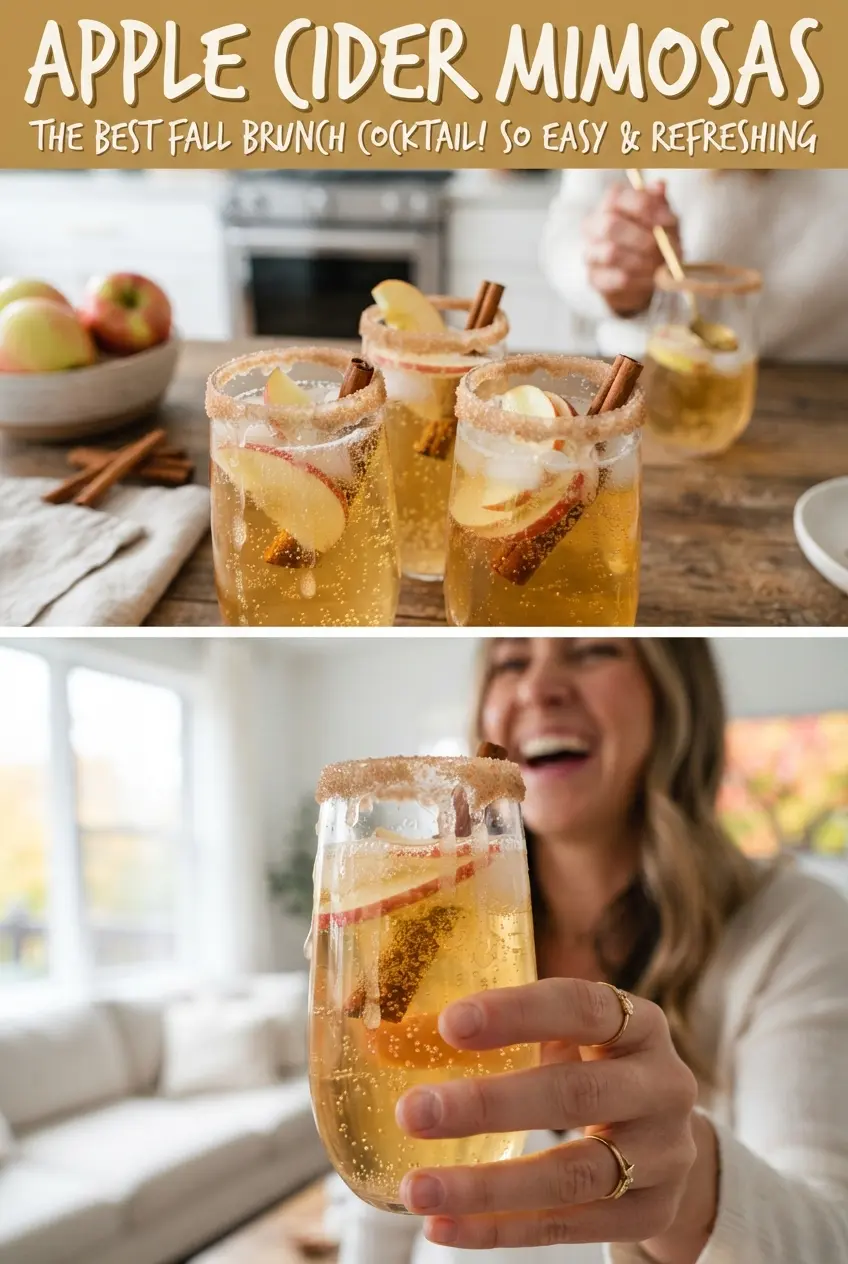
Apple cider mimosas come out crisp, sparkling, and just sweet enough to keep that first sip bright instead of syrupy. The cinnamon-sugar rim gives each glass a little crunch and a warm finish, while the apple slice and bubbles make the whole drink feel polished without any extra work.
The trick is keeping everything cold. Chilled cider and chilled sparkling wine hold their fizz longer, and that matters more here than almost anywhere else because this drink is only as good as the bubbles in the glass. I also like wetting the rims with cider instead of water so the cinnamon sugar picks up a little apple flavor and sticks evenly without turning pasty.
Below, you’ll find the small details that keep these mimosas balanced, plus a few easy ways to adapt them for a crowd. The ratio is simple, but the order you build the glass in makes a noticeable difference.
The cinnamon sugar stayed on the rim even after the bubbles settled, and using chilled cider kept the drink from going flat too fast. I made a pitcher for brunch and every glass tasted balanced from the first pour to the last.
Save these apple cider mimosas for brunches, holiday toasts, and any time you want a bubbly drink with a cinnamon sugar rim.
The Ratio Matters More Than the Garnish
Apple cider mimosas can turn heavy fast if the cider takes over, or weak if the sparkling wine gets buried. The balance here works because the cider brings the flavor and the champagne or prosecco brings lift; neither one should dominate the glass. One third cider to two thirds sparkling wine keeps the drink bright, crisp, and easy to sip.
The other mistake is building the drink too aggressively. If you pour the sparkling wine first and then chase it with cider, you lose more bubbles than you need to. Pour the cider in first, then add the sparkling wine slowly down the side of the flute so the foam stays controlled and the finish stays lively.
What Each Ingredient Is Doing in the Glass
- Apple cider — Use chilled cider, not warm or room-temperature cider, or the drink goes flat faster and tastes muddled. Fresh, unfiltered cider gives the best apple punch; if yours is very sweet, use a drier sparkling wine to keep the balance in check.
- Champagne or prosecco — Prosecco is a little fruitier and softer, while champagne brings a drier, tighter finish. Either works, but it should be cold and freshly opened, because older sparkling wine loses the lift that makes this drink feel special.
- Sugar and cinnamon — This rim is what makes the drink taste finished instead of just poured. Cinnamon can clump, so mix it with the sugar on a small plate before rimming; that gives you even coverage without dark specks.
- Apple slices and cinnamon sticks — These are for aroma as much as looks. Slice the apple thin so it floats easily in the glass, and add the cinnamon stick right before serving so it smells fresh instead of getting soggy in the drink.
Building the Bubbles Without Losing Them
Mix the Rim First
Stir the sugar and cinnamon on a small plate until the color is even and the cinnamon is fully distributed. If you skip this and sprinkle them separately, the rim looks patchy and the first sip can come out unevenly sweet. Dip the flute lightly into cider, then press the rim into the sugar mixture just enough to coat the edge without caking it onto the glass.
Pour the Cider Before the Sparkling Wine
Fill each flute about one third full with chilled cider. That gives the drink its apple flavor without crowding out the bubbles. If you pour too much cider, the drink tastes flat and sweet; if you pour too little, the cinnamon rim ends up carrying more weight than it should.
Finish with a Gentle Top-Off
Slowly top each glass with champagne or prosecco, aiming down the side of the flute to preserve as much carbonation as possible. The liquid will foam a little at first, then settle into a clean, bright layer. Add the apple slice and cinnamon stick last so the garnish sits above the foam and stays visible when you serve it.
How to Adapt These for a Crowd or a Different Glass
Pitcher for brunch service
Chill the cider and sparkling wine separately, then combine them right before serving. If you mix too early, the bubbles collapse and you end up with sweet cider instead of mimosas. Stir once or twice only, then pour immediately into flutes.
Drier and less sweet
Use brut champagne and reduce the cinnamon sugar on the rim if you want a sharper drink. You still get the apple aroma, but the finish lands cleaner and less dessert-like. This version works well with tart apples like Granny Smith for garnish.
Nonalcoholic version
Swap the champagne for chilled sparkling apple cider or a dry sparkling water if you want a lighter drink. Sparkling cider keeps the apple theme strong and gives you the same festive look, though it will be sweeter than the wine version.
Storage and serving prep
- Refrigerator: The mixed drink doesn’t hold well once poured, but the cider and sparkling wine can be chilled together for several hours before serving.
- Freezer: Don’t freeze the finished drink; the carbonation and texture won’t survive it.
- Reheating: Not applicable. Set out the chilled ingredients, rim the glasses, and assemble right before serving so the bubbles stay lively.
Answers to the Questions Worth Asking
Apple Cider Mimosas
Ingredients
Method
- Mix sugar and ground cinnamon on a small plate to make the cinnamon sugar mixture, keeping it dry and evenly combined.
- Wet the rims of the flutes with chilled apple cider, then dip each rim into the cinnamon sugar mixture and set the flutes aside.
- Fill each flute one third full with chilled apple cider.
- Top each flute with chilled champagne or prosecco.
- Garnish each drink with a thin apple slice and a cinnamon stick, then serve immediately.