Espresso-soaked ladyfingers, coffee ice cream, and mascarpone whipped into a thick, cloudlike top make this tiramisu ice cream layer cake taste like the best parts of the classic dessert, only colder and cleaner to slice. The layers hold their shape after a proper freeze, but the bite stays soft enough to feel luxurious instead of icy or heavy.
The trick is keeping every component in its lane. The ladyfingers get only a quick dip so they don’t collapse, the ice cream softens just enough to spread, and the mascarpone topping is whipped to stiff peaks so it sets into a neat finish. That balance is what keeps the cake from turning soggy or slumping once it hits the table.
Below, I’m walking through the part that matters most: how long to dip the cookies, how soft the ice cream should be, and how to keep the top layer from cracking when you slice it. If you’ve ever wanted a tiramisu that can come straight from the freezer, this is the version worth making.
The ladyfingers stayed intact, the coffee layer froze smooth, and the mascarpone topping sliced cleanly after overnight chilling. My guests kept asking how it tasted like tiramisu without getting soggy.
Save this tiramisu ice cream layer cake for the kind of dessert that needs an overnight freeze and slices beautifully.
The Part Most Tiramisu Ice Cream Cakes Get Wrong: Too Much Soak
The ladyfingers need a fast dip, not a bath. Espresso-soaked cookies that sit too long turn pasty and lose the little bit of structure that keeps the layers distinct after freezing. A quick in-and-out dip gives you the coffee flavor you want without making the base collapse into the ice cream.
The other common failure is building the cake before the ice cream is soft enough to spread. If it’s still firm, you’ll tear the cookie layer underneath trying to force it across the pan. Let it sit until it mounds on a spoon but still holds its shape, then work quickly and freeze the first layer before adding the second set of cookies.
What Each Layer Is Doing in This Frozen Tiramisu
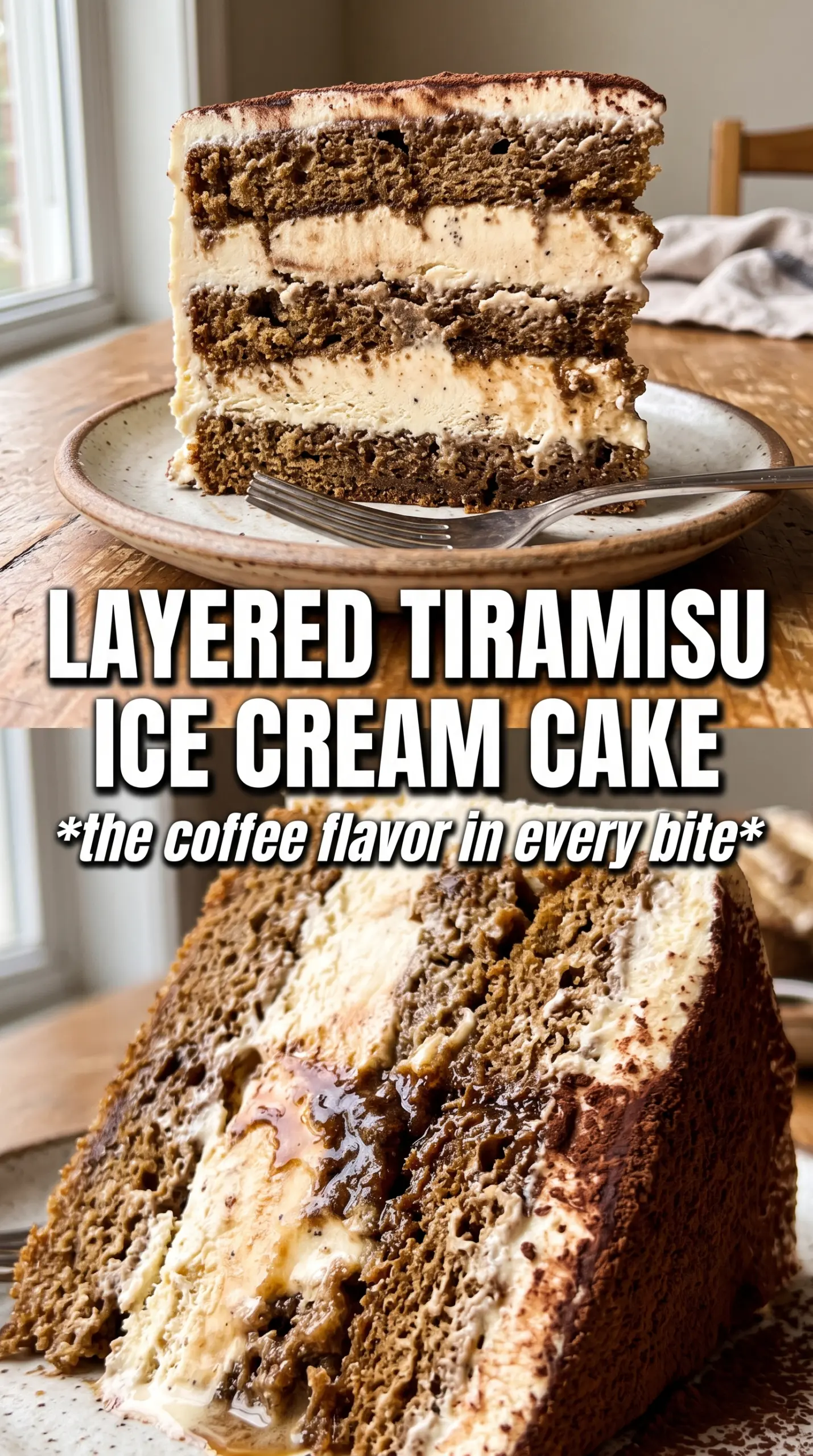
- Ladyfinger cookies — Savoiardi are sturdy enough to soak up espresso without disintegrating right away, which is exactly why they work here. Soft sponge cake won’t give the same clean layered slice, and cookies meant for dipping usually turn mushy too fast.
- Strong espresso — This is the backbone of the flavor, so use coffee that actually tastes bold when cooled. Weak coffee reads watery once frozen, while espresso gives the dessert that unmistakable tiramisu edge.
- Coffee liqueur — Optional, but it deepens the coffee note and keeps the filling tasting grown-up. If you skip it, add an extra tablespoon of espresso and a tiny pinch of sugar to round out the bitterness.
- Coffee ice cream — This carries the frozen layer and needs to be softened just enough to spread without melting into a puddle. A premium brand helps here because lower-quality ice cream can freeze icier and scrape instead of slice.
- Mascarpone — This is what gives the top its tiramisu character. Cream cheese will work in a pinch, but it’s tangier and firmer, so the finished cake loses some of that mellow, custardy richness.
- Heavy cream — Whipped with the mascarpone, it lightens the topping and helps it set into a smooth layer. Don’t swap in half-and-half; it won’t whip properly and the top won’t hold when you cut the cake.
Building the Layers So They Freeze Cleanly
Dip Fast, Then Stop
Stir the espresso and coffee liqueur together, then dip each ladyfinger for just a second or two on each side. You want the surface to darken and soften, not soak through to the center. If the cookies drip coffee when you lift them, they’ve already gone too far. Lay them in a single tight layer so the base is even and the frozen cake slices neatly later.
Spread the Ice Cream While It’s Still Shapeable
Spoon the softened coffee ice cream over the first layer and nudge it into the corners of the pan. A spatula works better than the back of a spoon because it levels the surface without dragging up the soaked cookies. Freeze this layer until it’s firm enough that a second cookie layer won’t sink into it, about 2 hours.
Whip the Mascarpone to Stiff Peaks
Beat the mascarpone, heavy cream, powdered sugar, and vanilla until the mixture is thick enough to hold firm peaks. Stop as soon as it gets there. If you keep beating, the cream can turn grainy and the mascarpone can loosen instead of staying smooth. Spread it over the top layer in a thick, even blanket, then freeze the cake overnight so the center firms all the way through.
Finish With Cocoa Right Before Serving
Dust the top with cocoa powder through a fine sieve just before the cake goes to the table. Cocoa darkens and clumps if it sits on a damp surface, so wait until the last minute. For the cleanest slices, run a sharp knife under hot water, wipe it dry, and cut while the blade is still warm.
How to Adapt This Tiramisu Ice Cream Layer Cake for Your Table
Skip the Liqueur for a Family-Friendly Version
Leave out the coffee liqueur and use all espresso in the dipping liquid. The cake still tastes deeply coffee-forward, but it reads a little cleaner and works better for anyone avoiding alcohol. If you want a touch more complexity, add a half teaspoon of instant espresso powder to the mascarpone topping.
Use Gluten-Free Ladyfingers When Needed
A good gluten-free savoiardi works here as long as it’s sturdy and dry enough to dip briefly. Softer gluten-free sponge cakes tend to absorb too much liquid and lose their layers, so the cookie texture matters more than the label. Keep the dipping time short and freeze the base before adding the second layer.
Swap in Vanilla or Chocolate Ice Cream
If coffee ice cream isn’t available, vanilla works best because it lets the espresso and mascarpone stay in charge. Chocolate ice cream makes the dessert richer and darker, but it pulls the flavor away from classic tiramisu. Either way, soften the ice cream just enough to spread so the layers stay distinct.
Make It a Smaller Pan Dessert
You can halve the recipe and build it in an 8×8-inch pan for a smaller crowd. The layers will be thicker, so add a little extra freezing time before slicing. Keep the assembly order the same, because the structure depends on that firm ice cream layer between the two cookie layers.
Storage and Reheating
- Refrigerator: Don’t store this in the fridge. It softens too fast and the layers lose their shape.
- Freezer: Wrap the pan tightly and freeze for up to 1 week for best texture. After that, the ice cream can pick up freezer taste and the ladyfingers start to dry out.
- Reheating: There’s no reheating here. Let slices sit at room temperature for 5 to 10 minutes so the knife goes through cleanly without cracking the topping.
Questions I Get Asked About This Tiramisu Ice Cream Layer Cake
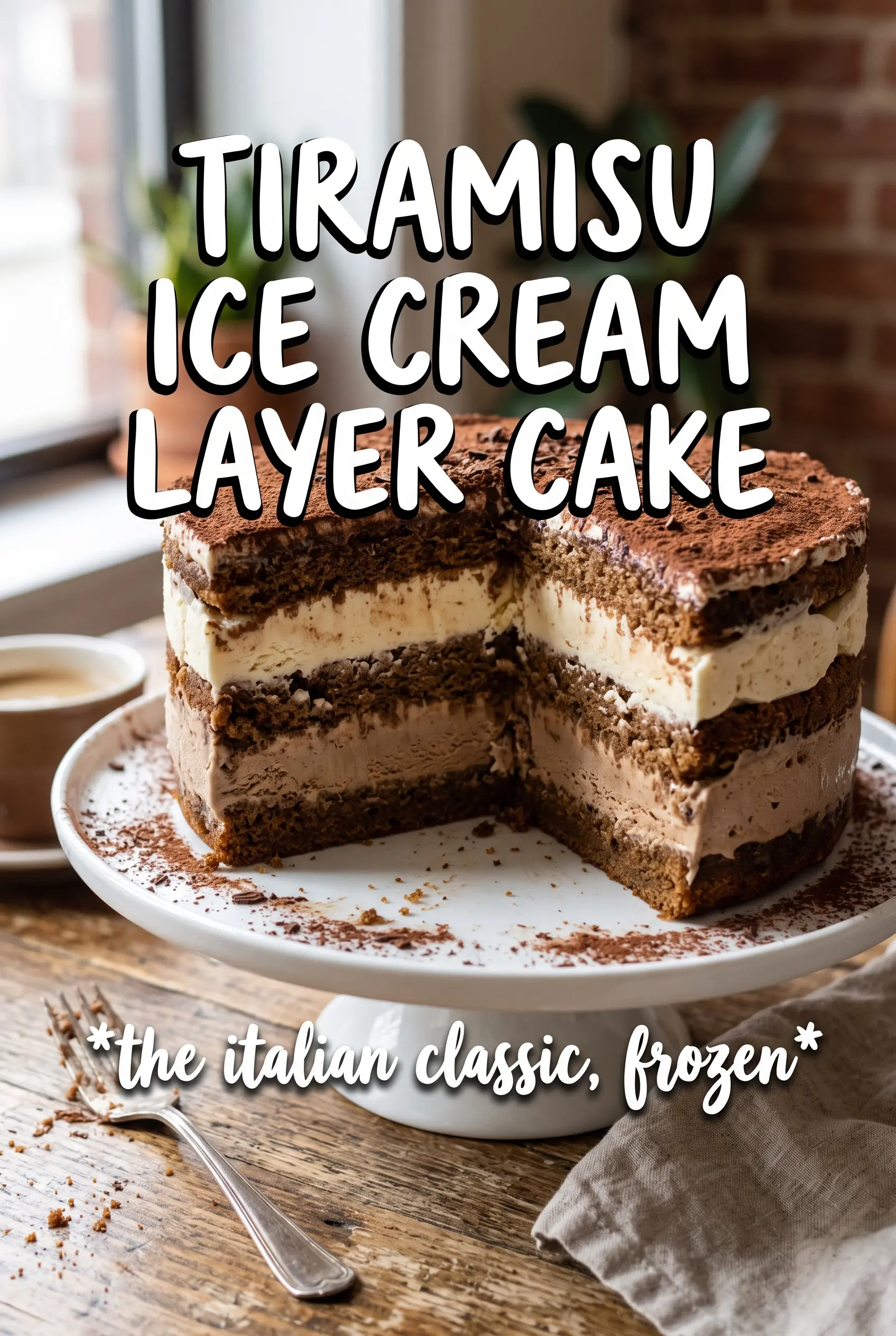
Tiramisu Ice Cream Layer Cake
Ingredients
Equipment
Method
- Mix the cooled espresso with the coffee liqueur, then quickly dip each ladyfinger just enough to coat and arrange them in a single layer in a 9x13 pan.
- Spread the softened coffee ice cream over the ladyfinger layer in an even layer, then freeze for 2 hours.
- Arrange a second layer of dipped ladyfingers over the frozen ice cream.
- Beat the mascarpone, heavy cream, powdered sugar, and vanilla extract until stiff peaks form.
- Spread the whipped mascarpone mixture over the second ladyfinger layer.
- Freeze at least 6 hours or overnight, until firm enough to slice cleanly.
- Dust the cake generously with cocoa powder through a fine sieve just before serving to highlight the layers.