Perfectly grilled salmon earns its place on repeat when the skin turns crisp, the flesh stays tender, and the whole fillet lifts cleanly from the grates without falling apart. The best versions taste clean and bright, with just enough char to make the edges interesting and enough moisture left in the center that every bite flakes instead of drying out.
This version keeps the seasoning short on purpose. Olive oil carries the lemon, garlic, and Dijon across the fish, and that little bit of mustard helps the marinade cling without turning it heavy. The real payoff comes from grilling the salmon skin-side down first and leaving it alone long enough for the skin to crisp and the fish to release naturally.
Below you’ll find the timing that keeps salmon from overcooking, plus the small details that matter most when you’re cooking fish over open heat. If salmon has ever stuck to the grill or turned out chalky, the fix is in here.
The salmon released from the grill cleanly after six minutes, and the skin got crisp without overcooking the middle. The lemon-Dijon marinade was light but gave it just enough punch that we didn’t need anything else.
Save this grilled salmon for the nights when you want crisp skin, flaky fish, and a lemon-Dijon finish without a long ingredient list.
The Reason Salmon Sticks to the Grill — and How This Avoids It
Salmon usually sticks when the grill isn’t hot enough, the grates aren’t oiled well, or the fish is turned too early. This recipe works because the salmon starts skin-side down and stays there long enough for the skin to crisp and naturally release from the metal. Once that happens, you can flip it with a lot less risk of tearing the fillet.
The other thing that keeps this from going sideways is the short marinating time. Fifteen minutes gives the fish enough seasoning without letting the lemon juice start curing the surface, which can make salmon feel firmer than it should. Longer isn’t better here.
- Skin-on salmon — The skin acts like a buffer between the flesh and the grill. It protects the fish and gives you that crisp bottom layer people actually fight over.
- Dijon mustard — It doesn’t make the salmon taste like mustard. It helps the marinade emulsify so the oil and lemon stay blended and cling to the fish instead of sliding off.
- Lemon juice — Fresh lemon brightens the salmon, but the amount is small enough that it won’t start cooking the surface before the grill does.
- Olive oil — Use a decent one here because it carries the seasoning and helps with browning. There isn’t enough of it for the flavor to be hidden.
What Each Ingredient Is Doing Before the Fish Hits the Heat
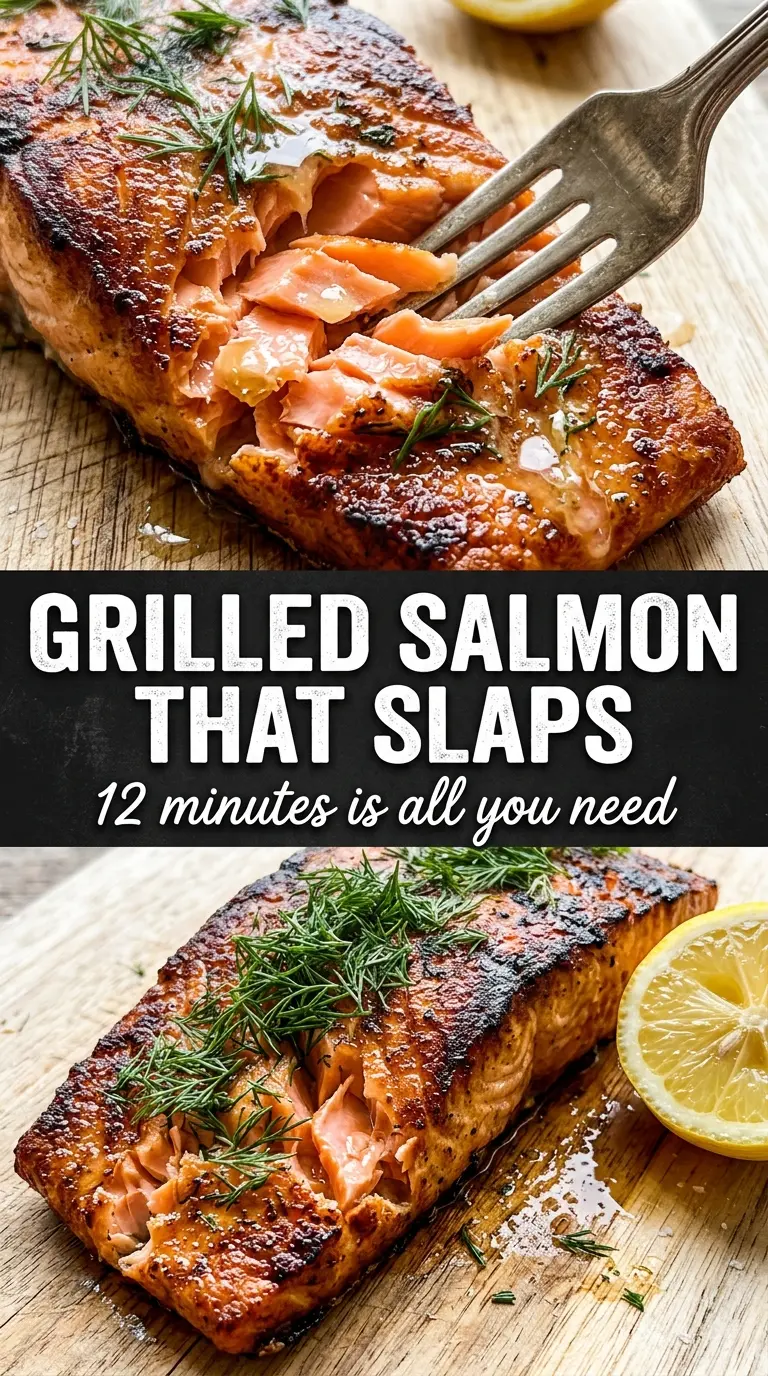
- Salmon fillets — Thick, even fillets cook more predictably than skinny tail pieces. If your pieces vary a lot in size, the thinner ends will overcook before the center is done.
- Garlic — Mince it fine so it doesn’t burn on the grill. Large pieces can stick to the fish and taste bitter.
- Fresh dill — Add it at the end, not to the marinade. Fresh herbs lose their lift fast over heat, and dill is best when it stays green and fragrant.
- Lemon wedges — A squeeze at the table wakes the whole dish up. Grilling adds savory depth, but the final burst of acid makes the salmon taste cleaner and brighter.
Grilling the Salmon So It Releases Cleanly
Mixing the Quick Marinade
Stir the olive oil, lemon juice, garlic, Dijon, salt, and pepper until the mixture looks glossy and slightly thickened. Brush it over the salmon and let the fillets sit for 15 minutes, no longer. If the salmon hangs out in the acid too long, the surface tightens before it even gets to the grill.
Preheating the Grates
Preheat the grill to medium-high and oil the grates well before the fish goes on. The grill should feel hot enough that a drop of water sizzles right away. If the grates are only warm, the skin will cling and tear when you try to move the fillets.
Cooking Skin-Side Down
Lay the salmon skin-side down and don’t move it for 6 to 8 minutes. You want to see the color turn opaque about two-thirds of the way up the side while the bottom crisps. If the fish still clings when you nudge it, give it another minute; once it releases, it is ready for the flip.
The Quick Finish on the Other Side
Flip the fillets carefully and grill for just 2 to 3 minutes more, only until the salmon reaches your preferred doneness. This last side is there for color and a touch of smoky flavor, not for full cooking. Pull it early if you like the center a little moist; carryover heat will finish the job while it rests.
How to Make This Grilled Salmon Work for Different Nights
Dairy-Free and Naturally Gluten-Free
This recipe already lands in both camps without any extra work. The marinade uses oil, lemon, garlic, and mustard, so there’s no butter or flour to swap out, and the flavor still stays bold enough to feel finished.
If You Don’t Have Fresh Dill
Use chopped parsley, chives, or a little tarragon instead. You lose dill’s soft anise note, but the fish still tastes bright and fresh, especially with the lemon finish.
For a Broiler Version
If grilling isn’t an option, broil the salmon skin-side down on a foil-lined sheet pan. You’ll miss the grill marks, but you still get quick cooking and good browning if the rack is close enough to the heat source.
Make It Spicier
Add a pinch of red pepper flakes or a little black pepper to the marinade. Keep it restrained; salmon has a clean flavor that gets buried fast when the seasoning turns aggressive.
Storage and Reheating
- Refrigerator: Store leftovers in an airtight container for up to 2 days. The skin won’t stay crisp, but the fish will still be good cold or reheated gently.
- Freezer: You can freeze cooked salmon, but the texture softens after thawing. Wrap it tightly and freeze for up to 1 month if you plan to use it in salads or grain bowls.
- Reheating: Warm it low and slow in a 300°F oven, covered loosely with foil, just until heated through. High heat dries salmon out fast and makes the edges chalky before the center warms.
Questions I Get Asked About This Recipe
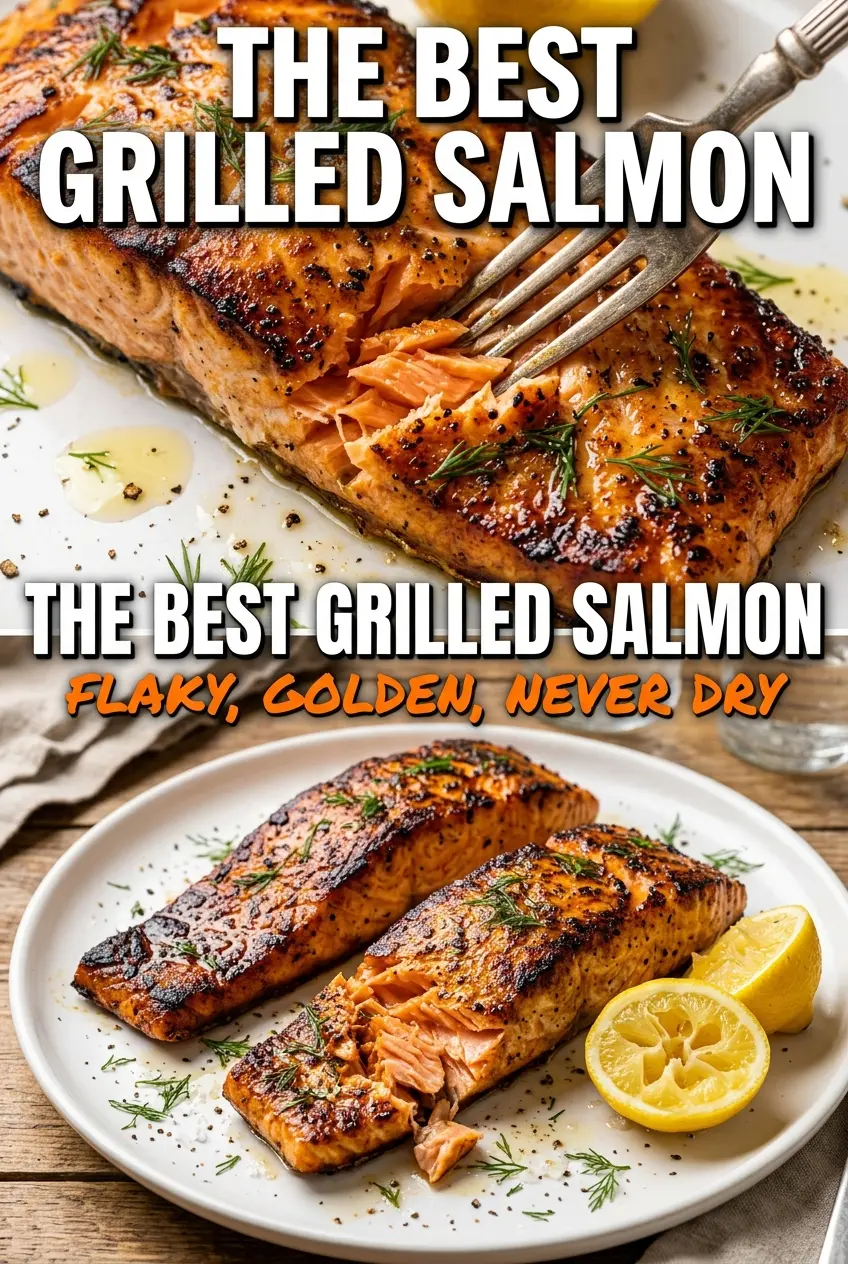
The Best Grilled Salmon
Ingredients
Equipment
Method
- In a bowl, mix olive oil, lemon juice, garlic, Dijon mustard, salt, and pepper until evenly combined.
- Brush the salmon with the marinade, coating the top well.
- Let the salmon sit for 15 minutes so the flavors soak in, uncovered on a plate in the fridge if needed.
- Preheat the grill to medium-high heat and oil the grates well to prevent sticking.
- Place the salmon skin-side down on the grill, arranging fillets so they don’t touch.
- Grill for 6-8 minutes skin-side down without moving until the skin is crisp and releases easily, with grill marks forming.
- Carefully flip and grill for 2-3 minutes until cooked to your desired doneness, keeping the flesh tender and flaky.
- Serve immediately with fresh dill and lemon wedges.