Stuffed pepper soup gives you all the savory comfort of classic stuffed peppers without the fussy assembly. The broth turns rich and tomatoey, the beef adds depth, and the peppers soften just enough to keep their sweetness and bite. With rice simmered right in the pot, every spoonful comes out hearty, balanced, and filling enough to stand on its own.
The key is building the flavor in layers instead of dumping everything in at once. Browning the beef first gives the soup its backbone, and cooking the tomato paste with the onions, peppers, and garlic takes away that raw edge and makes the broth taste fuller. The rice goes in uncooked so it absorbs the seasoned liquid as it cooks, which gives the soup a thicker, almost stew-like finish.
Below, I’ll walk through the small details that keep the rice from turning mushy, plus a few smart swaps if you want to make the pot a little lighter or stretch it further.
The rice stayed tender without getting gummy, and the tomato broth thickened up just enough to taste like stuffed peppers in a bowl. My husband went back for seconds and asked me to keep this one in the rotation.
Save this stuffed pepper soup for a night when you want a hearty, one-pot dinner with tender rice and a rich tomato broth.
The Step That Keeps the Rice Tender Instead of Mushy
Stuffed pepper soup goes wrong when the rice is treated like an afterthought. If it simmers too hard or too long, it keeps drinking broth until the pot turns thick, pasty, and a little sad. The better move is to add the rice after the broth comes to a boil, then drop the heat to a gentle simmer and cover the pot so the grains cook evenly without being smashed around.
The other trap is boiling the soup hard after the rice goes in. That rough heat breaks the grains on the surface and clouds the broth more than it needs to. A steady simmer keeps the rice intact and gives you a spoonable soup with texture, not a pot of tomato porridge.
- Ground beef — Use something with enough fat to brown well, then drain the excess. Lean beef works, but it can taste flatter unless you season it well and don’t overcook it while browning.
- Bell peppers — The mix of green and red gives you both savoriness and sweetness. Fresh peppers matter here because frozen ones can go soft before the soup finishes.
- Tomato paste — This is what deepens the broth. Cook it with the vegetables for a minute or two so it loses its raw edge and tastes round instead of sharp.
- Long grain white rice — This is the right rice for a clean, separate texture. Short grain rice can make the soup heavier, and brown rice needs a longer cook time and more liquid.
What Each Ingredient Is Actually Doing in This Recipe
- Primary ingredient (the star) — Quality matters most. Choose the best you can find.
- Cooking medium (oil, butter, or broth) — This carries flavors and prevents dryness.
- Seasonings (salt, pepper, spices, herbs) — Layer flavors so nothing overpowers. Build depth gradually.
- Aromatics (garlic, onion, herbs) — Cook with fat to bloom flavors. Become the foundation.
- Supporting ingredients — Complement the main ingredient without overpowering it.
- Sauce or liquid (if applicable) — Brings flavors together. Balance richness with acid.
- Acid (lemon, vinegar, wine, or other) — Brightens and prevents flat-tasting results.
- Final finish (garnish, glaze, or sauce) — Prevents one-dimensional taste and adds visual appeal.
Building the Soup in the Right Order
Browning the Beef First
Start with the beef in a large pot over medium-high heat and break it into small crumbles as it cooks. You want browned bits on the bottom, not gray meat steaming in its own liquid. If there’s a lot of fat after cooking, drain it off before you move on so the soup stays rich instead of greasy.
Softening the Peppers and Onion
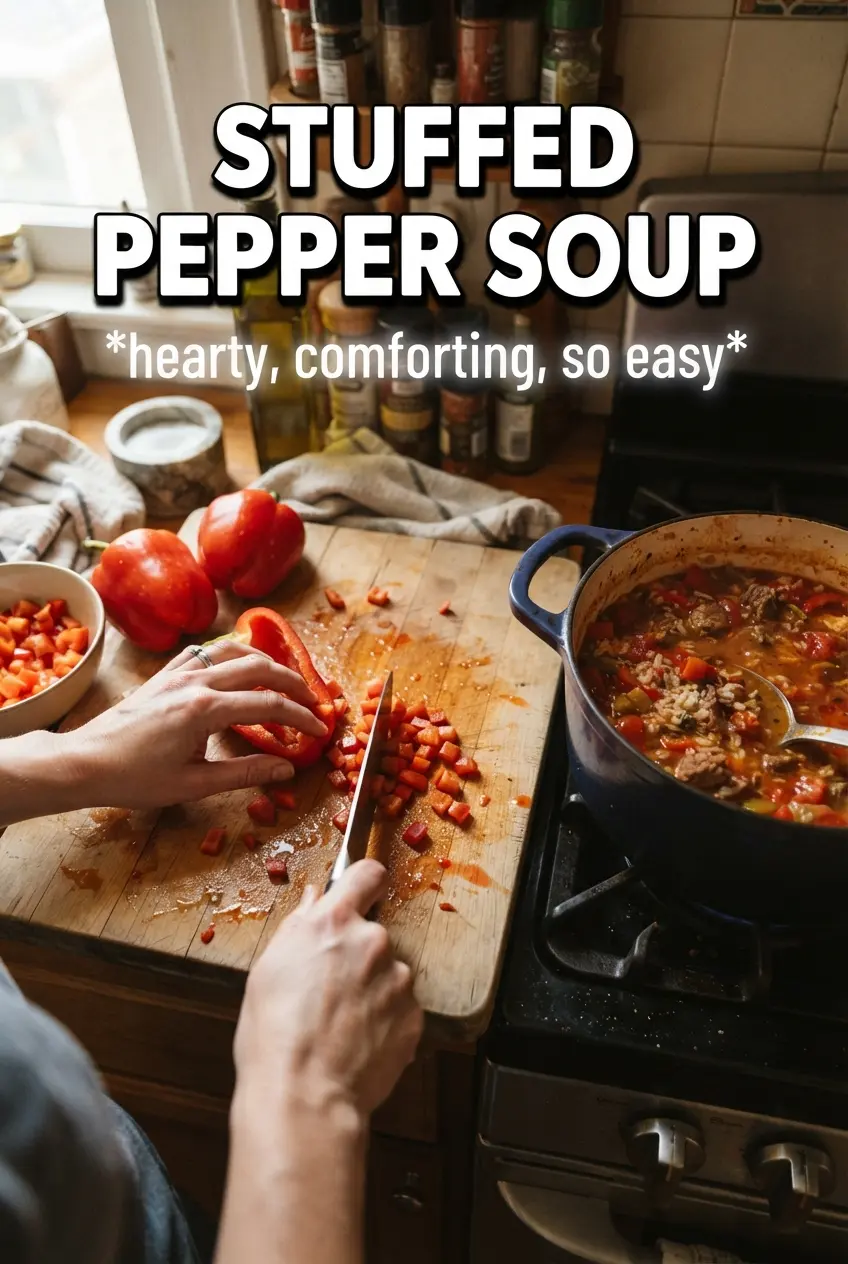
Add the diced onion and peppers to the same pot and cook them until the onion looks translucent and the peppers start to soften at the edges. Those vegetables need a little time to lose their raw crunch and start tasting sweet. Stir in the garlic and tomato paste at the end of this stage so the garlic doesn’t burn and the paste gets a chance to darken slightly.
Letting the Broth Come Together
Once the tomatoes, broth, and seasonings go in, bring everything up to a boil so the flavors start to blend quickly. After that, lower the heat before adding the rice. This is the point where impatience causes problems; if the pot keeps boiling hard, the rice can split and the soup will thicken too fast.
Finishing With the Rice
Cover the pot and let it simmer until the rice is tender, about 18 to 20 minutes. Stir once or twice so nothing catches on the bottom, but don’t keep lifting the lid every minute or the heat will drop too much. When the rice is cooked through and the broth has a slightly fuller body, season with salt and pepper and serve right away with cheddar and parsley on top.
How to Make This Pot Work for Different Tables
Turkey Instead of Beef
Ground turkey works well if you want a lighter soup, but it needs a little help because it has less built-in richness than beef. Use the same method, then taste carefully at the end and add a little more salt and smoked paprika if the broth needs more depth.
Dairy-Free Serving
Skip the cheddar on top and finish with parsley, or add a spoonful of dairy-free sour cream if you want a creamy note. The soup itself is naturally dairy-free as written, so this is an easy adjustment that doesn’t change the pot at all.
Making It Gluten-Free
This recipe is already gluten-free if your broth is certified gluten-free. The only thing worth checking is the label on the beef broth, since that’s the ingredient most likely to sneak in additives you weren’t expecting.
Storage and Reheating
- Refrigerator: Store in an airtight container for up to 4 days. The rice will keep absorbing broth, so expect the soup to thicken.
- Freezer: It freezes, but the rice softens after thawing. For the best texture, freeze the soup before adding rice, then cook fresh rice when you reheat it.
- Reheating: Warm it gently on the stove over medium-low heat with a splash of broth or water. A hard boil will break down the rice and make the texture heavy.
Answers to the Questions Worth Asking
Stuffed Pepper Soup
Ingredients
Equipment
Method
- Heat a large pot over medium-high heat and brown the ground beef, stirring until fully cooked. Drain the fat and keep the browned beef in the pot for the next step (about 8 minutes; visual cue: no pink remains).
- Add the onion, green bell peppers, and red bell peppers to the pot and sauté for 4-5 minutes. Add the garlic and tomato paste and cook for 2 minutes, stirring until fragrant and slightly darkened (visual cue: peppers soften and tomato paste looks toasted).
- Stir in the crushed tomatoes, diced tomatoes, beef broth, Italian seasoning, garlic powder, and smoked paprika, then bring to a boil. Keep the boil active until the surface looks actively bubbling (about 3 minutes; visual cue: rolling boil).
- Add the uncooked long grain white rice, reduce heat to low, and cover the pot. Simmer for 18-20 minutes, until the rice is tender (visual cue: rice grains are soft and liquid has thickened).
- Season with salt and black pepper to taste. Serve hot, topped with shredded cheddar and fresh parsley so the cheese begins to melt (visual cue: cheddar softens and slightly stretches).