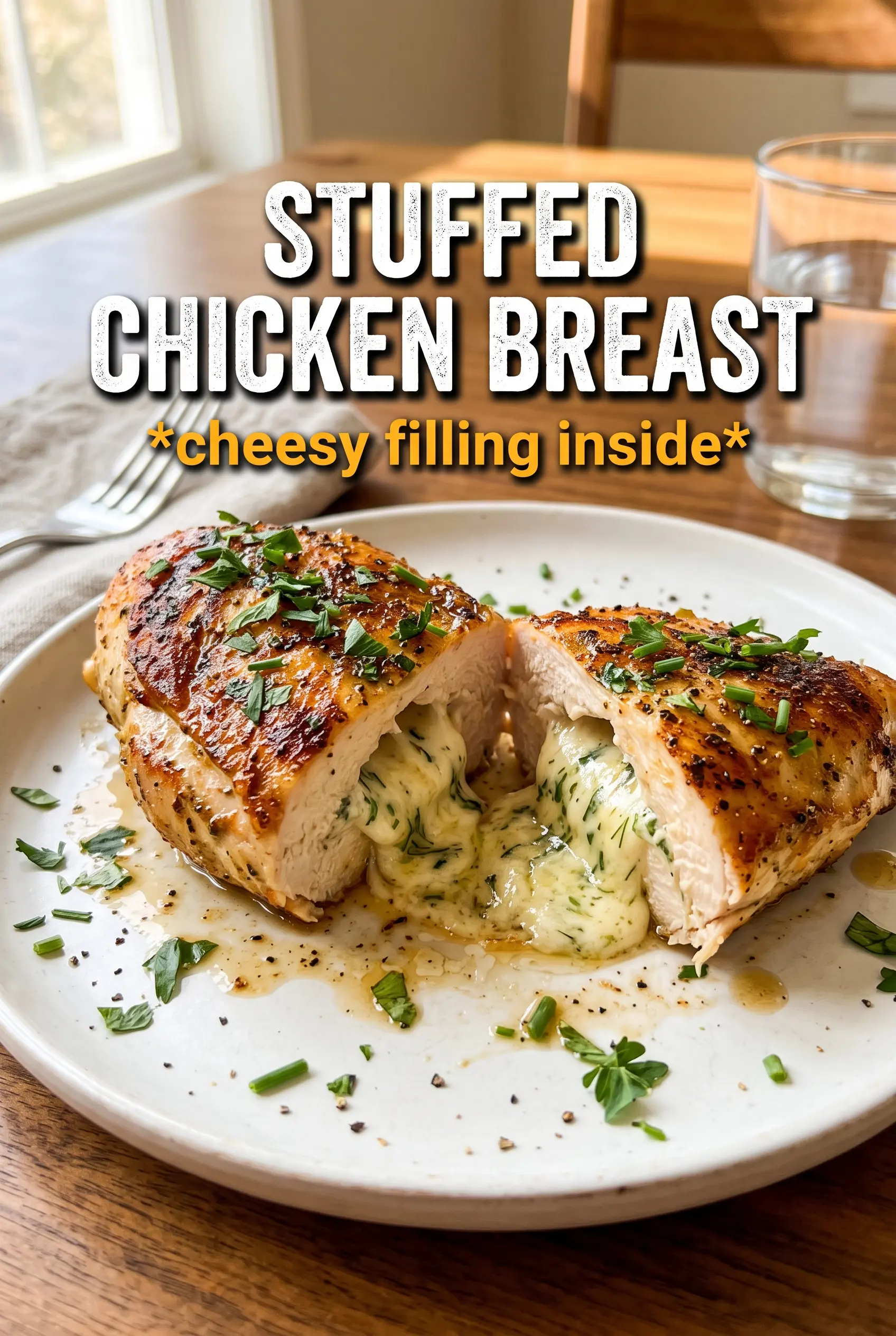
Golden seared stuffed chicken breast gives you the kind of dinner that looks restaurant-level the moment you cut into it. The outside picks up a seasoned crust in the skillet, then the oven finishes the chicken gently enough to keep the filling creamy instead of greasy. When the knife goes in, the center should spill out with spinach, mozzarella, and sun-dried tomatoes in a way that makes the whole plate feel worth serving.
The trick is treating the filling like part of the structure, not just something stuffed inside and hoped for. Softened cream cheese binds the spinach and mozzarella so it stays put during searing, while the sun-dried tomatoes add little bursts of sweet tang that keep the filling from tasting flat. A deep pocket, not a slit, gives you room for the stuffing without tearing the breast open.
Below, I’m walking through the part that matters most: how to keep the chicken from drying out before the center is hot, plus the one rest period that keeps the filling from running all over the cutting board.
The filling stayed creamy and didn’t leak out, and the chicken was still juicy after the bake. I followed the pocket-cutting tip and the cheese mixture held together perfectly.
Save this stuffed chicken breast for the nights when you want a crisp, golden exterior and a creamy spinach filling that slices cleanly.
The Cut That Keeps the Filling Inside
Most stuffed chicken goes wrong before it ever hits the pan. The pocket is either too shallow, which forces the filling back out, or cut too close to the edge, which tears the breast open as soon as it heats up. A deep horizontal pocket gives you space for the filling and enough structure left around the outside to hold everything together.
The other mistake is overstuffing. It looks generous on the plate, but once the chicken contracts in the skillet, the excess filling has nowhere to go except out. Pack the filling in firmly, then stop when the pocket is full and the opening can still close without bulging like it’s about to burst.
What the Filling Is Actually Doing Here

- Cream cheese — This is the binder that makes the filling creamy and stable. It needs to be softened so it mixes smoothly; cold cream cheese leaves lumps and makes stuffing harder. Full-fat gives the best texture here.
- Fresh baby spinach — Chop it finely so it folds into the cheese instead of tearing the pocket apart in big strands. If you only have frozen spinach, thaw it completely and squeeze it dry until it feels almost crumbly, or the filling will turn watery.
- Mozzarella — It gives you that molten pull when you slice the chicken. Pre-shredded works, but freshly shredded melts a little cleaner and brings the filling together more evenly.
- Sun-dried tomatoes — They bring concentrated sweetness and acidity, which keeps the filling from tasting heavy. If yours are packed in oil, drain them well before chopping so the filling doesn’t get slick.
- Garlic and Italian seasoning — These carry the savory backbone of the filling and echo the seasoning on the outside. Fresh garlic tastes best here because the filling doesn’t cook long enough for raw garlic to disappear completely.
Getting the Sear Right Before the Oven Finish
Season the chicken like it matters
Season the outside generously and get some seasoning inside the pocket too, because the filling alone won’t carry the whole dish. Use enough salt and pepper to wake up the chicken, then add the garlic powder, Italian seasoning, and smoked paprika for a browned, savory crust. If the surface looks dry and speckled with seasoning, you’re in the right place; if it looks thickly coated, it can scorch in the skillet.
Fill, secure, and stop fussing with it
Spoon the filling into each pocket, then close the opening with toothpicks so the seam stays put while the chicken sears. Don’t jam the filling all the way to the edge, or it will ooze out before the center cooks. A little leakage is normal, but if the filling is spilling before the pan even gets hot, the pocket is overloaded.
Sear for color, not doneness
Use an oven-safe skillet and get the olive oil shimmering before the chicken goes in. You want a deep golden crust on both sides, about 3 to 4 minutes per side, and you should hear a steady sizzle, not a violent spit. If the pan is too hot, the outside will brown too fast and the filling won’t have a chance to stay neatly inside.
Finish gently in the oven
Move the skillet to the oven and bake until the thickest part reaches 165°F. Pull it as soon as it hits temperature; chicken breast dries out fast if you let it cruise past the target. Rest it for 5 minutes before slicing so the filling settles instead of flooding the plate.
How to Adapt This for Different Tables and Different Nights
Dairy-Free Version with a Different Finish
Use a dairy-free cream cheese and skip the mozzarella, then add a tablespoon of nutritional yeast for a little savory depth. The filling won’t have the same stretch, but it will still stay creamy and slice cleanly if you don’t overfill the pocket.
Swap the Sun-Dried Tomatoes for Roasted Red Peppers
Roasted red peppers give you a softer, sweeter filling with less tang. Drain and chop them well before mixing them in, or the extra moisture will loosen the cheese mixture and make the chicken harder to seal.
Make It Ahead Without Losing the Texture
You can stuff and secure the chicken a few hours ahead, then keep it covered in the refrigerator until dinner. Don’t let it sit overnight once assembled, or the salt in the filling will start drawing moisture out of the chicken and make the seam wetter.
How to Store Leftovers Without Drying Out the Chicken
- Refrigerator: Store in an airtight container for up to 3 days. The filling stays creamy, but the chicken firms up a little after chilling.
- Freezer: Freeze cooked stuffed chicken for up to 2 months, wrapped tightly and sealed well. The filling will be a touch looser after thawing, but it still works.
- Reheating: Reheat covered in a 325°F oven until warmed through, or warm slices gently in a skillet with a splash of water. High heat dries the chicken before the center comes back to temperature.
Questions I Get Asked About This Recipe
Stuffed Chicken Breast
Ingredients
Equipment
Method
- Preheat oven to 400°F. In a bowl, beat together cream cheese, spinach, mozzarella, sun-dried tomatoes, garlic, Italian seasoning, salt, and pepper until combined.
- Cut a deep horizontal pocket in each chicken breast. Season inside and out generously with salt, pepper, garlic powder, Italian seasoning, and smoked paprika.
- Spoon filling into each pocket and secure with toothpicks. Press gently so the filling sits inside without spilling.
- Heat olive oil in an oven-safe skillet over medium-high heat and sear chicken for 3-4 minutes per side until golden. Keep an eye on browning so the outside caramelizes.
- Transfer the skillet to the oven and bake at 400°F for 18-22 minutes until internal temperature reaches 165°F. The filling should be hot and the chicken cooked through.
- Remove toothpicks and rest for 5 minutes. Slice and serve while the center is molten.