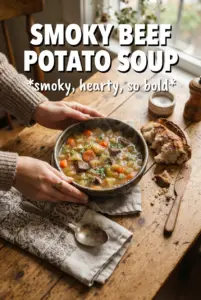
Smoky beef potato soup lands with deep, savory broth, tender chunks of beef, and potatoes that hold their shape without turning chalky. The smoked paprika and fire-roasted tomatoes give the soup a dark, round flavor that tastes like it simmered all day, even though the actual hands-on time stays manageable. It’s the kind of bowl that eats like a full meal and leaves the pot scraped clean.
The key is building flavor in layers. First, the beef needs a hard sear so the pot picks up those browned bits, then the onions, carrots, and celery soften in the same pan before the spices bloom in the hot fat. That short spice toast matters; it wakes up the paprika and cumin and keeps the soup from tasting flat. Yukon gold potatoes work best here because they stay creamy without dissolving into the broth.
Below, you’ll find the small details that keep the beef tender, the broth smoky instead of bitter, and the potatoes just right. There’s also a few practical swaps and storage notes for making this soup fit your kitchen.
The beef stayed tender and the potatoes held their shape, and that smoky broth got even better the next day. I added a little extra parsley at the end and it brightened the whole pot.
Save this smoky beef potato soup for a night when you want a hearty bowl with tender beef and a broth that turns richer after it rests.
The Browning Stage That Gives This Soup Its Depth
The biggest mistake people make with beef soup is rushing the sear. If the meat goes into the pot crowded or the heat is too low, it steams and the broth ends up tasting thin. You want a deep brown crust on the beef before it comes out of the pot, because those browned bits on the bottom become the backbone of the soup once the broth goes in.
The second thing that matters is when the potatoes go in. Add them too early and they break down before the beef gets tender; add them too late and they stay firm in the wrong way. This version gives the beef a head start, then adds the potatoes near the end so the broth stays hearty and the cubes turn creamy at the center without falling apart.
What Each Ingredient Is Doing in the Pot
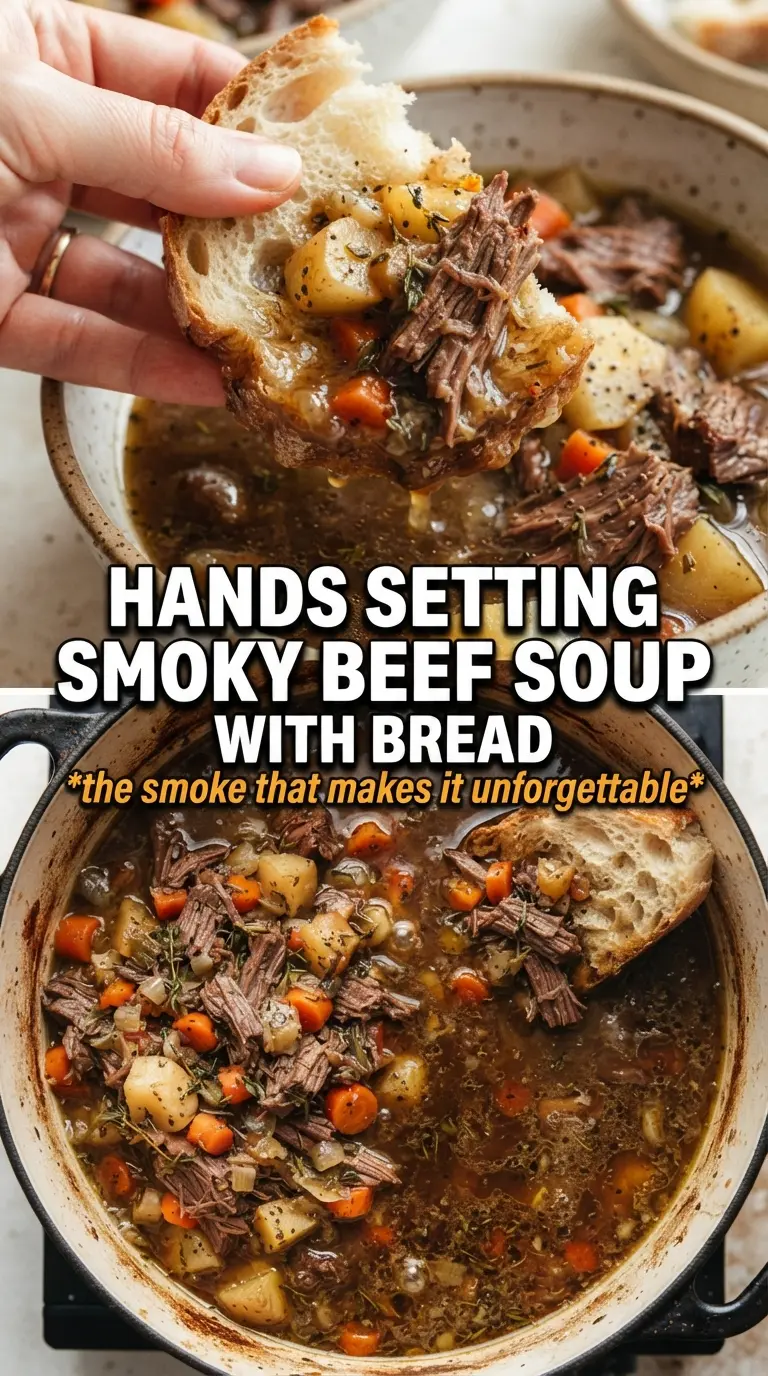
- Beef stew meat or chuck — Chuck gives you the best balance of flavor and tenderness for a long simmer. If you use pre-cut stew meat, check the pieces for extra fat and connective tissue; that’s where the good flavor lives. Cut everything into even cubes so the pot cooks at the same pace.
- Yukon gold potatoes — These stay creamy without turning mealy. Russets will soften faster and can make the broth cloudy, which is fine if you want a thicker soup, but Yukon golds give you more control and a smoother finish.
- Smoked paprika, cumin, and chipotle powder — This is the flavor engine. Smoked paprika brings the main smoky note, cumin adds earthiness, and chipotle gives a slow heat in the background. If you only have regular paprika, the soup will still work, but it won’t have the same depth.
- Fire-roasted tomatoes — They add acidity and a second layer of smoke that keeps the broth from feeling heavy. Regular diced tomatoes work in a pinch, but fire-roasted tomatoes are worth buying here because they make the whole pot taste more developed.
- Worcestershire sauce — Just a teaspoon gives the broth more savoriness and helps the beef taste beefier. It doesn’t make the soup taste like Worcestershire; it just fills in the gaps.
Building the Broth Without Losing the Beef
Searing the Meat Until the Pot Gets Dark
Season the beef with salt, pepper, and part of the smoked paprika, then sear it in hot olive oil until it’s deeply browned on all sides. Don’t crowd the pot or the temperature drops and the meat starts releasing liquid instead of browning. That dark crust is what gives the broth its base, so give the beef enough space to color properly before you remove it.
Softening the Vegetables in the Same Pot
Cook the onion, carrots, and celery in the same pot until the onion turns translucent and the edges of the vegetables start to pick up color. The pot will look dry at first, then the vegetables will release enough moisture to loosen the browned bits. Add the garlic at the end of this stage and cook it just until fragrant; if it browns too much, it turns bitter fast.
Blooming the Spices Before the Liquid Goes In
Stir in the remaining smoked paprika, cumin, and chipotle powder and let them cook for about a minute. You’re not trying to toast them hard. You’re waking them up in the hot oil so they perfume the pot before the broth washes everything out. If the spices catch on the bottom, lower the heat and stir immediately so they don’t turn sharp.
Simmering the Beef Until It Turns Tender
Add the broth, fire-roasted tomatoes, Worcestershire sauce, and browned beef, then bring everything to a boil before lowering the heat to a steady simmer. A gentle bubble is what you want; a hard boil makes the beef tighten up. After about 25 to 30 minutes, the meat should be starting to loosen when pierced with a fork, which is the cue for the potatoes to go in.
Finishing with the Potatoes
Stir in the potatoes and simmer until they’re tender and the beef gives easily when pressed with a spoon. The potato cubes should hold their shape but feel creamy in the center. If the broth tastes a little flat at this point, salt fixes it faster than more spices, and fresh parsley at the end lifts the whole bowl.
How to Adapt This Soup for Different Kitchens
Make it dairy-free and keep it hearty
This soup is naturally dairy-free as written, which makes it easy to serve without any special swaps. If you want a creamier finish, use a splash of unsweetened oat cream or leave it as-is and let the potatoes thicken the broth on their own. The texture stays rich without needing milk or cream.
Use sweet potatoes for a softer, sweeter bowl
Sweet potatoes will soften faster and bring a little sweetness that plays nicely against the smoked paprika and chipotle. Cut them into larger chunks than you would Yukon golds so they don’t disappear into the broth. The soup will taste rounder and slightly sweeter, with less of the classic potato-soup feel.
Turn it into a thicker stew
For a thicker, spoon-standing texture, mash a few potato pieces against the side of the pot near the end of cooking. That releases starch into the broth without needing flour. The soup turns more rustic and hearty, but you’ll still keep the chunks of beef and vegetable texture.
Make it gluten-free without changing the method
The recipe is naturally gluten-free as long as your Worcestershire sauce is certified gluten-free. That one label check matters because some brands use malt vinegar or other additives that contain gluten. Everything else in the pot stays exactly the same.
Storage and Reheating
- Refrigerator: Store for up to 4 days. The potatoes will absorb some broth, so the soup thickens as it sits.
- Freezer: This freezes well for up to 3 months, though the potatoes soften a bit after thawing. Cool it completely before freezing in airtight containers.
- Reheating: Warm it gently on the stove over medium-low heat and add a splash of broth if needed. Don’t boil it hard, or the potatoes can break down and the beef can turn stringy.
Answers to the Questions Worth Asking
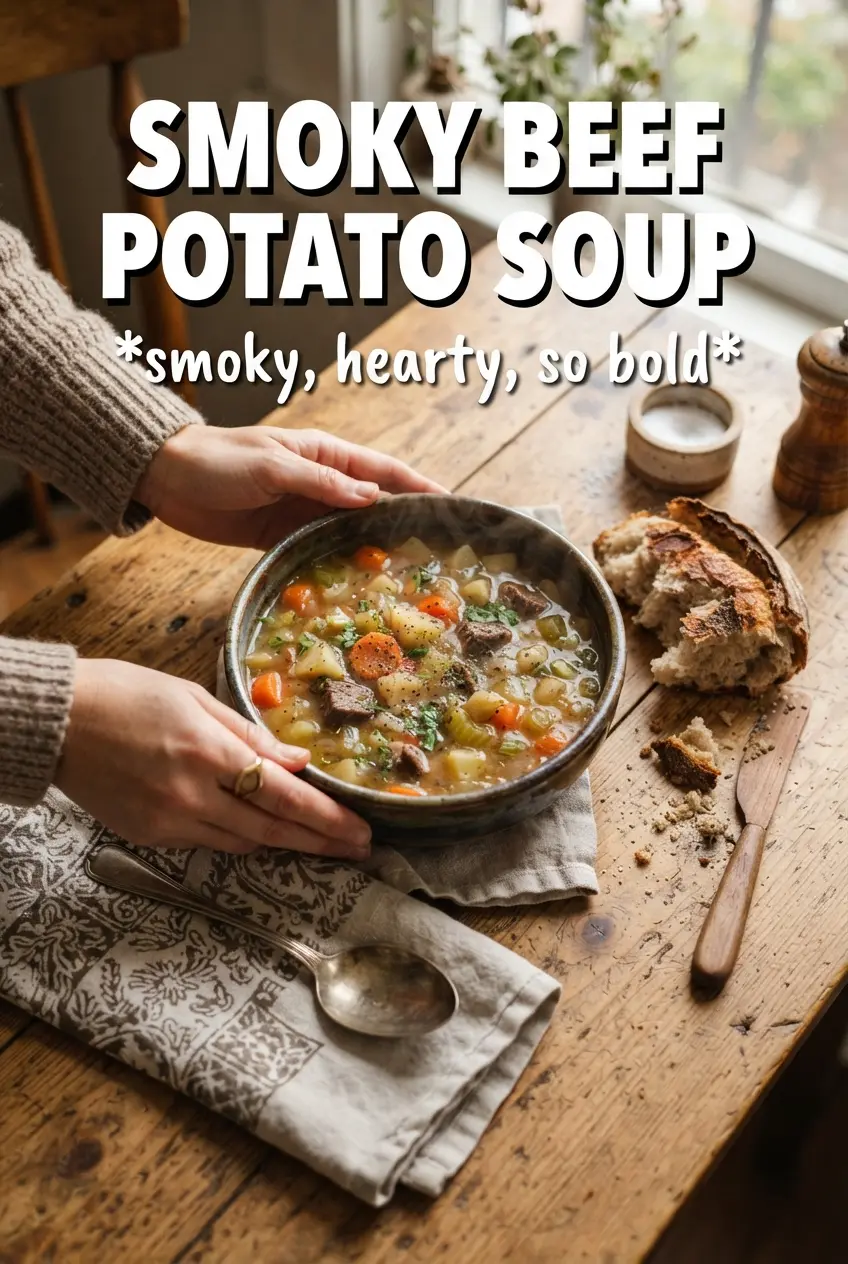
Smoky Beef Potato Soup
Ingredients
Equipment
Method
- Season the beef with salt, pepper, and 1 tablespoon smoked paprika. Heat 2 tablespoons olive oil in a Dutch oven over high heat and sear until deeply browned on all sides, about 8–10 minutes, then remove the beef.
- In the same pot, sauté the onion, carrots, and celery until softened, about 5 minutes. Stir in the minced garlic and cook 1 minute, keeping it fragrant and not browned.
- Stir in the remaining smoked paprika, cumin, and chipotle powder, then cook 1 minute. Add beef broth, fire-roasted tomatoes, Worcestershire sauce, and the browned beef, then bring to a boil.
- Reduce the heat and simmer 25–30 minutes to develop flavor. Add the cubed potatoes and simmer about 20 more minutes until the beef and potatoes are tender.
- Season with salt and pepper to taste, then garnish with fresh parsley and serve.