Slow cooker chicken cacciatore turns out best when the sauce has time to settle into something rich and rustic, and the chicken gets tender enough to fall from the bone without drying out. The tomato sauce picks up sweetness from the peppers and onions, earthiness from the mushrooms, and just enough briny bite from the olives to keep every spoonful interesting.
The trick is building everything in layers instead of stirring it all together at the start. The vegetables go down first so they soften in the tomato juices, while the chicken stays on top and braises gently instead of sinking into a watery stew. A little red wine gives the sauce depth, and adding the olives near the end keeps them from going mushy.
Below, I’ve included the part that matters most for getting the right texture in a slow cooker, plus a few swaps that work without flattening the dish. If you’ve ever ended up with bland, overcooked chicken cacciatore, this version fixes the usual mistakes.
The sauce thickened up beautifully and the chicken was still juicy after 6 hours on low. I served it over polenta and my husband went back for seconds, which never happens on a Tuesday.
Save this slow cooker chicken cacciatore for the nights when you want tender chicken, rich tomato sauce, and almost no hands-on time.
The Slow Cooker Trick That Keeps Cacciatore from Turning Watery
The most common problem with slow cooker cacciatore is excess liquid. Tomatoes, mushrooms, and peppers all give off moisture as they cook, and if the chicken sits buried in that liquid from the start, the sauce can taste thin instead of concentrated. Layering the vegetables first helps them release their juices into the tomato base, while keeping the chicken on top lets it braise without becoming soggy.
Bone-in thighs matter here. They stay juicy through a long cook and give the sauce more flavor than boneless breast meat, which can turn stringy before the vegetables are done. If you want a thicker sauce, take the lid off for the last 20 to 30 minutes and let the heat work off some of the extra liquid.
What Each Ingredient Is Doing in the Pot

- Bone-in chicken thighs — These stay tender during the long cook and give the sauce a fuller, more savory taste. Boneless thighs work in a pinch, but reduce the cooking time so they don’t dry out.
- Crushed tomatoes — This is the body of the sauce. Use a good canned brand if you can, because thin or overly acidic tomatoes will stay that way after hours in the slow cooker.
- Mushrooms, bell peppers, and onion — They build the cacciatore base and soften into the sauce instead of disappearing. Slice and dice them evenly so they cook at the same rate.
- Dry red wine — It adds depth and keeps the sauce from tasting flat. If you’d rather skip it, use an equal amount of chicken stock plus a small splash of red wine vinegar at the end.
- Kalamata olives — Add these near the end for briny contrast. If they go in too early, they lose their punch and blend into the sauce.
- Italian seasoning, oregano, and red pepper flakes — These give the dish its familiar cacciatore character. The red pepper flakes are easy to dial up or down depending on how much heat you like.
Building the Sauce So the Chicken Stays Tender
Seasoning the Chicken First
Start by seasoning the thighs generously with salt, pepper, and Italian seasoning. That seasoning goes on the meat, not just in the sauce, so the chicken tastes like more than a piece of protein floating in tomatoes. If you skip this step, the sauce carries the whole dish and the chicken can taste flat from the inside out.
Layering the Vegetables
Spread the onion, garlic, peppers, and mushrooms across the bottom of the slow cooker in an even layer. They create a bed that keeps the chicken slightly lifted and helps the juices circulate as everything cooks. If you pile them in clumps, some pieces soften while others stay undercooked and chewy.
Pouring the Sauce Without Stirring Too Soon
Pour the crushed tomatoes and wine over the chicken, then add the oregano and red pepper flakes. Don’t stir hard at this stage; the goal is to keep the chicken positioned on top so it braises gently. A heavy stir just before cooking can push the meat down into the vegetable layer and make the texture uneven.
Finishing with Olives and Fresh Basil
Cook until the chicken is tender and pulls apart easily with a fork, then stir in the olives during the last 30 minutes. That keeps their flavor bright instead of dull and overcooked. Serve the finished dish with basil and parmesan right before eating so the herbs stay fresh and the cheese melts into the hot sauce.
How to Change This Recipe Without Losing the Character of the Dish
Make it dairy-free
Skip the parmesan at serving and use extra basil or a drizzle of good olive oil instead. The dish still has plenty of richness from the tomatoes, chicken, and olives, so you won’t miss the cheese in the sauce itself.
Use boneless thighs instead of bone-in
Boneless thighs cook faster and are easier to serve, but they don’t give the sauce quite as much depth. Start checking them about an hour earlier on low so they stay juicy.
Skip the wine
Replace the wine with chicken broth or water, then add a teaspoon of red wine vinegar or lemon juice at the end for brightness. You’ll lose a little depth, but the sauce will still taste balanced instead of heavy.
Serve it over polenta for a naturally gluten-free meal
Polenta catches the sauce beautifully and turns this into a gluten-free dinner without changing the cacciatore itself. If you use pasta, choose a sturdy shape that can hold the sauce instead of a delicate noodle that gets lost in it.
Storage and Reheating
- Refrigerator: Store leftovers for up to 4 days. The sauce thickens as it chills, which actually helps the flavor.
- Freezer: Freeze for up to 3 months in airtight containers. The chicken stays in good shape, though the peppers soften a bit more after thawing.
- Reheating: Reheat gently on the stove over low heat or in the microwave at medium power. A hard boil can tighten the chicken and make the sauce separate, so warm it slowly with a splash of water if it looks too thick.
Answers to the Questions Worth Asking
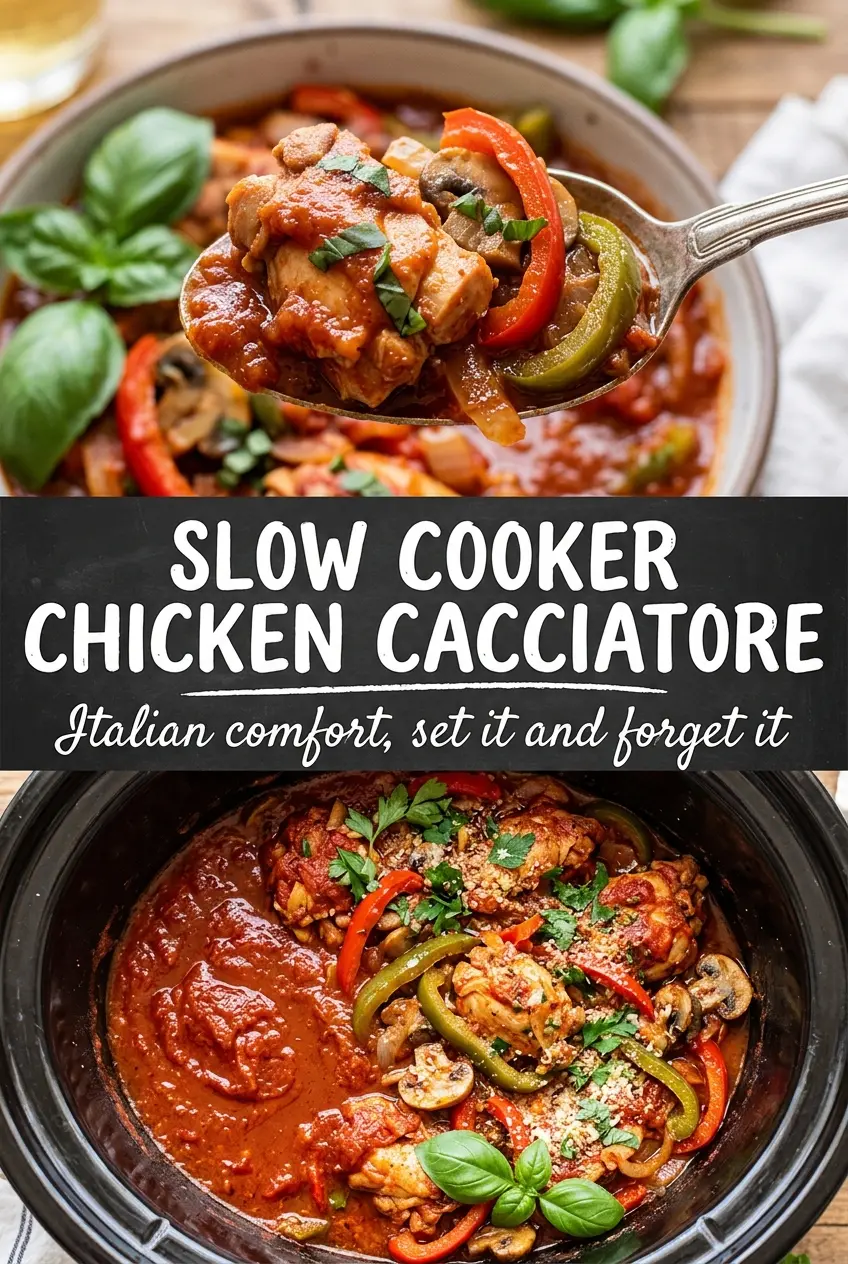
Slow Cooker Chicken Cacciatore
Ingredients
Equipment
Method
- Season the chicken thighs with salt, pepper, and Italian seasoning.
- Let the seasoned chicken sit while you prepare the vegetables for even seasoning, about 5 minutes.
- Layer the onion, garlic, bell peppers, and mushrooms in the bottom of the slow cooker.
- Place the chicken thighs on top of the vegetables.
- Pour the crushed tomatoes and red wine over everything, then add dried oregano and red pepper flakes.
- Cover and cook on Low for 6-8 hours, or on High for 3-4 hours, until the chicken is tender.
- In the last 30 minutes of cooking, stir in the kalamata olives.
- Serve the chicken cacciatore over pasta or polenta, then top with fresh basil and parmesan.