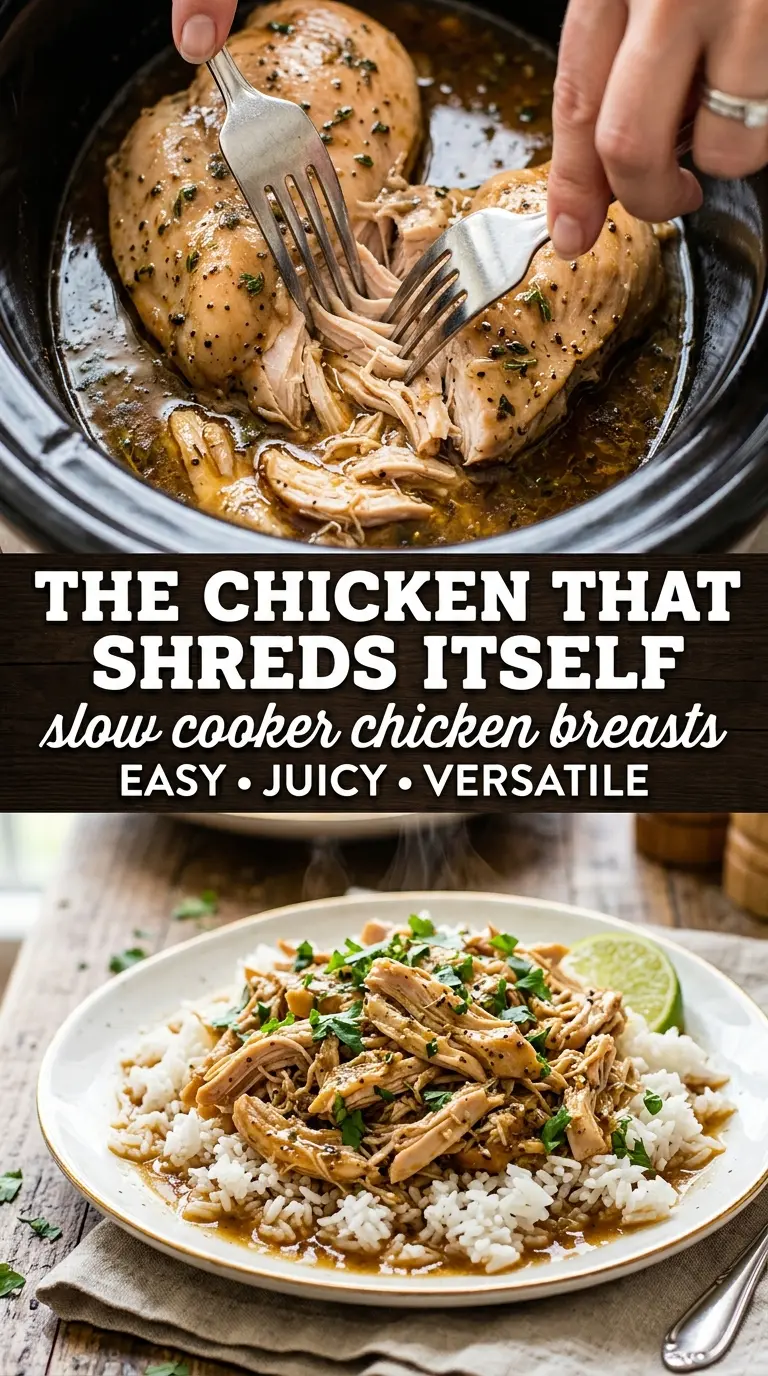
Slow cooker chicken breasts can go from bland and dry to deeply seasoned and spoon-tender with almost no effort, and that’s exactly why this version stays in regular rotation. The chicken cooks in a short bath of broth, butter, and garlic, then gets finished with the same juices spooned over the top so nothing tastes flat or one-note. What comes out is sliceable, juicy chicken with edges that stay tender instead of stringy.
The key is restraint. Chicken breasts don’t need to be buried in liquid, and they don’t need hours and hours on the heat. A modest amount of broth keeps the slow cooker humid, while butter and garlic build a quick sauce right in the pot. The seasoning blend leans on pantry spices that hold up during slow cooking without turning muddy, and a short rest before slicing keeps the juices where they belong.
Below, you’ll find the exact timing that keeps the chicken tender, the seasoning details that make the broth worth serving, and a few smart ways to adapt this when you want to change the flavor or make it ahead.
I was skeptical about chicken breasts in the slow cooker, but these came out juicy and sliced cleanly after the 5-minute rest. The broth with butter and garlic made a simple pan sauce that my kids actually asked for on the chicken and rice.
Save these slow cooker chicken breasts for the night you want juicy sliced chicken and a built-in garlic butter sauce with almost no hands-on time.
The Timing That Keeps Chicken Breasts Juicy Instead of Dry
Chicken breasts in a slow cooker fail for one reason more than any other: they stay in too long. Unlike thighs, breasts don’t have much fat to protect them, so once the protein tightens past the sweet spot, they turn chalky fast. The fix is a short cook on LOW and a willingness to pull them the moment they’re opaque through the center and just firm enough to slice.
Using a small amount of broth instead of submerging the chicken matters too. The slow cooker traps moisture on its own, and too much liquid can wash away the seasoning and leave the meat tasting boiled. Butter plus garlic gives the cooking juices enough body to taste like a sauce instead of plain broth.
- Cook low and slow when you can — LOW gives you a wider window before the chicken overcooks, which is especially helpful if your slow cooker runs hot.
- Pull it at tenderness, not at a set minute mark — if the thickest part slices easily and the center is no longer translucent, it’s done.
- Rest before slicing — five minutes lets the juices settle so they don’t flood the cutting board.
- Spoon the broth back over the top — that last step gives the chicken the flavor it would otherwise lose during slicing.
What the Garlic, Butter, and Broth Are Really Doing Here
- Chicken breasts — Boneless, skinless breasts are the whole point here, but they need gentle heat and enough seasoning to stay interesting. If yours are very thick, a quick horizontal cut to even them out helps them cook at the same rate.
- Chicken broth — This is the base of the sauce, so use a broth you’d actually taste and enjoy. Water won’t give you the same savory depth, and the finished juices will taste thin.
- Butter — Butter softens the garlic and rounds out the broth into something closer to a pan sauce. If you swap in oil, the result will still be moist, but it won’t have the same rich finish.
- Smoked paprika and Italian seasoning — These are doing the heavy lifting on flavor. Paprika brings warmth and color, while Italian seasoning adds that familiar herb backbone that holds up through the long cook.
- Garlic — Fresh garlic goes in with the broth so it has time to mellow and perfume the sauce. Garlic powder in the seasoning blend gives a deeper, more even garlic note on the chicken itself.
Building the Slow Cooker Base Without Ending Up With Watery Chicken
Seasoning the Chicken
Coat the chicken breasts on both sides before they go into the slow cooker. If the seasoning lands only on the surface of the liquid, most of it stays in the broth instead of on the meat. A generous, even layer helps the chicken taste seasoned all the way through, even after hours of cooking.
Adding Just Enough Liquid
Pour the broth around the chicken, not over the top, so you don’t immediately wash away the spice rub. The chicken should sit in a shallow pool, not be fully submerged. If the cooker looks flooded, the sauce will taste diluted and the chicken can take on a wet, steamed texture instead of a tender one.
Finishing with Butter and Garlic
Drop the butter in pieces and scatter the garlic over the top so it melts into the broth as the chicken cooks. By the end, you’ll have a light sauce that tastes like the cooking juices were intentionally built, not just leftover liquid. If the garlic looks harsh or raw at the end, your cooker may run cool; let it go a little longer, but don’t cross into overcooked chicken territory.
Slicing and Serving
Let the chicken rest for a few minutes before slicing across the grain. The grain on chicken breast runs lengthwise, and slicing across it gives you cleaner, more tender pieces. Spoon the juices over the sliced chicken right away, then finish with parsley and lemon for a bright, fresh edge that cuts through the butter.
How to Change the Flavor Without Losing the Tender Texture
Dairy-Free Version
Swap the butter for olive oil or a plant-based butter. You’ll lose a little of that round, silky finish, but the chicken will still be tender and the broth will still carry the garlic and spices well.
Extra Herb Forward
Add fresh thyme or rosemary to the slow cooker if you want a more savory, roast-chicken style result. Use a light hand; too much woody herb can take over the broth and make the sauce taste sharp instead of balanced.
Serve It Over Rice or Potatoes
This chicken is at its best with something that catches the broth. Rice, mashed potatoes, or buttered egg noodles all work, and each one turns the juices into part of the meal instead of something left behind in the slow cooker.
Storage and Reheating
- Refrigerator: Store in an airtight container for up to 4 days. Keep the chicken with some of the cooking juices so it doesn’t dry out.
- Freezer: It freezes well for up to 2 months. Slice it first and freeze with a little broth in a freezer-safe container so the meat stays moist when thawed.
- Reheating: Rewarm gently on the stove or in the microwave at half power with a spoonful of broth. High heat is the fastest way to push breast meat from tender to tough.
Answers to the Questions Worth Asking

Slow Cooker Chicken Breasts
Ingredients
Equipment
Method
- Season the chicken breasts generously on both sides with garlic powder, onion powder, smoked paprika, Italian seasoning, salt, and cracked black pepper. Make sure every surface is evenly coated for full flavor.
- Place the chicken breasts in the slow cooker and pour chicken broth around the chicken. Add butter and minced garlic on top, then cover.
- Cook on LOW for 3-4 hours or HIGH for 2-2.5 hours, keeping an eye on doneness so you do not overcook. When finished, the chicken should be tender enough to pull apart easily.
- Remove the chicken and let rest for 5 minutes before slicing. This short rest helps the juices settle so the meat stays juicy.
- Pour the cooking juices over the top as a pan sauce. Slice the chicken and spoon the flavorful broth-butter over each piece.
- Garnish with fresh parsley and lemon wedges before serving. Add lemon at the end for bright flavor.