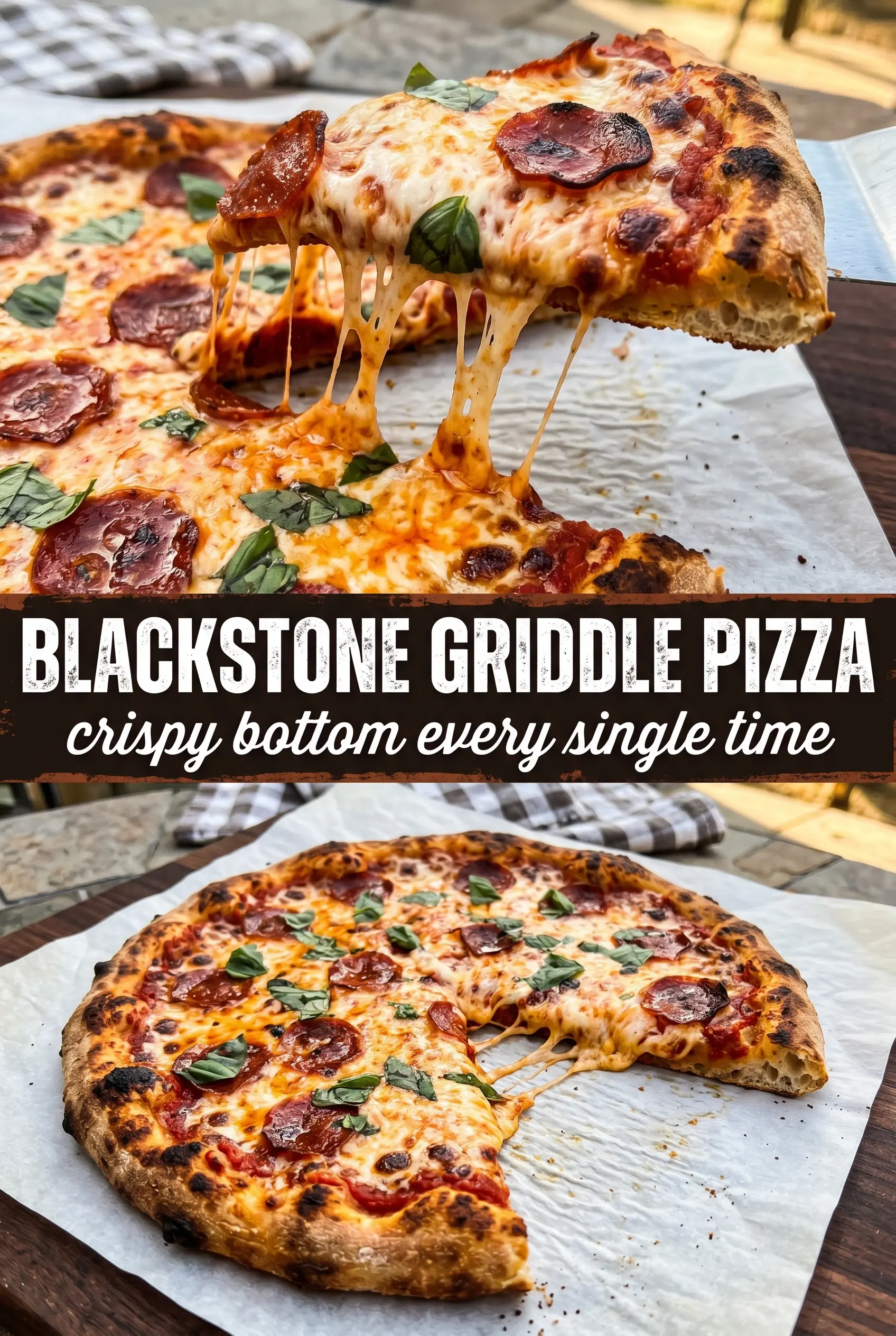
Pizza on a Blackstone griddle gets the kind of crust home ovens struggle to deliver: crisp on the bottom, spotted with char, and sturdy enough to hold bubbling cheese without going limp. The dough cooks fast on the hot surface, which means you get that pizzeria-style snap in minutes instead of waiting on a baking stone to come up to temperature.
The trick is cooking the dough first, then flipping it before the toppings go on. That sets the bottom and keeps the sauce from soaking straight through the crust. A thin layer of oil on the griddle helps the dough release cleanly, and a dome or inverted pan traps just enough heat to melt the cheese before the crust overcooks.
Below, I’ll walk through the part that matters most: stretching the dough thin enough to cook through without tearing, plus the small timing cues that keep the crust from burning before the cheese finishes. There are also a few easy swaps if you want to change up the toppings or make it a little lighter.
The bottom got that perfect golden crunch before we flipped it, and the dome melted the cheese just in time. My kids ate theirs outside standing around the griddle.
Save this Blackstone griddle pizza for the night you want a charred crust, melted cheese, and dinner on the table in under 30 minutes.
The Reason the Crust Cooks First on a Blackstone
Most griddle pizzas fail because the toppings go on too early and the dough underneath never gets a chance to set. On a Blackstone, that hot, even surface does the opposite of a skillet: it gives the crust immediate contact across the whole bottom, which means you can build structure fast before the sauce has time to soak in. If you try to top raw dough before the first side firms up, it will stretch, tear, and stick when you flip it.
The first side should look pale but dry in spots, with a little browning at the edges. That’s your cue to flip. The second side only needs a short cook because the toppings finish under the dome, and that’s what keeps the crust from drying out while the cheese melts.
- Medium heat is enough here. If the griddle runs too hot, the bottom scorches before the dough cooks through.
- Thin dough works best because it cooks fast and flips cleanly. Thick dough tends to stay doughy in the center.
- Flour for dusting helps with stretching and handling, but don’t overdo it or you’ll end up with a dusty, dry crust.
What Each Topping Is Doing on the Griddle

- Pizza dough needs to be stretchy and relaxed. Cold dough fights you, so let it sit at room temperature long enough to stop snapping back.
- Olive oil gives the griddle surface a little richness and helps the crust release. A light coating is enough; too much oil fries the dough instead of crisping it.
- Pizza sauce should be thick. A watery sauce runs to the edges and softens the crust before the cheese sets.
- Mozzarella is the main melting cheese here. Shredded low-moisture mozzarella melts more evenly than fresh mozzarella, which can leak too much water onto the pizza.
- Basil and Parmesan go on at the end for freshness and salt. Put them on after the pizza comes off the griddle so they don’t scorch.
Stretching, Flipping, and Melting Without Losing the Crust
Heat the Griddle and Oil It Lightly
Bring the Blackstone to medium heat and spread the oil in a thin film across the cooking area. You want a surface that sizzles when the dough hits it, not one that smokes. If the oil pools, wipe the excess away; pooled oil makes the dough fry in patches instead of setting evenly.
Stretch the Dough Into Thin Rounds
Divide the dough into four portions and stretch each one into a thin round with your hands, using flour only as needed to keep it moving. Aim for even thickness so one side doesn’t cook faster than the other. If the dough keeps shrinking back, let it rest for a few minutes and try again rather than forcing it.
Cook the First Side Until It Releases
Lay the dough on the griddle and let it cook undisturbed for 2 to 3 minutes. The bottom should turn golden and the surface should look dry enough to lift cleanly with a spatula. If it sticks, it needs another 30 seconds; don’t yank it or you’ll tear the crust.
Flip, Top, and Trap the Heat
Flip the crust so the cooked side is facing up, then add sauce, mozzarella, and toppings quickly. Keep the layer of sauce thin and leave a small border around the edge so it doesn’t spill onto the griddle. Cover with a dome or inverted pan for 3 to 5 minutes, just until the cheese melts and the toppings heat through. If the bottom is getting too dark before the cheese melts, lower the heat slightly and keep the cover on.
Finish With Fresh Basil and Parmesan
Move the pizza off the griddle as soon as the cheese is melted and the crust has a few deep brown spots. Fresh basil goes on right away for a bright finish, and Parmesan adds a salty edge that balances the sauce. Slice while the cheese is still stretchy; waiting too long lets the crust soften under the steam.
How to Change This Blackstone Pizza Without Wrecking the Crust
Make it dairy-free
Use a dairy-free mozzarella-style shred that melts well and skip the Parmesan. The pizza will still crisp nicely, but the cheese layer may set a little softer and won’t brown the same way as dairy cheese.
Gluten-free dough on the griddle
Use a gluten-free pizza dough that’s built for shaping, not a batter-style crust. Handle it gently and expect a slightly more delicate flip; a well-oiled surface matters even more because gluten-free dough tears faster.
Make it vegetarian with more structure
Load it with vegetables that won’t flood the crust, like mushrooms, peppers, onions, or olives. Sauté watery vegetables first if you want them deeply browned; raw tomatoes or zucchini can release too much moisture and soften the center.
Extra crisp crust
Brush the stretched dough lightly with olive oil before the first side cooks. That gives the crust a deeper color and a little more crunch, but use a light hand or the outside will brown before the center sets.
Storage and Reheating
- Refrigerator: Store leftovers in an airtight container for up to 3 days. The crust softens a bit in the fridge, especially under the sauce.
- Freezer: It freezes best after baking. Wrap slices tightly and freeze for up to 2 months, then reheat from frozen for the best texture.
- Reheating: Warm slices in a dry skillet or on the griddle over medium-low heat until the bottom crisps back up and the cheese loosens. The mistake to avoid is microwaving it first, which makes the crust rubbery before the cheese can recover.
Answers to the Questions Worth Asking
Pizza on a Blackstone Griddle
Ingredients
Equipment
Method
- Heat the Blackstone griddle to medium heat and oil the surface for a light slick sheen.
- Stretch the pizza dough into 4 thin rounds, dusting with flour as needed so the dough doesn’t stick.
- Place the dough directly on the griddle and cook for 2-3 minutes until the bottom is golden, watching for visible browning at the edges.
- Flip the crust and quickly add the pizza sauce, mozzarella cheese, and your choice of toppings to the cooked side so the cheese starts melting immediately.
- Cover with a dome or large pan and cook for 3-5 minutes until the cheese melts and looks glossy.
- Remove from the griddle, top with fresh basil and Parmesan, then slice and serve while the crust is hot and the cheese is bubbling.