Tropical pineapple coconut ice cream has that smooth, spoonable texture that lands somewhere between a custard ice cream and a frozen piña colada, with bright pineapple scattered through every bite. The coconut stays rich and round, the pineapple brings a sharp sweet-tart edge, and the toasted coconut adds little chewy-toasty bits that keep each scoop interesting.
The custard base matters here. Heating the coconut milk, cream, sugar, and yolks gives you a denser, silkier finish than a simple no-churn mix, and it also keeps the pineapple from tasting flat or icy. The pineapple gets folded in near the end so it stays distinct instead of melting into the base, which is what makes this taste homemade instead of one-note.
Below, I’ve included the exact timing that keeps the custard smooth, the point where the pineapple should go in, and a few smart swaps if you need a dairy-free direction or want a stronger coconut flavor.
The custard turned out silky and the pineapple stayed in little juicy pieces instead of freezing into hard chunks. I also loved that the toasted coconut kept the texture from feeling too smooth.
Like this pineapple coconut ice cream? Save it to Pinterest for the nights when you want a creamy tropical scoop with real pineapple pieces.
The Custard Base That Keeps This Ice Cream Creamy
Egg yolks and full-fat coconut milk do the heavy lifting here. The yolks give the ice cream body and help it freeze into a scoopable custard instead of an icy block, while the coconut milk brings enough fat to keep the texture soft straight from the freezer. If you skip the yolks, you’ll get a lighter mix, but it won’t hold the same plush texture after freezing.
The biggest mistake is rushing the heat. Once the yolks go in, the custard needs gentle stirring and moderate heat until it reaches 175F. Hotter than that, and you’ll scramble the eggs; lower than that, and the base never fully thickens, which leaves you with a thinner, icier churn.
What Each Ingredient Is Actually Doing in This Frozen Dessert
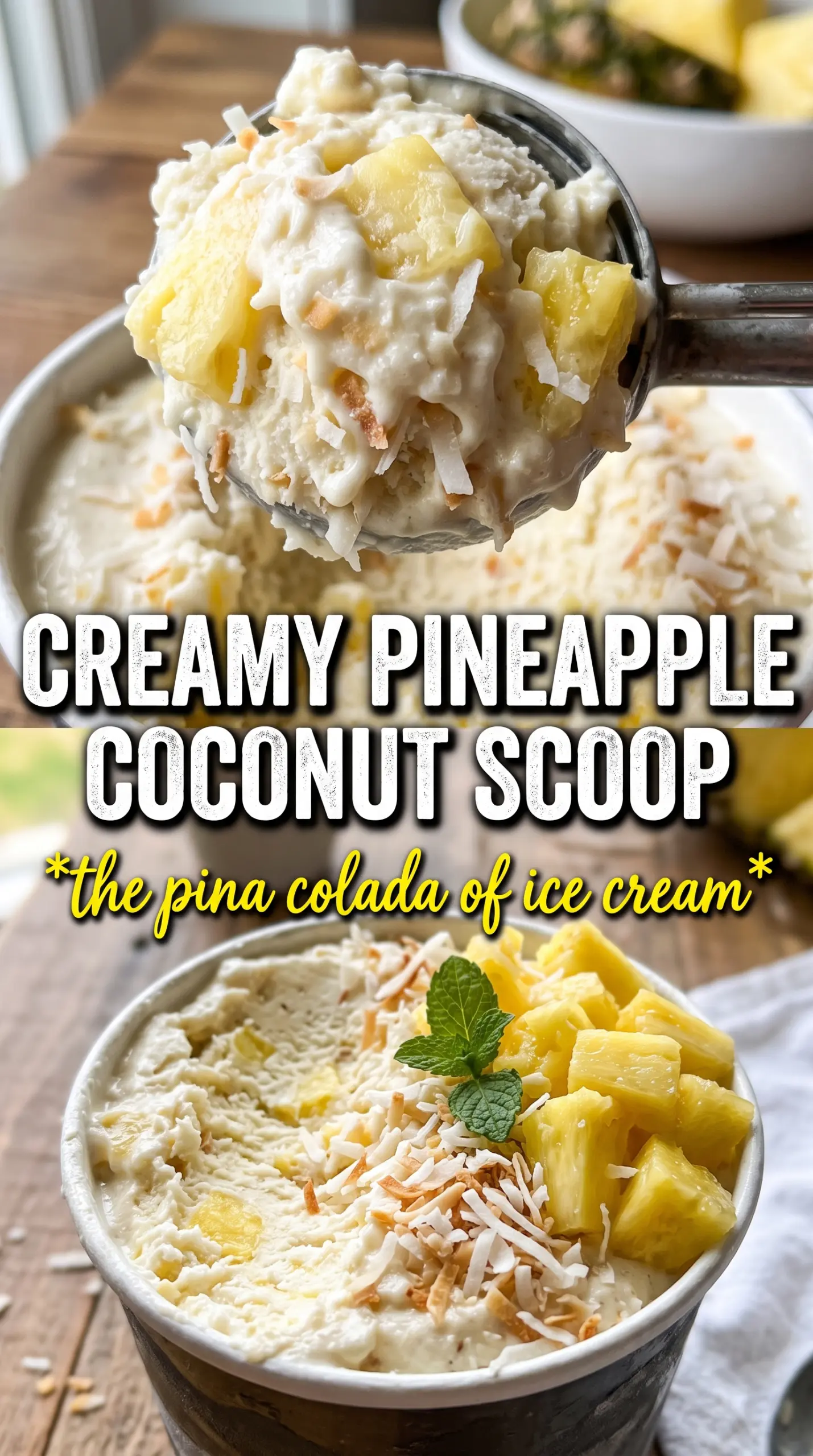
- Full-fat coconut milk — This is where the coconut flavor and body come from. Use full-fat, not light coconut milk, or the base turns thin and freezes harder than it should.
- Heavy cream — Cream softens the coconut milk and gives the churned ice cream a richer finish. You can swap in more coconut milk for a dairy-free version, but the final texture will be a little less silky and a little more firm.
- Egg yolks — These are what make the base custard-like. There isn’t a good shortcut here if you want the same scoopable, velvety result.
- Fresh pineapple — Fresh works best because it keeps its bright flavor and doesn’t water down the mix as much as canned fruit. Dice it finely so it folds in cleanly and doesn’t freeze into big icy chunks.
- Toasted shredded coconut — The toast gives the ice cream a nutty edge and a little texture. If you only have untoasted coconut, toast it in a dry skillet until it smells fragrant and starts turning pale gold.
- Coconut extract — This sharpens the coconut flavor without making the base heavier. Use it sparingly; too much can taste artificial fast.
Building the Base So It Churns Smoothly
Warming the Dairy and Sugar
Heat the coconut milk, cream, and sugar together until the sugar disappears and the mixture feels steamy, not boiling. You’re not trying to reduce it, just dissolve the sugar fully so the custard starts from a smooth base. If sugar crystals stay in the pot, they can leave the finished ice cream a little gritty.
Tempering the Yolks Without Scrambling Them
Whisk the hot dairy into the yolks in a slow stream, then pour everything back into the saucepan. That gradual temperature change is what keeps the yolks from curdling. If you dump the hot liquid in all at once, you’ll get sweet scrambled eggs instead of custard.
Cooking to the Right Thickness
Stir constantly and cook until the mixture reaches 175F and lightly coats the back of a spoon. It should look slightly thicker and glossy, not paste-like. Pull it off the heat as soon as it hits that temperature, because custard keeps cooking in the hot pan for a minute or two after you turn off the burner.
Chilling Before the Churn
Strain the custard, then stir in the coconut extract, vanilla, and salt before chilling it completely. The cold rest matters because warm base takes longer to churn and can freeze unevenly in the machine. Don’t rush this part; four hours is the minimum, and overnight is even better if you have the time.
Dairy-Free Coconut Pineapple Ice Cream
Swap the heavy cream for another 13.5 oz can of full-fat coconut milk. The texture will be a little firmer and less rich, but the coconut flavor gets louder and the recipe still churns well. Keep the yolks if you want the custard body; if you want an egg-free version, use a tested no-churn coconut base instead.
Extra Pineapple, Less Coconut
Increase the pineapple to 2 cups if you want a brighter fruit-forward scoop. Pat the diced pineapple dry first so the extra fruit doesn’t add too much moisture and turn the churned ice cream icy.
Piña Colada Style
Add a tablespoon of rum to the chilled base before churning and keep the coconut extract in place. The alcohol softens the freeze a little and gives the ice cream that classic cocktail note without making it taste boozy. Don’t add much more than that or the mixture can stay too soft.
Storage and Reheating
- Refrigerator: The custard base can sit covered in the fridge for up to 2 days before churning, and the flavor actually deepens as it chills.
- Freezer: Store churned ice cream in a shallow airtight container for up to 2 weeks. After that, the pineapple starts to pick up more ice crystals and the texture gets a little rough.
- Reheating: Let it stand at room temperature for 5 to 10 minutes before scooping. If it freezes hard, don’t microwave the whole container; that melts the edges before the center softens.
Questions I Get Asked About This Recipe
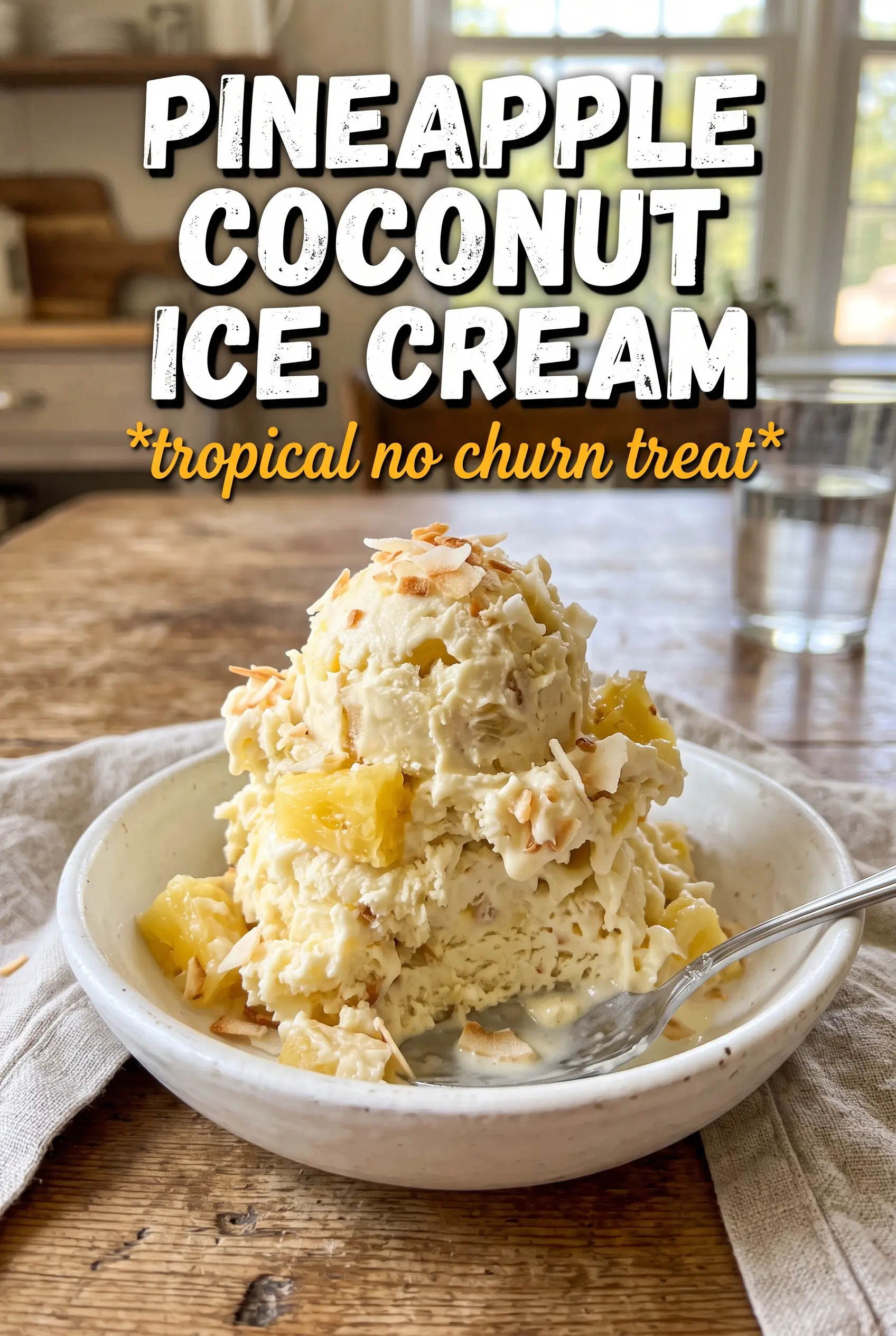
Pineapple Coconut Ice Cream
Ingredients
Equipment
Method
- In a saucepan, heat the full-fat coconut milk and heavy cream with the granulated sugar over medium-low heat, stirring until the sugar dissolves.
- In a bowl, slowly whisk the hot coconut mixture into the egg yolks to temper them, then return everything to the saucepan.
- Cook the mixture to 175°F, stirring constantly so it thickens into a custard consistency.
- Strain the custard, then stir in the coconut extract, vanilla extract, and the pinch of salt until smooth.
- Cool the custard completely, then refrigerate at least 4 hours until very cold.
- Churn the cold custard in an ice cream maker according to the manufacturer’s directions, and add the diced pineapple and toasted shredded coconut in the last 5 minutes.
- Transfer the churned ice cream to a container and freeze until scoopable.