Charred pineapple, juicy chicken, and tender peppers make these kabobs the kind of grill dinner people hover around before they even hit the table. The sweet-savory glaze clings to every piece, and the pineapple caramelizes just enough to turn sticky at the edges without falling apart. It’s the balance that keeps this recipe on repeat: bright fruit, salty soy, a little honey, and that clean grilled flavor that makes everything taste bigger.
The marinade does most of the work here. Pineapple juice brings flavor and a little natural sweetness, while soy sauce seasons the chicken all the way through. I keep the marinating time under control because pineapple can turn chicken mushy if it sits too long; one to four hours is the sweet spot. Cubing the chicken and vegetables to a similar size matters too, because uneven pieces cook at different speeds and leave you with either burned pineapple or underdone chicken.
Below, you’ll find the small details that make these kabobs grill cleanly, hold together, and finish with that glossy glaze instead of dry, bland chunks on a stick.
The marinade gave the chicken great flavor in just a few hours, and the pineapple caramelized beautifully without turning to mush. I’ve made kabobs before, but this was the first time every piece cooked evenly.
Love the caramelized pineapple and glossy teriyaki glaze? Save these pineapple chicken kabobs for your next grill night.
The marinade timer matters more than the grill time
A lot of kabob recipes fail before they ever reach the fire. The chicken gets too much time in an acidic marinade, the fruit gets cut too small, or the skewers are crowded so tightly that nothing chars. These kabobs work because the marinade is flavorful without being harsh, and the grill time is short enough to keep the chicken juicy while still giving the pineapple a real sear.
The other key is heat control. Medium-high heat gives you color fast, which matters because you’re not on the grill long enough to slowly build flavor. If the grill is too cool, the chicken dries out before the pineapple caramelizes. If it’s too hot, the sugar in the marinade burns before the center reaches 165°F.
- Cut size — Keep the chicken, pineapple, peppers, and onion in similar-sized chunks so they finish together. Big chicken pieces with tiny pineapple chunks are a recipe for uneven cooking.
- Marinade balance — Pineapple juice adds sweetness and helps with browning, but it should stay in the 1 to 4 hour range. Longer than that and the texture of the chicken starts to soften too much.
- Soaked wooden skewers — They help keep the sticks from scorching on the grill. A short soak is enough; you’re not trying to waterlog them, just slow the burn.
- Basting — A light baste during grilling builds a glossy finish. Too much sauce too early can drip and flare, so brush it on between turns instead of dumping it on at the start.
What the pineapple juice is doing that plain marinade can’t
Pineapple juice is doing more than adding sweetness. It gives the glaze a fruit-forward edge that soy sauce alone can’t provide, and it helps the chicken brown with that sticky, grilled finish everyone wants from kabobs. If you swap it out for plain water or extra soy sauce, you lose the brightness that makes this dish taste tropical instead of just salty.
The honey rounds out the acidity and helps the glaze cling. The olive oil keeps the marinade from tasting sharp and helps the chicken stay moist on the grill. Garlic matters here too, but it needs to be minced fine so it disperses into the marinade instead of sitting in raw little bits that can scorch on the grill.
- Chicken breasts — Boneless, skinless breasts stay lean and cook quickly, but they need the marinade and careful timing. If you want a little more forgiveness, chicken thighs work well and stay juicier on the grill.
- Pineapple — Fresh pineapple gives the best texture and the cleanest caramelized edges. Canned pineapple can work in a pinch, but drain it well so excess syrup doesn’t make the kabobs steam.
- Soy sauce — This is the salty backbone of the marinade. Low-sodium soy sauce is a good swap if you want a little more control over the final salt level.
- Honey — Honey helps the glaze turn glossy and darken on the grill. Maple syrup can substitute, but it brings a deeper, less bright sweetness.
Building the kabobs so the chicken finishes before the fruit burns
Mixing the marinade
Stir the soy sauce, pineapple juice, honey, olive oil, and garlic until the honey disappears and the mixture looks uniform. If the honey stays streaky, it won’t coat the chicken evenly. This is a quick marinade, so every ingredient needs to be fully blended before the chicken goes in.
Marinating the chicken
Add the cubed chicken and turn it until every piece is coated, then refrigerate for 1 to 4 hours. Less than an hour gives you surface flavor only; much longer than 4 hours can start to soften the meat too much. If you’re tight on time, even 30 minutes helps, but don’t skip the chill time completely.
Threading the skewers
Alternate chicken, pineapple, pepper, and onion so each skewer has a mix of sweet and savory pieces. Leave a tiny bit of space between pieces so the heat can move around them. If you pack them too tightly, the centers steam and the edges never char.
Grilling to the finish
Place the kabobs over medium-high heat and grill for 5 to 6 minutes per side, basting as you turn them. You’re looking for chicken that feels firm but still springy, with grill marks on the edges of the pineapple and softened peppers. Pull them when the chicken reaches 165°F; if the glaze starts to darken too fast, move the kabobs to a cooler spot on the grill so the outside doesn’t burn before the inside is done.
How to adapt these kabobs when the grill menu has to change
Use chicken thighs for a juicier version
Chicken thighs give you a little more margin on the grill and stay tender even if the heat runs hot. The flavor is a bit richer, and the kabobs won’t dry out as quickly as breasts. Keep the cooking time close and still cook to 165°F.
Make them gluten-free with tamari
Swap the soy sauce for tamari in a 1:1 ratio. You’ll get the same salty depth and caramelization, just without the wheat. Check that your tamari is labeled gluten-free if that matters for your kitchen.
Use bell peppers only if you want a sweeter kabob
You can leave out the onion and double the peppers if you want a milder, sweeter finish. The kabobs will lose a little sharpness and contrast, but the pineapple glaze will stand out more clearly.
Storage and Reheating
- Refrigerator: Store leftovers in an airtight container for up to 3 days. The pineapple softens a little, but the flavor holds up well.
- Freezer: Freeze the cooked chicken and vegetables off the skewers for up to 2 months. The pineapple won’t keep its fresh texture perfectly, but the flavor still works for a second meal.
- Reheating: Reheat gently in a covered skillet over medium-low heat or in a 325°F oven until warmed through. High heat dries out the chicken fast and can make the pineapple tough.
Answers to the questions worth asking before you fire up the grill
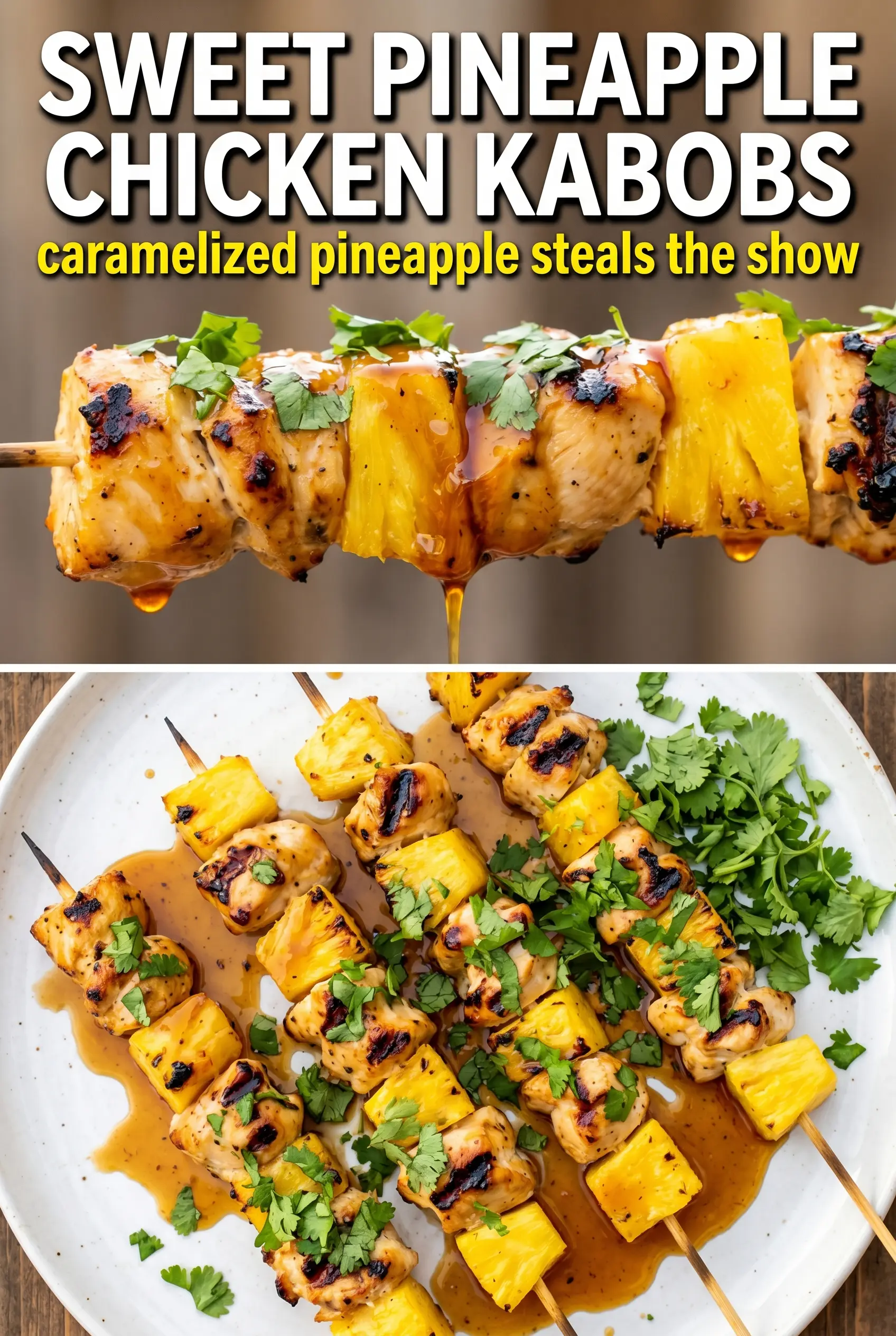
Pineapple Chicken Kabobs
Ingredients
Equipment
Method
- In a bowl, whisk together soy sauce, pineapple juice, honey, olive oil, and minced garlic until combined and glossy.
- Cover and refrigerate the marinade while you prep the chicken and fruit.
- Add cubed chicken breasts to the marinade and turn to coat evenly.
- Marinate for 1-4 hours in the refrigerator, and let it sit for the full time for best flavor.
- Thread chicken, cubed pineapple, bell peppers, and onion onto soaked wooden skewers, alternating ingredients for color.
- Brush or reserve a little marinade for basting during grilling.
- Preheat the grill to medium-high heat and place kabobs on the grate.
- Grill for 5-6 minutes per side, basting with marinade as they cook.
- Continue grilling until chicken reaches 165°F and pineapple is caramelized with browned edges.