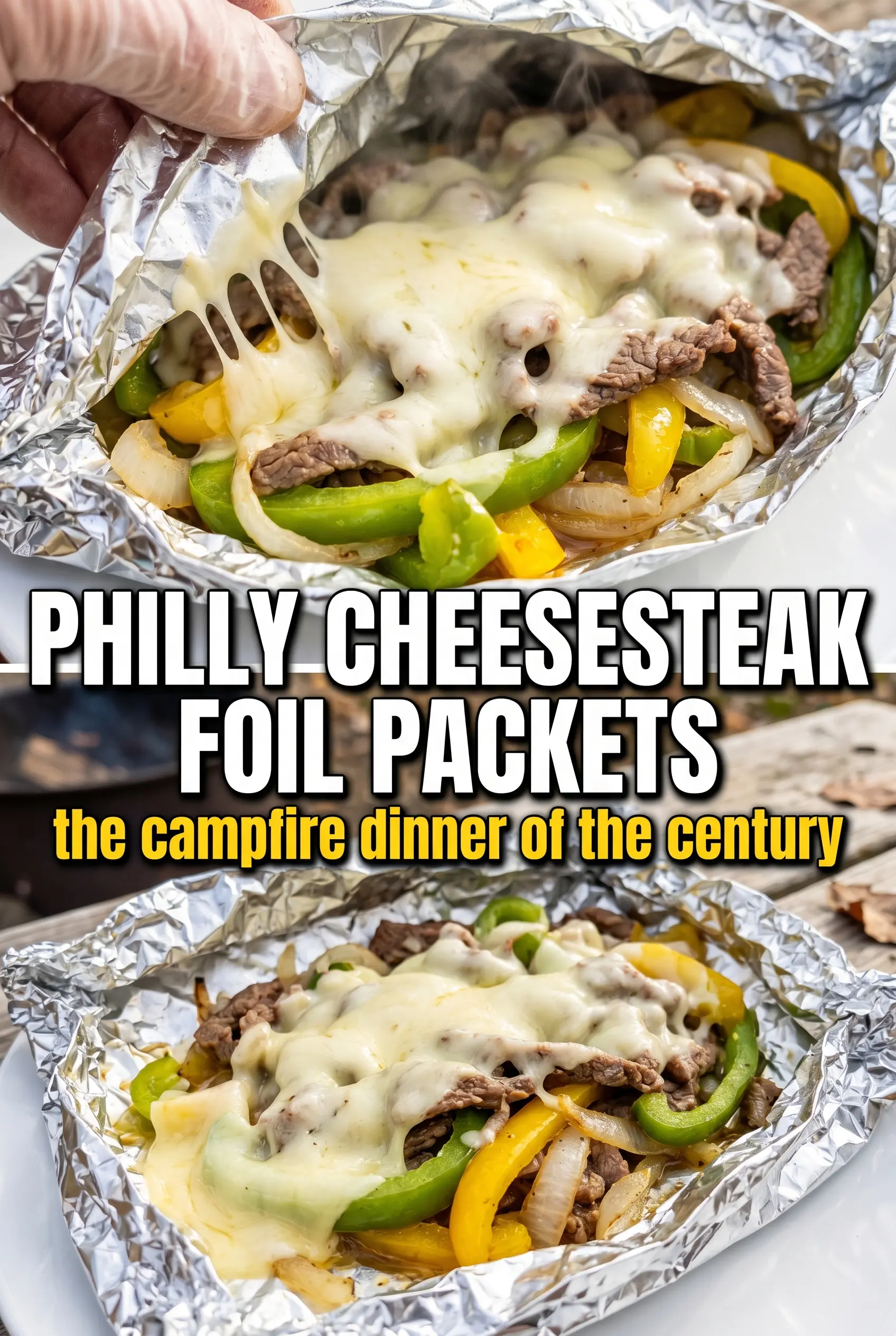
Philly cheese steak foil packet dinners come off the grill with tender steak, sweet peppers and onions, and a blanket of melted provolone that turns everything into one hot, messy, satisfying meal. The foil keeps the juices in the packet instead of losing them to the grill, which means the vegetables soften in their own steam while the steak stays flavorful and the cheese melts right over the top.
This version works because the steak is sliced thin and the vegetables are cut to a similar size, so everything finishes in the same window. Worcestershire sauce adds the savory depth you’d normally get from a longer cook, and the heavy-duty foil does the real work here by trapping heat and moisture. If you’ve ever ended up with dry steak and undercooked onions in the same packet, the fix is in the cut size and the sealed fold.
Below, I’ve included the small details that matter most: how to keep the packets from leaking, what to swap if you don’t have provolone, and the one grilling habit that keeps the steak from going tough.
The steak stayed tender, the peppers had a little bite left, and the cheese melted perfectly without making the packets soggy. I served them in rolls and my husband said they tasted like the best part of a deli sandwich, just easier.
Save these Philly cheese steak foil packets for a fast grilled dinner with melty provolone, tender steak, and almost no cleanup.
The Packet Seal That Keeps the Steak Juicy Instead of Steaming It Dry
The biggest mistake with foil packet dinners is packing them loosely and hoping the steam will do all the work. It will, but it will also soften the vegetables into mush and wash out the flavor. A tight seal keeps the juices around the steak and vegetables long enough for the onions to turn sweet, the mushrooms to release their moisture, and the cheese to melt without drying out the meat.
Heavy-duty foil matters here. Thin foil tears when you flip the packets, and once that happens, the steam escapes and the steak can dry out before the vegetables finish. Keep the filling in a fairly even layer so the center doesn’t stay cold while the edges overcook. The goal is a hot packet that puffs slightly when it’s ready to open.
What Each Ingredient Is Actually Doing in This Foil Packet Dinner
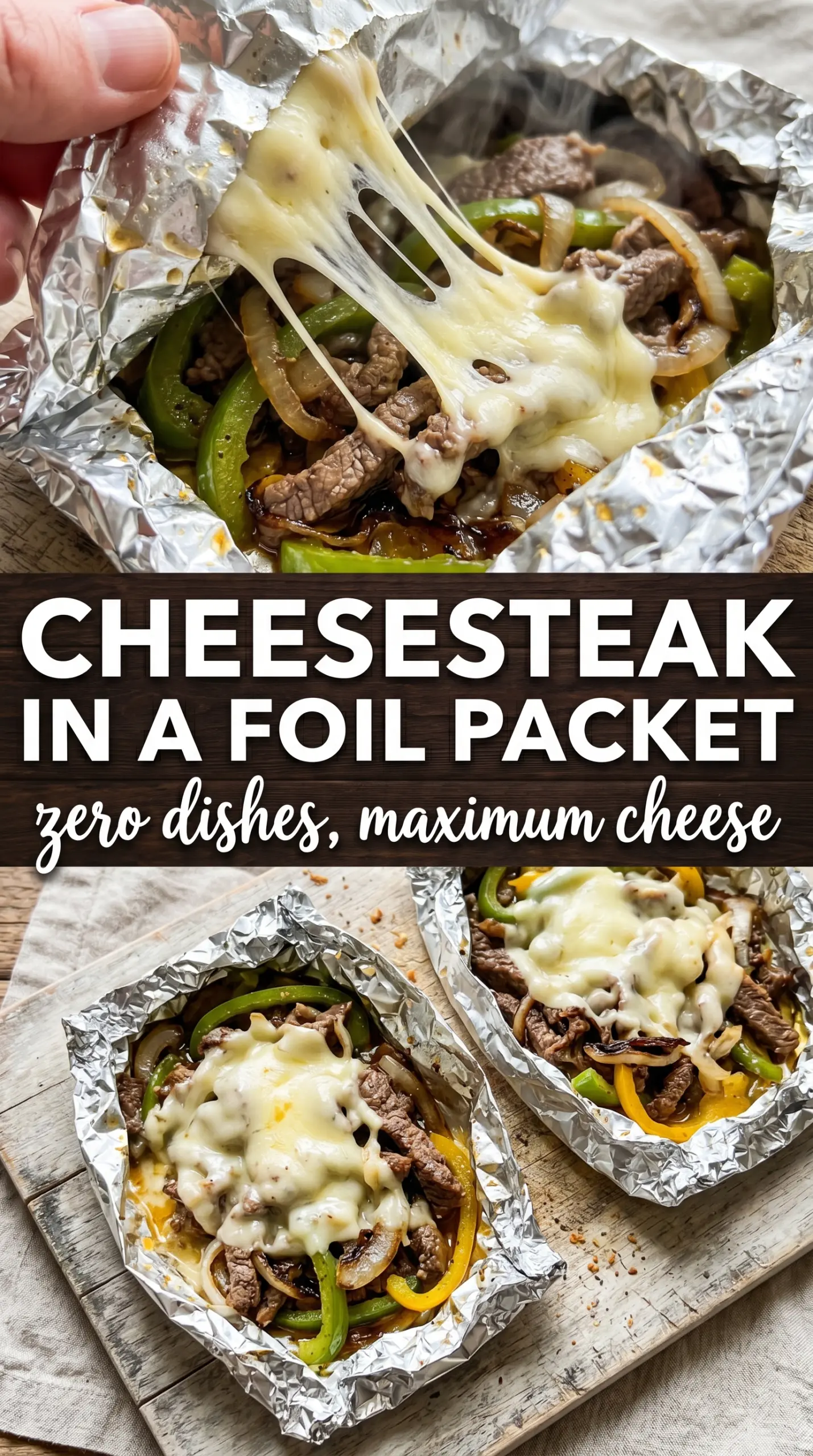
- Sirloin steak — Sirloin gives you beefy flavor and stays tender when sliced thin across the grain. Ribeye is richer if you want a more classic cheesesteak feel, but sirloin is the sweet spot for weeknight grilling because it’s easier on the budget and still cooks up well in the packet.
- Bell peppers, onion, and mushrooms — These build the juices that keep the packet from tasting flat. Slice them thin enough to soften in 20 minutes; thick chunks can still be crunchy when the steak is done. If you skip the mushrooms, the packet is still good, but you lose some of that savory depth.
- Provolone cheese — Provolone melts smoothly and brings the right mild, salty finish without turning greasy. Mozzarella will melt, but it tastes softer and less like a cheesesteak. If you like a sharper edge, mix in a little white American or use one slice of each.
- Worcestershire sauce — This is the shortcut for the deep, savory background you’d normally build with a griddle and plenty of time. Don’t overdo it or the packets can turn too salty; two tablespoons across four servings is enough to season the beef without overpowering the vegetables.
- Heavy-duty foil — This isn’t the place for flimsy foil. The packets need to hold steam, flip cleanly, and stay sealed until serving, so use the thicker sheets or double up if your foil feels delicate.
Building the Packets So Everything Finishes at the Same Time
Layer the Beef and Vegetables Evenly
Divide the steak, peppers, onions, and mushrooms into four equal piles right on the foil sheets. Keep the pile spread out instead of mounded high; a tall packet traps steam unevenly and leaves you with raw spots in the middle. Drizzle each portion with olive oil and Worcestershire sauce, then season before you fold so the flavors coat the food directly.
Seal for Steam, Not for Squeeze
Fold the foil over the filling and crimp the edges tightly so the packets stay closed on the grill. Leave a little air space inside for steam circulation, but don’t press the foil flat against the food. If the packets are smashed tight, the cheese can stick to the foil and the vegetables lose the moisture they need to soften properly.
Grill Until the Beef Is Just Cooked Through
Set the packets over medium heat and cook for 18 to 20 minutes, flipping once halfway through. You’re looking for bubbling juices, softened onions, and steak that’s no longer pink in the thinnest pieces. If your steak is cut a little thicker, give it a few extra minutes rather than opening the packet early; every time you lift the foil, you lose heat and steam.
Open Carefully and Serve Hot
Let the packets sit for a minute after they come off the grill, then open them away from your face because the steam bursts hard. The cheese should be fully melted and glossy, draped over the beef and vegetables. Spoon everything into hoagie rolls if you want the classic sandwich feel, or serve it straight from the packet for an easy no-fuss dinner.
How to Adapt These Philly Cheese Steak Foil Packets for Different Nights
Dairy-Free Version
Skip the provolone and finish the packets with a little extra Worcestershire and a drizzle of olive oil after grilling. You’ll lose the stretchy melt, but the steak and vegetables still have plenty of flavor. If you want a richer finish, add dairy-free cheese only after the packets come off the heat so it softens without turning oily.
Gluten-Free Dinner
The packets themselves are naturally gluten-free, but check your Worcestershire sauce because some brands use wheat-based ingredients. Serve the filling over rice, potatoes, or on a gluten-free roll. The flavor stays the same; the only thing you’re changing is the breading or bread at the end.
Ribeye Instead of Sirloin
Ribeye gives you a richer, more classic cheesesteak flavor because of the extra marbling. It cooks a little faster and can turn greasy if the slices are thick, so keep the pieces thin and watch the packets closely near the end of the cook time. This swap is worth it when you want a more indulgent result.
Make It in the Oven
If the grill isn’t an option, bake the sealed packets on a sheet pan at 425°F until the steak is cooked through and the vegetables are tender. The oven gives you more even heat and a slightly softer texture, but you’ll lose the light smoky edge that comes from grilling. Open the packets carefully either way because the steam builds fast.
Storage and Reheating
- Refrigerator: Store leftovers in an airtight container for up to 3 days. The vegetables soften a bit more after chilling, but the flavor holds up well.
- Freezer: The cooked filling can be frozen for up to 2 months, though the peppers and onions will be softer after thawing. Freeze without the rolls and wrap tightly once cooled.
- Reheating: Reheat in a covered skillet over medium-low heat with a splash of water, or warm in the oven at 325°F until hot. Don’t blast it in the microwave on high or the steak turns chewy before the center is hot.
Answers to the Questions Worth Asking
Philly Cheese Steak Foil Packet Dinners
Ingredients
Method
- Divide the sirloin steak, bell peppers, onion, and mushrooms among 4 heavy-duty foil sheets. Keep the layers fairly even so everything cooks at the same pace.
- Drizzle each packet with olive oil and Worcestershire sauce. Make sure the sauce coats the steak and vegetables rather than pooling in one spot.
- Season each packet with garlic powder, salt, and pepper. Use a light, even sprinkle across the top of the ingredients.
- Top each packet with 2 slices of provolone cheese. Place the cheese directly on the steak mixture so it melts during grilling.
- Fold foil into sealed packets. Crimp the edges tightly to trap steam while grilling.
- Grill the packets over medium heat for 18-20 minutes, flipping halfway. Look for visible steaming from the packet seams as the cheese melts.
- Carefully open the packets and serve in hoagie rolls or as-is. Steam will be very hot, so pause a moment before taking the first bite.