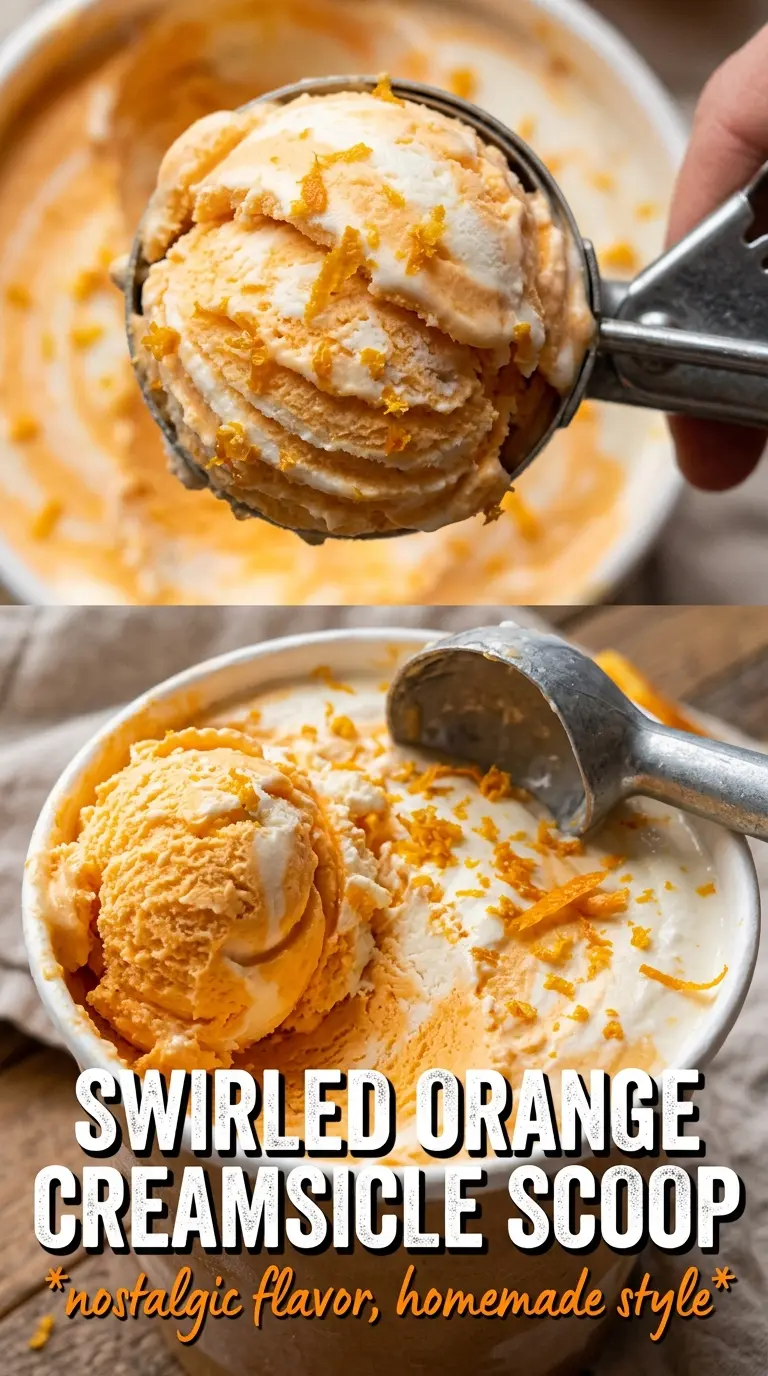
Orange creamsicle ice cream lands exactly where nostalgia and real homemade custard meet: bright citrus swirls, a soft vanilla base, and that clean, creamy finish that keeps you going back for one more scoop. The texture stays rich without feeling heavy, and the orange ripple gives every bite a little burst of sweetness and zest.
What makes this version work is the separate orange syrup. Cooking the juice with the zest and sugar concentrates the citrus flavor instead of watering down the base, and adding it at the very end keeps those pretty swirls intact. The vanilla custard gets cooked to a true nappe-like thickness, so it churns up smooth and scoops beautifully after a proper freeze.
Below, I’ll walk through the part that matters most: how to keep the custard silky, how to get the orange swirl bright instead of icy, and how to layer it so the finished ice cream looks as good as it tastes.
The orange swirl stayed separate instead of turning into one pale base, and the custard churned up so smooth. It tasted just like the popsicle from childhood, only creamier.
Love the orange syrup swirl and creamy vanilla base? Save this Orange Creamsicle Ice Cream for the next time you want a frozen dessert that tastes like a classic popsicle in scoopable form.
The Custard Temperature That Keeps This Ice Cream Silky Instead of Eggy
The biggest mistake with custard ice cream is chasing thickness too hard. Once the base hits 175°F, it should coat the back of a spoon and leave a clear line when you drag your finger through it. Go much hotter and the yolks start to tighten too fast, which gives you a faint scrambled-egg note and a grainy texture after freezing.
Tempering matters here, but the real protection is steady heat and constant whisking once everything goes back on the stove. The mixture thickens from the egg yolks and the cream, not from a rolling boil. If you see bubbles breaking hard across the surface, pull it off the burner immediately and strain it before chilling.
What the Orange Syrup Is Doing That Juice Alone Can’t
Fresh orange juice brings the flavor, but the simmered syrup brings the texture. Cooking it with the zest and the remaining sugar concentrates the citrus and removes some of the raw water that would otherwise turn into hard ice crystals in the freezer. That’s what keeps the orange part bright and scoopable instead of thin and icy.
- Heavy cream — This gives the base its lush body and helps the custard churn into something that scoops cleanly. Half-and-half will work in a pinch, but the texture comes out lighter and a little icier.
- Whole milk — It loosens the custard just enough so it doesn’t freeze into a block. Skim milk makes the base lean and less creamy, which is not what you want in a creamsicle-style ice cream.
- Egg yolks — These thicken the custard and give it that classic French-style richness. If you skip them, the ice cream will still freeze, but it won’t have the same velvety body.
- Fresh orange juice and zest — Zest is where the bold orange flavor lives, so don’t cut it back unless you have to. Bottled juice can taste flat here, while fresh juice keeps the swirl tasting clean and bright.
- Vanilla extract — Vanilla softens the citrus and turns this into a true creamsicle instead of plain orange ice cream. Use a good extract if you can; it’s the flavor that rounds everything out.
- Orange food coloring — Optional, but useful if you want that classic sherbet-orange look. It changes the appearance, not the taste, so leave it out if you prefer a more natural color.
Building the Base, Churning the Custard, and Swirling in the Orange at the Last Minute
Heating the Dairy
Warm the cream and milk until steaming, not boiling. You want small bubbles at the edges and a little movement in the pan, because that heat is enough to temper the yolks without shocking them. If the dairy boils hard, it can overcook the eggs later and leave you with a rough custard.
Tempering the Yolks
Whisk the hot dairy into the yolks and sugar slowly at first, then pour the whole mixture back into the pan. This keeps the eggs from scrambling the moment they hit the heat. Keep whisking while it cooks so the bottom doesn’t catch, and stop the second it reaches 175°F.
Cooking to the Right Thickness
The custard should look slightly thickened and glossy, not pudding-thick. If it clings to a spoon and leaves a clean path when you swipe your finger across the back, it’s done. Strain it right away to catch any tiny bits of cooked egg, then stir in the vanilla and salt while it’s still warm.
Making the Orange Ripple
Simmer the orange juice, zest, and sugar until the liquid looks a little syrupy and reduced. Let it cool completely before it touches the churned custard, or it will melt the base and blur the swirl. Add it in the last two minutes so you get distinct ribbons instead of a uniform orange ice cream.
Freezing for Clean Scoops
Layer the churned ice cream and the orange syrup in the container instead of stirring everything together. That creates those visible pockets of creamsicle color and flavor. Freeze it for at least four hours before scooping; if you cut that time short, it will taste soft in the center and lose the clean swirl pattern.
Three Ways to Tweak the Swirl Without Losing the Creamsicle Feel
Dairy-Free Version with Coconut Cream
Swap the cream and milk for full-fat coconut milk and coconut cream, then keep the orange syrup as written. You’ll lose the classic dairy custard taste, but you’ll gain a richer tropical note that still pairs well with vanilla and citrus. The texture will be a touch softer, so give it an extra hour in the freezer.
Extra-Bright Orange Flavor
Add another teaspoon of zest to the orange syrup if you want the citrus to stand up more against the vanilla. That gives you a sharper, more fragrant finish without making the ice cream watery. Don’t add more juice unless you’re willing to cook it down further, or the swirl will freeze harder.
Lighter, Less Sweet Scoop
Cut the sugar in the custard by 2 tablespoons and keep the orange syrup as written. The ice cream will taste a little less candy-like and a little more like fresh orange cream, though the texture will freeze slightly firmer. Let it sit on the counter for 5 to 10 minutes before scooping.
Storage and Reheating
- Refrigerator: Not applicable once frozen; the churned base should go straight from the machine into the freezer.
- Freezer: Keeps well for about 2 weeks with a piece of parchment pressed on the surface. After that, the orange swirl can start to taste a little dull and the edges pick up freezer flavor.
- Reheating: No reheating needed. For the best scoop, let it stand at room temperature for 5 to 10 minutes before serving; if it’s rock hard, don’t microwave it or the swirl will melt unevenly.
Answers to the Questions Worth Asking

Orange Creamsicle Ice Cream
Ingredients
Equipment
Method
- Heat the heavy cream and whole milk until steaming, then whisk into the egg yolks beaten with 1/2 cup granulated sugar.
- Return the mixture to heat and cook, stirring constantly, until it reaches 175F.
- Strain the custard, then whisk in vanilla extract and salt and cool completely.
- In a small saucepan, combine fresh orange juice, orange zest, and the remaining 1/4 cup granulated sugar.
- Simmer for 5 minutes until slightly syrupy, then cool completely.
- Churn the vanilla custard in an ice cream maker until thick.
- In the last 2 minutes, drizzle in the orange syrup and do not fully mix to keep visible swirls.
- Transfer to a container and layer spoonfuls to maintain the swirl pattern.
- Freeze at least 4 hours until firm.