Sticky, glossy Mongolian chicken hits that sweet-savory spot that keeps people going back for one more bite. The chicken stays crisp at the edges even after it’s coated in sauce, and the green onions soften just enough to bring a little bite without losing their shape. Piled over rice, it tastes like takeout in the best possible way, only brighter and fresher.
What makes this version work is the cornstarch on the chicken before it ever touches the pan. That light coating helps the chicken brown fast and gives the sauce something to cling to instead of sliding off. The sauce itself is built in the same skillet, so the garlic, ginger, and browned bits from the chicken all end up right where they should be.
You’ll find a few practical notes below on getting the sauce thick without turning it gummy, plus a couple of swaps if you need to work with what’s already in your kitchen.
The sauce got thick and glossy in just a couple minutes, and the chicken stayed coated instead of soggy. I served it over jasmine rice and my son asked if we could keep this in the weekly dinner rotation.
Save this Mongolian chicken for a fast sticky-sauce dinner with crisp-edged chicken and glossy green onions.
The Chicken Coating Is What Keeps the Sauce Clinging
Most stir-fry sauces taste good in the pan and then slide off the chicken by the time it reaches the plate. The cornstarch coating changes that. It creates a thin crust that browns quickly over high heat and gives the sauce a surface to grab onto, which is what makes the final dish taste sticky instead of watery.
The other thing that matters here is heat. If the pan isn’t hot enough, the chicken steams, the coating turns pasty, and the sauce never gets that dark, glossy finish. A wide skillet or wok gives the chicken room to sear instead of crowding each other, and that’s the difference between crisp edges and soft, pale pieces.
What Each Ingredient Is Actually Doing in the Pan
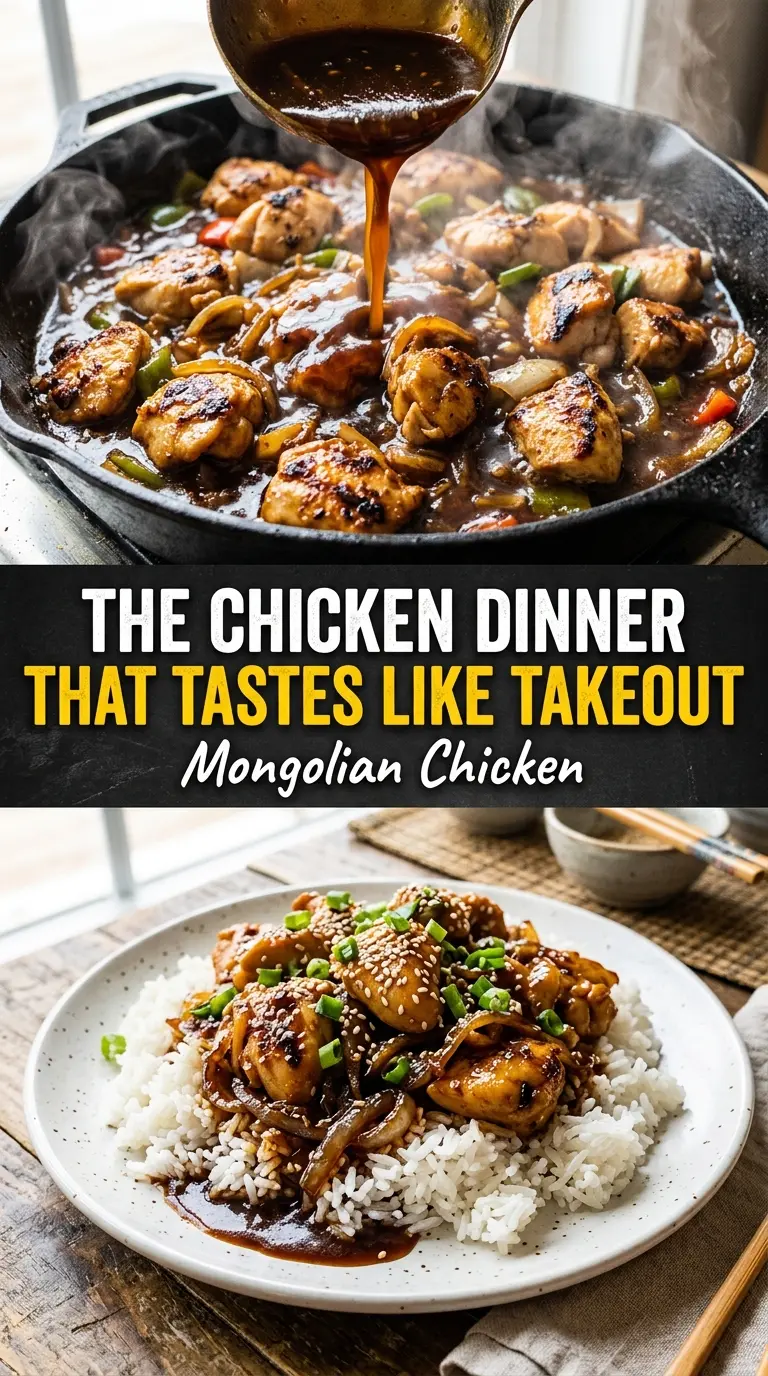
- Chicken breasts — Thin slices cook quickly and stay tender if you don’t overcook them. If you want a juicier result, boneless chicken thighs work too; they bring a little more richness and forgive the heat a bit better.
- Cornstarch — This does two jobs: it helps the chicken brown and it thickens the sauce later. Flour won’t give the same clean, glossy finish.
- Soy sauce, brown sugar, and hoisin — This is the backbone of the sauce. Soy brings salt, brown sugar gives the sticky glaze, and hoisin adds depth that keeps the sauce from tasting flat.
- Garlic and ginger — These need just a short stir-fry in the hot pan. If they sit too long, they burn and turn bitter before the sauce even goes in.
- Green onions — Add them at the end so they stay bright with a little char on the edges. That quick toss gives the dish its fresh finish without watering down the sauce.
Getting the Glaze Right Before the Chicken Goes Back In
Coating and Searing the Chicken
Toss the sliced chicken with cornstarch, salt, and pepper until every piece looks lightly dusted, not clumped. When it hits the hot oil, it should sizzle right away and leave golden spots in about 3 to 4 minutes per side. If the pan looks crowded, cook the chicken in batches; otherwise the steam softens the coating and you lose the texture that makes this dish work.
Building the Sauce in the Same Pan
Once the chicken comes out, add the garlic and ginger to the same pan and stir them for about 30 seconds. That short window is enough to wake them up without burning them, and the browned bits left behind will dissolve into the sauce. When the soy mixture goes in, let it come to a real boil before adding the slurry, or the cornstarch won’t thicken cleanly.
Finishing to a Sticky, Glossy Coat
Stir in the cornstarch slurry and cook until the sauce looks thick enough to leave a trail when you drag a spoon through it. Add the chicken and green onions back at the end and toss just until everything is coated. If you cook the chicken in the sauce too long, the crust softens fast, so the finish should be quick and decisive.
How to Adapt This for Thighs, Heat, or a Gluten-Free Dinner
Use chicken thighs for a richer, juicier result
Boneless, skinless thighs work well here and stay tender even if they go a minute too long. They bring a little more richness to the sticky sauce, though they won’t crisp quite as cleanly as chicken breast slices.
Make it gluten-free with tamari and gluten-free hoisin
Swap the soy sauce for tamari and use a gluten-free hoisin if you can find it. The flavor stays close, but tamari usually tastes a little rounder and less sharp than standard soy sauce.
Turn up the heat without changing the sauce
Add an extra pinch of red pepper flakes or a drizzle of chili oil at the end if you want more heat. Put the spice in the sauce rather than the chicken coating so the seasoning stays even from bite to bite.
Storage and Reheating
- Refrigerator: Store leftovers in an airtight container for up to 4 days. The coating softens as it sits, but the flavor holds up well.
- Freezer: It freezes okay, though the chicken won’t stay crisp after thawing. Freeze in a sealed container for up to 2 months if you don’t mind a softer texture.
- Reheating: Warm it in a skillet over medium-low heat with a splash of water to loosen the sauce. The biggest mistake is blasting it in the microwave too long, which makes the chicken rubbery and the sauce sticky in all the wrong ways.
Answers to the Questions Worth Asking
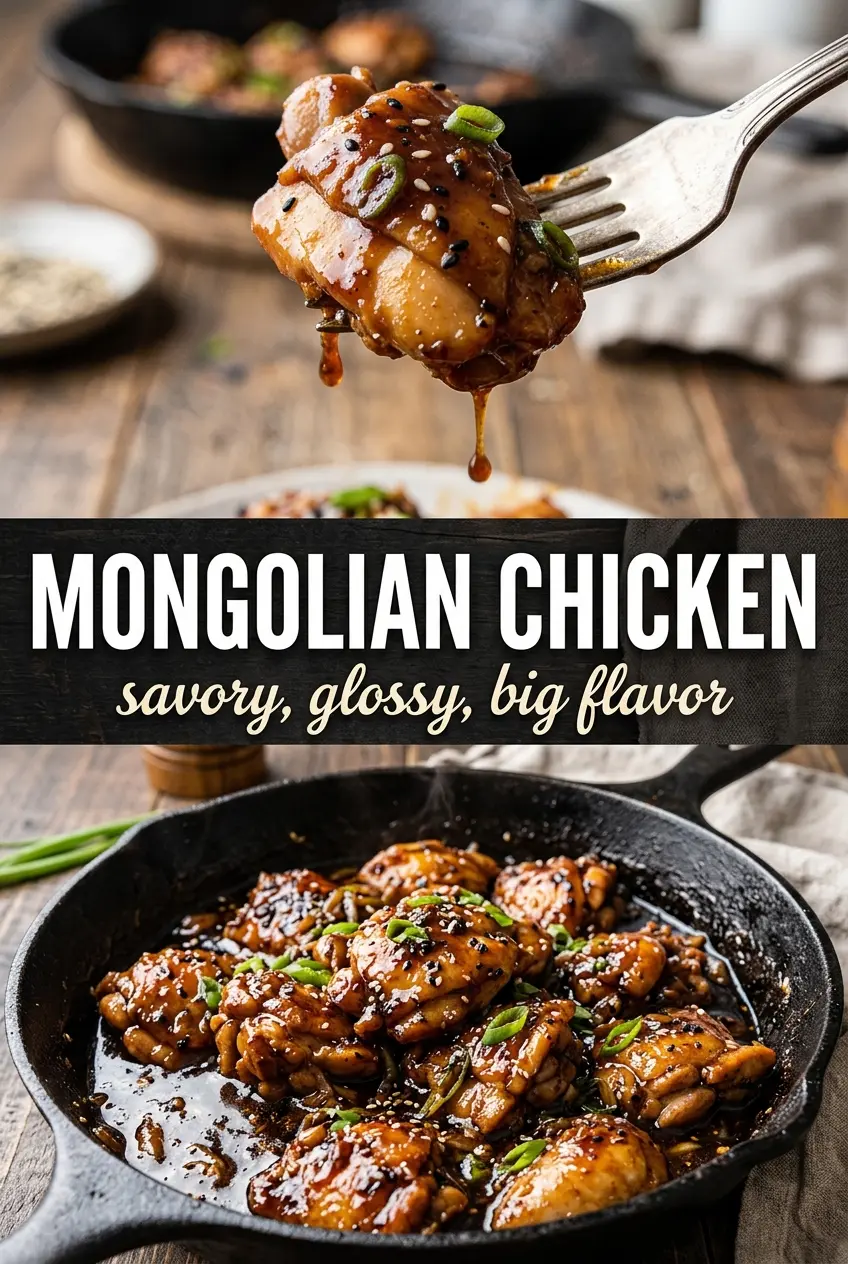
Mongolian Chicken
Ingredients
Equipment
Method
- Toss the thinly sliced chicken with cornstarch, salt, and pepper until coated, so every piece is dry-frosted with starch.
- Whisk together soy sauce, brown sugar, water, hoisin sauce, sesame oil, and red pepper flakes until the sugar dissolves.
- Heat the vegetable oil in a large skillet or wok over high heat, then cook the chicken for 3-4 minutes per side until deeply golden and cooked through; remove to a plate.
- Add the garlic and ginger to the same pan and stir-fry for 30 seconds to release aroma, then pour in the sauce and bring it to a boil.
- Stir in the cornstarch slurry and cook for 1-2 minutes until thickened and glossy.
- Return the chicken to the pan, add the green onions, and toss until the pieces are coated and the onions are slightly charred.
- Serve the Mongolian chicken over steamed rice with sesame seeds sprinkled on top.