Golden chicken thighs over lemony rice hit the table with the kind of comfort that feels complete on the first scoop. The skin turns deeply browned and crisp while the rice underneath absorbs the broth, garlic, oregano, and chicken drippings, so every bite tastes seasoned all the way through instead of just on the surface. The feta softens into the grains, the tomatoes collapse just enough to add sweetness, and the olives keep the dish from tasting flat.
The trick with this kind of one-pan bake is giving the rice enough liquid and protection early on, then uncovering it at the end so the chicken can brown without drying out the grains. Bone-in, skin-on thighs matter here because they stay juicy and season the rice as they roast. A quick marinade is enough to wake up the lemon and garlic without overpowering the dish, and the rest happens in the oven where the rice quietly does its job underneath everything else.
You’ll find the timing cues that keep the rice tender, the step that keeps the chicken skin from steaming, and a few smart swaps for when you want to change up the vegetables or make it work with what’s already in the pantry.
The rice came out fluffy and never mushy, and the chicken skin actually stayed crisp after the feta went on. I loved how the lemon and olives balanced each other without making the whole pan taste salty.
Save this Mediterranean Chicken and Rice for the night you want crispy chicken, fluffy lemon rice, and one pan to clean.
The Reason the Rice Stays Fluffy Instead of Turning Heavy
The biggest mistake with baked rice dishes is crowding the pan with too little liquid and then uncovering it too soon. The rice needs enough broth to cook through under the foil first, or the top layer dries out before the center softens. In this recipe, the chicken goes on top of the rice instead of being stirred through it, which lets the drippings season the whole pan without crushing the grains into a dense layer.
Another detail that matters is where the olives and tomatoes go. They should sit around the chicken, not buried under it, so they can roast and release flavor without turning the rice wet in one spot. If your rice ever comes out patchy, the usual problem is uneven coverage under the foil or lifting the lid too many times before the grains have finished absorbing the liquid.
What Each Ingredient Is Actually Doing in This Pan
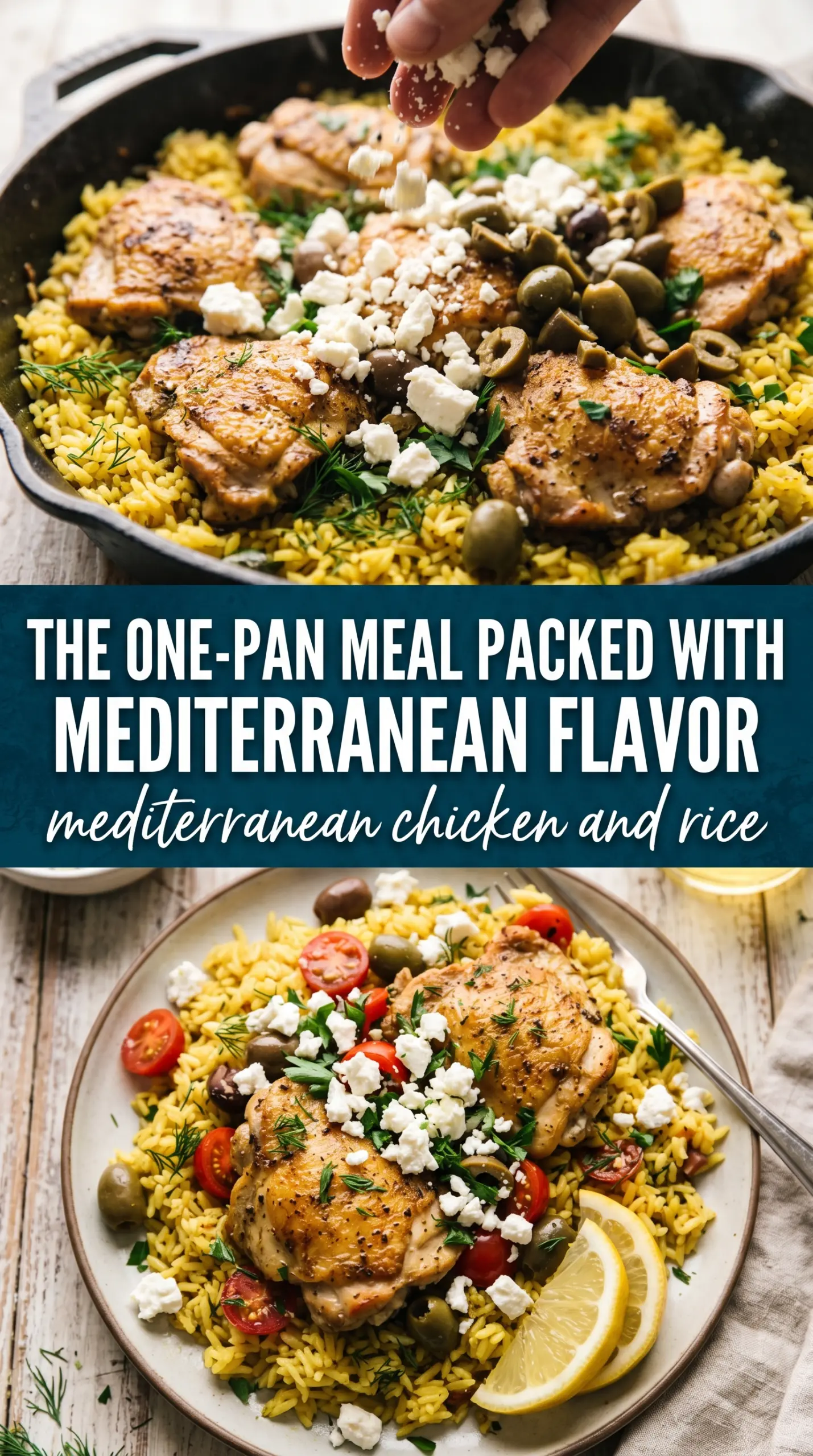
- Bone-in, skin-on chicken thighs — These carry the flavor of the whole dish. The skin protects the meat from drying out, and the bone helps the thighs stay juicy through the full bake. Boneless thighs work in a pinch, but they cook faster and won’t season the rice quite the same way.
- Long-grain white rice — This is the rice that stays separate and fluffy in the oven. Short-grain rice gets too sticky here, and brown rice needs a different liquid ratio and a longer bake. Don’t rinse it unless your rice is especially starchy; a little surface starch helps the broth cling to the grains.
- Lemon juice and zest — The zest gives the dish its bright top note, while the juice cuts through the richness of the chicken and feta. Fresh lemon matters here because bottled juice tastes flatter and can make the whole pan taste dull. Use the zest first, then juice the lemon so you don’t waste the oils in the peel.
- Feta, olives, and cherry tomatoes — These three keep the pan from tasting one-note. Feta melts softly into the rice instead of disappearing, the olives bring salt and depth, and the tomatoes roast into sweet bursts. If you need to swap the olives, use capers sparingly; they bring sharpness but not the same briny richness.
How to Build the Pan So the Chicken Browns and the Rice Cooks Through
The Quick Marinade
Whisk the olive oil, lemon juice, zest, garlic, oregano, salt, and pepper in a bowl, then coat the chicken thighs well. Twenty minutes is enough to season the surface and loosen up the aromatics without turning the chicken soft from too much acid. If the garlic sits clumped in one spot, it can scorch later, so rub the marinade all over the thighs instead of just spooning it on top.
Setting Up the Rice Base
Spread the rice evenly in the baking dish and pour the broth over it before adding the chicken. Stir in the remaining marinade and a pinch of salt so the rice starts seasoned from the beginning. If the rice looks dry in patches before it goes into the oven, those grains are the ones most likely to stay hard, so level the surface with a spoon.
Roasting Covered, Then Uncovered
Cover the dish tightly with foil for the first bake so the rice steams properly and the chicken releases juices into the pan. That first covered stretch is what cooks the grains through; without it, the top dries out before the center softens. Remove the foil for the last 15 minutes so the skin can brown and the rice can finish absorbing any remaining liquid. If the chicken skin looks pale at the end, it usually means the foil stayed on too long or the oven ran cool.
The Feta Finish
Crumbled feta goes on immediately after the dish comes out of the oven. The heat softens it just enough that it settles into the rice without disappearing completely. Wait too long and the feta stays crumbly instead of melting into the grains, which changes the whole texture of the dish.
Three Ways to Bend This Recipe Without Breaking It
Make It Dairy-Free
Leave off the feta and finish with extra lemon zest plus a drizzle of olive oil. You lose the salty creaminess that feta gives the rice, so add a few more olives or a pinch of flaky salt at the end to keep the dish balanced.
Swap in Boneless Chicken Thighs
Boneless thighs work if that’s what you have, but they cook faster and won’t baste the rice as richly. Start checking them a little early, and expect a softer, less bronzed finish on top. The rice still works, but the dish loses some of the deep roasted flavor from the bone and skin.
Make It Gluten-Free Without Changing Anything
This recipe is naturally gluten-free as written, as long as your chicken broth is certified gluten-free. That’s the only ingredient that sometimes hides a problem, and once you verify it, the dish needs no other changes.
Use What You Have for the Vegetables
Sliced roasted red peppers or artichoke hearts can stand in for the tomatoes if that’s what’s in the pantry. Both bring tang and moisture, but neither gives you the same burst of fresh sweetness, so the finished dish will taste a little deeper and less bright.
Storage and Reheating
- Refrigerator: Store leftovers in an airtight container for up to 4 days. The rice firms up a bit as it chills, but the flavor holds well.
- Freezer: It freezes best without the feta. Portion into airtight containers and freeze for up to 2 months; the rice softens slightly after thawing, but it still reheats well.
- Reheating: Reheat covered in the oven at 325°F with a splash of broth or water until hot. The common mistake is blasting it uncovered in the microwave, which dries out the chicken and makes the rice tough before the center warms through.
Questions I Get Asked About This Recipe
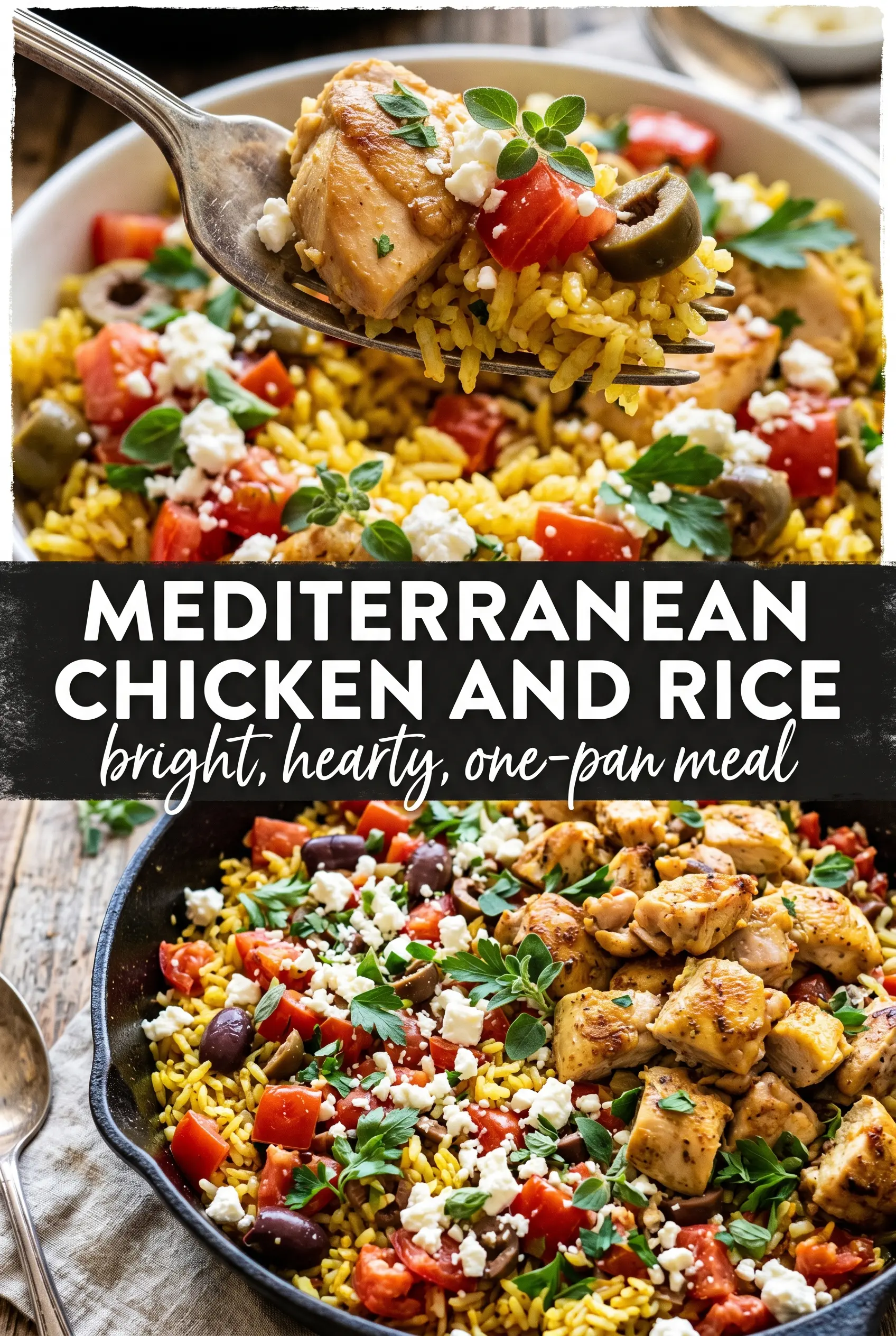
Mediterranean Chicken and Rice
Ingredients
Equipment
Method
- Whisk olive oil, fresh lemon juice, lemon zest, garlic, dried oregano, salt, and pepper until combined. Marinate chicken thighs for 20 minutes.
- Preheat the oven to 375°F. Spread long-grain white rice in a 9x13 baking dish and pour chicken broth over the rice.
- Stir in a pinch of salt and the remaining marinade into the rice and broth. Nestle the chicken skin-side up into the rice.
- Scatter cherry tomatoes and Kalamata olives around the chicken. Cover tightly with foil.
- Bake covered for 30 minutes. Remove the foil and bake 15 more minutes until the chicken skin is golden and the rice is cooked.
- Immediately crumble feta over the hot dish so it softens into the grains. Garnish with fresh parsley and serve with lemon wedges.