Juicy grilled chicken with bright lemon, ginger, and soy is the kind of dinner that earns a permanent place in the rotation. The marinade brings enough salt, acid, and sweetness to season the meat all the way through, and the grill gives it those browned edges that make each bite taste deeper than the ingredient list suggests.
This version works because the lemon juice and soy sauce are balanced instead of aggressive. The honey softens the sharpness, the ginger and garlic carry the aroma, and a little sesame oil gives the chicken that rounded finish you notice even before the first bite. Marinating for a few hours is long enough to build flavor without turning the chicken stringy, especially if you use breasts.
Below, I’ve laid out the one part people usually get wrong with citrus marinades, plus the small adjustments that make this chicken work for thighs, meal prep, and leftovers.
The chicken came off the grill juicy and the lemon-ginger marinade browned up beautifully instead of burning. I used thighs and the texture was perfect after two hours in the fridge.
Save this lemon ginger soy grilled chicken for a bright marinade that turns simple chicken into a juicy weeknight main.
The Reason Citrus Marinades Need a Short Timer, Not an Overnight Soak
Chicken and lemon are a great match, but acid has a limit. If the chicken sits in lemon juice too long, the surface tightens and turns a little chalky before it ever hits the grill. Two to six hours is the sweet spot here: long enough for the garlic, ginger, soy, and sesame oil to penetrate, short enough that the texture stays tender.
The other thing that matters is heat management. This marinade has honey in it, which helps browning, but it can also scorch if the grill is blasting too hot. Medium-high heat gives you charred edges without blackened sugar, and it helps the chicken cook through before the outside dries out.
- Chicken breasts stay juicy if you pull them the moment they hit 165°F and let them rest. Slice too early and the juices run out onto the cutting board.
- Chicken thighs are more forgiving and give you a richer result. They’re the better choice if you want a little extra cushion on the grill.
- Lemon juice brings brightness, but fresh juice matters here because bottled juice tastes flat and can make the marinade dull.
- Sesame oil is small in quantity but important for the finish. Don’t swap it for more olive oil if you want that toasted aroma in the background.
What Each Ingredient Is Doing in the Marinade

The marinade is built around balance. Soy sauce seasons the chicken from the outside in, lemon juice sharpens it, and honey keeps the acidity from tasting harsh. That combination is what gives you chicken that tastes seasoned all the way through instead of just coated on the surface.
Fresh ginger and garlic are worth using here; powdered versions won’t give you the same clean bite or fragrance. Grated ginger disperses through the marinade better than chopped ginger, which means you get flavor on every piece of chicken instead of little pockets of heat. Olive oil helps the marinade cling and keeps the chicken from sticking to the grill grates, while sesame oil adds depth, not grease.
- Chicken breasts or thighs both work, but thighs hold up better if your grill runs hot or you’re cooking for people who like a little extra browning.
- Soy sauce does the heavy lifting for salt and umami. Low-sodium works if that’s what you keep on hand, but don’t replace it with coconut aminos unless you’re prepared for a sweeter, lighter result.
- Honey rounds out the sharp edges of the lemon. If you skip it, the marinade tastes leaner and less finished.
- Fresh ginger and garlic should be minced or grated fine so they don’t burn in big bits on the grill.
Building Flavor on the Grill Without Drying Out the Chicken
Mix the Marinade Until It Looks Unified
Whisk the soy sauce, lemon juice, zest, oil, ginger, garlic, honey, sesame oil, salt, and pepper until the honey disappears and the mixture looks glossy. If the honey sits in streaks, the chicken won’t marinate evenly. The grated ginger should float through the liquid, not clump at the bottom.
Let the Chicken Sit, But Not Too Long
Add the chicken and turn it a few times so every surface gets coated. Refrigerate it for at least two hours and up to six. Less than that and the flavor stays shallow; much longer and the lemon starts working against the texture, especially with breasts.
Cook Over Medium-High Heat
Preheat the grill before the chicken goes on. You want a hot grate so the chicken picks up color quickly and releases cleanly once it sears. Grill for 6 to 8 minutes per side, depending on thickness, and use an instant-read thermometer if you have one; 165°F is the point where the chicken is done without getting chalky.
Rest Before Slicing
Move the chicken to a plate and let it rest for 5 minutes. That short rest keeps the juices in the meat instead of letting them run out the second you cut it. Slice across the grain for the cleanest texture and the easiest serving.
Make It with Thighs for a More Forgiving Grill
Chicken thighs can take a little more heat and a little more marinating time without drying out. They come off the grill juicier and slightly richer, which works well if you like a darker, more savory finish.
Gluten-Free Version That Still Tastes Balanced
Use a certified gluten-free soy sauce or tamari. The flavor stays close to the original, though tamari is usually a touch smoother and less sharp.
Dairy-Free, Meal-Prep Friendly Leftovers
The recipe is already dairy-free, and it holds up well for lunches the next day. Store the chicken whole, then slice it after reheating so it stays juicier.
Add Heat Without Changing the Balance
Stir a pinch of red pepper flakes or a little chili paste into the marinade. Keep it subtle; the point is warmth in the background, not a sauce that covers the lemon and ginger.
Storage and Reheating
- Refrigerator: Store cooked chicken in an airtight container for up to 4 days. It stays moist best if you keep it in larger pieces instead of slicing it all at once.
- Freezer: This freezes well after cooking. Wrap portions tightly and freeze for up to 2 months; thaw in the refrigerator so the texture doesn’t turn rubbery.
- Reheating: Warm it gently in a covered skillet over low heat with a splash of water, or microwave at 50% power. High heat is the fastest way to dry out marinated chicken.
Answers to the Questions Worth Asking
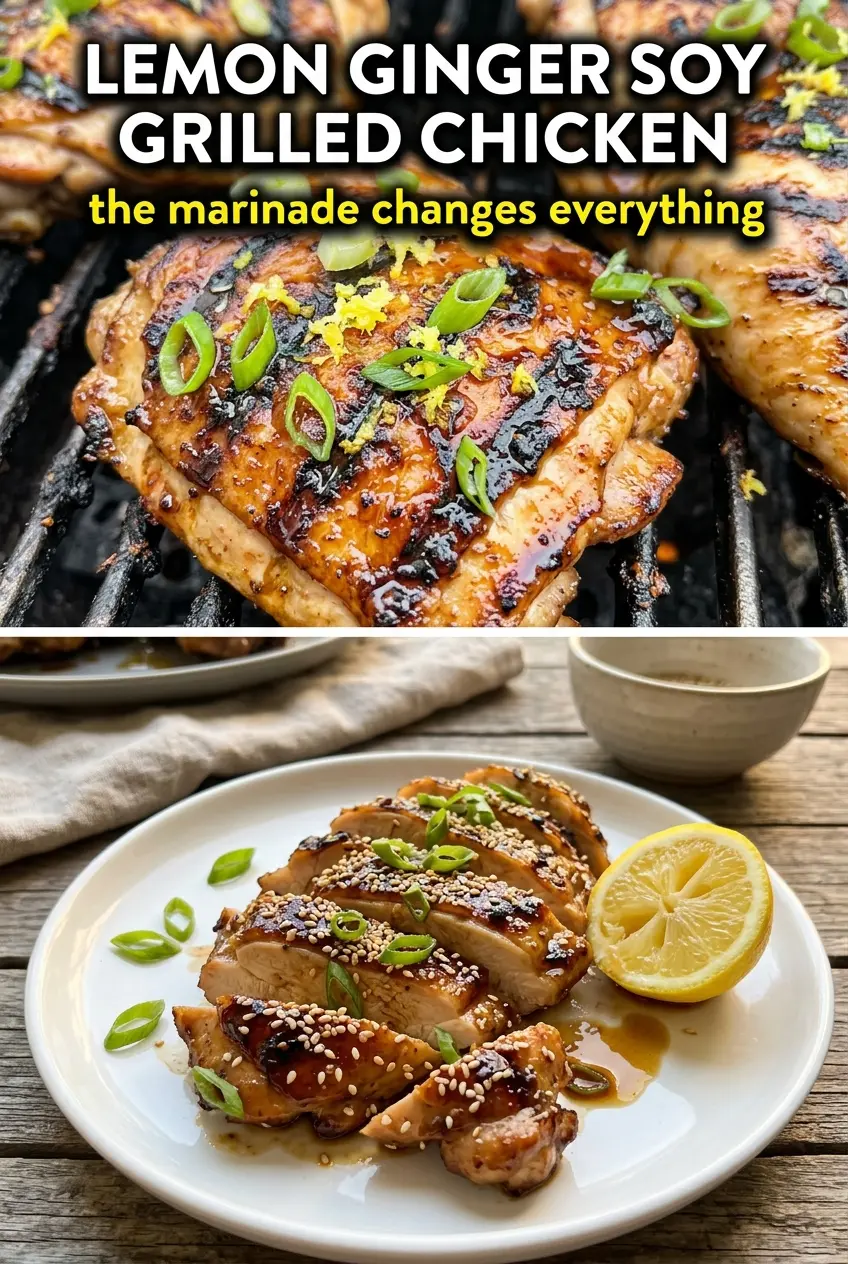
Lemon Ginger Soy Marinated Grilled Chicken
Ingredients
Equipment
Method
- Whisk together soy sauce, lemon juice, lemon zest, olive oil, ginger, garlic, honey, sesame oil, salt, and pepper until the honey dissolves and the mixture looks evenly combined.
- Place the chicken in the refrigerator to marinate for 2 to 6 hours, turning once if possible, so the marinade penetrates and the surface turns glossy.
- Preheat the grill to medium-high heat until it’s hot and ready to sear.
- Grill the chicken for 6 to 8 minutes per side until the internal temperature reaches 165°F and the outside looks golden with visible ginger pieces.
- Let the chicken rest for 5 minutes before slicing so the juices settle and the center stays moist.