Lemon gelato lands somewhere between ice cream and sorbet, but the texture is what makes it worth keeping in the freezer. It scoops dense and silky, with a clean citrus bite that stays bright instead of turning icy or sharp. The flavor is bold enough to stand on its own, yet the dairy keeps each spoonful soft and smooth.
The trick is building a lightly thickened custard base before the lemon goes in. That gives the gelato body without making it heavy. Cornstarch helps stabilize the mixture, which matters here because lemon juice can thin and loosen a custard if you rush the process. The result is a pale, creamy dessert with real lemon flavor, not just perfume.
Below you’ll find the exact timing that keeps the base from scrambling, why the zest belongs in the custard and not just on top, and how to get that dense scoopable texture instead of a fluffy batch that melts fast.
The lemon flavor came through bright and clean, and the custard thickened perfectly before churning. Mine froze up dense and scoopable, not icy at all.
Save this lemon gelato for the nights when you want a dense, scoopable Italian frozen dessert with real citrus punch.
The Custard Has to Thicken Before the Lemon Goes In
With gelato, the biggest mistake is adding acid too early or cooking the base too hard once the yolks are in. Lemon juice can make the mixture taste bright, but it also makes a custard more fragile. The base needs to reach a pudding-like thickness first, while the yolks and cornstarch do their job. Once that structure is set, the lemon goes in off the heat so the dairy stays smooth instead of turning grainy.
That extra caution is what gives this gelato its dense body. If the mixture looks thin in the saucepan, it will churn thin in the machine and freeze with more ice crystals. You want it thick enough to coat a spoon and leave a clean trail when you drag a finger through it. That’s the point where the gelato will hold together after chilling and freeze into something scoopable rather than slushy.
What Each Ingredient Is Actually Doing in This Gelato

- Whole milk — This gives the gelato its main body without making it heavy. Lower-fat milk works, but the finished texture gets less lush and a little more icy.
- Heavy cream — Just enough cream keeps the lemon flavor rounded and the base silky. Too much cream muddies the brightness, which is why this recipe stays balanced instead of tasting like lemon custard ice cream.
- Egg yolks — Yolks add richness and help the base thicken into that classic gelato texture. If you skip them, the mixture sets leaner and freezes harder.
- Cornstarch — This is the quiet insurance policy. It helps stabilize the custard so the gelato churns dense and smooth, and it’s one reason the texture stays creamy after freezing.
- Fresh lemon juice and zest — Fresh is non-negotiable here. Bottled juice tastes flatter, and the zest carries the oil that makes the lemon flavor linger after the first spoonful.
- Vanilla extract — Just a small amount softens the edges of the citrus without turning this into vanilla dessert. It makes the lemon taste fuller.
Cooking the Base So It Stays Smooth and Dense
Heating the Dairy
Warm the milk and cream until steaming, not boiling. You want heat in the pan, but not a hard simmer, because that extra burst can make the custard cook unevenly when it hits the yolks. If you see small bubbles around the edge and a little steam rising, you’re there. That is enough to temper the eggs without turning them into curds.
Tempering the Yolks
Whisk the yolks, sugar, and cornstarch until they look pale and slightly thick, then add the hot dairy slowly while whisking constantly. The slow pour matters because it raises the temperature gently. If you dump it all in at once, the eggs can seize and the base turns speckled. Keep whisking until the mixture looks smooth again before it goes back on the stove.
Cooking to Pudding Thickness
Return the mixture to the saucepan and stir over medium heat until it thickens enough to coat a spoon. When you drag a spatula across the bottom, the line should hold for a second before filling in. Don’t chase a rolling boil; that’s how custard gets scrambled. Pull it off the heat as soon as it looks like loose pudding, because it will continue to thicken a little as it cools.
Adding the Lemon and Chilling Hard
Stir in the lemon juice, zest, vanilla, and salt off the heat, then cool the mixture over an ice bath before refrigerating. Adding lemon off the heat keeps the dairy smooth and the citrus bright. The base needs to be fully cold before churning, or the machine will have to work too long and the texture won’t get as dense. After churning, freeze it just long enough to firm up for clean scoops.
How to Adapt This for Different Freezers, Diets, and Citrus Levels
Dairy-Free Lemon Gelato
Swap in full-fat coconut milk and coconut cream for the dairy. The texture will still be creamy, but the flavor shifts slightly toward coconut, which softens the sharp lemon edge. Keep the lemon zest in the base so the citrus still reads clearly.
Extra-Bright Lemon Flavor
Add an extra teaspoon of zest, not more juice. More juice can thin the base and make the custard harder to set, while zest boosts flavor without changing the texture. This is the best move if you want the lemon to hit harder without turning the gelato sharp or icy.
No Ice Cream Maker
Freeze the chilled base in a shallow pan and stir it every 30 minutes for about 2 to 3 hours. You won’t get the same dense churned texture, but you’ll break up ice crystals before they get large. The batch will still taste clean and lemony, just a little less smooth than the machine version.
Storage and Reheating
- Refrigerator: Keep the base, not the finished gelato, chilled up to 2 days before churning. Once churned, refrigeration softens the texture too much.
- Freezer: The finished gelato keeps for about 1 week with the best texture, though it’s at its creamiest on day one. Press parchment or plastic wrap directly on the surface to limit ice crystals.
- Reheating: Not applicable, but let firm gelato sit at room temperature for 5 to 10 minutes before scooping. Trying to force a spoon through it straight from the freezer can crack the surface and make serving messy.
Questions I Get Asked About This Recipe
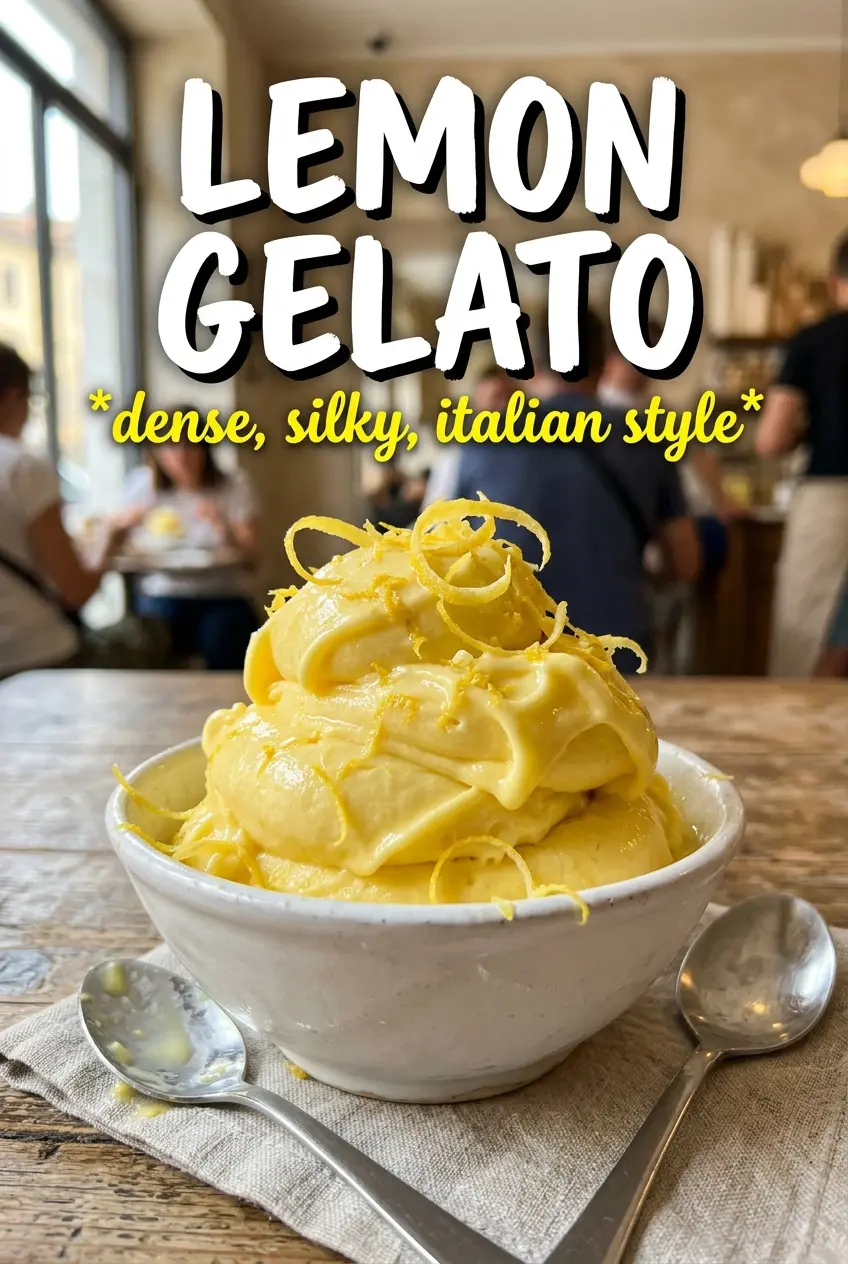
Lemon Gelato
Ingredients
Equipment
Method
- Heat the whole milk and heavy cream in a saucepan until steaming, about 3 to 5 minutes, with small bubbles forming around the edges (visual cue: steam rising).
- In a bowl, whisk the egg yolks, granulated sugar, and cornstarch until pale and thick, about 1 to 2 minutes (visual cue: the mixture looks lighter and slightly viscous).
- Slowly whisk the hot milk mixture into the egg yolk mixture until fully combined, keeping the whisk moving to prevent scrambling (visual cue: smooth, uniform cream base).
- Return the mixture to the saucepan and cook over medium heat, stirring constantly, until thickened to a pudding consistency, about 6 to 8 minutes (visual cue: it coats the back of a spoon).
- Remove the saucepan from the heat and stir in the fresh lemon juice, lemon zest, vanilla extract, and salt until smooth and evenly bright (visual cue: a glossy pale-yellow custard).
- Cool completely over an ice bath for about 10 to 15 minutes, stirring occasionally (visual cue: temperature drops and the custard looks smooth and thick).
- Refrigerate at least 4 hours, uncovered or covered, until very cold (visual cue: custard is chilled through and thick).
- Churn the chilled custard in an ice cream maker on the lowest setting until dense, about 25 to 35 minutes (visual cue: pale-yellow gelato that holds soft peaks).
- Serve immediately for a soft scoop, or transfer to a container and freeze 1 to 2 hours for firmer texture (visual cue: set but still scoopable).