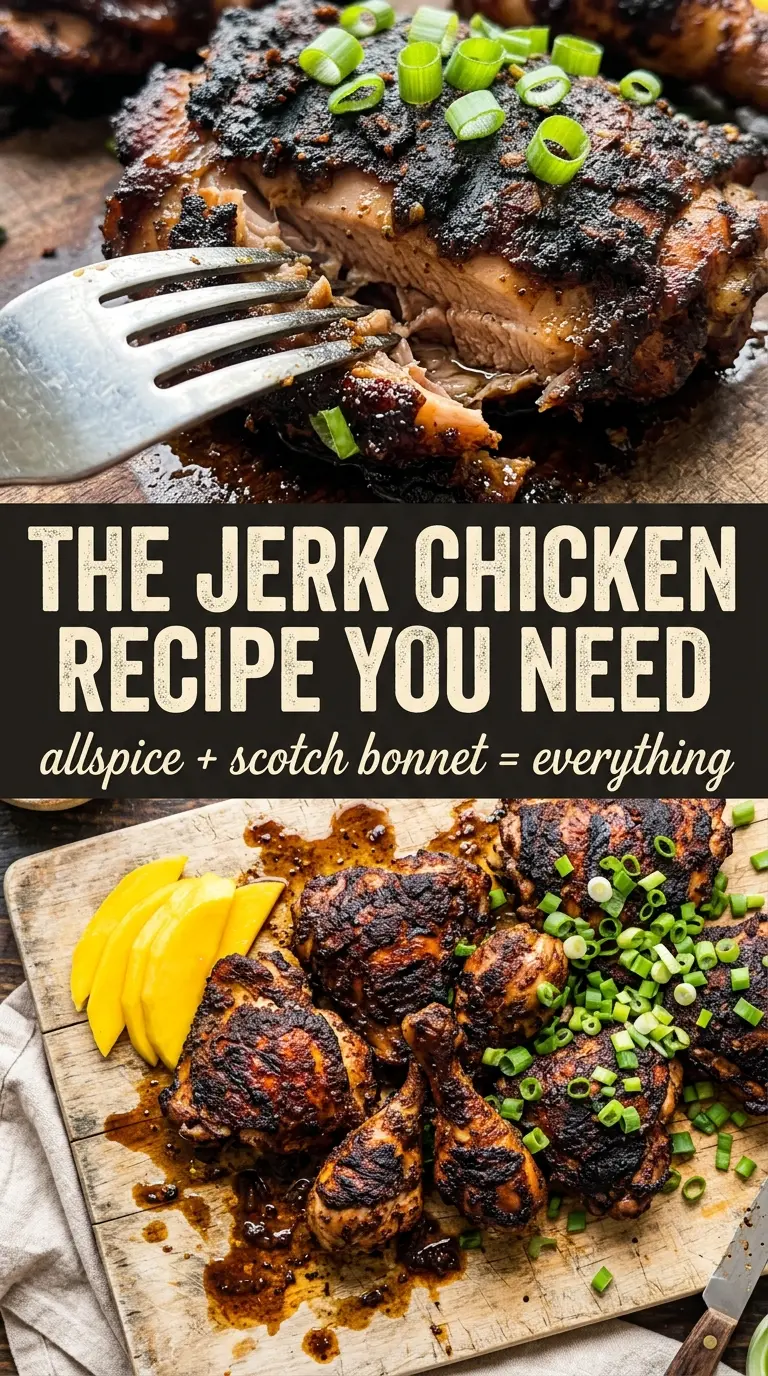
Charred, deeply seasoned Jamaican jerk chicken earns its place in the rotation because it hits three things at once: heat, smoke, and a marinade that actually gets inside the meat. The edges crisp up on the grill, the sugar in the marinade caramelizes without turning the chicken sticky-sweet, and the allspice-thyme backbone keeps every bite tasting like more than just spice for spice’s sake.
The part that makes this version work is balance. Scotch bonnet peppers bring the fire, but the brown sugar, lime, and soy sauce pull the edges back enough to keep the chicken from tasting one-note. Scoring the meat matters here too. It gives the marinade a path into the chicken instead of leaving all that flavor parked on the surface where it burns off.
Below, I’ll walk through the one marinade step that makes the biggest difference, what to watch for on the grill so the chicken gets charred instead of dry, and a few smart swaps if you need to work with what’s already in your kitchen.
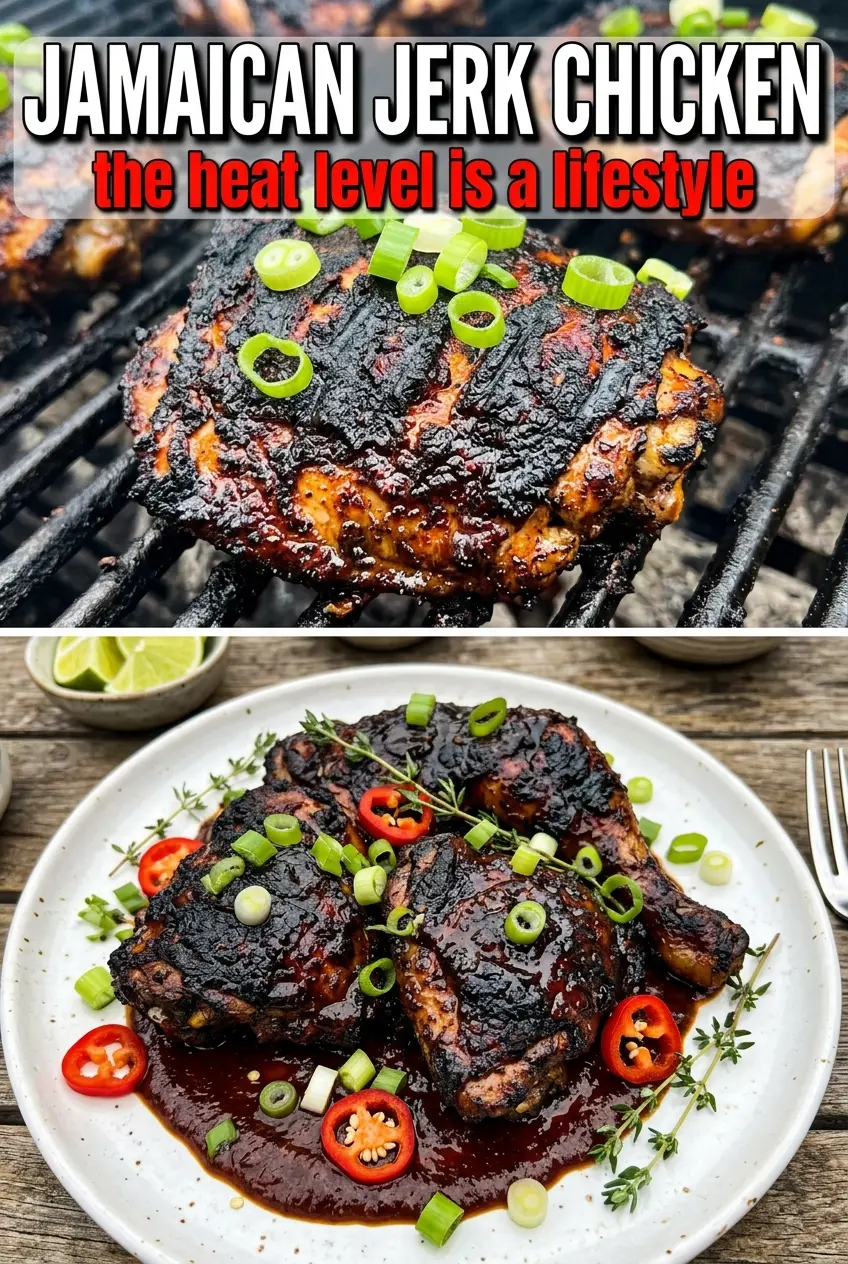
The marinade clung beautifully and the chicken came off the grill with those dark, crisp edges I was hoping for. The lime at the end kept the spice bright instead of heavy.
Save this Jamaican jerk chicken for the nights when you want charred edges, real heat, and a marinade that actually tastes like something.
The Marinade Can Burn Before the Chicken Cooks If You Rush the Grill
Jerk chicken lives or dies on heat management. The brown sugar and aromatics in the marinade are what give you those dark, fragrant edges, but they also mean the outside can scorch fast if the grill is too hot. Medium heat gives the chicken time to cook through while the surface caramelizes instead of turning bitter.
Scoring the chicken is another small step that changes the whole dish. It opens up thicker pieces so the marinade can sink in, and it helps the meat cook evenly. If you skip it, the outside can look done before the center catches up, especially on bone-in pieces.
- Scotch bonnet peppers — These bring the signature jerk heat. Habaneros work if that’s what you can find; they’re slightly less fruity, but they still give you the right level of fire.
- Fresh thyme — Dried thyme won’t give the same bright, woodsy note. If you have to use dried, cut the amount to about 2 teaspoons, because dried herbs hit harder by volume.
- Allspice — This is the backbone of the dish. There isn’t a real substitute that tastes the same, so use good ground allspice if you want the chicken to taste like jerk and not just spicy marinated chicken.
- Brown sugar and soy sauce — These round out the heat and help the chicken brown. You can use low-sodium soy sauce if needed, but keep the sugar in place; it’s doing more than sweetening.
What Each Ingredient Is Actually Doing in This Jerk Chicken
- Chicken pieces — Bone-in pieces hold up best on the grill and stay juicier over a longer cook. Skin-on pieces will give you more charred, flavorful edges, but the chicken still works without skin if that’s what you have.
- Green onions — They add sharpness and freshness that keeps the marinade from tasting flat. Use both the white and green parts; the whole thing gets blended down anyway.
- Lime juice — This cuts through the richness and helps the marinade penetrate. Lemon can work in a pinch, but lime gives the sharper, more traditional finish.
- Garlic and spices — Blend them until the marinade is as smooth as you can get it. Big chunks of garlic or pepper can scorch on the grill and leave you with bitter spots instead of a clean, even crust.
The Marinade and Grill Timing That Give You Real Jerk Flavor
Building the Marinade
Blend everything until the mixture is thick, dark, and spoonable, with no big pieces of pepper or garlic left behind. You want it to look like a paste more than a sauce. That texture helps it cling to the chicken instead of sliding off. If it looks watery, the chicken won’t pick up the same level of flavor and the sugars will burn faster on the grill.
Coating and Resting the Chicken
Rub the marinade into every piece, pushing it into the score marks so it gets into the meat, not just the skin. The longer rest matters here; four hours is the minimum, and overnight is even better if you have the time. If the chicken still looks pale after marinating, that’s fine — the color shows up on the grill, not in the bowl.
Grilling to a Deep Char
Preheat the grill to medium and cook the chicken with the lid on only when needed. Turn it often so the sugar in the marinade browns evenly instead of blackening in one spot. If the outside darkens too fast, move the pieces to a cooler part of the grill and let the heat work from the inside out. The chicken is done when the juices run clear and the thickest piece reaches 165°F in the center.
The Final Lime Hit
Let the chicken rest for a few minutes after grilling, then serve it with lime wedges. That squeeze of acid wakes up the spice and pulls the smoky edges back into balance. Without it, the dish can taste heavier than it should. With it, the whole plate tastes brighter and cleaner.
How to Adjust the Heat, the Cut, or the Cooking Method
Milder Jerk Chicken
Use one seeded scotch bonnet or swap in habanero, then remove every seed and white rib you can. You’ll still get the pepper flavor and aroma, but the heat lands softer and more manageable. The chicken stays recognizable as jerk, just with less fire.
Gluten-Free Version
Swap the soy sauce for tamari or coconut aminos. Tamari keeps the savory depth closest to the original, while coconut aminos taste a little sweeter and lighter. Either one keeps the marinade working without changing the cooking method.
Oven-Baked Jerk Chicken
If you can’t grill, bake the marinated chicken on a rack set over a sheet pan at 425°F, then finish under the broiler for color. You won’t get the same smoke, but you’ll still get the caramelized edges and the sticky-spicy crust. Watch it closely under the broiler because the sugar can go from browned to burnt in a minute.
Storage and Reheating
- Refrigerator: Store cooked chicken for up to 4 days. The spice gets a little deeper after a day, which is a nice bonus.
- Freezer: Freeze cooked chicken for up to 2 months, wrapped well. Thaw overnight in the refrigerator before reheating so the outside doesn’t dry out before the center warms through.
- Reheating: Warm it covered in a 325°F oven with a splash of water or stock in the pan. Microwaving works, but it softens the charred edges and can make the meat unevenly hot.
Answers to the Questions Worth Asking
Jamaican Jerk Chicken
Ingredients
Equipment
Method
- Blend green onions, scotch bonnet peppers, garlic, thyme, brown sugar, soy sauce, lime juice, allspice, black pepper, cinnamon, and nutmeg until smooth, with visible orange-brown specks of spice.
- Score the chicken pieces on both sides and rub the marinade all over, pressing into the cuts so the jerk spices cling to the surface.
- Marinate the chicken in the refrigerator for 4-24 hours, covered, until the meat looks darker and more speckled with the jerk seasoning.
- Preheat the grill to medium heat and let the grates heat up so the chicken starts to char on contact.
- Grill the chicken, turning frequently, for 30-40 minutes until the exterior is charred and the thickest piece is cooked through and juices run clear.
- Serve the jerk chicken with rice and peas and add lime wedges on the side so guests can brighten each bite.