Grilled salmon earns its place on the menu when the skin turns crisp, the flesh stays glossy and tender, and the whole fillet lifts off the grill in one clean piece. The best version doesn’t need a long ingredient list or a heavy marinade. It needs dry fish, a hot grate, and enough restraint to let the salmon sear before you even think about moving it.
The trick is in the balance. Lemon and garlic add brightness, but the salmon still tastes like salmon. A short rest with the oil, citrus, and seasoning helps the surface take on flavor without turning the texture soft or mushy. Then the grill does the rest, as long as the grates are clean and well oiled and you start skin-side down so the fish protects itself while it cooks.
Below, I’m walking through the exact cues I use for salmon that’s cooked through but still moist, plus the little fixes that keep the skin from sticking and the fillets from overcooking.
The skin got crisp without sticking, and the salmon stayed buttery in the middle. I used the lemon and dill at the end like you suggested, and it tasted like something from a restaurant grill.
Save this grilled salmon method for crisp skin, tender centers, and a fast lemon-dill finish.
The Detail That Keeps Grilled Salmon from Sticking
Most grilled salmon problems start before the fish ever hits the grate. If the salmon is damp, the surface steams first and sears later, which is why the skin clings to the grates instead of releasing cleanly. Patting the fillets dry matters more here than in almost any other fish recipe, and the brief olive oil, lemon, and garlic coating gives the exterior enough protection to cook evenly without masking the salmon itself.
The other piece people miss is patience. Put the salmon skin-side down and leave it alone for the first stretch of cooking. The skin firms up, the fish turns opaque from the bottom up, and the natural fat under the skin does a lot of the work for you. If you try to flip too early, the fish tears before the crust sets.
- Skin-on salmon — The skin acts like a built-in shield on the grill and helps the fillet hold together. Skinless salmon can work, but it needs much gentler handling and is easier to overcook.
- Olive oil — This helps the seasoning spread and keeps the surface from drying out on the grill. A light, neutral oil also works, but olive oil adds a little more body to the flavor.
- Lemon juice — Use it for brightness, not a long marinade. Too much time in citrus can make the surface soft, so fifteen minutes is enough to wake up the flavor without changing the texture.
- Fresh dill — Dill belongs here because it echoes the clean, rich taste of salmon without overpowering it. Dried dill can pinch-hit, but the fresh herb gives the finished dish a cleaner, greener finish.
Grilling the Salmon So It Stays Moist and Releases Cleanly
Drying and Seasoning the Fillets
Pat the salmon dry first, then brush it with the olive oil, lemon juice, and garlic mixture. The surface should look lightly coated, not wet enough to drip. Season both sides with salt and pepper and let the fillets sit for 15 minutes while the grill heats. If you leave them much longer in the lemon, the outer layer starts to cure instead of season.
Heating and Oiling the Grates
Preheat the grill to medium-high so the grates are hot before the fish goes on. Then oil the grates well. This is the step that keeps the skin from welding itself to the metal, and it matters more than the exact grill type. If the grates aren’t hot enough, the salmon will stick before it has a chance to form a crust.
Cooking Skin-Side Down
Set the salmon skin-side down and don’t move it for 6 to 8 minutes. You’re waiting for the color to change up the sides and for the bottom to loosen on its own. The skin should crisp and the flesh should be mostly opaque with just a little translucence in the center. If you have to pry it up, it isn’t ready yet.
The Final Flip and Rest
Flip the fillets carefully and cook 2 to 3 minutes more, just until the center reaches your preferred doneness. For medium, 145°F is the target, but it’s fine to pull it a little earlier if you like a juicier middle. Let the salmon rest briefly before serving so the juices settle instead of running out onto the plate. Finish with dill and lemon wedges right at the end.
How to Adapt This Salmon for Different Grills and Diets
No-Dairy, Naturally Clean Finish
This recipe already lands naturally dairy-free, which is one reason it works so well for a wide range of dinners. Keep the olive oil, lemon, garlic, and herbs as written, and you’ll still get plenty of flavor without needing butter or a sauce.
Using a Cedar Plank
If you want a gentler smoke flavor, cook the salmon on a soaked cedar plank instead of directly on the grates. You’ll lose a little of the hard sear on the skin, but you gain a sweet, woodsy aroma and a little extra insurance against sticking.
Skinless Fillets
Skinless salmon will still work, but it needs a well-oiled grate and a lighter touch when flipping. Cut the cook time by a minute or two and use a thin spatula so the fillet doesn’t break apart before it firms up.
Storage and Reheating
- Refrigerator: Store leftovers in an airtight container for up to 3 days. The skin will soften, but the salmon stays good for lunch salads or grain bowls.
- Freezer: Cooked salmon freezes, but the texture gets a little drier after thawing. Wrap portions tightly and freeze for up to 2 months if you plan to flake it into another dish later.
- Reheating: Warm it gently in a low oven, covered loosely with foil, just until heated through. High heat dries salmon out fast, and the biggest mistake is blasting it in the microwave until the edges turn tough.
Answers to the Questions Worth Asking
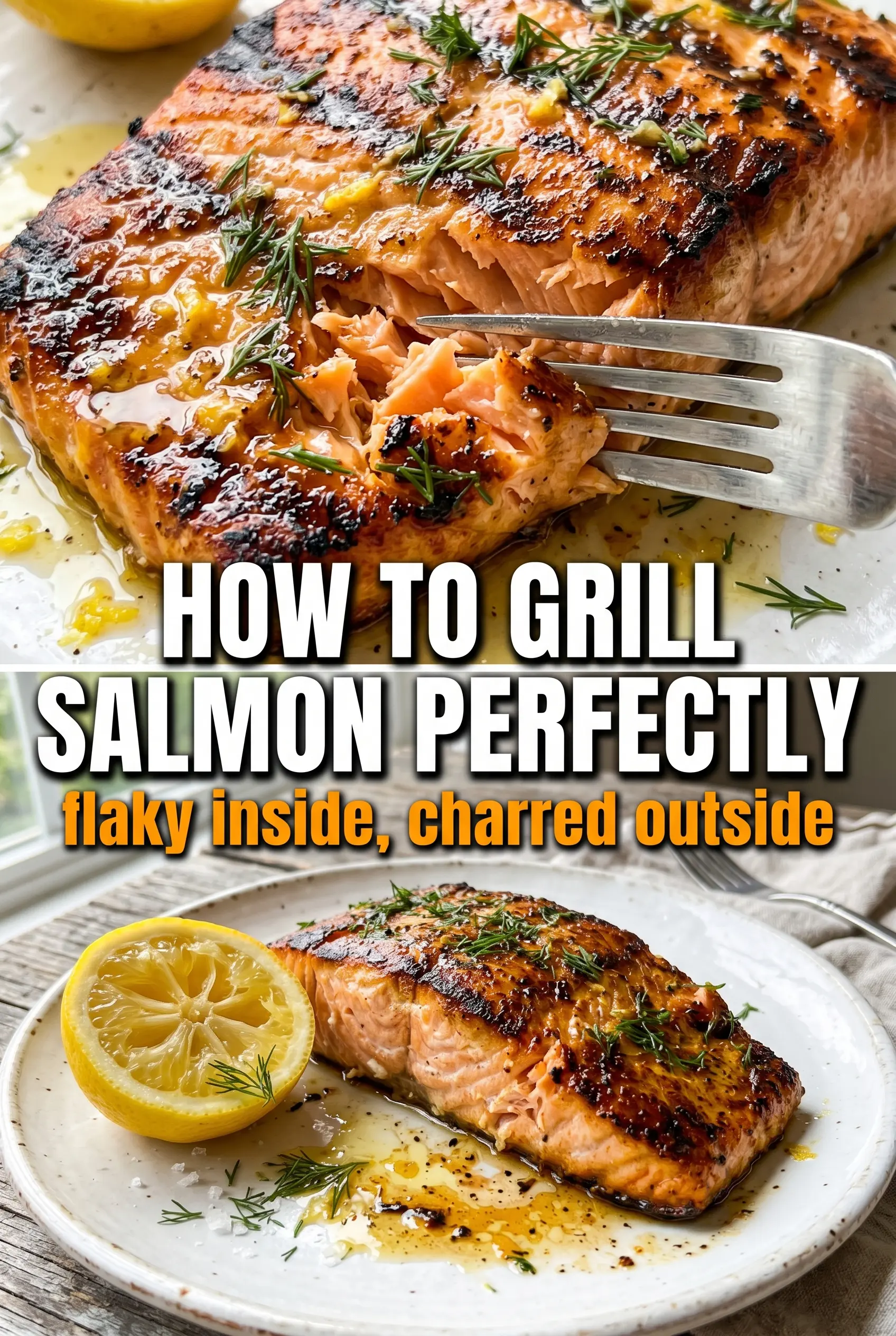
How To Make The Best Grilled Salmon
Ingredients
Equipment
Method
- Pat the salmon fillets dry, then brush them with a mixture of olive oil, lemon juice, and minced garlic.
- Season generously with salt and pepper, then let the salmon sit at room temperature for 15 minutes to marinate.
- Preheat the grill to medium-high and oil the grates well so the skin releases cleanly.
- Place the salmon skin-side down and grill for 6-8 minutes without moving, until the skin looks deeply browned and releases easily.
- Carefully flip the salmon and grill for 2-3 minutes more, until it reaches 145°F for medium (use a thermometer in the thickest part).
- Rest the grilled salmon briefly for 1-2 minutes before serving so the juices settle.
- Serve the salmon with fresh dill and lemon wedges, spooning over any juices from the grill.