Honey garlic Asian chicken kabobs hit that sweet spot between sticky and smoky: glossy pieces of chicken, charred edges on the vegetables, and bursts of pineapple that turn the whole skewer into something you want to eat straight off the grill. The glaze clings instead of dripping away, which is what makes these kabobs worth making again and again.
The trick is in the balance. Honey brings shine and caramelization, soy sauce gives the savory backbone, and rice vinegar keeps the marinade from tasting flat or cloying. A little sesame oil and fresh ginger make the whole thing taste layered instead of one-note, and reserving a portion of the marinade for basting helps build that lacquered finish on the grill.
Below, I’ll walk through the parts that matter most: how to keep the chicken juicy, why the pineapple belongs here, and what to change if you need a dairy-free or gluten-free version. The marinade does a lot of the heavy lifting, but the grilling timing is what keeps the kabobs glossy instead of scorched.
The marinade made the chicken taste like it had been on the grill all day, and the pineapple actually caramelized instead of turning mushy. I basted at the end just like you said and got that shiny glaze on every skewer.
Save these honey garlic Asian chicken kabobs for a night when you want glossy grilled skewers with sweet soy glaze and charred pineapple.
The Marinade Needs a Head Start, Not a Long Soak
This kind of kabob fails when the marinade is treated like a sauce instead of a seasoning bath. Honey and soy bring a lot of surface flavor, but chicken breast still needs time for the salt, acid, and aromatics to work into the meat before it hits the grill. One hour is enough to change the flavor; four hours is the upper edge if you want the chicken to stay tender and clean-tasting.
The other mistake is loading the skewers with ingredients that cook at different speeds without thinking about size. Cut the chicken, peppers, and onions into similar pieces so the grill gives you caramelized edges on all of them at the same time. Pineapple belongs here because its juices play against the salty glaze, but it should be chunked thick enough to hold on the skewer and stay intact over the heat.
What Each Ingredient Is Actually Doing in These Skewers
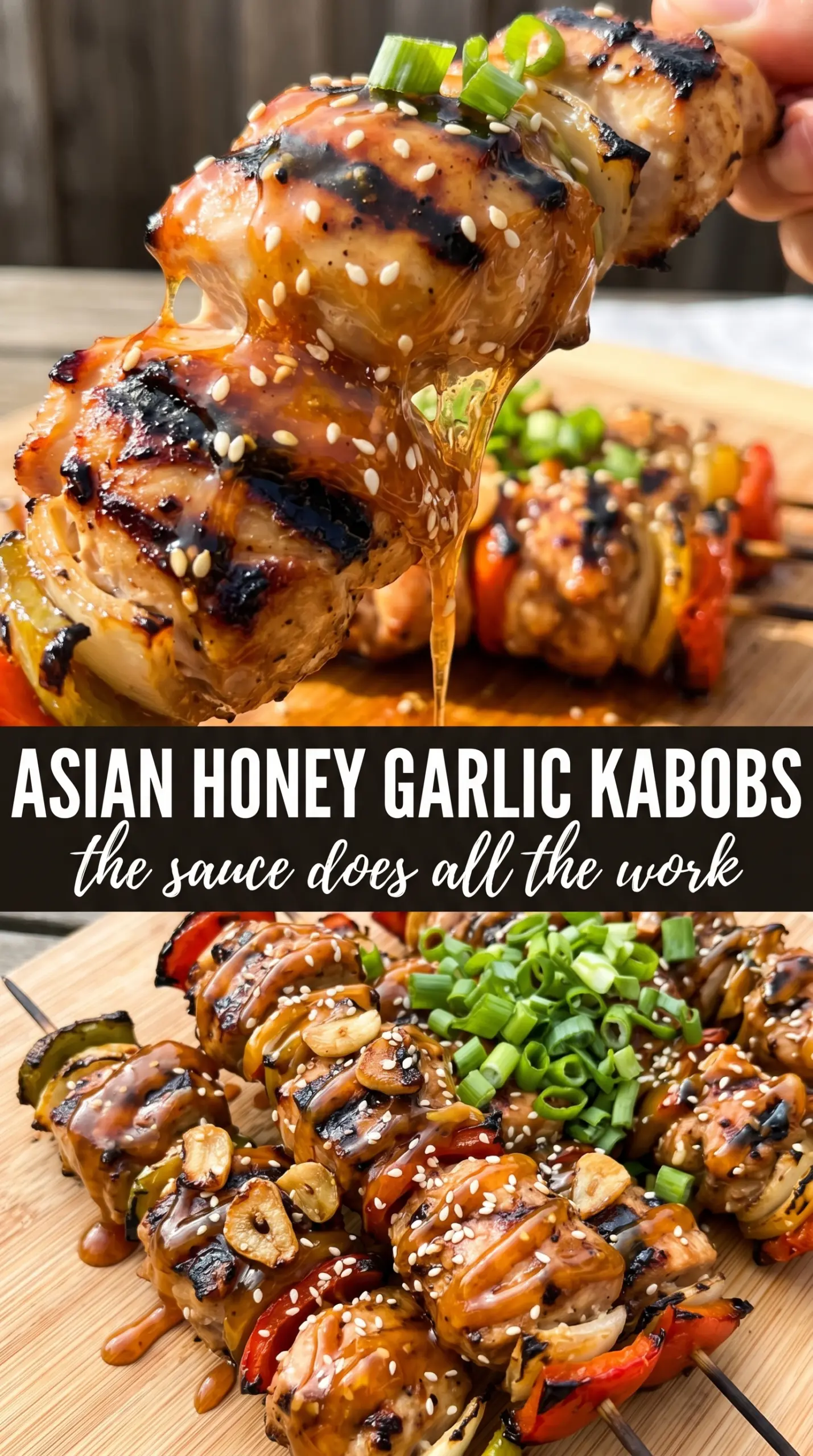
- Chicken breasts — Breast meat stays juicy when it’s cut into even cubes and grilled quickly. Thighs work too if you want a little more forgiveness and a richer bite, but they’ll need the same careful attention to avoid overcooking.
- Honey — This is what gives the kabobs their shine and that sticky edge on the grill. Don’t swap in plain sugar here; honey coats better and helps the glaze cling to the chicken and vegetables.
- Soy sauce — This is the salty backbone and it also deepens the color. Use regular soy sauce for the best balance, or low-sodium if you want more control over the final seasoning.
- Rice vinegar — The small amount of acid keeps the marinade from tasting heavy. If you use lemon juice instead, the flavor gets sharper and less round, which changes the whole profile.
- Sesame oil and ginger — These are background notes, but they’re the reason the kabobs taste like more than honeyed chicken. Fresh ginger gives a brighter finish than powdered ginger, and toasted sesame oil adds depth fast, so use a light hand.
- Pineapple — Fresh pineapple gives the best caramelized edges and a cleaner texture on the skewer. Canned works in a pinch if it’s well drained, but it tends to soften faster and won’t char as nicely.
Grill the Glaze, Don’t Burn It
Building the Marinade
Whisk the honey, soy sauce, garlic, rice vinegar, sesame oil, and ginger until the honey is fully loosened and the mixture looks smooth. If the honey sits in thick streaks at the bottom of the bowl, it won’t coat the chicken evenly. Pull out 1/4 cup before the chicken goes in so you have clean marinade for basting later. Once raw chicken touches the rest of the mixture, that portion is off-limits unless you boil it first.
Threading the Skewers
Cut everything into pieces that are close in size so the chicken and vegetables finish together. Pack the skewers snugly but not tightly; if you jam everything together, the sides steam and you lose the char that makes kabobs worth grilling. Soak wooden skewers long enough that they don’t blacken and split on the grill. If one end keeps burning, trim any exposed wood before cooking.
Getting the Grill Marked and Lacquered
Grill over medium-high heat and don’t move the skewers too early. Let the first side develop color for 5 to 6 minutes before turning, or the chicken will stick and tear instead of releasing with those dark grill marks. Baste during the final minutes, not at the beginning, because the honey can scorch before the chicken is cooked through. If the glaze starts smoking hard, move the skewers to a cooler part of the grill and finish there.
Finishing and Serving
Take the kabobs off when the chicken is cooked through and the vegetables have browned edges, not when the honey looks dark all over. A little caramelization is good; blackened spots mean the sugars went too far. Garnish with sesame seeds and green onions right at the end so they stay bright and noticeable against the glossy glaze. Serve them hot, while the sauce is still tacky and the pineapple is sweet from the grill.
How to Adjust These Kabobs for Different Grills and Diets
Gluten-Free Version
Use tamari or a certified gluten-free soy sauce in place of regular soy sauce. The kabobs still taste savory and glossy, but the salt level may change a little, so taste the marinade before adding the chicken.
Chicken Thigh Swap
Boneless thighs give you a juicier kabob and a little more room for error on the grill. They’re a smart swap if you’re cooking over coals or your grill runs hot, but they do bring a richer flavor that tastes less lean than breast meat.
No Pineapple Version
Leave out the pineapple and add extra bell pepper or zucchini chunks instead. You’ll lose some of the sweet-tart contrast, so the kabobs taste more savory and less tropical, but the glaze still works beautifully.
Oven or Broiler Method
If grilling isn’t an option, arrange the skewers on a lined sheet pan and broil them close to the heat source, turning once and basting near the end. You won’t get the same smoke-kissed flavor, but you’ll still get caramelized edges and a sticky glaze.
Storage and Reheating
- Refrigerator: Store leftovers in an airtight container for up to 3 days. The vegetables soften a bit, but the flavor stays strong.
- Freezer: The cooked chicken freezes well, though the peppers and onions lose some texture after thawing. Freeze off the skewers for best results and wrap tightly.
- Reheating: Warm gently in a skillet over medium-low heat or in a 325°F oven until heated through. High heat dries out the chicken and makes the glaze sticky in the wrong way, so don’t blast it in the microwave unless you’re just reheating a small portion.
Answers to the Questions Worth Asking
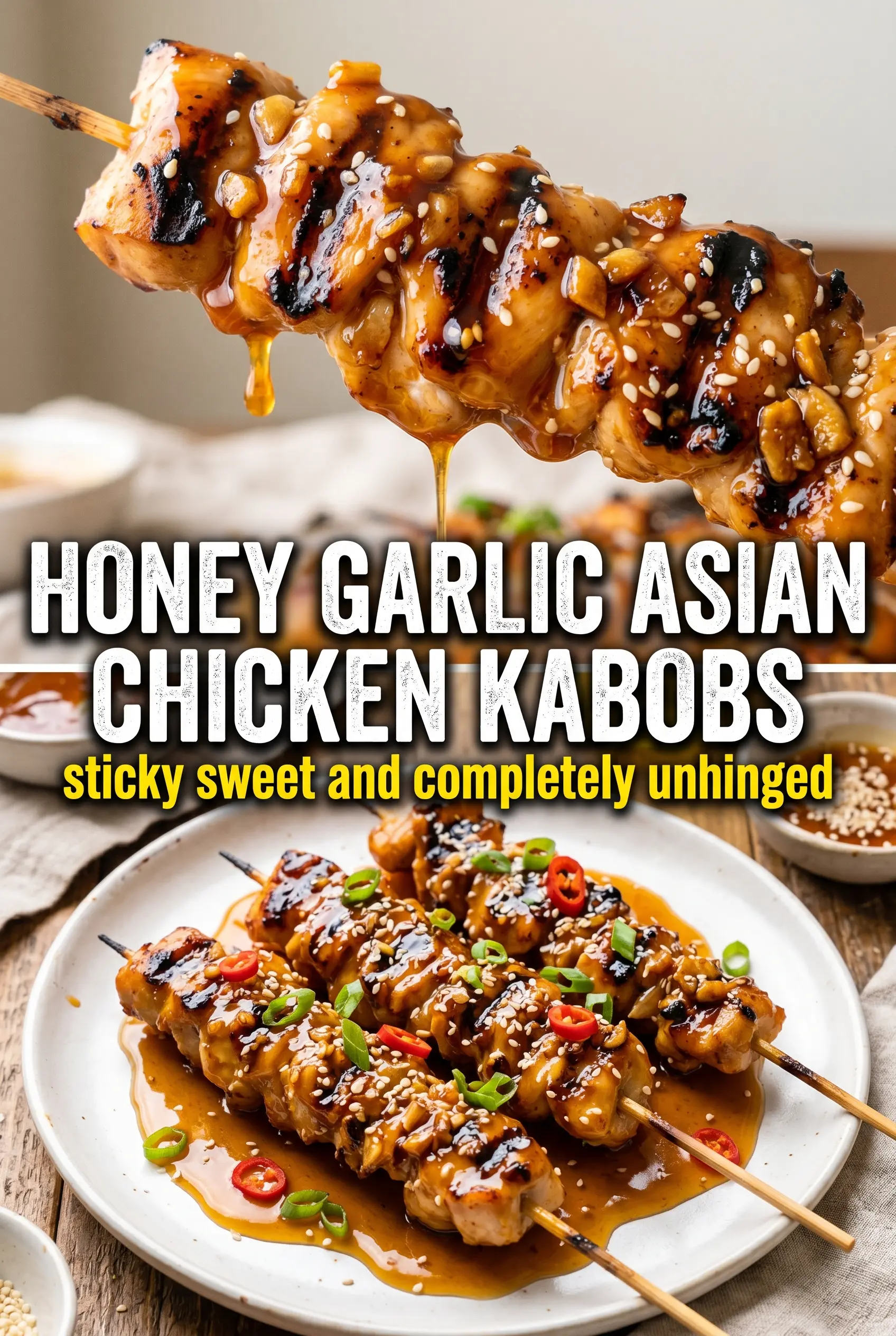
Honey Garlic Asian Chicken Kabobs
Ingredients
Equipment
Method
- Whisk together honey, soy sauce, garlic, rice vinegar, sesame oil, and ginger until smooth and glossy.
- Reserve 1/4 cup marinade for basting and set it aside for later.
- Marinate the chicken for 1-4 hours, keeping it covered and refrigerated so it absorbs the sweet soy flavor.
- Thread chicken, bell peppers and onions, and pineapple chunks onto soaked wooden skewers in an even pattern so everything cooks at a similar rate.
- Grill over medium-high heat for 5-6 minutes per side, basting with the reserved marinade to build a caramelized, glossy sheen.
- Continue grilling until the chicken is cooked through and the vegetables show charred edges, then pull the kabobs off the grill.
- Garnish with sesame seeds and green onions so the kabobs have a fresh, crunchy top note.