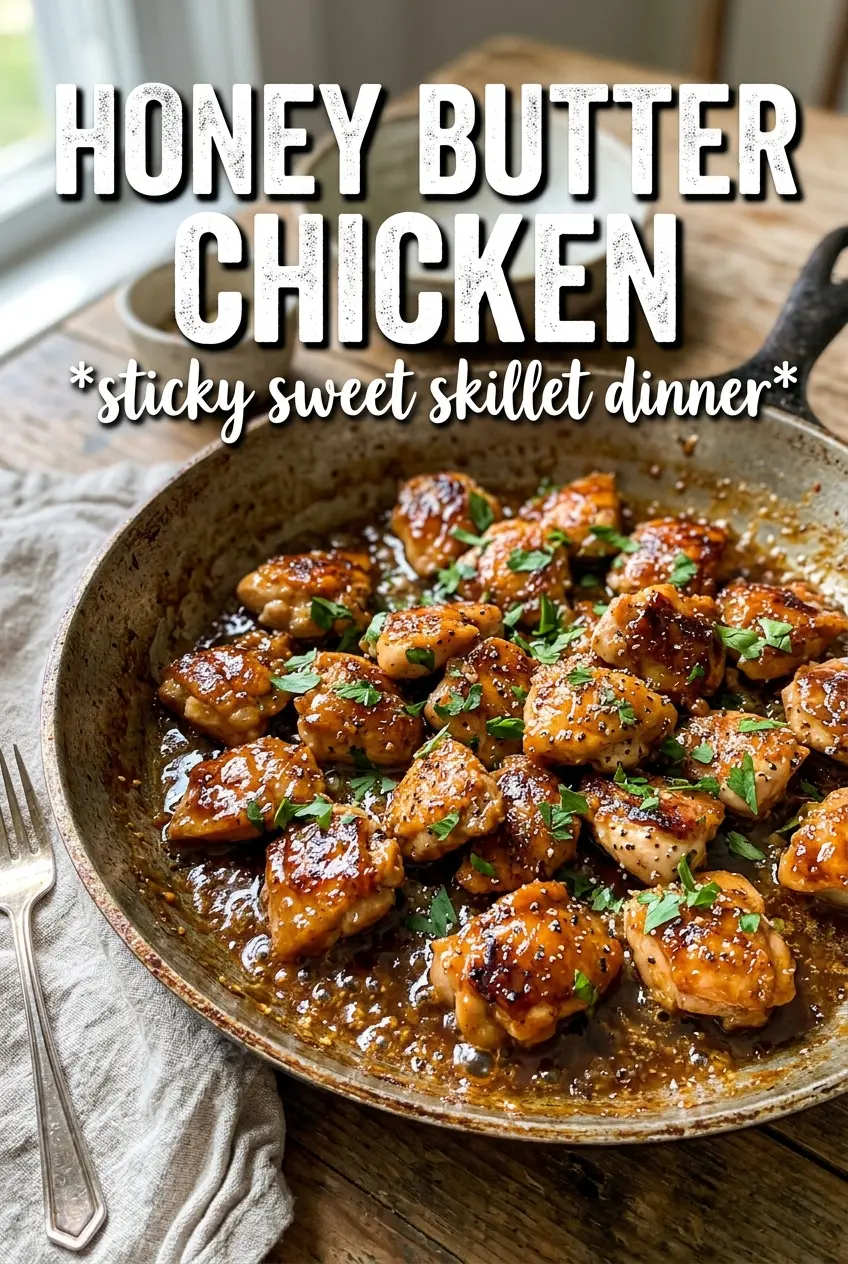
Golden chicken breasts coated in a glossy honey butter sauce hit that sweet-savory spot that keeps people going back for one more bite. The glaze clings to the chicken instead of sliding off, and the edges pick up just enough caramelization to taste rich without turning sticky-sweet. It’s the kind of skillet dinner that looks like it took a lot more effort than it did.
What makes this version work is the balance in the pan. Butter gives the sauce body, honey brings shine and sweetness, soy sauce adds depth, and apple cider vinegar keeps the whole thing from tasting flat. A quick sear on the chicken builds color first, then the sauce finishes in the same skillet so every browned bit gets pulled back into the glaze.
Below you’ll find the timing that keeps the chicken juicy, the ingredient swaps that still preserve the sauce’s texture, and the little finishing move that makes the glaze taste polished instead of one-note.
The sauce thickened into this glossy glaze in the last few minutes, and the chicken stayed juicy instead of drying out. My husband kept dragging the skillet back to the stove for “just one more bite.”
Save this honey butter chicken for the nights when you want a glossy skillet glaze and tender chicken on the table fast.
The Secret to Keeping the Honey Butter Glaze Glossy, Not Gummy
The biggest mistake with this kind of skillet chicken is rushing the sauce before the chicken has real color. If the pan is crowded or the heat is too low, the chicken steams and the glaze ends up thin instead of lacquered. You want a hard, confident sear first, then the sauce gets built in the same pan so the browned bits dissolve into the butter and honey.
The other thing that matters is the acid. Honey and butter can taste heavy fast, and the apple cider vinegar keeps the sauce bright enough to cut through the richness. That little sharp note is what makes the glaze taste finished instead of syrupy.
What Each Ingredient Is Actually Doing in This Skillet

- Chicken breasts — Boneless, skinless breasts cook fast and slice cleanly, which matters here because the sauce only takes a few minutes to finish. If yours are thick, pound them to even thickness so one end doesn’t dry out while the other is still catching up.
- Butter — This is what gives the sauce its body and the soft, rich finish that oil alone can’t match. Use real butter here; a substitute will thin the glaze and make it taste flatter.
- Honey — Honey is the gloss and the caramelized sweetness. If your honey is thick or crystallized, warm it slightly before adding it so it blends smoothly into the sauce instead of clumping at the edge of the pan.
- Soy sauce and apple cider vinegar — Soy sauce brings salt and depth, while vinegar keeps the glaze from reading like candy. Don’t skip the vinegar unless you replace it with another acid, like lemon juice, because the sauce needs that lift.
- Garlic — Fresh minced garlic perfumes the butter in about a minute. Any longer and it can turn bitter, especially once the honey goes in, so keep it moving and don’t let it brown hard.
How to Build the Sauce So It Clings to the Chicken
Get the Sear Before You Touch the Sauce
Season the chicken well, then sear it in olive oil over medium-high heat until you get a deep golden crust and the chicken releases easily from the skillet. If it sticks, it’s not ready yet. Pull it only when the center hits 165°F, then set it aside while you build the glaze so it doesn’t overcook while the sauce comes together.
Let the Garlic Bloom in the Butter
Melt the butter in the same pan and add the garlic for about a minute, just until it smells fragrant. If the garlic starts to brown, lower the heat right away. Burned garlic will carry through the entire sauce, and honey won’t hide that bitterness.
Finish With a Fast Simmer and Constant Basting
Stir in the honey, soy sauce, and vinegar, then let the sauce bubble gently until it looks glossy and slightly thickened. Return the chicken and spoon the glaze over the top as it cooks for another 2 to 3 minutes. The sauce should coat the back of a spoon and leave an amber sheen on the chicken, not pool like melted butter at the bottom of the pan.
Three Ways to Adjust This Honey Butter Chicken Without Losing the Point
Use chicken thighs for a richer, juicier result
Boneless skinless thighs work well if you want more forgiving meat and a deeper chicken flavor. They may need a few extra minutes in the skillet, but they stay tender even if you’re a little late pulling them from the pan.
Make it dairy-free with plant butter
A good plant-based butter will still give you a glossy sauce, though it won’t taste quite as round as real butter. Use one that melts cleanly and doesn’t have a strong coconut note, or it will compete with the honey.
Make it gluten-free without changing the texture
Swap the soy sauce for tamari or coconut aminos. Tamari gives the closest savory depth; coconut aminos run a little sweeter, so if you use them, keep the honey measured and don’t add more.
Turn the glaze a little spicier
A pinch of red pepper flakes added with the garlic gives the sauce a gentle heat that plays well with the honey. Keep it light; too much heat will drown out the sweet-butter balance that makes the dish work.
Storage and Reheating
- Refrigerator: Store leftovers in an airtight container for up to 3 days. The sauce will thicken as it chills.
- Freezer: It freezes, but the glaze can separate a little after thawing. Freeze the chicken and sauce together for up to 2 months, then rewarm gently.
- Reheating: Reheat covered in a skillet over low heat with a splash of water to loosen the sauce. High heat can make the honey catch and scorch before the chicken warms through.
Questions I Get Asked About This Recipe
Honey Butter Chicken
Ingredients
Equipment
Method
- Season the boneless skinless chicken breasts with salt, pepper, garlic powder, and smoked paprika to taste. Heat olive oil in a large cast iron skillet over medium-high heat and sear the chicken for 5-6 minutes per side, until golden and the internal temperature reaches 165°F, then remove.
- Melt butter in the same pan over medium heat until it foams and turns glossy. Add minced garlic and cook for 1 minute, stirring, until fragrant.
- Stir in honey, soy sauce, and apple cider vinegar. Bring the sauce to a simmer and watch it bubble as it begins to thicken.
- Return the chicken to the skillet and cook for 2-3 minutes, turning and basting with the sauce. Continue until the sauce caramelizes and coats the chicken in a darker amber glaze.
- Plate the honey butter chicken and drizzle with any remaining sauce from the skillet. Finish with fresh thyme leaves and flaky sea salt.