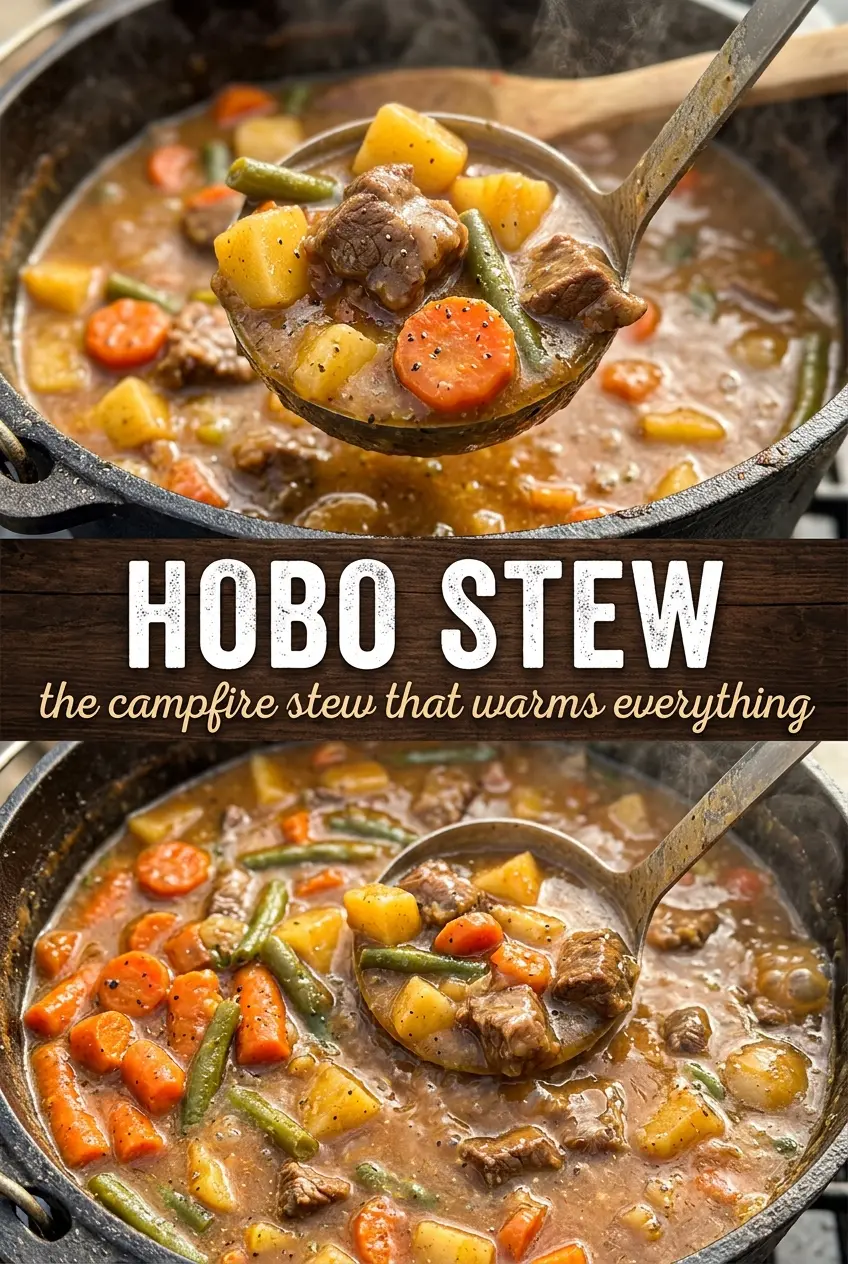
Hobo stew is the kind of meal that earns its place because it comes out hearty, smoky, and satisfying with almost no fuss. The broth gets rich from the meat and tomatoes, the potatoes turn tender without falling apart, and the vegetables keep enough shape to give every spoonful some texture. It’s the sort of pot you want bubbling away when people are hungry and the table needs to be full fast.
What makes this version work is the order. Browning the meat first gives the broth depth, and adding the potatoes and carrots early lets them soften into the stew instead of tasting undercooked or stiff. The canned vegetables go in later than the root vegetables, so they stay intact instead of turning to mush. A Dutch oven helps hold steady heat over a campfire, but this works just as well on a stovetop when you want the same rustic result.
Below, you’ll find the small details that keep the stew from getting watery, plus a few easy swaps if you want to use what’s already in the pantry.
The potatoes held their shape, the broth picked up all the flavor from the browned beef, and it tasted even better the next day.
Save this hobo stew for the nights when you want a bubbling one-pot dinner with tender vegetables and a smoky campfire feel.
Why the Pot Matters More Than the Ingredient List
The difference between a stew that tastes flat and one that tastes built comes down to heat control. If the pot runs too hot, the broth boils hard, the potatoes split at the edges, and the carrots go soft before the meat has a chance to contribute much flavor. A steady simmer is what gives you a cohesive stew instead of a pot of separate ingredients floating around in thin liquid.
This recipe also depends on the beef being browned before anything else goes in. That step leaves little browned bits on the bottom of the Dutch oven, and those bits are what give the broth its backbone. Skip that, and the stew still works, but it tastes lighter and less savory.
- Stew meat or ground beef — Stew meat gives you a more classic chunked texture and a richer bite after simmering. Ground beef is the easier, faster option and makes the stew heartier in a looser, spoonable way. If you use ground beef, drain off excess fat after browning so the broth doesn’t turn greasy.
- Potatoes — Use a waxy or all-purpose potato if you can. They keep their shape better than very starchy potatoes, which can break down and cloud the broth. Cube them evenly so they cook at the same pace as the carrots.
- Canned tomatoes and broth — The tomatoes add acidity that keeps the stew from tasting heavy, and the broth stretches the base into something spoonable. If your broth is salted, go easy on the salt at the start; the liquid reduces as it simmers.
- Canned corn and green beans — These are pantry-friendly and they hold up well in a rustic stew. Drain them first so you don’t water down the pot. They don’t need long cooking, which is why they stay in good shape here.
How to Build a Stew That Tastes Like It Simmered All Day
Browning the Meat First
Set the Dutch oven over steady heat and brown the meat until it has deep color on the outside. You’re not cooking it through yet; you’re building flavor on the bottom of the pot. If you crowd the pan, the meat steams instead of browning, so work in batches if needed. Leave the browned bits in the pot — they dissolve into the broth later and give the stew its depth.
Adding the Vegetables in the Right Order
Stir in the potatoes, carrots, onion, corn, green beans, tomatoes, and broth once the meat is browned. The root vegetables need the full simmer to turn tender, while the canned vegetables only need enough time to mingle with the broth. If you add everything and immediately crank the heat, the liquid can scorch on the bottom before the potatoes soften. Keep the mixture moving just enough to combine it well.
Letting the Simmer Do the Work
Bring the pot to a boil, then drop the heat down to a gentle simmer and cover it. You want small bubbles breaking the surface, not a hard rolling boil. That gentler heat keeps the potatoes intact and gives the broth time to thicken slightly as the vegetables release starch. If the stew looks thin near the end, uncover it for the last few minutes so some of the liquid can cook off.
Finishing and Serving
Taste the stew right before serving and adjust the salt and pepper. The seasoning often needs one last nudge after simmering because the broth, vegetables, and meat all change the balance. Serve it hot while the potatoes are still firm and the broth is steaming in the bowl. If it sits too long before serving, the vegetables keep soaking up liquid, which makes it thicker but less brothy.
What to Change When You Need to Use What’s on Hand
Ground beef instead of stew meat
This is the easiest swap and it makes the stew faster and a little more uniform in texture. Ground beef gives you a softer, more spoonable result, while stew meat brings bigger chunks and a more classic rustic feel. Brown it well and drain excess fat if there’s a lot in the pot.
Make it dairy-free and gluten-free without changing the method
This stew already fits both diets as written, which is part of why it’s such a practical pantry dinner. Just check that your broth is certified gluten-free if that matters for your kitchen. The texture and flavor stay the same because the broth gets its body from the potatoes and the simmer, not from flour or cream.
Use fresh vegetables instead of canned
Fresh green beans and corn work fine, but they need a little longer in the pot and a bit more broth if the mixture thickens too much. Fresh vegetables give you a brighter, firmer bite, while canned versions bring convenience and a softer, more classic camp-style texture. Add them early enough to cook through, but not so early that they lose their shape.
Make it thicker and heartier
For a thicker stew, mash a few potato cubes against the side of the pot during the last 10 minutes of cooking. That naturally thickens the broth without adding flour or cornstarch. It keeps the stew rustic and gives the liquid a fuller body.
Storage and Reheating
- Refrigerator: Store in an airtight container for up to 4 days. The stew thickens as it chills, and the potatoes soften a little more overnight.
- Freezer: It freezes well for up to 3 months, though the potatoes may turn a touch softer after thawing. Cool it completely before freezing in portions.
- Reheating: Warm it gently on the stove over medium-low heat with a splash of broth or water if needed. A hard boil can break up the potatoes and make the vegetables go mushy.
Answers to the Questions Worth Asking
Hobo Stew
Ingredients
Equipment
Method
- Brown the stew meat or ground beef in a Dutch oven over the campfire until browned, stirring as needed to break it up.
- Add the potatoes, carrots, onion, corn, green beans, diced tomatoes, and beef broth to the Dutch oven and stir to combine.
- Season with garlic powder, paprika, salt, and pepper, then stir again so the spices coat the meat and vegetables.
- Bring the stew to a boil, then reduce the heat and simmer covered for 35-40 minutes until the vegetables are tender, with steady bubbling visible at the edges.
- Ladle the hobo stew into bowls while hot and serve immediately from the Dutch oven.