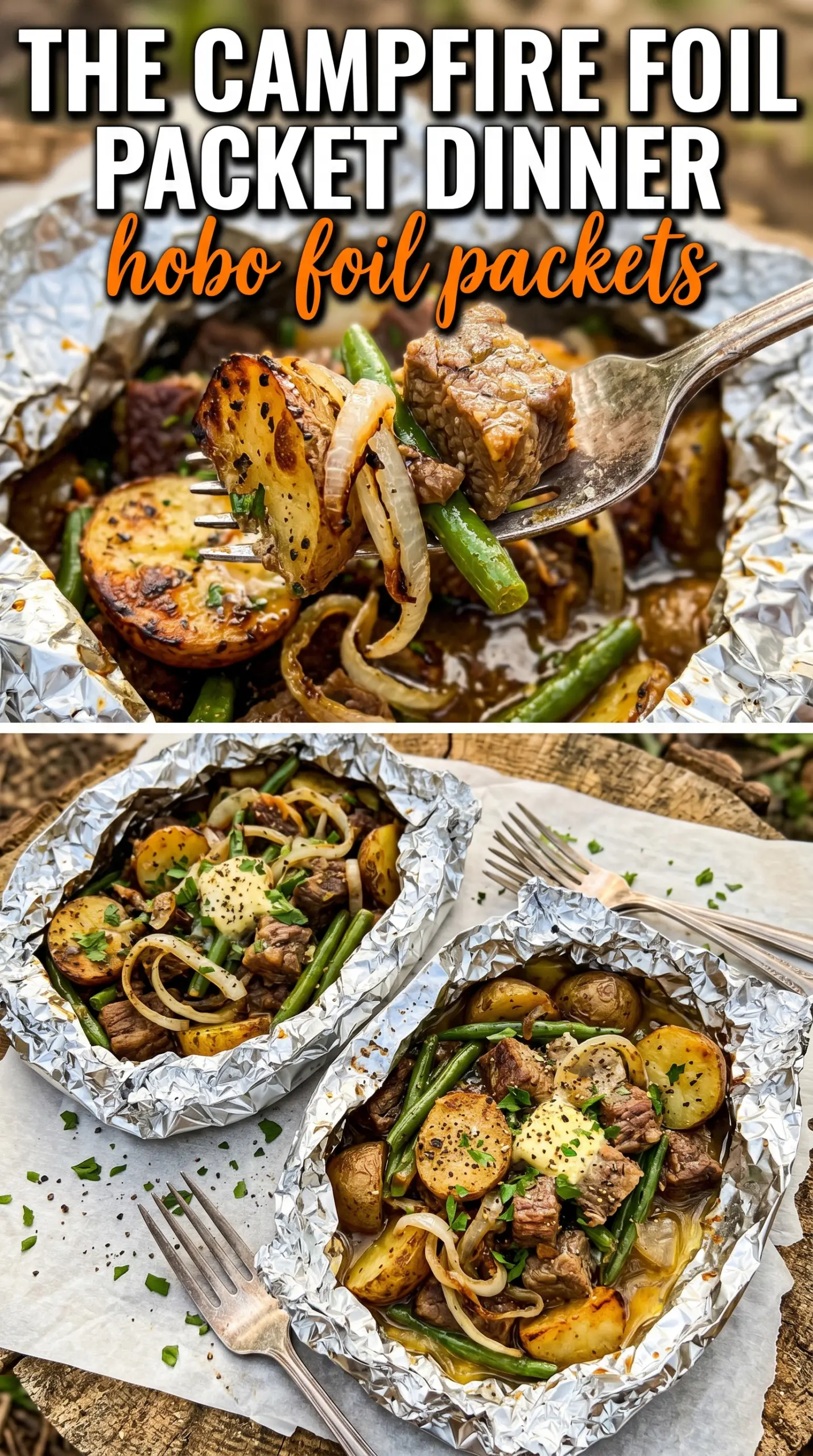
Hobo foil packets come off the fire with the kind of simple, steady satisfaction that keeps them in regular rotation. The potatoes turn tender, the carrots soften just enough to keep a little bite, and the butter melts into the vegetables so every forkful tastes seasoned all the way through. When the foil opens and the steam comes out, dinner already feels done before anyone sits down.
What makes this version work is the layering. Potatoes go on the bottom because they need the most heat, and the meat sits on top so the juices drip down and season everything underneath. Heavy-duty foil matters here too; thin foil tears easily when you flip the packets or try to open them over hot coals. I also like slicing the vegetables evenly so nothing is left hard while the rest of the packet is falling apart.
Below, you’ll find the little details that keep these packets from turning soggy or undercooked, plus a few smart swaps if you’re cooking at home instead of over a fire.
The potatoes were tender, the carrots still had a little bite, and the butter made everything taste like it cooked in its own gravy. We opened the packets right on the picnic table and everyone went quiet for a minute.
Save these hobo foil packets for campfire nights when you want beef, potatoes, and vegetables all steaming together in one tidy packet.
The Layering Trick That Keeps the Potatoes Tender
Packets like this fail when everything is stacked without thinking about cook time. Potatoes take the longest, so they belong closest to the heat. If they sit on top of the meat, they often stay a little firm while the beef is already done. The other common problem is cutting the vegetables unevenly; one thick slice of potato can stay stubbornly hard while the rest of the packet turns soft.
- Potatoes — Slice them thin and even, about 1/4 inch thick. That gives them enough surface area to cook through in the same window as the meat.
- Ground beef or stew meat — Ground beef is the faster, more dependable option for packets. Stew meat works too, but it needs truly thin slices or small pieces so it doesn’t turn chewy before the vegetables catch up.
- Butter — This is the built-in sauce. It melts over the vegetables and helps carry the salt and garlic powder through the whole packet. You can use olive oil in a pinch, but you lose that rich, campfire-style finish.
- Heavy-duty foil — Ordinary foil can split when you flip the packets. If all you have is thin foil, double it up and crimp the edges tightly so the juices stay inside.
What Each Ingredient Is Doing Once the Packet Seals Up
- Carrots — They add sweetness and hold their shape better than potatoes, which keeps the packet from turning mushy. Slice them on the thinner side so they soften in time.
- Onion — Onion melts into the juices and gives the packet that old-school camp dinner flavor. It doesn’t need special treatment; just slice it thin so it cooks through.
- Green beans — Canned green beans are the shortcut here, and they work because they only need reheating. Drain them well so extra liquid doesn’t steam the packet from the inside.
- Garlic powder — Fresh garlic can burn in a packet, especially over a fire. Garlic powder spreads evenly and stays mellow, which is exactly what you want here.
Building the Packet So It Cooks Evenly Over the Fire
Start With the Vegetables on the Bottom
Lay the potatoes down first, then add the carrots, onion, and green beans. This puts the hardest vegetables closest to the heat source and gives them the longest cooking time. If you toss everything together, the packet still tastes fine, but the texture gets less reliable. Keep the layers fairly flat so the heat can move through the packet instead of getting trapped in one thick mound.
Season Before You Fold
Salt, pepper, and garlic powder need to go in before the foil closes. Once the packet is sealed, the seasoning can’t be corrected from the outside, and bland vegetables stay bland. Put the butter right on top of the meat so it melts downward and coats everything as the packet cooks. If your vegetables seem dry when you assemble them, that’s fine; the butter and meat juices will take care of the moisture.
Seal It Tight and Flip Gently
Crimp the foil into a tight packet with room for steam to circulate inside. A loose seal lets the juices leak out and leaves the vegetables dry. Cook over medium heat for about 25 to 30 minutes, flipping once halfway through. If the fire is too hot, the foil can char before the potatoes are done, so keep the packets over steady heat instead of directly in roaring flames.
Let the Steam Settle Before Opening
Give the packets five minutes off the heat before opening them. That short rest lets the steam calm down and keeps you from burning your hands or face when you cut the foil. Open them carefully from the top so the hot liquid stays inside until the last moment. The finished packet should smell buttery and savory, with tender potatoes and vegetables that still look intact, not collapsed.
How to Change These Foil Packets for Different Camps and Kitchens
Make It With Stew Meat Instead of Ground Beef
Stew meat gives you a meatier, more rustic bite, but it needs more attention than ground beef. Cut it small and keep the pieces in a single layer so they cook through in the same 25 to 30 minute window. If the chunks are too big, the vegetables finish first and the beef stays tough.
Swap in Chicken or Sausage for a Different Finish
Sliced smoked sausage works well because it’s already cooked and only needs heating through. Chicken can work too, but it has to be cut into small, even pieces and cooked until the center reaches a safe temperature. Both swaps change the packet’s flavor from beefy and brothy to lighter or smokier.
Make It Dairy-Free
Use olive oil or a plant-based butter instead of dairy butter. You won’t get quite the same richness, but the packets still steam beautifully and the vegetables stay glossy. Add an extra pinch of salt if you’re using a neutral oil, since butter brings some seasoning of its own.
Storage and Reheating
- Refrigerator: Store leftovers in an airtight container for up to 3 days. The potatoes soften a bit more as they sit.
- Freezer: These packets freeze, but the potatoes and green beans lose some texture after thawing. Freeze only if you need to, and expect a softer result.
- Reheating: Reheat covered in a 325°F oven until hot, or warm in a skillet with a splash of water over low heat. The mistake to avoid is blasting them in the microwave, which makes the potatoes mealy and the meat dry.
Questions I Get Asked About This Recipe
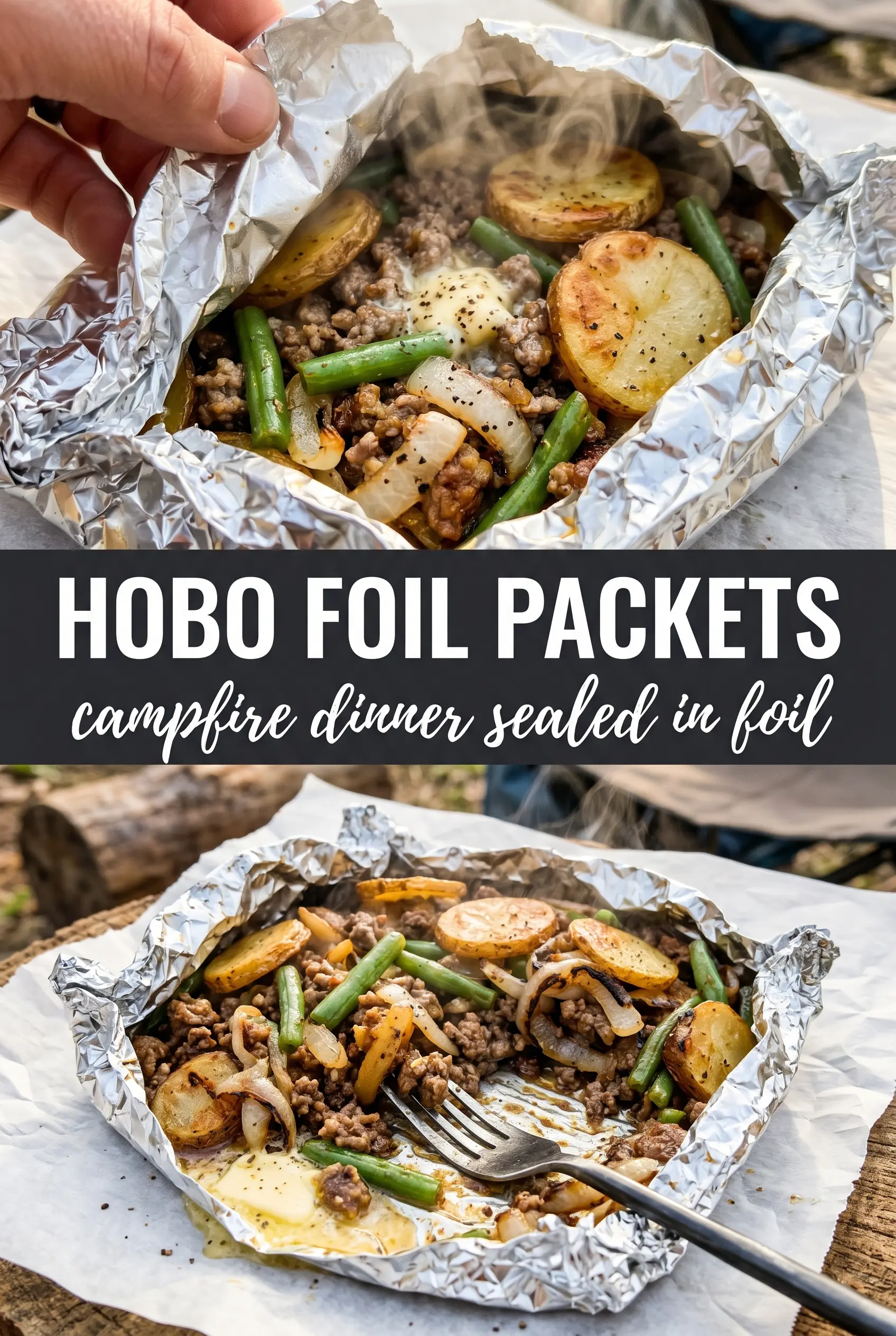
Hobo Foil Packets
Ingredients
Equipment
Method
- If using ground beef, form the meat into 4 patties; if using stew meat, divide into 4 portions. Keep portions even so they finish cooking at the same time.
- Slice the potatoes, carrots, and onion, and drain the green beans. Arrange the sliced vegetables so they’re ready to layer on the foil.
- Lay out 4 heavy-duty aluminum foil sheets and layer potatoes, carrots, and onions on each sheet. Spread into an even base so steam circulates around everything.
- Add drained green beans over the vegetables on each foil sheet. Press the vegetables lightly so they sit flat for better heat contact.
- Place the meat on top of the vegetable layer. Position it in the center so juices stay contained inside the sealed packet.
- Season each packet with salt, pepper, and garlic powder, then top with 1 tablespoon butter. Distribute butter across the top so it melts and coats the meat and vegetables.
- Fold the foil into sealed packets. Crimp edges tightly to prevent steam from escaping.
- Place packets on a campfire grate over medium heat for 25-30 minutes, flipping halfway. Cook until the potatoes are tender and the packets are visibly steaming when opened.
- Let packets cool for 5 minutes before carefully opening and serving. Resting helps steam settle and prevents burns.