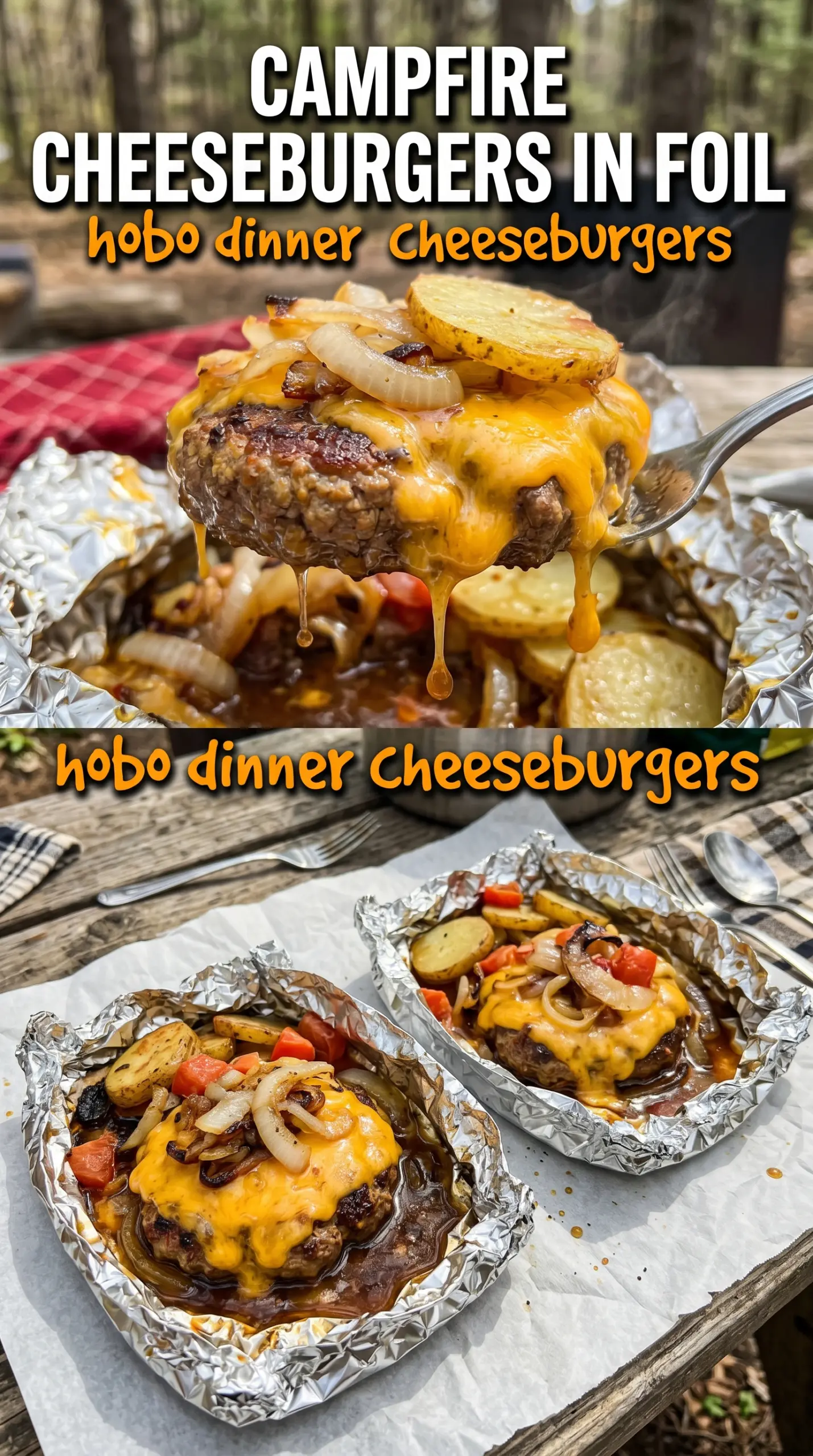
Hobo dinner cheeseburgers land somewhere between a campfire classic and an old-school foil packet supper, and that’s exactly why they keep earning a spot in the rotation. You get a juicy burger, tender potatoes, sweet onions, softened peppers, and melted cheese all in one packet, with almost no cleanup at the end. The foil does more than hold everything together — it traps steam so the vegetables cook through while the burger stays protected from direct flare-ups.
The trick is in the layering. Thinly sliced potatoes go on the bottom because they need the most time, and the butter melts down through the vegetables to keep everything from drying out. The burgers are formed thin on purpose, which helps them cook at the same pace as the vegetables instead of ending up underdone while the potatoes finish. The cheese goes in at the end, after the packet has already done most of the work, so it melts without turning greasy or disappearing into the foil.
Below, I’ve included the small details that matter most: how thin to slice the potatoes, how to keep the packets sealed, and what to change if you want to cook these in the oven instead of over a fire.
The potatoes came out tender without getting mushy, and the cheese melted right over the burger at the end instead of soaking into the foil. I’ve made this twice now at the campsite and it cooked evenly both times.
Save these hobo dinner cheeseburgers for your next campfire night when you want juicy burgers, buttery vegetables, and almost no cleanup.
The Potato Slices Need More Time Than the Burgers
If hobo dinner cheeseburgers ever come out with browned meat but stubborn, undercooked potatoes, the problem is almost always the cut. Thin slices matter here because the packets work by steaming and trapping heat, not blasting everything with direct flame. The potatoes sit on the bottom for a reason: they’re closest to the hottest part of the packet and they need the full cook time to turn tender.
The other thing that helps is forming the patties thinner than a standard burger. Thick patties and thick potato rounds don’t finish together, which is how people end up overcooking one part to save the other. Keep the vegetables in even slices, seal the foil tightly, and flip the packets halfway so the heat reaches both sides evenly.
What Each Ingredient Is Actually Doing in the Packet
- Ground beef — Use 80/20 if you can. It stays juicy under foil heat and gives enough fat to flavor the vegetables without turning the packet greasy.
- Potatoes — Thin slices are nonnegotiable here. Waxy potatoes hold their shape best, but any potato works if you slice it about 1/8 inch thick so it softens in time.
- Onion and bell pepper — These cook down into something sweet and savory, which balances the richness of the beef and butter. Slice them evenly so you don’t end up with some pieces charred and others still crisp.
- American cheese — It melts cleanly in a hot packet and coats the burger instead of clumping. A sharper cheese can work, but it won’t melt as smoothly in this setup.
- Butter — This is what keeps the vegetables from steaming in their own dryness. One tablespoon per packet is enough to add richness without flooding the foil.
- Heavy-duty foil — Regular foil tears too easily once the packets are flipped and moved around over a grate. Heavy-duty foil gives you a better seal and fewer leaks.
Building the Packet So the Heat Works for You
Layer the vegetables first
Start with the sliced potatoes, then add the onion and bell pepper. This order gives the potatoes the most direct heat and keeps the burger from sitting in a puddle of butter before it starts to cook. If the potato slices are stacked too thickly, they’ll steam unevenly, so spread them into a loose, even layer instead of a tight pile.
Form the patties thinner than usual
Shape each portion of beef into a thin patty and season both sides with salt and pepper. A thinner patty matches the cook time of the vegetables, which keeps the packet from going from underdone to dry while you wait on the potatoes. Pressing them too thick is the most common mistake here.
Seal and cook over medium heat
Fold each foil sheet into a tight packet with enough room for steam to circulate. Set the packets over medium heat on a campfire grate and let them cook for 20 to 25 minutes, flipping once halfway through. If the heat is too high, the foil can scorch before the vegetables soften, so keep the fire steady instead of chasing a big flame.
Finish with the cheese and rest briefly
Open the packets carefully because the steam hits fast. Add the cheese slices over the burgers, reseal the packets for a minute or two, and let the residual heat melt the cheese without overcooking the meat. Rest the packets for about 5 minutes before serving so the juices settle and the vegetables stop steaming aggressively the second you open them.
How to Adapt These Foil Packet Burgers for Different Setups
Oven-Baked Hobo Dinner Cheeseburgers
Bake the sealed packets on a sheet pan at 400°F if you’re not cooking over a fire. The result is a little less smoky, but the texture stays close to the campfire version as long as the potatoes are sliced thin. Check for tenderness before opening, because oven heat can vary depending on how tightly the packets are packed.
Dairy-Free Version
Skip the butter and use olive oil or a dairy-free butter substitute, then top the burger with a meltable plant-based cheese if you want that cheesy finish. You’ll lose a little of the classic richness, but the vegetables still turn tender and the packet stays juicy.
Swap in Ground Turkey
Ground turkey works, but it needs a little extra help to stay moist. Add a touch more butter or a drizzle of oil to the packet, and don’t overcook it past the point where the center is no longer pink. The flavor is lighter, so a little extra salt helps.
Make It Gluten-Free Without Changing Anything
This recipe is naturally gluten-free as written, which makes it an easy crowd option. Just check the cheese packaging if you’re cooking for someone who needs strict labeling, and keep the packets on clean foil so nothing picks up stray breadcrumbs from the grill area.
Storage and Reheating
- Refrigerator: Store leftovers in an airtight container for up to 3 days. The potatoes soften a bit more after chilling, but the flavor holds up well.
- Freezer: Freezing isn’t ideal once the vegetables have already been cooked in the packet. The potatoes can turn grainy after thawing, so this is better made fresh.
- Reheating: Reheat gently in a covered skillet over low heat or in a 325°F oven until warmed through. High heat dries out the beef and makes the potatoes tough before the center is hot.
Questions I Get Asked About This Recipe
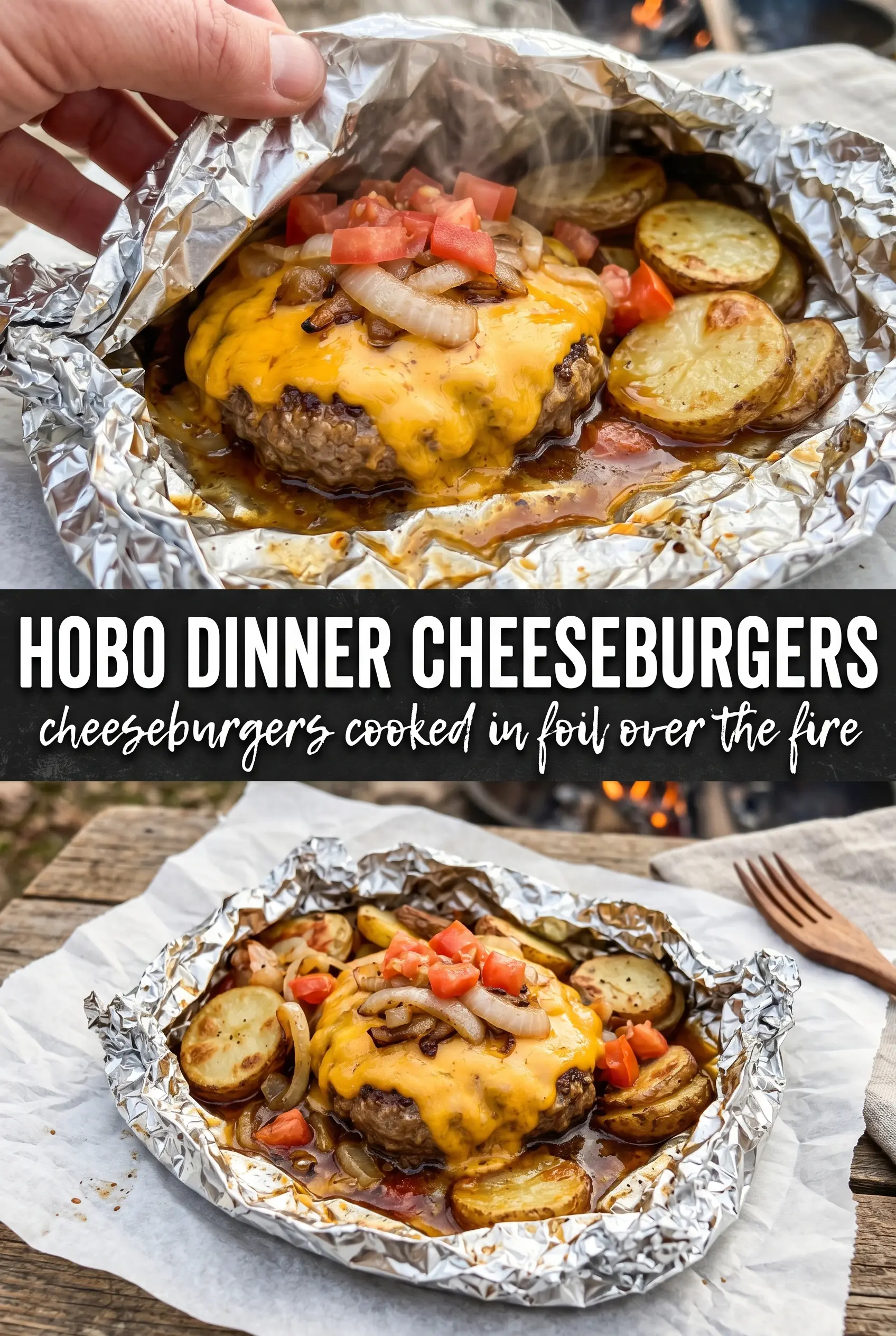
Hobo Dinner Cheeseburgers
Ingredients
Equipment
Method
- Divide the ground beef into 4 portions and form into thin patties, seasoning with salt and pepper for an even cook.
- Lay out 4 heavy-duty aluminum foil sheets and layer sliced potatoes, onions, and bell peppers on each, keeping the vegetables in an even thickness.
- Place 1 burger patty on top of the vegetables on each packet and add 1 tablespoon butter over the patty so it melts into the filling.
- Fold the foil into sealed packets, pressing edges tightly to trap steam and help the vegetables cook through.
- Place packets on a campfire grate over medium heat for 20-25 minutes, visual cue: steam should be actively escaping only minimally at the seams.
- Flip the packets halfway through cooking, using a careful turn so the burgers and vegetables brown evenly in the foil.
- Open the packets, add cheese slices to the burgers, and reseal briefly to melt the cheese until glossy and fully softened.
- Let packets cool for 5 minutes before serving from the packets so the juices thicken and the cheese sets slightly.