Grilled mango pineapple chicken lands with that sweet-savory finish that keeps people coming back for one more bite. The fruit marinade turns the chicken glossy and lightly caramelized on the grill, while the lime and ginger keep the sweetness from going flat. Serve it with grilled mango and pineapple slices, and the whole plate tastes bright, smoky, and a little bit sticky in the best way.
The key is balance. Mango puree gives body, pineapple juice brings acidity and tenderness, and honey helps the surface brown without turning the chicken into candy. I like to reserve part of the marinade before it touches raw chicken, then use that clean portion for basting so you get a shiny glaze without any food-safety guesswork.
Below, I’m walking through the two spots where this recipe usually goes sideways: the marinade ratio and the grill timing. Get those right and the chicken stays juicy, the glaze clings, and the fruit comes off the grill with those deep caramel edges that make the whole dish feel finished.
The marinade gave the chicken a gorgeous glaze, and the pineapple on the grill got those caramelized edges without falling apart. I basted with the reserved marinade and the chicken stayed juicy all the way through.
Like this grilled mango pineapple chicken? Save it to Pinterest for smoky grill nights with sticky tropical glaze and caramelized fruit.
The Marinade Needs Enough Acid to Tenderize, Not So Much That It Turns Mushy
With fruit-based marinades, the mistake is treating the chicken like it can sit in the mixture all day. Pineapple juice has active enzymes, and when you combine that with lime juice, the tenderizing power climbs fast. That’s great for flavor and texture in a short window, but if you push it too far, especially with chicken breasts, the outside starts to go soft before the grill ever hits it.
Two to six hours is the sweet spot here. Thighs can handle the upper end better than breasts because they have more fat and more forgiveness, but both need a marinade that does its job without chewing up the meat fibers. If your chicken seems oddly fragile or chalky after marinating, it’s usually been sitting too long in too much acid.
What Each Ingredient Is Actually Doing in This Tropical Glaze
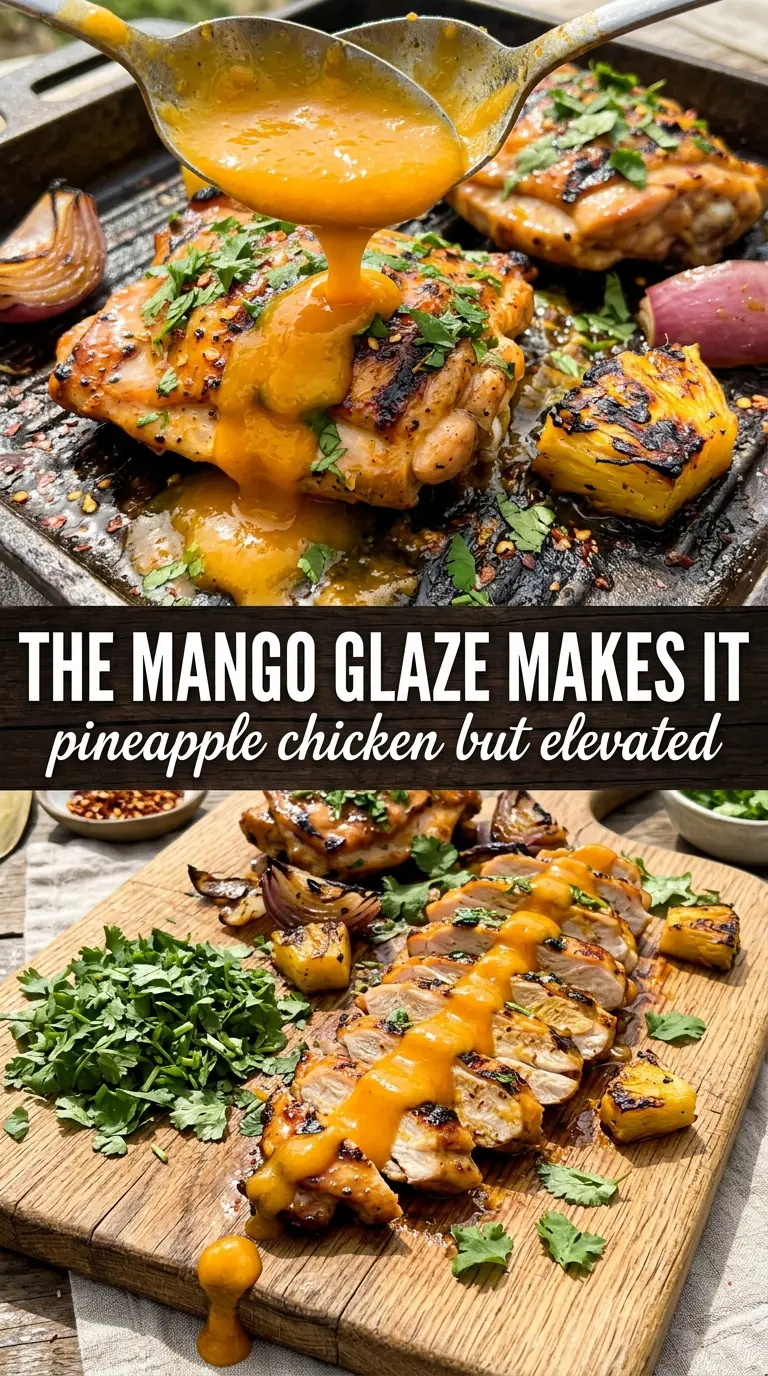
- Mango puree — This gives the marinade body and a rounded fruit sweetness that clings to the chicken instead of running off the grates. Mango pulp or a smooth mango puree both work; a thinner mango drink won’t coat as well.
- Pineapple juice — This brings bright acidity and helps the chicken tenderize. Fresh or bottled juice both work, but avoid pineapple nectar because it’s usually too thick and too sweet for this balance.
- Honey — Honey is what helps the glaze darken and stick. Swap in maple syrup if that’s what you have, but the finish will taste a little less tropical and a touch more earthy.
- Lime juice — Lime keeps the fruit from tasting flat and heavy. Bottled lime juice can work in a pinch, but fresh juice gives the cleanest finish.
- Ginger and garlic — These are the savory edge that stops the marinade from eating like dessert. Fresh ginger matters more than powdered here because it cuts through the sweetness with a sharper, cleaner bite.
Getting the Glaze to Cling Without Burning on the Grill
Building the Marinade Base
Blend the mango puree, pineapple juice, honey, lime juice, garlic, ginger, salt, and pepper until smooth. You want a pourable marinade that still coats a spoon lightly. If it tastes flat now, it will taste flat after grilling, so season it before the chicken goes in. Reserve half a cup before adding the raw chicken; that clean portion is your basting glaze later.
Marinating for Flavor, Not for Softness
Submerge the chicken and chill it for 2 to 6 hours. Turn it once or twice if you think of it, but don’t obsess over it. The biggest mistake is leaving the chicken swimming overnight, which can make the surface overly soft and prevent good browning. Pat off excess marinade before grilling so the sugars can caramelize instead of steaming on the grates.
Grilling to a Juicy Center
Grill over medium-high heat for 6 to 7 minutes per side, depending on thickness. You’re looking for clear grill marks, some darkened glaze at the edges, and chicken that releases from the grates without tearing. If it sticks, give it another minute; proteins usually free themselves once a crust forms. Baste with the reserved marinade during the last few minutes, not from the start, or the sugars will burn before the chicken is cooked through.
Finishing the Fruit
Grill the mango and pineapple slices for about 2 minutes per side, just until they pick up char and soft grill lines. They should look glossy and smell deeply sweet, not collapse into mush. A hot grill turns the fruit into a side dish that tastes almost like sauce, and it’s that contrast with the savory chicken that makes the plate work.
Three Ways to Adjust the Grill Chicken Without Losing the Tropical Balance
Use chicken thighs for a richer finish
Thighs stay juicier on the grill and forgive a little extra time, which makes them the safer choice if your heat runs hot. They also hold onto the glaze better because of the higher fat content.
Make it dairy-free and gluten-free without changing the method
This recipe already fits both, so the main job is keeping your ingredients clean. Check the honey and any bottled juice for additives if you’re cooking for someone with strict dietary needs, but the marinade itself needs no adjustment.
Swap in peaches if mango isn’t available
Peach puree gives you a softer, less tropical sweetness and a lighter glaze. It still works with the pineapple and lime, but the final flavor leans more mellow than bold.
Turn it into a stovetop meal when grilling isn’t an option
Sear the chicken in a hot skillet and finish it in the oven, then simmer the reserved clean marinade for a few minutes until slightly thickened before spooning it over the top. You’ll lose the smoky char, but you keep the sticky glaze and the same sweet-savory balance.
Storage and Reheating
- Refrigerator: Store cooked chicken in an airtight container for up to 4 days. The glaze will thicken as it chills.
- Freezer: Freeze the cooked chicken for up to 2 months. Wrap it tightly so the fruit glaze doesn’t pick up freezer flavor.
- Reheating: Rewarm gently in a covered skillet over low heat with a splash of water or juice. High heat dries out the chicken and can make the sugars on the glaze go bitter.
Questions I Get Asked About This Recipe
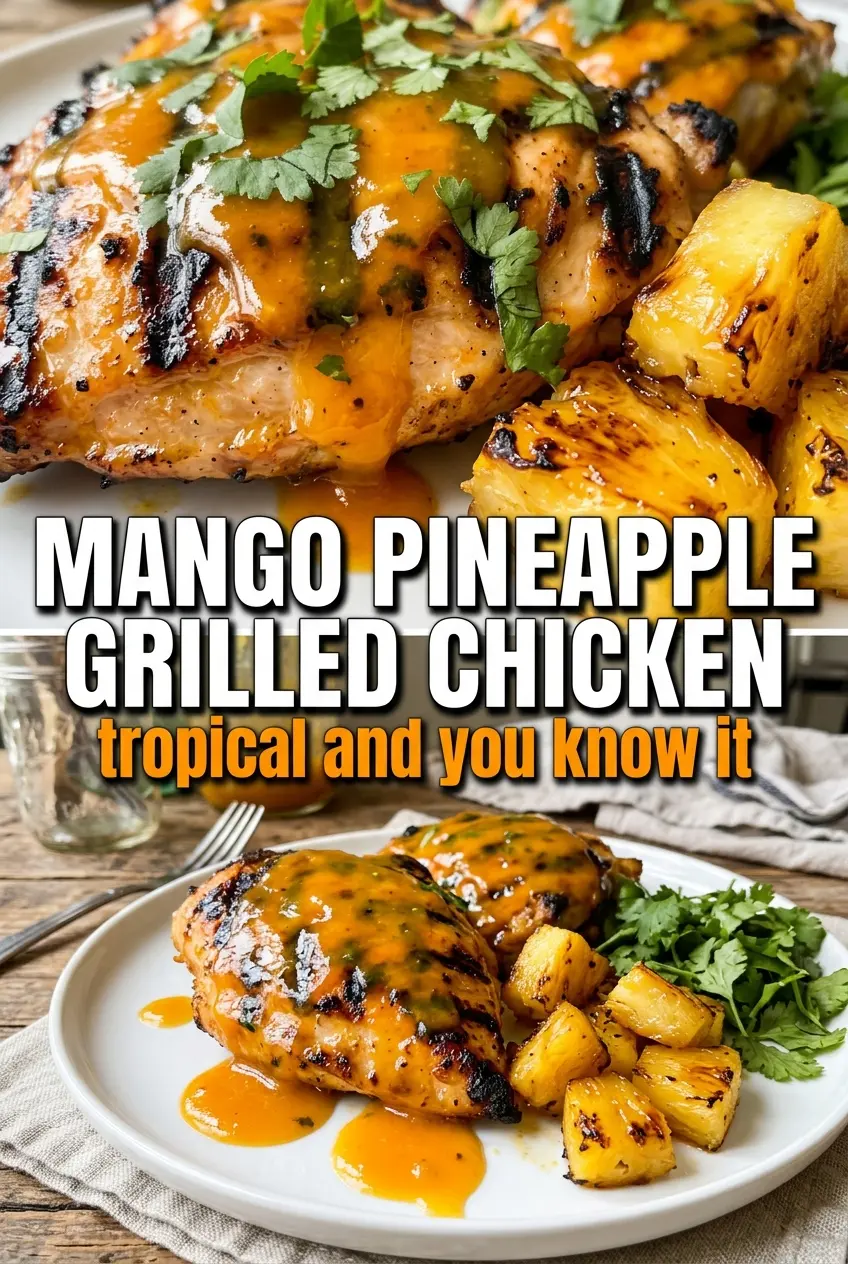
Grilled Mango Pineapple Chicken
Ingredients
Equipment
Method
- Blend mango puree, pineapple juice, honey, lime juice, garlic, ginger, salt, and pepper until smooth and glossy.
- Reserve 1/2 cup marinade for basting in a small container.
- Marinate chicken for 2-6 hours, refrigerating until well coated and fragrant.
- Grill chicken over medium-high heat for 6-7 minutes per side, basting with the reserved marinade during grilling for a caramelized sheen and golden color.
- Grill fresh mango and pineapple slices for 2 minutes per side until lightly charred and warmed through.
- Serve grilled fruit with the chicken, spooning any remaining glaze over the top.