Sticky, charred Grilled Huli Huli Chicken hits that sweet-savory place that keeps you reaching for one more piece. The glaze cooks down into a lacquered coating, the edges pick up smoke and a little bitterness from the grill, and the chicken stays juicy underneath if you keep the heat steady and turn it often.
The trick is in the balance of the marinade. Soy sauce brings salt and depth, brown sugar gives the sticky finish, and pineapple juice plus ginger keep the whole thing bright instead of heavy. I like reserving part of the marinade for basting, but only after it’s set aside before the raw chicken goes in, because that sauce is what builds the shiny, caramelized finish without turning the grill into a burnt-sugar mess.
Below, I’ve included the one grilling habit that keeps the glaze from scorching, plus a few smart swaps if you need to work with what’s already in the pantry.
The chicken came off the grill with that sticky, caramelized coating instead of burning, and the pineapple juice gave it a bright finish that kept everyone going back for seconds.
Save this Grilled Huli Huli Chicken for the nights when you want sticky island-style grilling with a caramelized glaze.
Why the Marinade Needs Time Before It Hits the Grill
Huli Huli chicken lives or dies by the marinade. The sugar, soy, and pineapple juice need time to move past the surface and season the meat before the heat starts working on the outside. If you rush it, the chicken tastes glazed on top and plain underneath, which is the exact opposite of what this dish should be.
The other thing people miss is that the reserved basting sauce has to stay clean. Set aside half the marinade before the chicken goes in, because once raw chicken touches it, that liquid is only for cooking, not for brushing on at the table. Frequent turning keeps the glaze from burning and gives you those even, dark caramelized patches that make this chicken taste like it came off a proper backyard grill.
What the Sweet, Salty, and Tangy Ingredients Are Doing Here
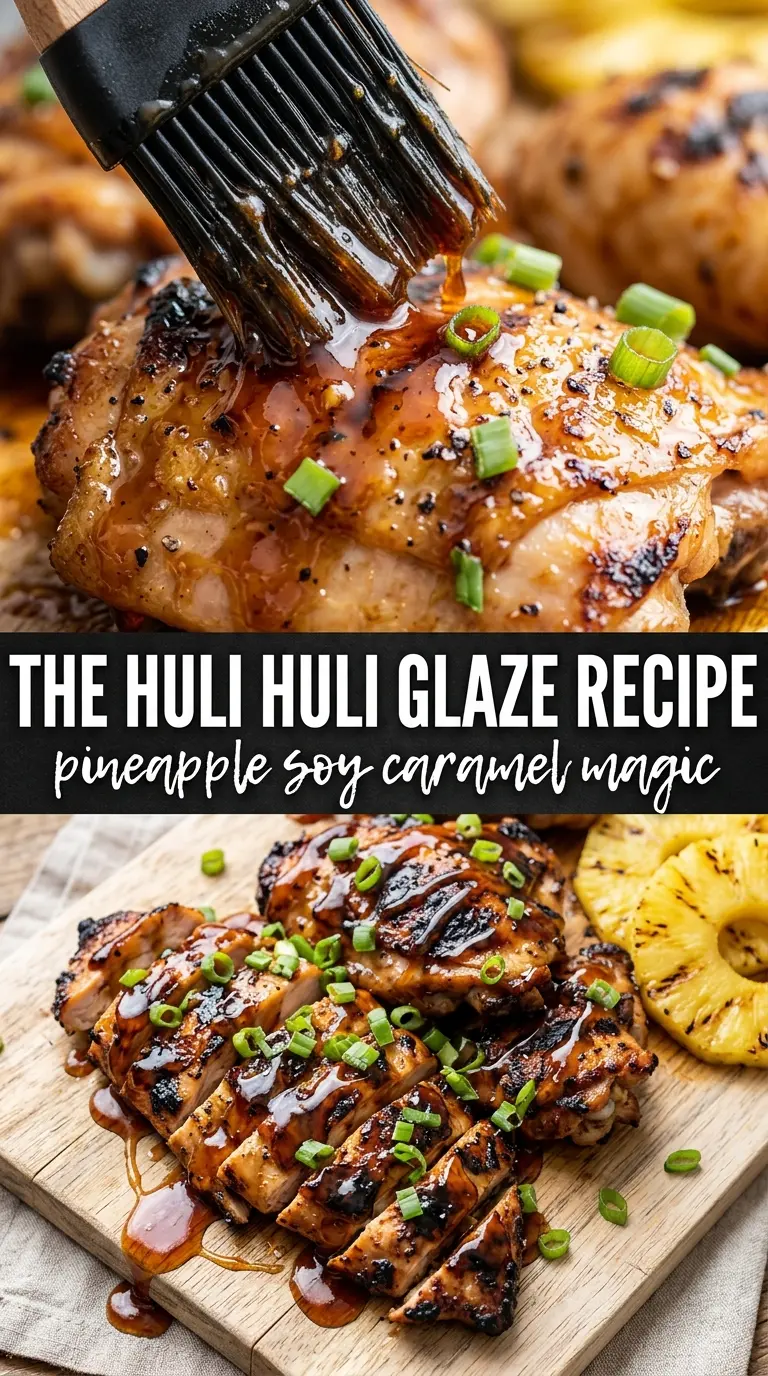
- Chicken thighs or legs — Dark meat stays juicy over medium grill heat and stands up to the sweet glaze. You can use bone-in pieces or thighs; both handle the long, sticky cook better than boneless breasts, which dry out fast and miss that classic barbecue texture.
- Soy sauce — This carries the savory backbone. Use regular soy sauce unless you need to cut the salt, in which case low-sodium works fine and still gives you the right depth.
- Brown sugar — This is what helps the glaze cling and caramelize. Light or dark brown sugar both work; dark brown gives a deeper molasses note, while white sugar won’t give you the same sticky finish.
- Pineapple juice — It adds brightness and a gentle tropical tang that keeps the marinade from tasting flat. Fresh or canned both work, but use unsweetened juice if you can, since sweetened juice can push the glaze into candy territory before the chicken is cooked.
- Ginger and garlic — Fresh is worth it here. They sharpen the marinade and keep the flavor lively through the heat of the grill; dried versions taste dull and don’t melt into the sauce the same way.
- Sherry or chicken broth — Sherry adds a rounder, slightly nutty note, while broth keeps things savory if you don’t want alcohol in the marinade. Either one loosens the sauce just enough so it brushes on easily without becoming watery.
- Sesame oil — A little goes a long way. It adds that toasted finish you notice most at the end, so don’t pour in extra thinking it will deepen the flavor; it can take over fast.
Turning, Basting, and Waiting for the Glaze to Set
Mix the Marinade Until the Sugar Dissolves
Whisk the soy sauce, brown sugar, ketchup, pineapple juice, sherry, ginger, garlic, and sesame oil until the mixture looks smooth and the sugar starts to disappear. If it still feels grainy, keep whisking for another minute or two; undissolved sugar tends to sit on the surface and scorch before the chicken cooks through. Reserve half the marinade now, before the chicken goes in, so you have a clean basting sauce later.
Marinate for Enough Time to Season the Meat
Coat the chicken well and let it sit for 2 to 8 hours in the fridge. Two hours gives you a decent flavor boost, but the longer rest builds a deeper taste and a better glaze on the grill. Don’t push it much past 8 hours if your marinade is heavy on pineapple juice, because too much acid can start to soften the outside of the chicken too far.
Grill Over Medium Heat and Turn Often
Set the chicken over medium heat, not high heat. The sugar in the marinade needs enough time to caramelize without blackening, and frequent turning keeps the glaze even instead of one side burning while the other side stays pale. Baste with the reserved marinade after turning, not before long stretches over the flame, or the sugars will char before the center reaches temperature.
Cook to a Sticky Finish, Not a Dry One
Grill for about 25 to 30 minutes, until the internal temperature reaches 165°F and the exterior looks deep mahogany with some charred edges. The glaze should feel tacky and glossy, not wet and raw. If the chicken is browning too fast, move it to a cooler part of the grill and let it finish there; pulling the heat back saves the sauce from burning and keeps the meat juicy.
How to Adapt This for Different Grills and Diets
Use Chicken Breasts Instead of Thighs
Breasts work, but they need more attention. Pound them to an even thickness and start checking temperature early, because they dry out faster than thighs and won’t give you quite the same rich, sticky bite.
Gluten-Free Huli Huli Chicken
Use a gluten-free soy sauce or tamari and keep everything else the same. You’ll still get the same sweet-salty glaze, and the swap doesn’t change the grilling method at all.
Dairy-Free, Egg-Free, and Naturally Weeknight-Friendly
This recipe already fits dairy-free and egg-free eating, which is part of why it’s so easy to keep in rotation. The main thing to watch is the sugar on the grill; keep the heat at medium so the glaze caramelizes instead of turning bitter.
Make It a Little More Pineapple-Forward
If you want a brighter tropical finish, serve it with grilled pineapple rings or brush the chicken with a little extra pineapple juice in the last few minutes of cooking. Don’t overdo it early, or the extra sugar can make the glaze burn before the chicken is done.
Storage and Reheating
- Refrigerator: Store leftovers in an airtight container for up to 4 days. The glaze will firm up a little in the fridge, but the flavor gets even better by the next day.
- Freezer: It freezes well for up to 2 months. Wrap the cooled chicken tightly or store it in freezer bags with a little sauce so it doesn’t dry out.
- Reheating: Reheat covered in a 325°F oven until hot, or warm gently in a skillet with a splash of water. High heat will dry out the chicken and burn the sugars in the glaze before the center is warmed through.
Answers to the Questions Worth Asking
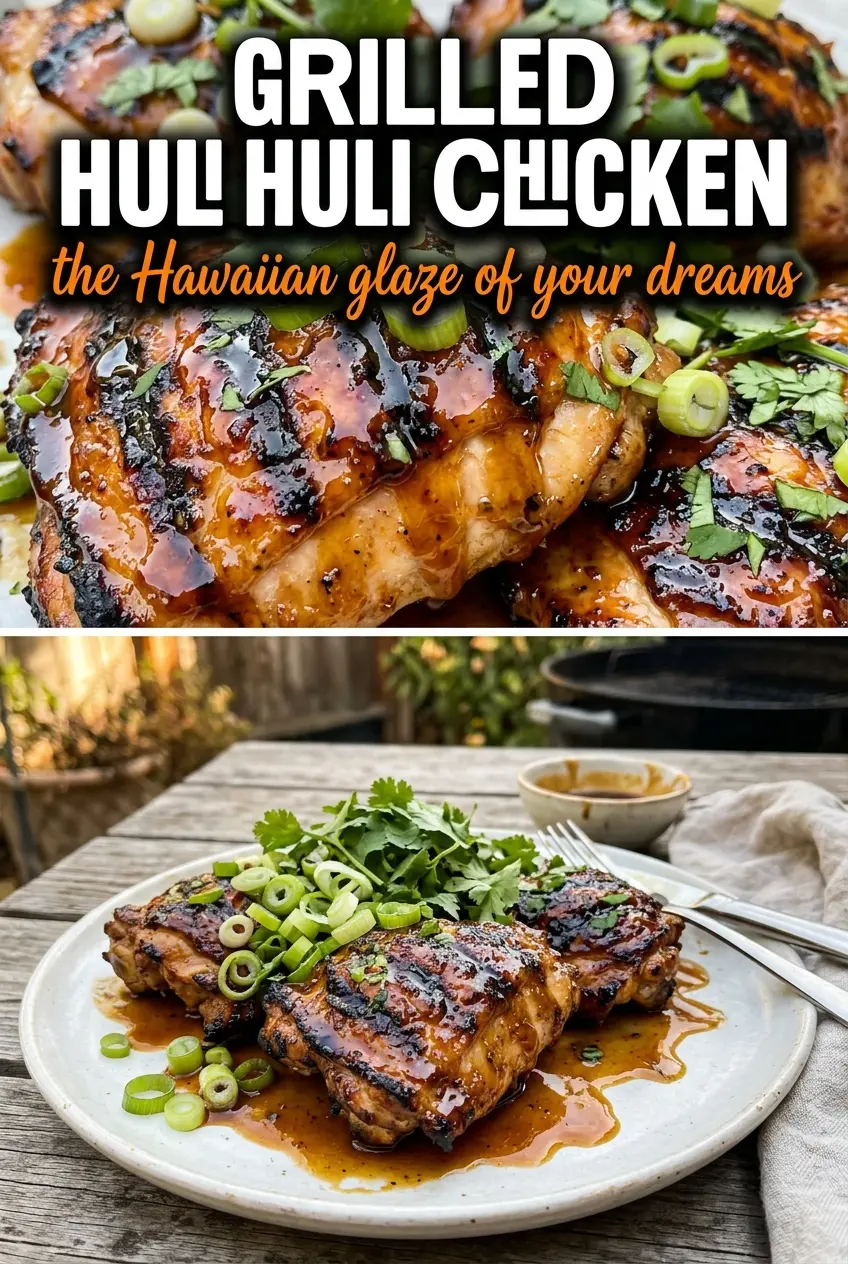
Grilled Huli Huli Chicken
Ingredients
Equipment
Method
- Whisk together soy sauce, brown sugar, ketchup, pineapple juice, sherry or chicken broth, grated ginger, minced garlic, and sesame oil until smooth and glossy.
- Reserve 1/2 cup of the marinade for basting and set aside.
- Marinate the chicken for 2-8 hours in the refrigerator, turning once if possible for even coating.
- Preheat a grill to medium heat and place the marinated chicken on the grates.
- Grill over medium heat, turning (huli) frequently and basting with the reserved marinade to build caramelized color.
- Continue grilling for 25-30 minutes total until the internal temperature reaches 165°F and the chicken is caramelized, charred, and sticky. (If it browns too fast, reduce to medium-low heat.)