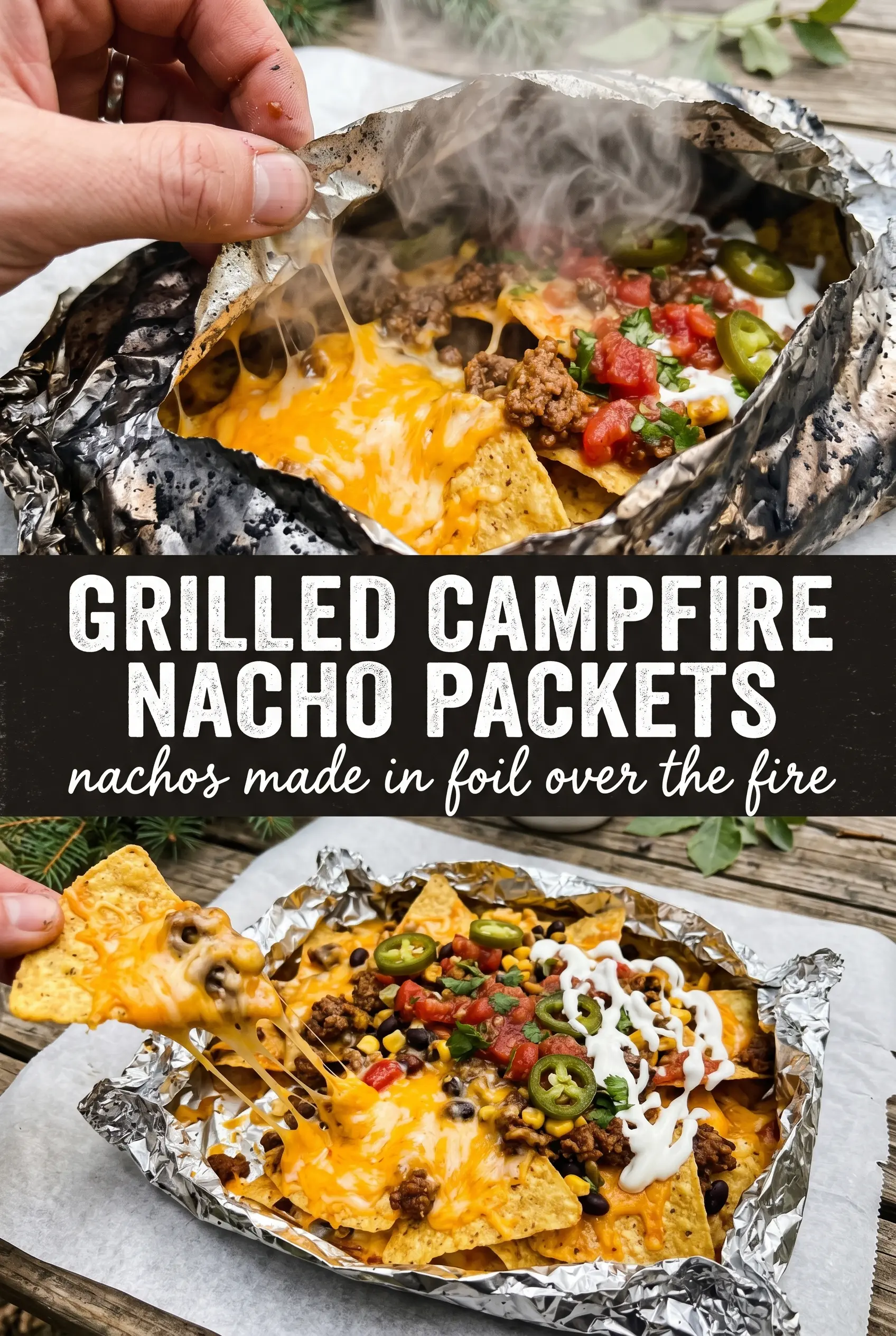
Grilled campfire nacho packets hit that sweet spot between casual and worth repeating: crisp edges on the chips, melted cheese that blankets everything underneath, and just enough smoke from the fire or grill to make the whole thing taste like a treat. Each packet comes out a little different, which is part of the charm, but the good ones all have the same payoff — hot, gooey nachos you can eat straight from the foil with almost no cleanup.
The trick is keeping the packets sealed without smashing the chips into dust. Heavy-duty foil holds up best, and leaving a little space inside the packet gives the heat room to circulate so the cheese melts before the chips turn soggy. I like using black beans and cooked meat because they bring heft without adding much extra moisture, and sliced jalapeños give the top layer enough bite to cut through all that richness.
Below, I’ve included the one detail that keeps these from turning into a steam trap, plus a few smart swaps for making them work with what you already have on hand.
The cheese melted all the way through and the chips on the bottom stayed sturdy enough to scoop. I added the guacamole after opening the packet and it tasted like something from a backyard taco truck.
Grilled campfire nacho packets stay crisp around the edges and melty in the center — pin this for your next easy fire-grilled appetizer.
Why Your Nacho Packets Stay Crispy Instead of Turning Soggy
The biggest mistake with foil nachos is packing them too tightly and trapping steam. When that happens, the chips soften before the cheese has a chance to melt properly, and the whole packet eats like warmed-up leftovers instead of a fresh campfire snack.
Space inside the foil matters. The chips need room for hot air to move around the fillings, and the toppings should sit in a loose layer rather than being pressed flat. Medium heat is enough here; high heat only burns the bottom before the center gets hot.
- Heavy-duty foil — This is worth using. Thin foil tears easily when you open the packets, and once that happens, melted cheese and beans leak straight onto the grate.
- Black beans — They add body without making the packets greasy. Rinse and drain them well so they don’t dump extra liquid into the chips.
- Cooked meat — Ground beef or chicken both work, but it should already be cooked before it goes into the packet. Raw meat won’t finish safely in the short cook time, and it also releases too much moisture.
- Mexican cheese blend — A blend melts more smoothly than most single cheeses because it usually includes cheeses that soften evenly. Pre-shredded is fine here; the packet isn’t fussy enough to justify hand-grating.
What Each Layer Is Actually Doing in These Packets
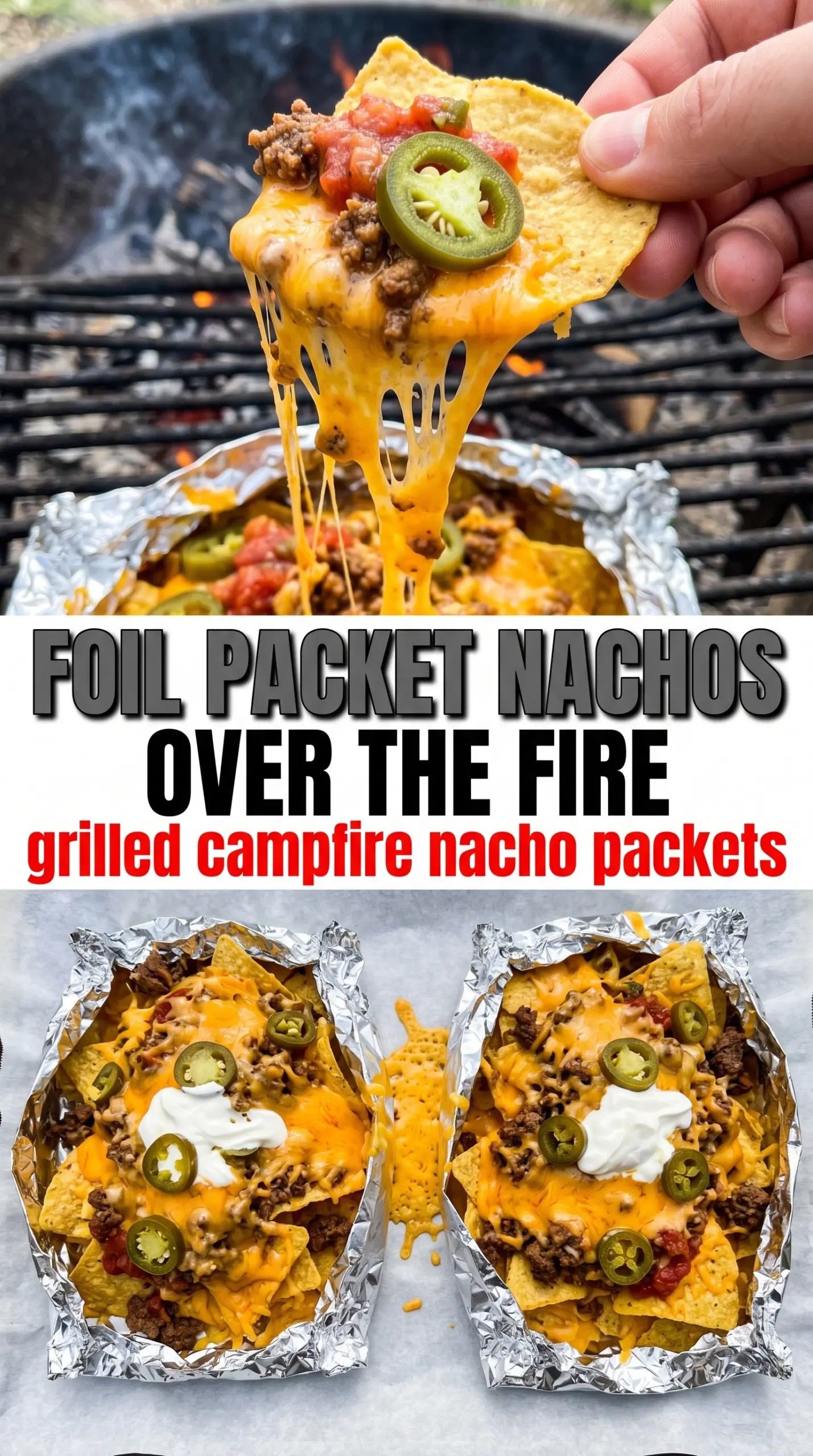
- Tortilla chips — These are the structure of the dish, so use a sturdy chip. Thin chips break too fast under the toppings and turn mushy as soon as they absorb steam.
- Shredded Mexican cheese blend — This is what ties everything together. If you swap in a harder cheese, the packet still works, but the melt won’t be as smooth and stretchy.
- Black beans — They bring creaminess and make the packets feel like a real appetizer instead of just chips with cheese. Canned beans are fine, but drain them well and don’t add extra sauce from the can.
- Ground beef or chicken — This is the savory anchor. Use leftovers or pre-cooked meat so the packet only has to heat through instead of cook from scratch.
- Jalapeño — Fresh slices give you little bursts of heat without flooding the packet with liquid. If you want less bite, remove the seeds before slicing.
- Salsa, sour cream, and guacamole — Keep these for the finish. If they go into the foil packet, they loosen the nachos and make the chips soft before you can eat them.
Building the Packets So the Cheese Melts Before the Chips Break Down
Layering the Chips and Fillings
Divide the chips evenly among the foil sheets and pile the toppings loosely over the top. Don’t crush the chips into one tight layer; the best packets have a little unevenness so some chips stay extra crisp while the center goes fully melted. The beans and meat should sit mostly on top of the chips, not buried underneath where they can trap moisture against the foil.
Sealing for Steam, Not Squeeze
Fold each packet closed with enough space left inside for heat to circulate. A tight seal matters, but the packet should still puff slightly as it cooks. If you wrap it flat and compressed, the fillings steam too aggressively and the chips at the bottom lose their texture fast.
Grilling Over Medium Heat
Set the packets on a campfire grate or grill over medium heat and cook them for 12 to 15 minutes. You’re looking for melted cheese visible at the seams and a packet that feels hot all the way through. If the fire is running hot, move the packets to a cooler edge of the grate; burned foil packets usually mean the outside got too much direct flame before the inside was ready.
Opening and Finishing
Open the packets carefully because hot steam escapes fast. Pull back the foil, add salsa, sour cream, and guacamole, and serve right away while the cheese is still stretchy. Once the packets sit too long, the chips soften from the trapped heat, so this is a dish that wants to hit the table immediately.
Make It Vegetarian
Skip the meat and add more black beans, or stir in roasted corn for extra texture. The result is a little lighter but still hearty because the cheese and beans carry enough weight on their own.
Make It Dairy-Free
Use a meltable dairy-free shredded cheese and accept that the texture won’t be quite as stretchy as the original. The key is choosing a brand designed to melt, not a cheese-style sprinkle that dries out in the heat.
Make It Gluten-Free
Most tortilla chips are naturally gluten-free, but check the bag if cross-contact matters to you. The rest of the recipe is already friendly to a gluten-free table as long as your salsa and seasoning mixes are too.
Make Ahead for Camp
Pre-portion the chips, beans, meat, and cheese into foil sheets at home, then fold them into packets just before cooking. That keeps the chips from absorbing moisture while they sit, which is the fastest way to lose the crunch.
Storage and Reheating
- Refrigerator: Leftovers keep for 1 day, but the chips soften quickly once the packet is opened and cooled.
- Freezer: I don’t recommend freezing these. The chips lose all texture and the cheese turns grainy after thawing.
- Reheating: Warm the filling in a skillet or in a fresh foil packet over low heat if you can, then add fresh chips if the original ones have gone soft. Microwaving makes the chips limp and the packet loses the texture that makes this recipe worth making.
Questions I Get Asked About This Recipe
Grilled Campfire Nacho Packets
Ingredients
Equipment
Method
- Divide tortilla chips among 4 heavy-duty aluminum foil sheets, spreading them in an even layer.
- Top each packet with shredded Mexican cheese blend so it covers the chips.
- Add black beans, cooked ground beef or chicken, and sliced jalapeño to each packet in even amounts.
- Fold foil into sealed packets, leaving a little space for heat circulation inside each packet.
- Place packets on a campfire grate over medium heat for 12-15 minutes, until the cheese is fully melted.
- Remove packets from the heat and carefully open them, keeping steam contained as you lift the foil back.
- Top each opened packet with salsa, sour cream, and guacamole before serving.