Greek chicken kabobs hit the grill with bright lemon, garlic, and oregano, then finish with charred edges and juicy centers that taste like they came straight off a seaside charcoal fire. The vegetables soften just enough to turn sweet and smoky, and the tzatziki on the side cools everything down without dulling the herbs or citrus. It’s the kind of meal that disappears fast because every skewer gets a little bit different mix of caramelized onion, blistered pepper, and tender chicken.
What makes this version work is the marinade. Lemon juice and olive oil do the heavy lifting, but the Dijon gives the coating a little backbone so the chicken tastes seasoned all the way through instead of just on the surface. Four hours is the sweet spot for the marinade here; long enough for flavor, not so long that the acid starts to toughen the meat. I also like to keep the vegetable pieces on the larger side so they hold up on the grill instead of collapsing before the chicken is done.
Below you’ll find the trick that keeps the kabobs juicy, the ingredient notes that matter, and a few smart ways to adapt the recipe if you want to swap the grill for the oven or change up the protein.
The chicken stayed juicy after the full marinating time, and the edges picked up that nice grilled char without drying out. We kept sneaking the onions off the skewers before dinner was even ready.
Save these Greek chicken kabobs for a grill-night dinner with juicy lemon chicken, charred vegetables, and plenty of tzatziki.
The Marinade Is Doing More Than Adding Flavor
The biggest mistake with kabobs is treating the marinade like a quick coating. Chicken breast needs time for the lemon, garlic, oregano, and olive oil to work into the surface, and it needs enough fat in the mix to protect the meat while it cooks. If the marinade is all acid and no oil, the outside can go chalky before the center is done.
Grilling kabobs is a balancing act. You want enough heat for color, but not so much that the vegetables scorch before the chicken cooks through. Medium-high heat gives you the best of both: a little char on the edges, a juicy middle, and vegetables that still taste fresh instead of shriveled.
- Olive oil — This carries the garlic and herbs across the chicken and helps the surface brown instead of drying out. Use a good one if you can taste the difference, but you don’t need your most expensive bottle here.
- Lemon juice — Fresh is worth it. Bottled juice can taste flat and harsh, and kabobs rely on that clean citrus edge to keep the whole dish lively.
- Dijon mustard — It doesn’t make the kabobs taste like mustard. It helps the marinade emulsify so the seasoning clings evenly to the chicken instead of separating in the bowl.
- Wooden skewers — Soak them long enough that they don’t catch fire on the grill. If you skip that step, the exposed ends can burn before the chicken is cooked.
What the Heat Is Supposed to Do to Each Skewer
Mixing the Marinade Until It Emulsifies
Whisk the olive oil, lemon juice, garlic, oregano, Dijon, salt, and pepper until the mixture looks slightly thickened and no longer streaky. That emulsion is what helps the seasonings coat the chicken evenly. If the oil and lemon separate immediately, keep whisking a little longer before the chicken goes in.
Letting the Chicken Marinate Long Enough
Four hours is enough to season the chicken without turning the texture spongy. Eight hours is the upper limit I’d use with this much lemon juice. If you rush this step, the kabobs taste like chicken with seasoning on the outside instead of Greek chicken all the way through.
Building the Skewers So They Cook Evenly
Thread the chicken and vegetables with a little breathing room between pieces. Crowding everything together traps steam, and steam is the enemy of good grill marks. Keep the onion and pepper chunks close in size to the chicken cubes so nothing burns while the center of the skewer is still catching up.
Grilling to Juicy, Charred Doneness
Set the skewers over medium-high heat and let them cook for 5 to 6 minutes per side. Don’t keep flipping them back and forth; each side needs contact with the grates to develop color. If the outside is browning too fast, move the skewers to a slightly cooler part of the grill and finish them there. The chicken is ready when it reaches 165°F in the thickest piece and the juices run clear.
Oven-Broiled Kabobs
If you don’t have a grill, broil the skewers on a foil-lined sheet pan set a few inches from the heat source. Turn them once halfway through, and watch closely because broilers can go from browned to burnt fast. You’ll lose a little smoke flavor, but the marinade still gives you that bright Greek profile.
Dairy-Free Serving
The kabobs themselves are already dairy-free, so the only thing to check is the tzatziki. Use a dairy-free yogurt base if you want the same cool contrast without milk. The flavor stays fresh and tangy, but the sauce may be a little thinner than the traditional version.
Chicken Thigh Swap
Boneless chicken thighs work well if you want a richer, more forgiving kabob. They stay juicier on the grill and can handle a slightly longer cook time, but they won’t have the same lean bite as breast meat. Cut them into evenly sized pieces so they cook at the same pace as the vegetables.
Make-Ahead for a Crowd
You can cube the chicken and mix the marinade a day ahead, then thread the skewers a few hours before cooking. That keeps the vegetables from weeping too much and gives you a cleaner grill session when guests arrive. If you assemble them too early, the onion and pepper can soften before they ever hit the heat.
Storage and Reheating
- Refrigerator: Store cooked kabobs in an airtight container for up to 3 days. The vegetables soften a bit, but the flavor holds up well.
- Freezer: The cooked chicken freezes better than the vegetables. If you want to freeze leftovers, pull the chicken off the skewers and freeze it separately for up to 2 months.
- Reheating: Reheat gently in a 325°F oven or in a skillet over medium-low heat until warmed through. High heat dries out the chicken fast, especially after it’s already been grilled once.
Questions I Get Asked About This Recipe
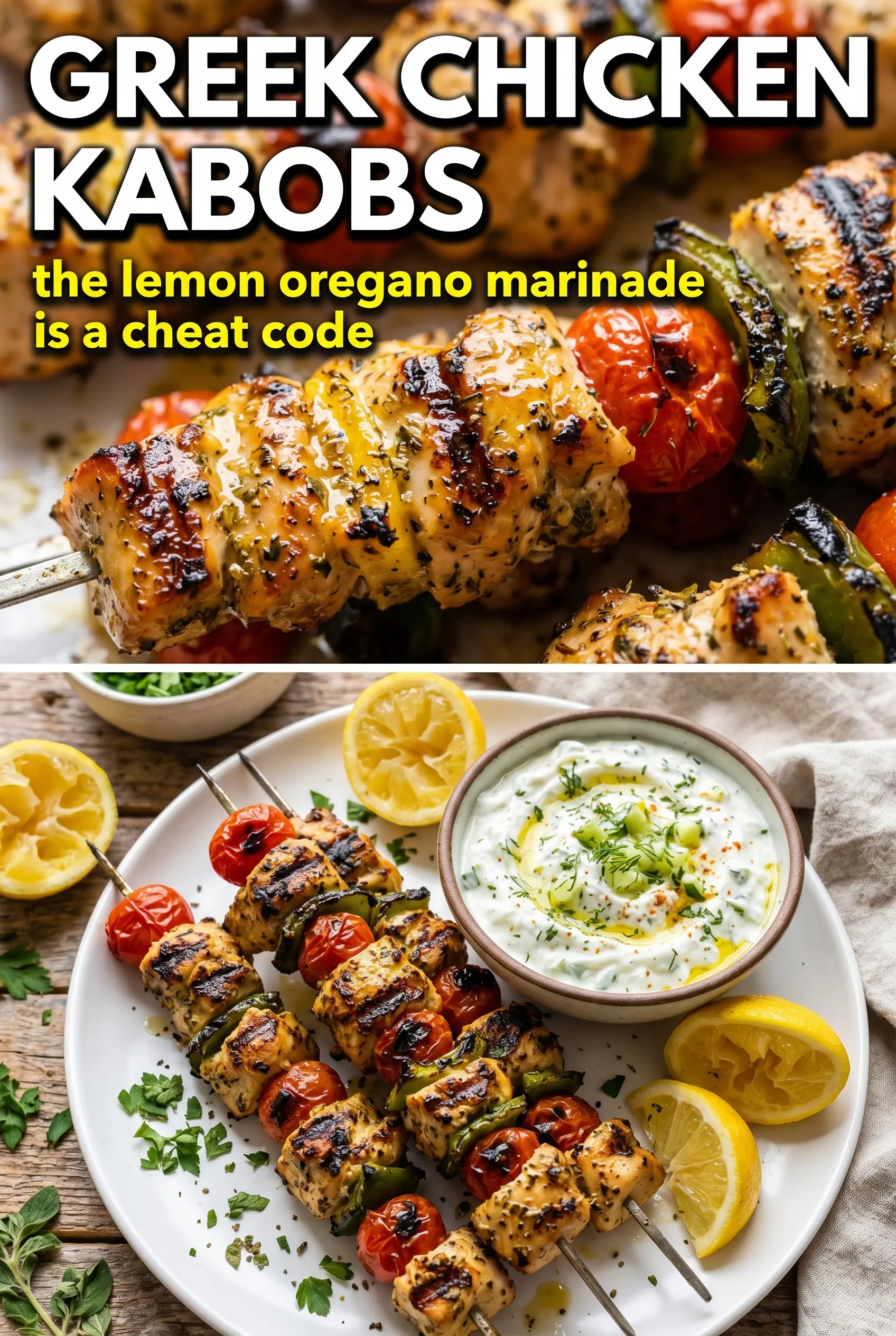
Greek Chicken Kabobs
Ingredients
Equipment
Method
- Whisk together olive oil, lemon juice, garlic, oregano, Dijon mustard, salt, and pepper until evenly combined and fragrant.
- Marinate the chicken for 4-8 hours, turning occasionally for even flavor.
- Thread chicken and vegetables onto soaked wooden skewers, alternating chicken with cherry tomatoes, red onion chunks, and bell pepper chunks.
- Grill the kabobs over medium-high heat for 5-6 minutes per side, until chicken is cooked through and vegetables are lightly charred.
- Serve the Greek chicken kabobs with tzatziki sauce, pita bread, and lemon wedges.