Golden garlic butter chicken thighs over creamy Parmesan rice hit that sweet spot between comfort food and a skillet dinner that still feels like a little bit of effort went into it. The chicken gets a hard sear first, which leaves the pan full of browned bits, and those bits are what give the rice its deep, savory backbone. By the time everything comes together, the rice is creamy without turning mushy and the chicken sits on top with crisp edges and a glossy finish.
The trick here is building layers in the same pan instead of cooking the chicken and rice separately. The butter carries the garlic, the broth lifts the fond from the skillet, and the Parmesan goes in after the rice is tender so it melts into the sauce instead of clumping or turning grainy. I tested this with boneless thighs because they stay juicy and hold up better than chicken breast in a one-pan dish like this.
Below, I’ve included the timing that matters most, the ingredient swap that still keeps the rice creamy, and a few variations for nights when you want to stretch the recipe or lighten it up.
The chicken stayed juicy and the rice soaked up every bit of that garlic butter flavor. I was worried the Parmesan would get clumpy, but stirring it in at the end made the sauce turn silky.
Save this garlic butter chicken with Parmesan rice for the night you want a skillet dinner with creamy rice and rich pan drippings in every bite.
The Part That Keeps the Rice Creamy Instead of Gluey
The biggest mistake in chicken-and-rice skillet dinners is treating the rice like it can absorb anything at any speed. It can’t. If the broth goes in before the garlic and rice have had a minute to toast, the starches stay flat and the final texture turns soft in a dull, overcooked way instead of creamy and cohesive. Toasting the rice in the butter and garlic first gives the grains a better edge and helps them hold their shape when the broth and cream go in.
The other thing that matters is heat control after the liquid is added. Once the pan comes to a boil, it needs to drop all the way to low so the rice simmers gently under a tight lid. A hard simmer will cook off the liquid too fast and leave the center underdone, while the low heat gives the grains time to finish evenly and absorb the Parmesan and cream at the end.
What Each Ingredient Is Actually Doing in This Skillet

- Boneless skinless chicken thighs — These stay juicy through the sear and the final return to the pan. Chicken breast will work in a pinch, but it dries out faster and gives you less room for timing mistakes.
- Long-grain white rice — This is the best choice for a creamy skillet rice that still has distinct grains. Short-grain rice turns softer and stickier, and brown rice needs a different liquid ratio and a much longer cook time.
- Chicken broth — Broth gives the rice depth before the cheese goes in. Water works only if you increase the seasoning, but the dish loses the savory base that makes the pan drippings taste like part of the sauce.
- Parmesan cheese — Grate it finely so it melts into the rice instead of sitting in shreds. Pre-grated cheese can work, but freshly grated Parmesan gives a smoother finish and a cleaner, saltier finish.
- Heavy cream — This is what turns the rice from simply seasoned to rich and saucy. Half-and-half will loosen the texture and keep it lighter, but it won’t coat the grains quite as thickly.
- Garlic and butter — These carry the whole dish. The garlic needs just a minute in the butter before the rice goes in; if it browns hard, it turns bitter and the whole skillet tastes harsh.
Building the Chicken and Rice in the Right Order
Seasoning and Searing the Chicken
Coat the chicken thighs evenly with salt, pepper, garlic powder, and smoked paprika before they hit the pan. You want the skillet hot enough that the chicken sizzles the second it touches the oil, which gives you a deep golden crust instead of pale, steamed chicken. Don’t move the pieces too early; if they stick at first, they’re still building color and will release once the crust forms. Pull them out when they reach 165°F and let them rest while you start the rice.
Blooming the Garlic and Toasting the Rice
After the chicken is out, melt the butter in the same skillet and scrape up the browned bits as the garlic cooks. One minute is enough. If the garlic starts to brown before the rice goes in, lower the heat right away or it will taste sharp. Stir the rice through the butter until the grains look glossy and a little translucent at the edges; that’s the sign they’ve picked up the fat and are ready for the broth.
Simmering the Rice Until Tender
Pour in the chicken broth and bring it to a boil before covering the pan and lowering the heat. The lid needs to stay on so the rice cooks by steady steam, not by the liquid boiling away. At around 18 minutes, the grains should be tender and the liquid mostly absorbed. If there’s still a little moisture left, give it a few more minutes off the heat with the lid on instead of stirring hard and breaking the grains.
Finishing with Parmesan and Cream
Stir in the Parmesan, heavy cream, and thyme after the rice is cooked through. This is the moment that turns the skillet from plain rice to a creamy sauce, so keep the heat low and stir until the cheese melts cleanly. If the pan is too hot here, the cheese can seize or turn grainy. Nestle the chicken back on top and let it warm through for a minute or two so the juices settle back into the rice.
How to Adapt This for a Bigger Crowd, a Lighter Plate, or No Dairy
Dairy-Free Version
Use olive oil instead of butter, then finish the rice with unsweetened coconut cream or an unsweetened dairy-free cooking cream. You’ll lose the sharp, salty bite of Parmesan, so add a little more salt and a spoonful of nutritional yeast if you want the sauce to taste fuller.
Chicken Breast Instead of Thighs
Chicken breast works if that’s what you have, but cut the sear time down and pull it as soon as it reaches 165°F. Breast meat dries faster than thighs, so rest it while the rice cooks and only return it to the pan at the very end.
Make It a Little Lighter
Use half-and-half instead of heavy cream and reduce the Parmesan slightly. The sauce won’t cling quite as thickly, but the rice still gets that creamy finish without feeling as rich.
Storage and Reheating
- Refrigerator: Store leftovers in an airtight container for up to 4 days. The rice firms up as it chills, but the flavor holds up well.
- Freezer: It freezes, though the rice softens a bit after thawing. Freeze in portions for up to 2 months and thaw overnight in the refrigerator.
- Reheating: Reheat gently on the stove or in the microwave with a splash of broth or water. The mistake to avoid is blasting it on high heat, which tightens the chicken and dries out the rice before the center warms through.
Answers to the Questions Worth Asking
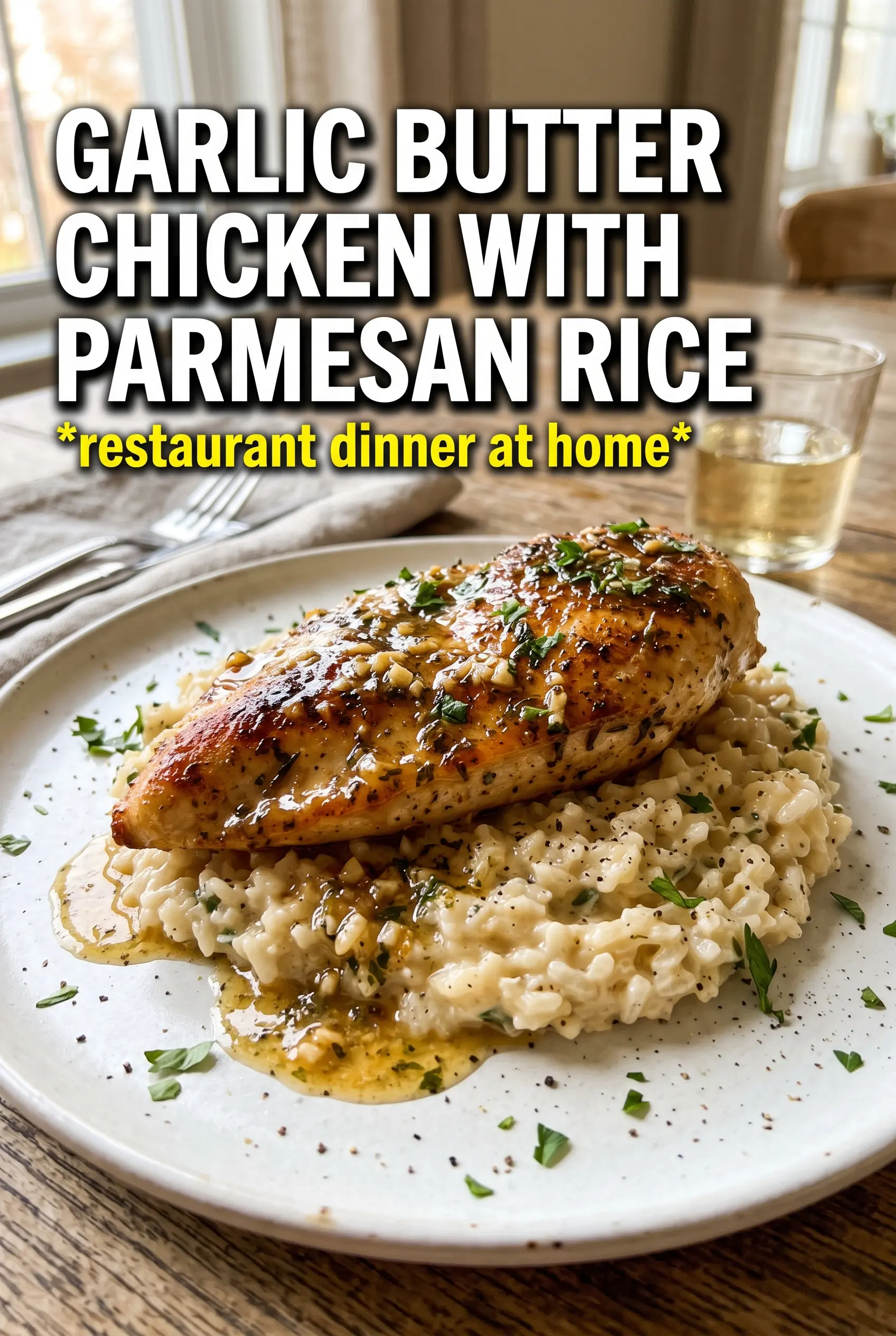
Garlic Butter Chicken with Parmesan Rice
Ingredients
Equipment
Method
- Season the chicken thighs with salt, black pepper, garlic powder, and smoked paprika. Heat olive oil in a large skillet over medium-high heat and sear the chicken for 5-6 minutes per side until golden and cooked through to 165°F, then remove.
- Melt butter in the same skillet, then cook the minced garlic for 1 minute until fragrant. Add the long-grain white rice and toast for 2 minutes.
- Pour in the chicken broth and bring to a boil. Cover and simmer over low heat for 18 minutes until the rice is tender.
- Stir in Parmesan cheese, heavy cream, and dried thyme until the rice is creamy and saucy.
- Return the chicken to the pan, nestling it into the Parmesan rice. Garnish with fresh parsley and serve.