Freezer breakfast sandwiches earn their place in the rotation because they come back from the freezer tasting like an actual breakfast, not a rescue mission. The English muffin stays sturdy, the egg bakes up tender instead of rubbery, and the cheese melts into the sausage once you reheat it. That balance is what makes these worth making ahead.
The trick is building each layer with a little restraint. Bake the eggs in a muffin tin so they hold their shape, toast the muffins lightly so they don’t collapse under the filling, and let the sandwiches cool before wrapping so trapped steam doesn’t turn everything soggy in the freezer. I’ve made enough of these to know that the small details matter more than fancy ingredients.
Below you’ll find the one step that keeps the texture right after freezing, plus a few swaps if you want to change the meat or make the sandwiches dairy-free.
The eggs stayed fluffy after reheating and the muffins didn’t get soggy at all. I wrapped them right after cooling and they were perfect for busy school mornings.
Save these freezer breakfast sandwiches for grab-and-go mornings with fluffy eggs, melted cheese, and a freezer-friendly wrap.
The Part That Keeps the Muffin From Going Stale
The biggest mistake with freezer breakfast sandwiches is building them hot and wrapping them immediately. That steam has nowhere to go, so it condenses on the muffin and egg, then freezes into a soft, damp layer. Let the components cool until they’re no longer releasing heat before you wrap them. That one pause keeps the texture closer to freshly made once they’re reheated.
Baking the eggs in a muffin tin gives you neat rounds that match the bread, which means the sandwich stacks evenly and warms through at the same rate. If you try to use scrambled eggs here, they tend to spread and slip around after freezing. These ingredients are chosen for structure as much as flavor.
- English muffins — They hold up better than softer sandwich breads because the nooks and crannies catch a little melted cheese without turning gummy. Light toasting before assembly helps them survive freezing.
- Eggs — Baking them in the oven keeps the texture tender and uniform. If you like the yolk less set, break it before baking so the center isn’t runny when it reheats.
- Breakfast sausage patties — These freeze and reheat cleanly. Bacon works too, but it comes back a little less juicy and a little crisper after microwaving.
- American or cheddar cheese — American melts the smoothest, while cheddar brings a sharper bite. Either one should go directly against the hot egg so it softens when the sandwich is reheated.
Building Them So They Reheat Like Breakfast, Not Leftovers
Cooking the Sausage First
Start with the sausage so it has time to cool while you handle everything else. Cook it through according to the package directions and let the patties drain on paper towels so excess grease doesn’t soak into the muffin. If the sausage is still dripping hot fat when you assemble, the sandwich turns greasy after freezing.
Baking the Eggs in the Muffin Tin
Grease the muffin tin well, then crack one egg into each cup and break the yolk if you want a flatter, more sandwich-friendly shape. Bake at 350°F until the whites are just set and the centers no longer look wet, usually 12 to 15 minutes. Pull them as soon as they set; overbaked eggs get springy after microwaving, and that texture only gets worse once frozen.
Toasting and Stacking
Toast the English muffins lightly so the cut sides dry out a little. Build each sandwich with the muffin bottom, egg, sausage, cheese, and muffin top so the cheese sits against the warm egg. That heat helps it soften later; if you put the cheese on the outside, it doesn’t melt as evenly when reheated.
Wrapping for the Freezer
Wrap each sandwich tightly in plastic wrap, then tuck the wrapped sandwiches into freezer bags. Press out as much air as you can before sealing. The less air trapped around them, the less freezer burn you’ll get, and the better the muffins taste after a few weeks in the freezer.
Use bacon instead of sausage
Bacon gives you a saltier, crisper sandwich, but it reheats a little drier than sausage. Cook it until just done so it doesn’t turn brittle after freezing, then layer it the same way with the egg and cheese.
Make it vegetarian
Skip the meat and add a thick slice of tomato, sautéed spinach, or a meatless breakfast patty. The sandwich will be a little softer, so keep the muffins well toasted to protect the structure.
Make it dairy-free
Use your favorite dairy-free cheese slice or leave the cheese out completely. The sandwich still works, but the melt and richness will be lighter, so add an extra pinch of salt to the egg if you’re skipping cheese.
Storage and Reheating
- Refrigerator: Up to 4 days if you want to eat them before freezing. The muffins will soften a bit, so the texture is best when fresh.
- Freezer: Freeze for up to 3 months. Wrap each sandwich tightly so the bread doesn’t pick up freezer odors or dry edges.
- Reheating: Unwrap, then microwave from frozen for 1 to 2 minutes until hot in the center. If your microwave runs strong, start with 1 minute and finish in 15-second bursts so the egg doesn’t turn rubbery.
Answers to the Questions Worth Asking
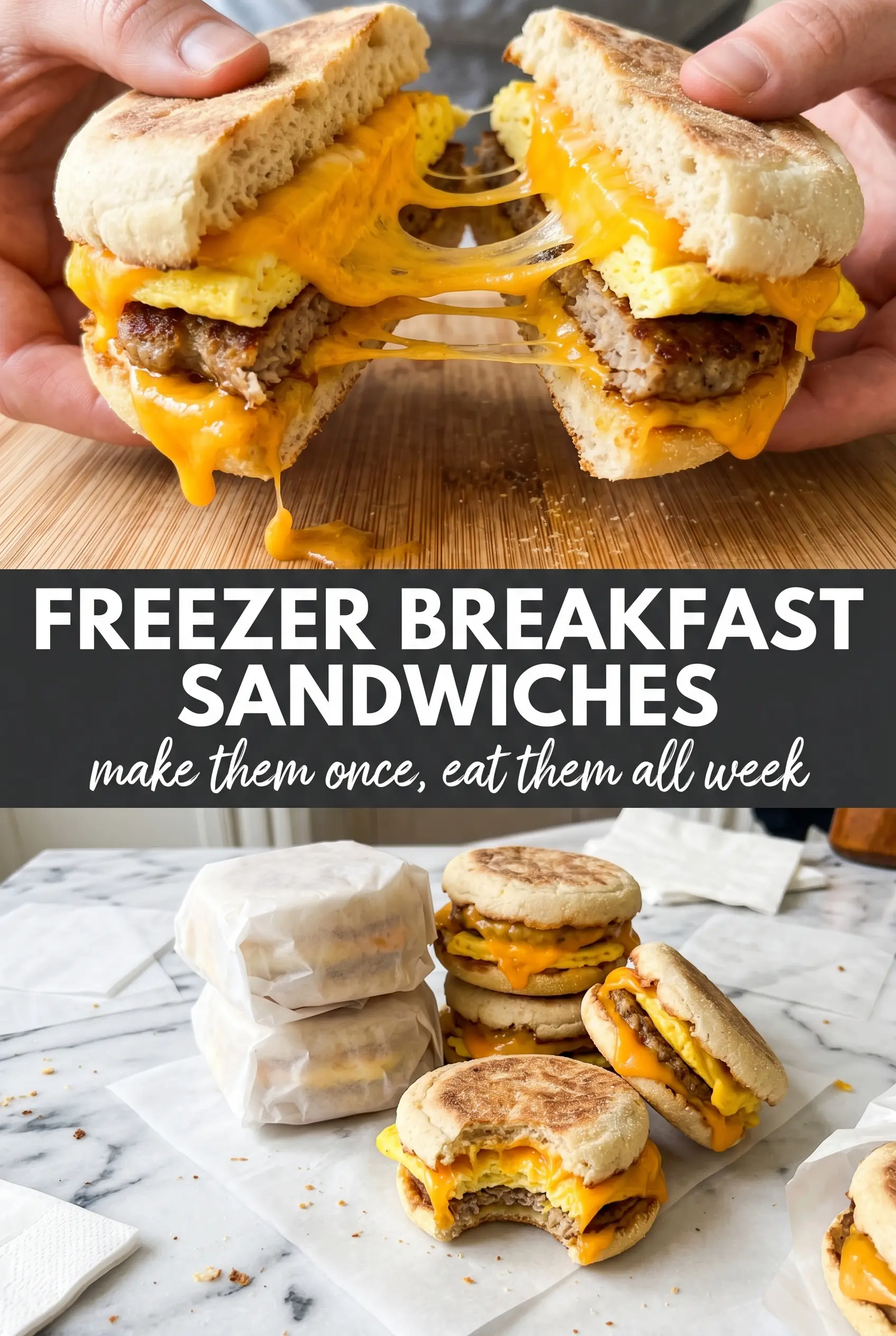
Freezer Breakfast Sandwiches
Ingredients
Equipment
Method
- Cook the breakfast sausage patties according to package directions, then set aside to cool slightly.
- Keep the sausage warm until you bake the eggs so it’s easy to assemble.
- Spray a muffin tin with cooking spray and crack one egg into each cup, breaking yolks if desired.
- Season the eggs with salt and pepper and bake at 350°F for 12-15 minutes until set, with slightly puffed, fully cooked centers.
- Toast the English muffin halves lightly so they hold up well after freezing, with lightly browned edges.
- Assemble each sandwich with a muffin bottom, egg, sausage patty, a cheese slice, and the muffin top.
- Wrap each sandwich individually in plastic wrap, then place the wrapped sandwiches in freezer bags.
- Freeze up to 3 months; when ready to eat, unwrap and microwave for 1-2 minutes until heated through, with cheese melted and eggs hot.