Foil packet sausage and peppers turn out juicy, smoky, and packed with sweet onion flavor, with the kind of hands-off cooking that makes dinner feel almost too easy. The sausages steam in their own juices while the peppers soften just enough to keep a little bite, and the foil keeps everything together until the very end so you get a full, messy, satisfying scoop every time.
What makes this version work is the balance between heat and enclosure. Heavy-duty foil matters because thinner foil can tear once the peppers soften and release liquid, and that liquid is part of the payoff here. Slicing the vegetables evenly helps them finish at the same time as the sausage, so you don’t end up with snappy peppers next to undercooked meat or limp onions that disappear into mush.
Below, you’ll find the small details that keep the packets from leaking, how to judge doneness over a campfire or grill grate, and a few smart variations if you want to serve these on rolls, keep them low-carb, or make them ahead for an easy cookout dinner.
The peppers came out soft and sweet, the sausage stayed juicy, and the packets were perfect after 22 minutes over the campfire.
Foil Packet Sausage and Peppers are the kind of campfire dinner that stays juicy, smoky, and easy to serve.
The Trick to Keeping the Sausage Juicy Instead of Dried Out
The biggest mistake with foil packet dinners is treating them like a high-heat roast. Sausage needs steady medium heat, not a blast of flame, or the outside will split before the inside has time to cook through. When the packets are sealed well, the vegetables release enough steam to create a moist cooking environment, which is exactly why this method works so well for sausages that can dry out on a grate.
The other thing that matters is how you cut the peppers and onions. Thin enough to soften in about the same window as the sausage, but not so thin that they collapse into a watery tangle. If the peppers are cut in big chunky strips, they’ll still taste raw when the sausage is done. If they’re shaved too thin, they’ll lose all texture and turn soft before the packet even comes off the heat.
What the Foil, Oil, and Seasoning Are Doing Here
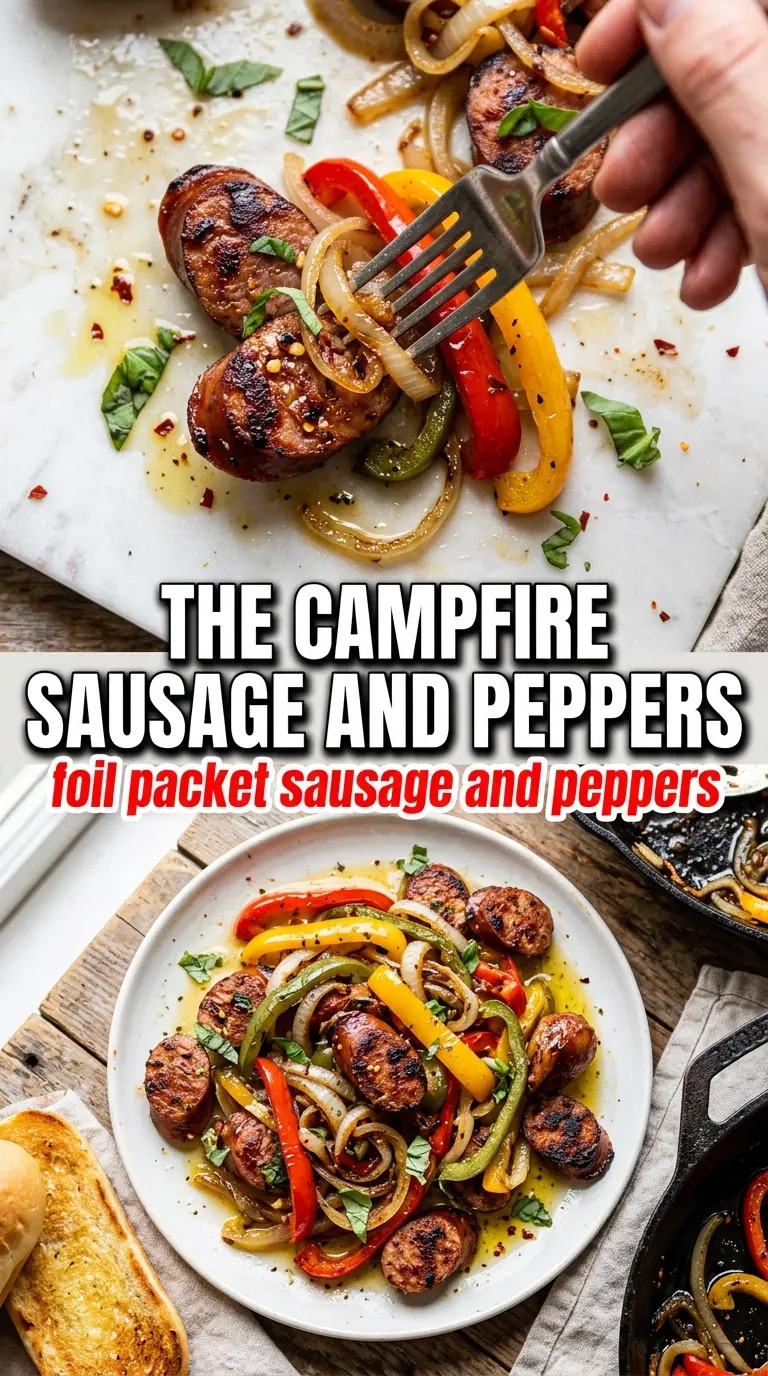
- Italian sausages — Sweet or hot both work. Raw sausage is best here because it seasons the peppers as it cooks and stays more succulent than pre-cooked sausage. If you use fully cooked sausage, shorten the cook time and watch mainly for hot, softened vegetables rather than internal doneness.
- Bell peppers — Use a mix of colors for sweetness and better contrast. Red and yellow peppers get a little sweeter over the fire, while green peppers keep a firmer, sharper edge. That combination keeps the packet from tasting one-note.
- Onions — They turn mellow and jammy in the foil, which is part of what makes the juices taste rich. Slice them into even wedges or half-moons so they soften at the same pace as the peppers.
- Olive oil — This helps the vegetables roast instead of just steaming in their own liquid. You don’t need much, but skipping it leaves the packet tasting flat and can make the vegetables stick to the foil.
- Italian seasoning — This gives the packet an herby backbone without needing a long ingredient list. If you want more punch, add a pinch of fennel seed or crushed red pepper, but don’t overdo it or it will compete with the sausage.
- Heavy-duty aluminum foil — This matters more than people think. Thin foil can split when the packet is flipped, especially once the onions soften and leak liquid. If all you have is standard foil, double it up.
How to Seal the Packets So Nothing Leaks Into the Fire
Divide and Stack with Purpose
Lay out the foil sheets and divide the sausage evenly before adding the vegetables. Piling everything in a loose mound helps the steam circulate, but leaving a little border around the edges is what lets you seal the packet properly. If the filling reaches the very edge, the seal tends to pop open once the juices start bubbling.
Fold for Steam, Not for Squashing
Bring the long sides of the foil together and fold them over twice, then crimp the short ends tightly. You want a sealed pouch with a little room inside, not a flattened brick. That trapped space turns into steam, and steam is what cooks the sausage through without scorching the peppers on the bottom.
Cook Over Medium Heat and Flip Once
Set the packets on a medium-hot grill grate or campfire grate and leave them alone for the first 10 to 12 minutes. When you flip them, do it carefully with tongs so the seal stays intact. The packet is done when the sausage reaches 160°F and the vegetables are tender with just a little bite left; if the foil is puffed and fragrant but the sausage still feels soft, give it a few more minutes before opening.
Open Away from Your Face
When you cut or tear the packets open, hot steam escapes fast. That burst is normal, and it’s one of the reasons the sausage stays juicy. Serve the filling straight from the foil for a rustic dinner, or tuck it into hoagie rolls and let the juices soak in a little before eating.
How to Adapt This for Grill Nights, Gluten-Free Plates, and Make-Ahead Prep
Dairy-Free and Naturally Gluten-Free
This recipe is already dairy-free and can be gluten-free as long as you skip the hoagie rolls or use a gluten-free roll. The packet itself doesn’t need any bread or cheese to work, which is part of why it travels so well for camping and cookouts.
Turn It Into a Hoagie Dinner
Split the rolls and spoon the sausage, peppers, and onions right in, then drizzle some of the juices over the top. The bread catches all the good stuff, but it also softens fast, so serve these right away once the packets are opened.
Make Them Ahead for Camping
Assemble the packets up to a day ahead and refrigerate them until you’re ready to cook. That gives the seasoning time to cling to the vegetables, but don’t salt them far earlier than that or the onions will start releasing too much moisture and make the packets watery.
Swap the Sausage Style
Chicken sausage works if you want a lighter packet, but it won’t give you the same rich drippings as pork Italian sausage. If you use a leaner sausage, add an extra drizzle of oil and check for doneness a little earlier so the meat stays tender.
Storage and Reheating
- Refrigerator: Store leftovers in an airtight container for up to 4 days. The peppers soften a little more after chilling, but the flavor holds well.
- Freezer: The cooked sausage freezes well, though the peppers and onions lose some texture. Freeze in a sealed container for up to 2 months if you don’t mind softer vegetables after thawing.
- Reheating: Warm in a covered skillet over medium-low heat with a splash of water, or heat in a 325°F oven until hot. The common mistake is blasting leftovers in a dry pan, which tightens the sausage and turns the vegetables leathery.
Answers to the Questions Worth Asking
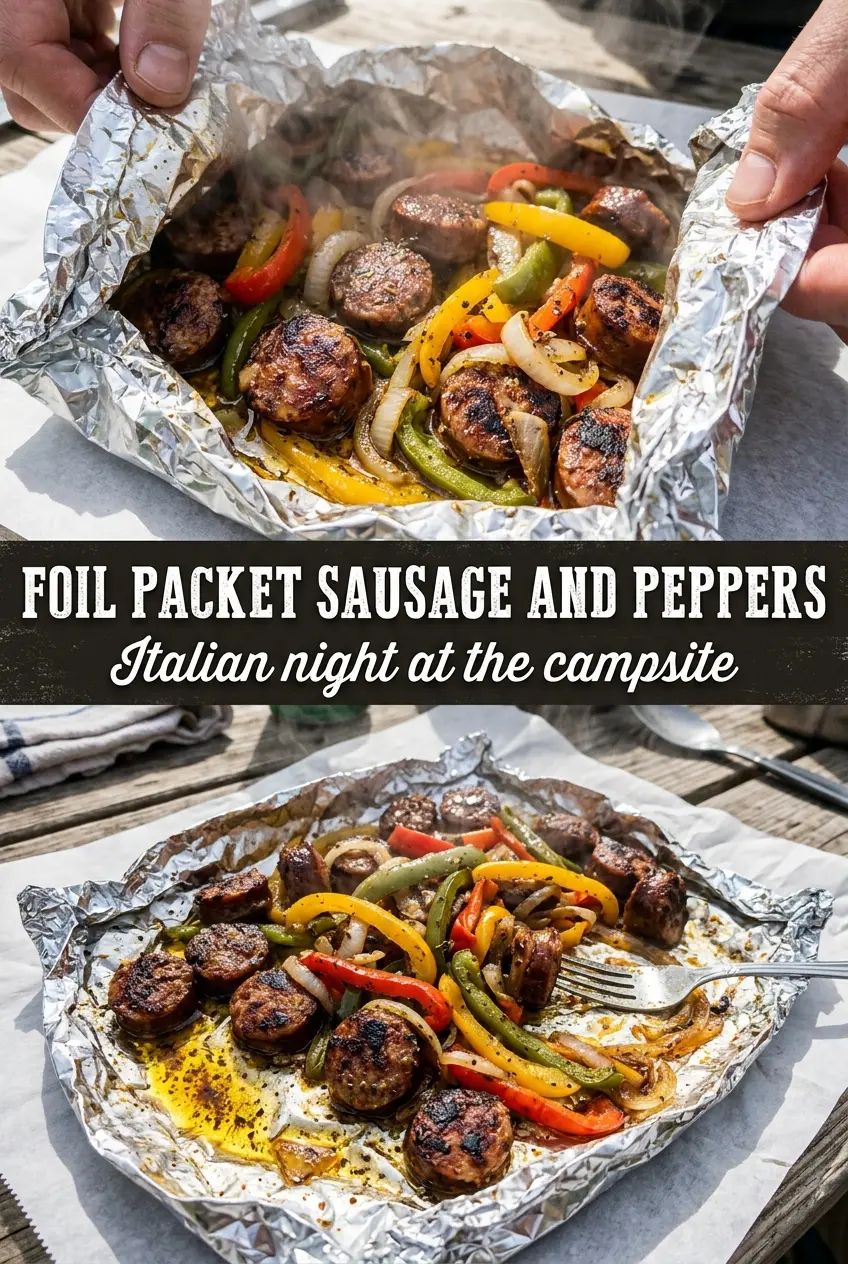
Foil Packet Sausage and Peppers
Ingredients
Equipment
Method
- Preheat the campfire so you have a campfire grate over medium heat. Divide the sausages among 4 heavy-duty aluminum foil sheets.
- Evenly top each foil packet with sliced bell peppers and sliced onions. Make sure the vegetables are spread near the sausages for even cooking.
- Drizzle olive oil over each packet and sprinkle with Italian seasoning, salt, and black pepper. Toss lightly in place so seasonings coat the vegetables.
- Fold the foil into sealed packets, pressing edges tightly to keep steam trapped. Leave some space above the food so the packet can puff slightly as it cooks.
- Place packets on the campfire grate over medium heat for 20-25 minutes. Keep an eye on the steam and foil: the packets should look active and gently billowing.
- Flip each foil packet halfway through cooking using tongs. Cook until sausages are heated through and peppers are tender.
- Open the packets carefully and vent steam away from your face. Serve the sausage and peppers on hoagie rolls or as-is.